
Public Records & Filing Offices in Illinois
Locate public records repositories, county recorder offices, vital statistics divisions, and state filing registries operating throughout the state of Illinois. Public records access is maintained across 102 county clerks, regional circuit clerks, and the Illinois Secretary of State Index Department. Review our comprehensive directory below to identify recording fees, vital records intake requirements, and official registry offices.


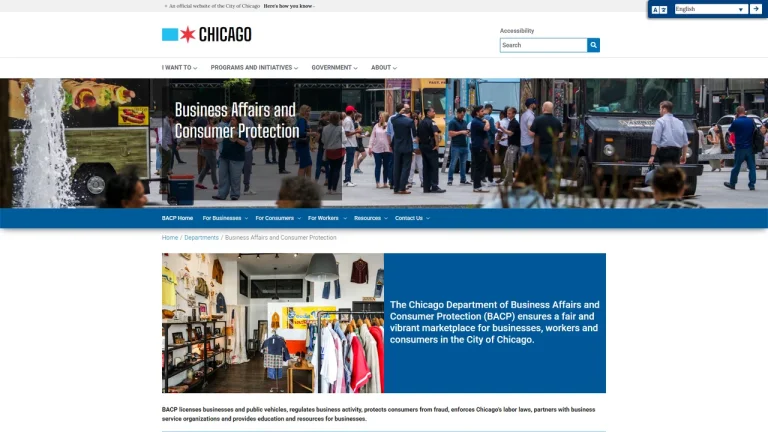
Chicago Department of Business Affairs and Consumer Protection (BACP) - Chicago, IL



George W. Dunne Cook County Administration Building - Chicago, IL

Public Records Governance & Recording Registries in Illinois
Public record management across Illinois is organized through a dual system of county recording authorities and statewide executive filing repositories. These filing bodies ensure public notice of real estate conveyances, judgment liens, corporate records, and vital statistics under statutory frameworks established by the Illinois General Assembly pursuant to 55 ILCS 5/3-5001.
At the county level, County Clerks and County Recorders across all 102 counties-including the Cook County Clerk Recording Division in Chicago, the DuPage County Clerk, and the Lake County Recorder-serve as the official registries for real property records, deeds, mortgages, mechanic liens, and local vital records. In addition, Circuit Court Clerks maintain official dockets of civil judgments, probate administrations, and domestic decrees that establish binding property and parental rights.
At the state level, the Illinois Secretary of State Index Department in Springfield maintains state central archives, apostilles, and Uniform Commercial Code (UCC) financing statements. The Illinois Department of Public Health (IDPH) Division of Vital Records oversees the central registry for birth, marriage, and death records created under the Vital Records Act codified at 410 ILCS 535/1.
Key Public Record Services, Statutory Fees & Timelines
| Service / Matter | Required Documents / Prerequisites | Statutory Fee (USD) | Processing Timeline |
|---|---|---|---|
| County Real Estate Deed Recording | Standard deed form, legal description, PIN/parcel number, MyDec transfer stamp | $98 statutory predictable fee (pursuant to GIS & RHSP statutes) | Same-day recording at clerk counter; 24-48 hours via e-recording |
| Certified Vital Record Copy (IDPH) | Application form, government photo ID, proof of direct familial or legal interest | $10 first copy ($4 each additional copy) | 2 to 4 weeks by mail; 2 to 5 business days online |
| UCC-1 Financing Statement (IL SOS) | Standard national UCC-1 form, debtor and secured party details | $20 electronic filing ($30 for paper submission) | Immediate electronic indexation; 3-5 business days by mail |
| Certified Circuit Court Record Retrieval | Case docket number, document identification, written request to Circuit Clerk | $6 certification base fee plus $0.50 per page | Immediate in person; 3 to 7 business days by mail |
Critical Legal Deadlines & Statutes in Illinois
Filing property records, securing liens, and requesting public documents in Illinois are strictly regulated by statutory deadlines:
- Mechanic's Lien Recording Deadline: To preserve priority against third-party purchasers or mortgage lenders, a contractor must record a mechanic's lien with the County Recorder within four months of completion of work under 770 ILCS 60/7.
- Mechanic's Lien Foreclosure Deadline: An action to enforce a recorded mechanic's lien must be commenced in the Circuit Court within two years of the completion of work pursuant to 770 ILCS 60/9.
- UCC Statement Duration: A UCC financing statement filed with the Secretary of State remains effective for five years from the filing date, requiring a continuation statement within six months prior to lapse under 810 ILCS 5/9-515.
- Real Estate Judgment Lien Duration: A certified copy of a judgment filed with the County Recorder creates a lien upon the real estate of the judgment debtor that is valid for seven years under 735 ILCS 5/12-101, renewable up to 27 years.
- FOIA Record Inspection Response: Public record custodians must respond to a non-commercial records disclosure request within five business days under 5 ILCS 140/3.
Direct Public Access vs. Retaining Title & Real Estate Counsel
Citizens can conduct independent title searches, purchase certified copies of deeds, register assumed business names with the County Clerk, and request vital records directly through county desks and state registries without retaining an attorney. The Illinois Predictable Fee Schedule simplifies recording real estate documents by establishing standard flat fees across county recording offices.
However, when resolving unreleased mortgages, challenging fraudulent recording encumbrances, litigating boundary disputes, or quieting title to real property under 735 ILCS 5/13-108, retaining a real estate attorney admitted to the Illinois Bar is essential. Legal counsel ensures proper drafting of warranty deeds, evaluates title insurance commitments, and prosecutes formal quiet title actions to remove clouds on real property titles.
Red Flags & Public Records Exploitation Scams
Property owners and public records applicants in Illinois must protect themselves against predatory schemes:
- Deceptive Deed Copy Solicitations: Official-looking mailers offering to provide a copy of a homeowner's recorded deed for $80 to $100, when a certified copy can be obtained from the local County Recorder for less than $15.
- Third-Party Vital Records Portals: Websites charging substantial processing fees to intermediate birth or marriage certificate orders that can be requested directly from IDPH or county clerks.
- Fraudulent Recording and Clouded Title Schemes: Unauthorized filings of bogus quitclaim deeds or fraudulent liens filed by predatory actors attempting to cloud title to residential properties.
- Property Tax Assessment Appeals Guarantees: Commercial solicitation services demanding non-refundable upfront fees while promising guaranteed reductions in assessed property values before county Boards of Review.
Frequently Asked Questions
Where do I record a property deed in Illinois?
Real estate deeds must be recorded with the County Recorder (or County Clerk in counties with combined offices) in the specific county where the property is geographically located under 55 ILCS 5/3-5001.
How do I obtain a certified copy of a birth or death certificate in Illinois?
Certified copies can be ordered through the County Clerk's office where the event occurred or directly through the Illinois Department of Public Health Division of Vital Records under 410 ILCS 535/25.
What is the standard recording fee for real estate documents in Illinois?
Most Illinois counties utilize a predictable statutory fee schedule, setting standard recording fees at approximately $98 for standard documents, which includes statutory GIS and Rental Housing Support Program fees under 55 ILCS 5/3-5018.1.
How long does a judgment lien remain attached to real property in Illinois?
A recorded judgment creates a lien against the debtor's real estate for seven years from the date of the judgment, subject to revivor proceedings within statutory timeframes under 735 ILCS 5/12-101.
What is the deadline for contractors to record a mechanic's lien in Illinois?
To preserve rights against subsequent purchasers and encumbrancers, a contractor must record a mechanic's lien within four months following completion of the work under 770 ILCS 60/7.