
Federal Law Enforcement in Maine
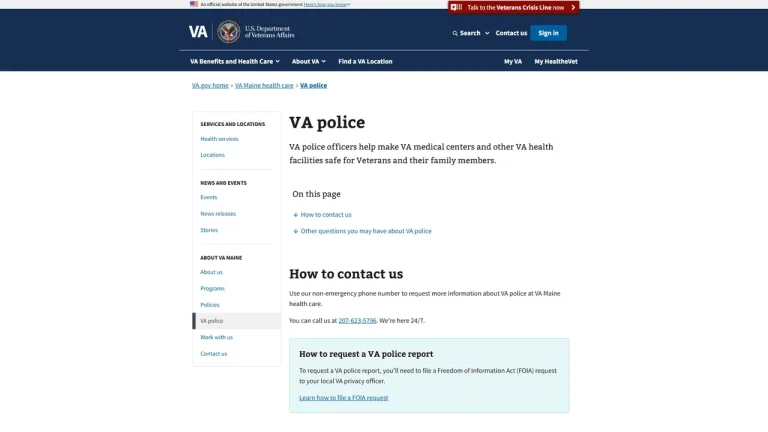
Access verified directories, jurisdictional parameters, and agency contacts for federal law enforcement agencies operating throughout Maine. Navigating federal investigations, border security protocols, and international maritime regulations requires adherence to federal procedural standards. Explore our structured resource below to connect with federal investigative offices, U.S. Border Patrol stations, and federal court personnel across Maine.
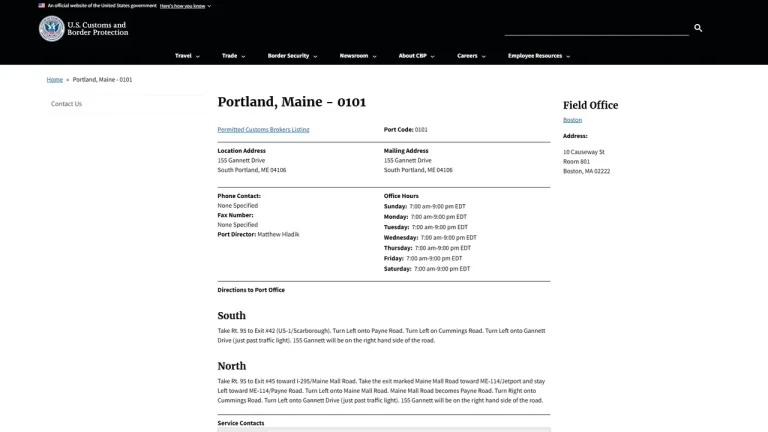
US Customs and Border Protection - International Marine Terminal - Portland, ME



The Federal Law Enforcement Framework Across Maine
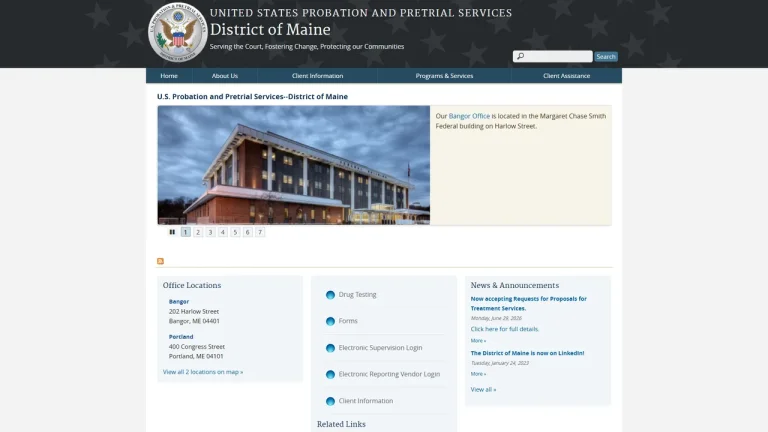
Federal law enforcement in Maine operates across a unified statewide jurisdiction centered within the United States District Court for the District of Maine, established pursuant to 28 U.S. Code § 99. The district maintains two primary divisional courthouses: the Edward T. Gignoux United States Courthouse in Portland (serving southern and western Maine) and the Margaret Chase Smith Federal Building in Bangor (serving central, eastern, and northern Maine).
Given Maine extensive international land border and expansive Atlantic coastline, federal border security and maritime operations play an exceptional role. The United States Border Patrol Houlton Sector oversees border enforcement across Maine 611 miles of land boundary, maintaining stations in Calais, Fort Fairfield, Houlton, Jackman, Rangeley, and Van Buren. Customs operations and commercial ports of entry are managed by U.S. Customs and Border Protection (CBP), while maritime safety, fisheries enforcement, and coastal security are directed by the United States Coast Guard Sector Northern New England based in South Portland.
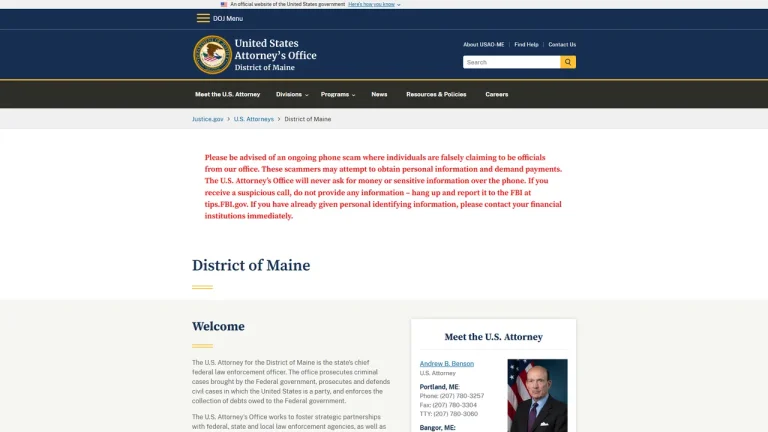
Federal criminal prosecutions and civil representation are directed by the United States Attorney Office for the District of Maine under 28 U.S. Code § 547, with staffed branches in Portland and Bangor. Major investigative agencies, including the Federal Bureau of Investigation (FBI) through resident agencies in Augusta, Bangor, and Portland (under the Boston Field Office), the Drug Enforcement Administration (DEA), and the Bureau of Alcohol, Tobacco, Firearms and Explosives (ATF), conduct complex investigations. Federal prisoner transit and judicial security are directed by the United States Marshals Service (USMS).
Federal Law Enforcement Services, Requests, and Schedules
| Service / Matter | Required Documents / Prerequisites | Statutory Fee (USD) | Processing Timeline |
|---|---|---|---|
| Federal FOIA Public Records Request | Written request identifying specific agency records, requester category, ID | $0 base statutory fee (search/duplication costs apply) | 20 statutory business days |
| FBI Identity History Summary (Rap Sheet) | Form FD-258 fingerprint card, identity verification form, payment authorization | $18 standard statutory processing fee | 3 to 5 business days electronically |
| CBP Port of Entry Trusted Traveler Interview | Valid passport, approved online application, conditional approval letter | Statutory application fee ($100 - $120) | Appointment scheduled upon conditional clearance |
| Federal Appearance Bail & Bond Processing | Valid government photo ID, magistrate appearance bond order, cash/surety | Statutorily mandated bond assessment | 2 to 4 hours after judicial release order |
Critical Legal Deadlines & Statutes in Maine
Individuals interacting with federal law enforcement in Maine must adhere to strict constitutional and statutory timeframes. Under Fed. R. Crim. P. 5, anyone taken into federal custody must be brought before a United States magistrate judge in Portland or Bangor without unnecessary delay, typically within 24 hours, for an initial appearance and formal advisement of rights.
When a defendant is held on a federal complaint, preliminary proceedings follow rigid deadlines. Pursuant to Fed. R. Crim. P. 5.1, the magistrate court must conduct a preliminary hearing within 14 days of the initial appearance if the defendant is detained, or within 21 days if released on bail. Under the Federal Speedy Trial Act, codified at 18 U.S. Code § 3161, an indictment or information must be returned within 30 days of arrest, and trial must commence within 70 days from filing or appearance, subject to statutory tolling.
In tort claims arising from the actions of federal law enforcement officers, claimants must comply with the Federal Tort Claims Act under 28 U.S. Code § 2401, which requires submitting a written administrative claim to the responsible federal agency within two years after the claim accrues. Public records inquiries submitted under the federal Freedom of Information Act are governed by 5 U.S. Code § 552, establishing a 20-day agency response window.
Direct Public Engagement vs. Retaining Federal Criminal Defense Counsel
Members of the public can independently complete standard administrative transactions with federal agencies. Submitting FOIA inquiries to federal departments, applying for international border travel passes through CBP Trusted Traveler portals, or obtaining personal background checks from the FBI can be handled directly through established agency workflows.
However, when an individual or business entity becomes the subject of a federal criminal inquiry, is served with a grand jury subpoena, or faces questioning by Border Patrol, Coast Guard, or FBI special agents, hiring an attorney admitted to the Bar of the United States District Court for the District of Maine is critical. Federal investigations carry severe consequences under federal sentencing guidelines, and voluntary statements can lead to federal false statement prosecutions under 18 U.S. Code § 1001. Federal criminal defense counsel manages subpoena responses, represents clients at detention hearings under 18 U.S. Code § 3142, and challenges border search exceptions under Fourth Amendment jurisprudence.
Red Flags, Federal Imposter Scams, and Procedural Warnings
- Beware of phone callers impersonating federal deputy marshals, Border Patrol agents, or court clerks threatening immediate arrest or seizure of assets for missed federal grand jury duty in Portland or Bangor; authentic federal authorities never demand payments or gift cards over the phone.
- Avoid commercial websites charging fees to file federal FOIA petitions or obtain basic government forms; official submissions should be processed directly through agency web portals without third-party surcharges.
- Never answer questions from federal agents or consent to searches of digital devices without legal representation, as statements made during investigative encounters can be used in federal criminal prosecutions.
- Ensure any legal advocate representing your interests in federal court is formally admitted to the District of Maine Bar or sponsored under local pro hac vice rules.
Frequently Asked Questions
Where are the federal courthouses and U.S. Attorney offices located in Maine?
Federal judicial operations are based in the Edward T. Gignoux Federal Courthouse in Portland and the Margaret Chase Smith Federal Building in Bangor, where the U.S. Attorney Office also maintains staffed branches.
What is the role of the U.S. Border Patrol Houlton Sector in Maine?
The Houlton Sector is responsible for securing Maine 611 miles of land border with Canada, operating stations in Calais, Fort Fairfield, Houlton, Jackman, Rangeley, and Van Buren.
What should I do if federal law enforcement agents contact me for an interview in Maine?
You have the constitutional right under the Fifth Amendment to decline answering questions and to request the advice and presence of a qualified defense attorney before speaking with investigators.
What areas are patrolled by the United States Coast Guard in Maine?
The U.S. Coast Guard Sector Northern New England, headquartered in South Portland, oversees maritime safety, border interdiction, search and rescue, and environmental response along the entire coast of Maine.
What is the statutory deadline for trial under the federal Speedy Trial Act?
Under 18 U.S. Code § 3161, a federal criminal trial must commence within 70 days from the filing of the information or indictment, or from the date the defendant appears before a judicial officer, subject to statutory tolling.