
Specialty Courts (Drug, Family, Juvenile) in Boston
Access specialized problem-solving courts in Boston, Massachusetts, addressing substance use, domestic relations, and juvenile rehabilitation. Operating primarily out of the Edward W. Brooke Courthouse, these dedicated sessions combine judicial oversight with therapeutic support services to resolve complex family and behavioral challenges. Explore our verified directory below to review docket procedures, eligibility rules, and official clerk contacts across Suffolk County.
Problem-Solving Courts & Specialty Jurisdictions in Boston
Specialty courts in Boston provide focused judicial interventions for sensitive domestic disputes, juvenile welfare, and behavioral health challenges. Located primarily within the Edward W. Brooke Courthouse at 24 New Chardon Street, these specialized sessions depart from traditional adversarial litigation to prioritize therapeutic outcomes, structured rehabilitation, and community stability across Suffolk County.
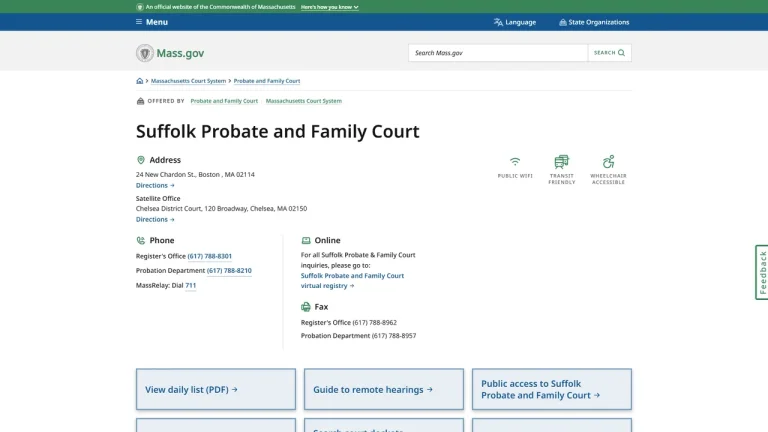
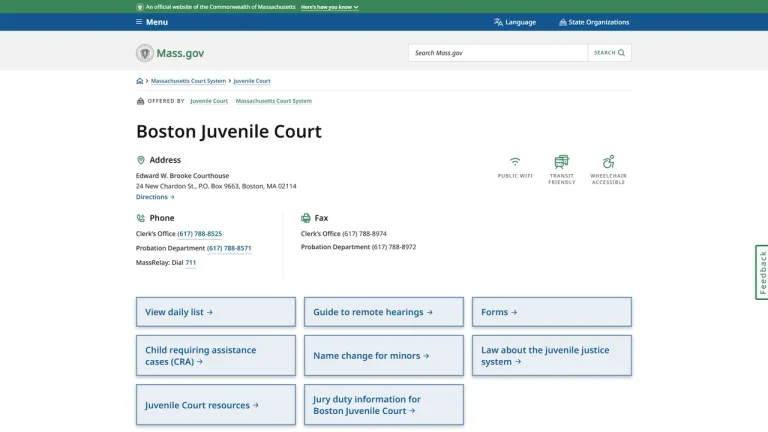
Domestic relations, paternity, divorce, and child custody matters are adjudicated by the Suffolk County Probate and Family Court at the Brooke Courthouse. Concurrently, child protection, care and protection proceedings, and juvenile delinquency cases are managed by the Suffolk County Juvenile Court, which maintains its central division at 24 New Chardon Street along with community sessions in Dorchester, West Roxbury, and Charlestown.
Substance use disorders and co-occurring mental health challenges within the criminal justice system are addressed through Boston Municipal Court (BMC) specialty sessions. The Boston Drug Court, Veterans Treatment Court, and mental health diversion sessions operate across BMC Central, Dorchester, and Roxbury divisions, coordinating treatment plans in close collaboration with the Massachusetts Department of Public Health and local probation departments.
Boston Specialty Court Filings, Eligibility & Statutory Schedules
| Service / Matter | Required Documents / Prerequisites | Statutory Fee (USD) | Processing Timeline |
|---|---|---|---|
| BMC Adult Recovery / Drug Court Diversion | Clinical Assessment, Defense Counsel Referral, Voluntary Probation Agreement | $0.00 court fee / tiered treatment costs | 12 to 18-month structured program |
| Abuse Prevention Order (Chapter 209A Petition) | Sworn Affidavit of Abuse, 209A Complaint Form, Supporting Police Incident Notes | $0.00 statutory fee (exempt by law) | Immediate ex parte review; full hearing in 10 days |
| Juvenile Care & Protection / Delinquency Action | DCF Intake Report or Delinquency Summons, Juvenile Intake Evaluation | $0.00 statutory fee | Initial appearance within 24 to 48 hours |
| Probate & Family Child Support / Custody Petition | Complaint for Custody, Rule 401 Financial Statement, Affidavit of Care & Custody | $120.00 to $215.00 entry fee (waiver available) | 30 to 60 days to case management conference |
Critical Legal Deadlines & Statutes in Massachusetts
Navigating specialty court proceedings in Suffolk County requires strict compliance with statutory procedural timetables established by Massachusetts law. Missing mandatory filing or hearing dates can prejudice parental rights or trigger involuntary judicial sanctions.
Emergency domestic relief is regulated under the Massachusetts Abuse Prevention Act. Under Mass. Gen. Laws ch. 209A § 3, a petitioner may obtain an immediate temporary ex parte restraining order upon showing a substantial likelihood of immediate danger, but a mandatory evidentiary hearing must be conducted within 10 business days to determine whether the protective order will be extended for up to 1 year.
Child welfare interventions initiated by the Department of Children and Families (DCF) are governed by strict statutory timeframes. Under Mass. Gen. Laws ch. 119 § 24, when the commonwealth assumes emergency custody of a minor, a preliminary hearing must be held within 72 hours in the Boston Juvenile Court to evaluate whether temporary state custody should continue pending a full adjudication.
Diversion programs and specialty probation sessions operate under Mass. Gen. Laws ch. 276 § 87A, granting judges the authority to place defendants on specialized probation with clinical treatment conditions. In domestic relations appeals originating from the Suffolk County Probate and Family Court, a notice of appeal must be filed within 30 days of the entry of judgment pursuant to Mass. R. App. P. 4.
Direct Court Navigation vs. Retaining Specialized Legal Counsel
Individuals can independently access several critical protections within Boston's specialty court divisions. Petitioners seeking emergency restraining orders under Chapter 209A can file paperwork directly at the Edward W. Brooke Courthouse with assistance from court-based victim advocates at no cost. Similarly, voluntary paternity acknowledgments and basic support modification petitions can be initiated without legal representation.
However, when proceedings involve state-initiated child removals, termination of parental rights, or high-conflict custody disputes, retaining an experienced family or juvenile law attorney is essential. Navigating evidentiary hearings before the Suffolk County Juvenile Court or contesting financial disclosures in the Probate and Family Court requires sophisticated legal advocacy and an understanding of the child's best interests standard.
In criminal specialty sessions, such as the Boston Drug Court, retaining defense counsel is vital before entering a binding contract. While these programs offer an alternative to incarceration, noncompliance can result in immediate termination and imposition of underlying jail sentences. An attorney evaluates the evidentiary strength of the prosecution's case, ensures the plea agreement is voluntary, and protects the participant's constitutional rights throughout clinical supervision.
Specialty Court Red Flags & Procedural Traps
- Entering a recovery or drug court diversion program without defense counsel first reviewing the underlying arrest for constitutional search and seizure violations.
- Treating meetings with Department of Children and Families (DCF) investigators as informal conversations without understanding that admissions can form the basis of a formal 51A petition in Juvenile Court.
- Failing to file the mandatory financial disclosure statement under Probate and Family Court Supplemental Rule 401 prior to temporary order hearings.
- Missing the mandatory 10-day extension hearing date on a Chapter 209A restraining order, resulting in automatic expiration of protective relief.
Frequently Asked Questions
Where are specialty and family courts located in Boston?
Most specialty, juvenile, and family courts in Boston operate inside the Edward W. Brooke Courthouse, located at 24 New Chardon Street in downtown Boston.
Is there a fee to file for a restraining order under Chapter 209A in Boston?
No, Massachusetts law exempts petitioners from all filing fees, service costs, and court charges when submitting an application for an Abuse Prevention Order under Chapter 209A.
How does someone enter the Boston Drug Court program?
Candidates are typically referred by defense counsel or probation officers in the Boston Municipal Court, followed by a clinical evaluation to verify eligibility for intensive judicial treatment supervision.
What is a 72-hour hearing in the Boston Juvenile Court?
A 72-hour hearing is a mandatory court proceeding held under Mass. Gen. Laws ch. 119 § 24 after the state takes emergency custody of a child to determine if temporary removal remains legally justified.
Are juvenile court records in Boston accessible to the public?
No, juvenile delinquency and care and protection records in Massachusetts are strictly confidential and shielded from public inspection to protect the privacy and rehabilitation of minors.