
Legal Resources in Massachusetts
Accessing verified Massachusetts legal resources connects residents with official trial courts, county detention centers, clerk offices, and public registries. Understanding state administrative procedures enables the public to submit records requests, verify court dockets, and obtain certified vital records seamlessly. Explore our statewide directory below to find essential contact details, operating hours, and official access rules for Massachusetts government institutions.
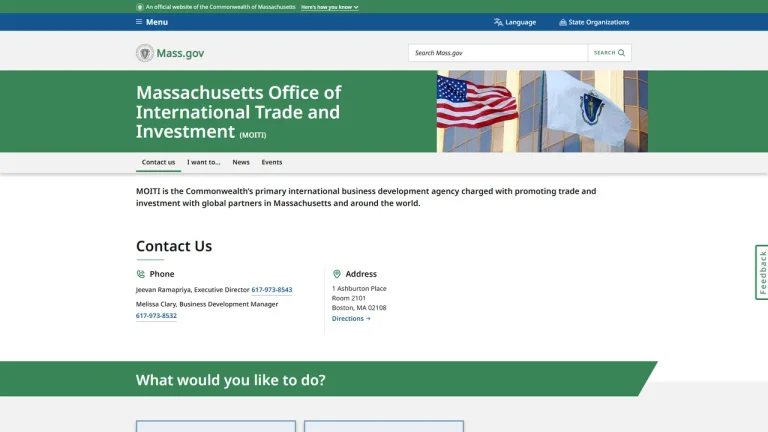
Massachusetts Office of International Trade and Investment - Boston, MA

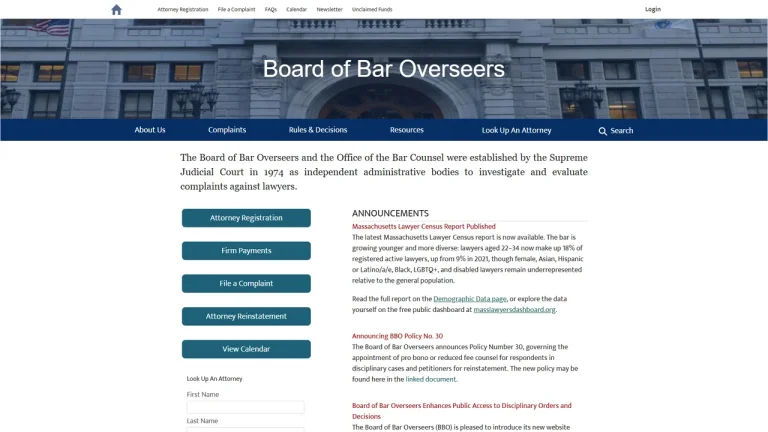
Board of Bar Overseers of the Supreme Judicial Court of Massachusetts - Boston, MA
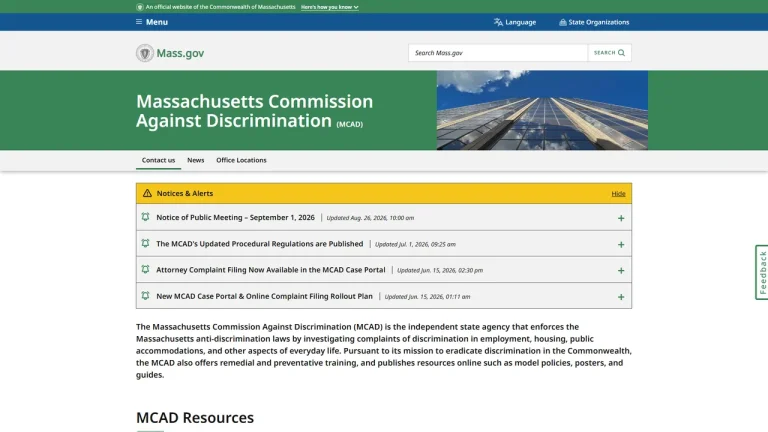
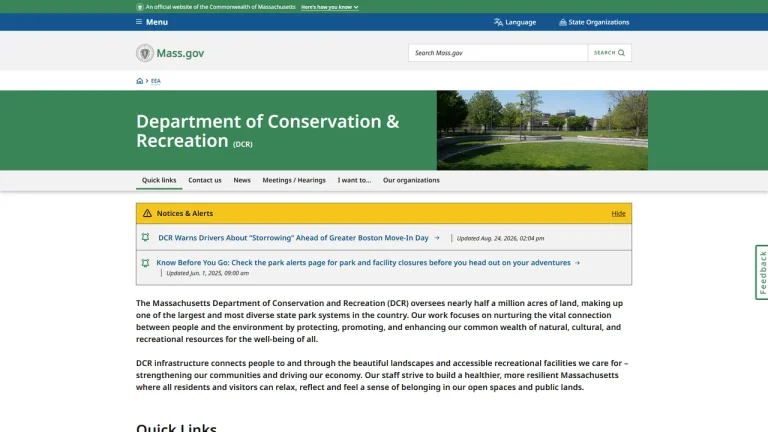







USDA Food and Nutrition Service (Northeast Regional Office) - Boston, MA
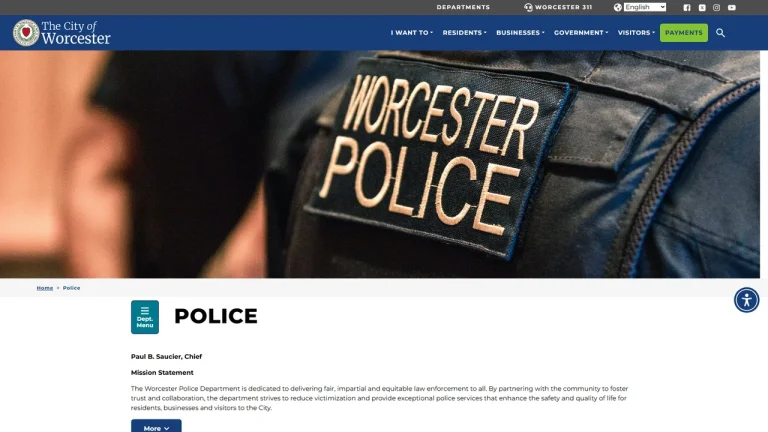
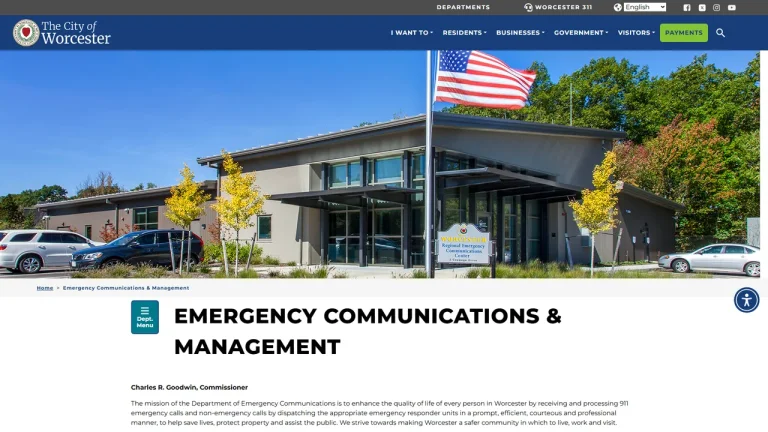
The Framework of Massachusetts Public Legal and Government Institutions
The Commonwealth of Massachusetts maintains an established network of public legal and governmental institutions created to uphold statutory transparency, constitutional due process, and public record access. From the historic State House in Boston to municipal offices across fourteen counties, citizens interact with state and county departments to resolve legal matters, record deeds, and access public vital records. Navigating these public legal resources requires familiarity with the jurisdiction of regional trial courts, law enforcement departments, and administrative agencies.
The judicial branch of Massachusetts is anchored by the Supreme Judicial Court in Boston, the highest appellate court in the Commonwealth, accompanied by the Massachusetts Appeals Court. Primary trial authority is exercised through the Massachusetts Trial Court system, organized into specialized departments including the Superior Court, District Court, and Boston Municipal Court. Civil disputes, land use questions, and family matters are handled within regional venues such as the Suffolk County Superior Court in Boston, Middlesex County Superior Court in Woburn and Lowell, Worcester County Superior Court, and Hampden County Superior Court in Springfield.
Custodial operations are divided between the Massachusetts Department of Correction, which manages long-term state correctional institutions, and elected County Sheriffs' Offices, who operate county jails and houses of correction for pretrial detainees and short-term sentences. Administrative public registries, including the Registry of Vital Records and Statistics in Dorchester and the Massachusetts Registry of Motor Vehicles, handle statewide vital documentation and vehicle titling services.
Statutory Fees and Service Timelines for Massachusetts Public Services
| Service / Matter | Required Documents / Prerequisites | Statutory Fee (USD) | Processing Timeline |
|---|---|---|---|
| Certified Vital Records Copy (Birth, Marriage, Death) | State-issued photo identification and formal application | $20.00 in person / $32.00 online or mail | Same-day walk-in; 2 - 4 weeks via standard processing |
| Massachusetts Public Records Law Request | Written request identifying specific public records | Free first 2 hours search; $0.05 per standard page | Strictly 10 business days statutory deadline |
| Trial Court Case Docket Searches & Certified Copies | Docket number or party name via MassCourts portal | $0.50 per page / $20.00 certification fee | Immediate online search; 3 - 7 business days for certified paper records |
| Cash Bail Lodgment & Jail Release Processing | Government-issued identification, bail order, and cash or surety bond | $40.00 statutory bail fee + court-ordered bail | 2 - 5 hours after judicial magistrate processing |
Critical Administrative Deadlines & Statutes in Massachusetts
Statutory timelines dictate all public record disclosures and tort actions within the Commonwealth of Massachusetts. Access to public governmental files is governed by the Massachusetts Public Records Law codified under Mass. Gen. Laws ch. 66, § 10. Public records access officers must respond to a written public records request within ten business days of receipt, either by providing the requested documents, identifying applicable statutory exemptions, or issuing an estimated fee and fulfillment schedule.
For individuals seeking financial compensation for damages caused by the negligence of a public agency or employee, the Massachusetts Tort Claims Act under Mass. Gen. Laws ch. 258, § 4 governs the legal process. Claimants must formally present an executive notice of claim in writing to the appropriate public employer within two years after the cause of action accrues. If the executive officer denies the claim or fails to respond within six months, the claimant may commence a civil action in court. Additionally, public land title filings must conform to recording acts enforced through county Registry of Deeds offices under Mass. Gen. Laws ch. 183, § 4.
Direct Agency Access vs. Retaining Legal Counsel in Massachusetts
Massachusetts citizens can utilize numerous public legal resources independently without retaining private counsel. Individuals can obtain certified copies of birth, marriage, or death certificates directly from municipal clerks or the Registry of Vital Records and Statistics, inspect recorded land instruments through MassLandRecords, submit public records requests under Chapter 66, or resolve minor traffic citations through the RMV or local District Court clerks.
Conversely, matters involving personal liberty, complex administrative appeals, or substantial civil liability necessitate formal legal representation. In the District Court and Boston Municipal Court, small claims procedures are capped at $7,000 pursuant to Mass. Gen. Laws ch. 218, § 21, though claims for property damage resulting from motor vehicle accidents are exempt from this limit. While small claims matters may be litigated pro se, major civil suits in Superior Court, bail review hearings before Superior Court judges under Mass. Gen. Laws ch. 276, § 58, or evidentiary hearings before the Department of Industrial Accidents demand experienced legal counsel to safeguard statutory rights.
Red Flags and Fraud Warnings for Massachusetts Legal Resources
- Third-party commercial entities charging exorbitant processing fees for standard state administrative applications or public records available at nominal statutory costs.
- Fraudulent electronic messages claiming to represent MassCourts or the Trial Court demanding immediate wire payments for missed jury duty or fines.
- Unaccredited document services charging high rates to prepare municipal deed transfers or vital record applications available directly from city or town clerks.
- Unauthorized bail facilitators operating outside certified professional bail commissioner standards who solicit money directly from families of incarcerated individuals.
Frequently Asked Questions
How do I search for court cases and docket entries in Massachusetts?
Public court case records and dockets across the Superior, District, Boston Municipal, and Housing Courts can be searched online via the official MassCourts portal or requested in person at the respective courthouse clerk office.
What is the deadline for state agencies to respond to a Massachusetts public records request?
Under Mass. Gen. Laws ch. 66, § 10, records access officers must provide an initial written response within ten business days of receiving the public records request.
What is the financial limit for small claims actions in Massachusetts courts?
Pursuant to Mass. Gen. Laws ch. 218, § 21, small claims actions in District Court and Boston Municipal Court are capped at $7,000, except for claims for property damage caused by a motor vehicle, which have no monetary cap.
Where can I obtain certified copies of vital records in Massachusetts?
Certified copies of birth, marriage, and death records are issued by the Registry of Vital Records and Statistics in Dorchester or through local city and town clerks pursuant to Mass. Gen. Laws ch. 46, § 2A.
Which agency oversees state prison facilities in Massachusetts?
State correctional institutions are administered by the Massachusetts Department of Correction under Mass. Gen. Laws ch. 124, § 1, while county jails and houses of correction are managed independently by elected County Sheriffs.