
Specialty Courts (Drug, Family, Juvenile) in Massachusetts
Massachusetts specialty courts provide dedicated therapeutic, domestic, and rehabilitative judicial tracks across the Commonwealth. These specialized venues, including Recovery Courts, Probate and Family Courts, and Juvenile divisions, focus on individualized justice and family welfare. Browse our directory below to find local specialty court sessions, intake procedures, and community support resources.
The Role of Massachusetts Specialty and Specialized Trial Court Departments
The Commonwealth of Massachusetts has established specialized court departments and problem-solving dockets designed to address complex domestic, child welfare, and substance use challenges. Rather than focusing solely on conventional punitive adjudication, the Massachusetts Trial Court utilizes specialized sessions such as Adult Recovery Courts (Drug Courts), Veterans Treatment Courts, and Mental Health Courts to integrate intensive judicial oversight with clinical rehabilitation and community supervision.
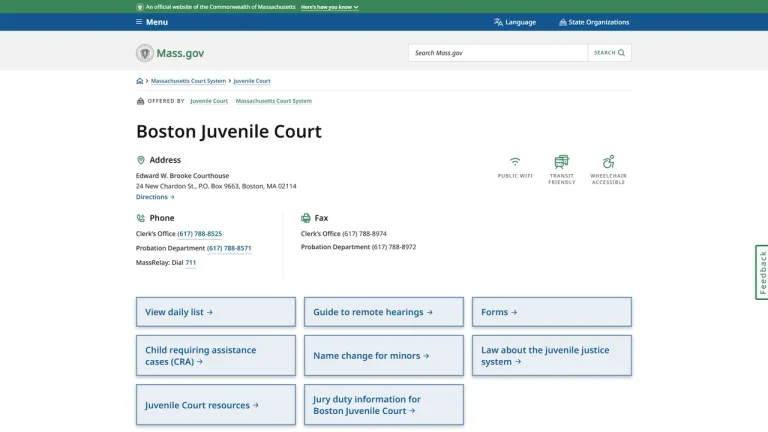
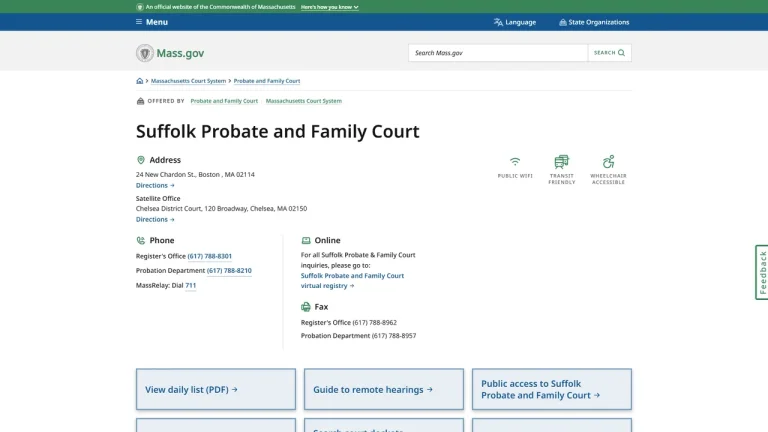
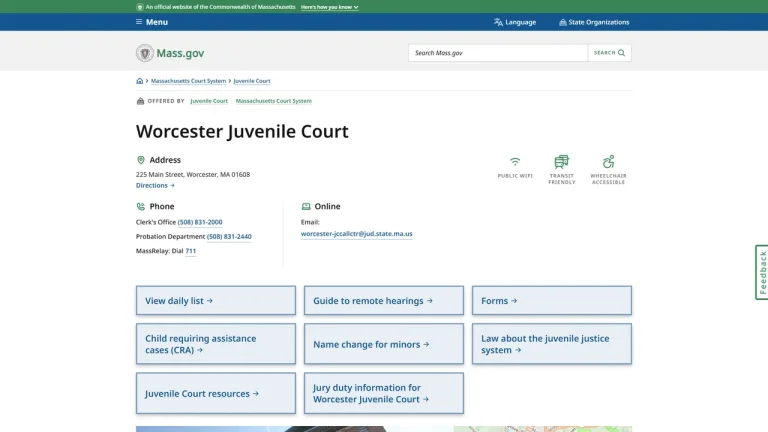
Operating alongside therapeutic diversion programs are two vital specialized departments of the Massachusetts Trial Court: the Probate and Family Court and the Juvenile Court. Under Mass. Gen. Laws ch. 215 § 3, the Probate and Family Court maintains division courthouses across all fourteen counties, exercising exclusive jurisdiction over divorce, child custody, alimony, paternity establishment, adoption, and probate administration. Meanwhile, the Juvenile Court Department operates dedicated regional facilities to protect children, resolve Care and Protection petitions, and address juvenile delinquency.
These specialized forums emphasize individualized case resolution, multidisciplinary treatment teams, and child-centered protections. Litigants, families, and defense counsel coordinate with probation officers, licensed clinicians, and the Massachusetts Department of Children and Families (DCF) to achieve restorative legal outcomes and maintain family stability across the Commonwealth.
Specialty Court Services, Entry Prerequisites, and Statutory Costs
| Service / Matter | Required Documents / Prerequisites | Statutory Fee (USD) | Processing Timeline |
|---|---|---|---|
| Recovery / Drug Court Referral | Clinical addiction assessment, probation screening, voluntary participant agreement | $0 (Statutorily court-sponsored therapeutic program) | Screening completed in 7 to 14 days; immediate docket transfer |
| Probate & Family Uncontested Divorce | Joint Petition (Ch. 208 § 1A), separation agreement, Rule 401 financial statements | $215 ($200 statutory filing fee + $15 surcharge) | Hearing within 30 to 60 days; judgment nisi finalized 90 days after approval |
| Child Requiring Assistance (CRA) Petition | Formal CRA application by parent, school truant officer, or guardian; behavioral history | $0 (Statutorily exempt from civil filing costs) | Intake conference within 10 days; preliminary judicial review within 30 days |
| Emergency 209A Abuse Prevention Order | Verified Complaint for Protection from Abuse, sworn incident affidavit of imminent harm | $0 (Free of charge by Commonwealth statutory mandate) | Ex parte same-day hearing; 10-day return hearing scheduled for full extension |
Critical Legal Deadlines & Statutes in Massachusetts
Practicing before Massachusetts specialty and domestic courts involves strict procedural timetables enacted to safeguard parental rights and procedural fairness. In divorce proceedings based on irretrievable marital breakdown under Mass. Gen. Laws ch. 208 § 1B, the law imposes a mandatory six-month waiting period from the initial complaint entry before the court may conduct a trial on the merits. In joint uncontested divorces under Mass. Gen. Laws ch. 208 § 1A, the court issues a judgment of divorce nisi 30 days following approval of the agreement, which becomes absolute exactly 90 days thereafter.
Child protection cases in the Juvenile Court enforce rigorous time constraints. When an emergency temporary custody order is issued under Mass. Gen. Laws ch. 119 § 24, the court must convene a formal 72-hour adversarial hearing to evaluate whether temporary custody must remain with the Commonwealth or return to the parents. For victims of domestic violence seeking protective intervention under Mass. Gen. Laws ch. 209A § 4, an emergency ex parte restraining order remains operative for a maximum of 10 business days, after which a contested evidentiary hearing must take place to determine further extensions.
Direct Court Navigation vs. Legal Representation
In Massachusetts family and juvenile courts, self-represented parties may access critical emergency mechanisms without retaining counsel. Any individual facing domestic abuse may file an emergency petition under Chapter 209A directly with the clerk's counter during regular hours, or through an on-call emergency judicial officer outside business hours, with no filing fees required. Parents may also file for child support modifications or submit Child Requiring Assistance (CRA) petitions directly with the Juvenile Court clerk.
However, when legal matters involve disputed child custody evaluations, multi-million-dollar marital estate divisions, parental rights terminations, or juvenile felony allegations, professional legal counsel is indispensable. Furthermore, entering an adult Recovery Court involves waiving certain constitutional trial rights in exchange for treatment diversion. Retaining an attorney or securing court-appointed counsel through the Committee for Public Counsel Services (CPCS) ensures that litigants understand compliance obligations and avoid accidental probation violations that could lead to incarceration.
Procedural Warnings & Public Scams
- Beware of unaccredited online paralegal services offering low-cost divorce packages that fail to meet Massachusetts financial disclosure requirements under Supplemental Probate Court Rule 401, which can lead to dismissal of the petition.
- Never pay third-party companies promising guaranteed entry into a Massachusetts drug specialty court or guaranteed expungement of criminal records, as placement depends strictly on judicial approval and clinical screening.
- Be cautious of phone scams demanding payments to resolve juvenile warrants or child support enforcement actions; official child support payments are managed solely through the Massachusetts Department of Revenue (DOR) Child Support Enforcement Division.
- Do not ignore 209A protective order hearings; failing to appear at the 10-day extension hearing will routinely result in the order being granted against you for up to a full year, impacting parental access and firearm ownership rights.
Frequently Asked Questions
What is a Massachusetts Recovery Court and who is eligible?
A Massachusetts Recovery Court is a specialized judicial track for individuals facing criminal charges driven by substance use disorders. Eligibility requires clinical addiction screening, legal screening by prosecutors and defense counsel, and voluntary agreement to adhere to rigorous court supervision and treatment.
What issues are handled by the Massachusetts Probate and Family Court?
Pursuant to Mass. Gen. Laws ch. 215 § 3, the Probate and Family Court resolves divorce, child support, child custody and parenting time, paternity, spousal support, adoption, guardianship, name changes, and the administration of wills and estates.
Are Massachusetts Juvenile Court proceedings open to the public?
Generally, Massachusetts Juvenile Court hearings and records concerning delinquency, child welfare, and Care and Protection matters are closed to the general public to protect the privacy and confidentiality of minors, except in specific Youthful Offender indictments.
Does it cost money to file an emergency restraining order in Massachusetts?
No. Under Mass. Gen. Laws ch. 209A § 4, filing a Complaint for Protection from Abuse is completely free of charge in all Massachusetts courts, with no entry fees, surcharge fees, or service costs assessed to the applicant.
What is a Child Requiring Assistance (CRA) case?
A CRA case is a proceeding in the Massachusetts Juvenile Court under Mass. Gen. Laws ch. 119 § 39E that assists families and schools with children who repeatedly run away, miss school (truancy), or fail to obey lawful parental directives, providing community-based support services rather than criminal penalties.