
Recorder of Deeds in Pennsylvania
Access Pennsylvania Recorder of Deeds resources across all sixty-seven counties to verify property titles, record mortgages, and access public land records. Whether transferring real estate, filing mortgage satisfactions, or conducting genealogical deed searches, county recording offices provide authoritative documentation. Explore our verified statewide directory below to connect directly with your local county Recorder of Deeds office.

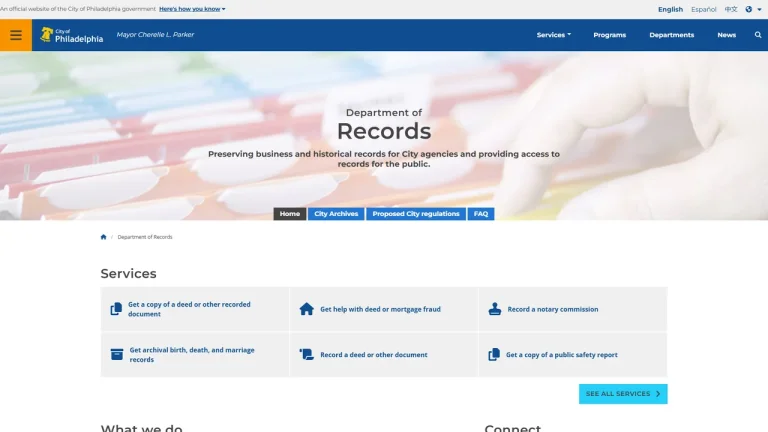
Philadelphia Department of Records - Philadelphia, PA

Pennsylvania Land Records and the Office of the Recorder of Deeds
The Office of the Recorder of Deeds serves as the official repository for real property records and public land instruments across all 67 counties in the Commonwealth of Pennsylvania. As an elected county constitutional officer established under the Pennsylvania Constitution and governed by the Pennsylvania County Code, the Recorder of Deeds is charged with recording, indexing, and permanently preserving documents that affect title to real estate. From major metropolitan hubs like Philadelphia and Allegheny County to rural jurisdictions, these county offices protect real property ownership throughout the Commonwealth.
The Recorder of Deeds maintains permanent public archives encompassing residential deeds, commercial conveyances, mortgages, mortgage satisfactions, easements, rights-of-way, subdivision plans, and powers of attorney. Recording these documents creates constructive public notice of ownership interests, establishes legal claim priority, and safeguards property rights against subsequent claims. In addition, many county recorders archive military discharge records (Form DD-214) free of charge to protect veterans' benefits under Commonwealth law.
Navigating the Recorder of Deeds requires understanding Pennsylvania's specific real estate recording statutes and local county formatting standards. Instruments presented for recording must feature proper acknowledgments, legal property descriptions, uniform parcel identifiers where required, and applicable state and local transfer tax payments to ensure valid recordation on the county land index.
Real Estate Recording Services, Document Standards, and Statutory Fees
| Service / Matter | Required Documents / Prerequisites | Statutory Fee (USD) | Processing Timeline |
|---|---|---|---|
| Standard Residential Deed Recording | Original executed deed, certificate of residence, UPI verification, REV-183 form | $60.00 - $110.00 base fee + transfer taxes | Same-day to 5 business days |
| Mortgage Recording | Executed mortgage instrument, complete legal description, notarized acknowledgment | $70.00 - $130.00 base fee | 1 to 3 business days |
| Mortgage Satisfaction Piece | Original executed satisfaction document, original mortgage book and page references | $50.00 - $75.00 | 1 to 5 business days |
| Certified Copy of Recorded Deed | Written request, grantor/grantee name, instrument number or deed book page | $10.00 - $25.00 per instrument | Immediate at counter or 2 to 5 days by mail |
Critical Legal Deadlines & Statutes in Pennsylvania
Real estate transactions and document recordation in Pennsylvania operate under foundational statutory mandates set forth in Title 21 of the Pennsylvania Statutes. Under Pennsylvania's recording priority statute, codified at 21 P.S. § 351, all deeds, conveyances, and titles concerning real property must be recorded in the county where the property is located. Pennsylvania operates as a race-notice recording jurisdiction; failure to record an instrument promptly renders the conveyance fraudulent and void against any subsequent bona fide purchaser or mortgagee who records first without notice of the unrecorded document.
When a mortgage loan is fully satisfied, lenders are subject to strict statutory deadlines under the Pennsylvania Mortgage Satisfaction Act, codified at 21 P.S. § 721-6. Lenders must record a formal satisfaction piece in the county Recorder of Deeds office within 60 days of receiving full payoff and written request. Failure to record timely satisfaction subjects the lender to statutory penalties and damages under 21 P.S. § 721-7. Furthermore, real estate transfers are subject to the Pennsylvania Realty Transfer Tax Act pursuant to 72 P.S. § 8101-C, requiring payment of state transfer tax alongside local municipal and school district transfer taxes at the time the instrument is presented for recording. In participating counties, parcel identification verification must comply with the Uniform Parcel Identifier Law under 21 P.S. § 338.
Direct Agency Access vs. Legal Counsel
Homeowners, title researchers, and members of the public can directly access the Office of the Recorder of Deeds for many administrative and investigative matters. Property owners can obtain certified copies of their own recorded deeds, verify that a mortgage satisfaction piece has been properly filed after paying off a home loan, inspect public land records, or review historical property transfers without retaining an attorney. Many Pennsylvania county recording offices provide public computer terminals and online subscription portals for direct document viewing.
However, when real estate matters involve legal disputes, title defects, or complex conveyances, retaining a licensed Pennsylvania real estate attorney is critical. Resolving clouds on title, boundary disputes, unrecorded easements, or fraudulent deeds requires formal legal action in the Court of Common Pleas, such as an action to quiet title or deed reformation. County Recorders of Deeds are purely ministerial administrative recording officers; they cannot examine titles for marketability, determine property boundaries, draft deeds, or advise property owners on transfer tax exemption strategies.
Red Flags & Public Safety Warnings
- Deed Copy Solicitations: Beware of deceptive letters mailed to new homeowners offering to provide a copy of their deed for $80 to $100; official certified deed copies can be obtained directly from your county Recorder of Deeds for a fraction of that cost.
- Deed Fraud & Title Theft: Protect your property by enrolling in free county property fraud alert notification programs where offered, which notify owners whenever a deed, mortgage, or lien is recorded against their parcel.
- Unrecorded Deeds: Never keep original, signed deeds in personal storage without immediate recording; delayed recording risks loss of ownership priority under Pennsylvania's race-notice statute 21 P.S. § 351.
- Unverified Online Intermediaries: Do not submit sensitive property documents or credit card information to unaccredited third-party document portals charging excessive processing surcharges above statutory recording fees.
Frequently Asked Questions
How do I get a certified copy of my deed in Pennsylvania?
You can obtain a certified copy of your deed by visiting your county Recorder of Deeds office in person, submitting a written request by mail, or ordering through the county's official online land records system.
What is the Realty Transfer Tax in Pennsylvania?
Pennsylvania levies a 1% statewide transfer tax on the value of transferred real estate, which is combined with local municipal and school district taxes, typically totaling 2% or more depending on the locality.
What does Pennsylvania's race-notice recording law mean?
Under Pennsylvania law, an unrecorded deed or mortgage is void against a subsequent purchaser who purchases the property for value without notice and records their deed first in the county Recorder of Deeds office.
How long does a mortgage company have to record a satisfaction in Pennsylvania?
Under the Pennsylvania Mortgage Satisfaction Act, a lender must record a formal satisfaction piece within 60 days of receiving full mortgage payoff and written notice from the mortgagor.
Does the Recorder of Deeds perform title searches for the public?
No, the Recorder of Deeds provides public access to land records but office personnel do not perform title searches or certify whether a property title is marketable and free of liens.