
Legal Resources in Pennsylvania
Navigating legal resources across Pennsylvania requires understanding the Commonwealth administrative framework and statutory access guidelines. Our comprehensive directory provides direct access to state court dockets, vital records offices, open records officers, and regulatory agencies statewide. Browse the verified listings below to find official contact information and filing procedures.



City of Harrisburg Bureau of Financial Management - Harrisburg, PA
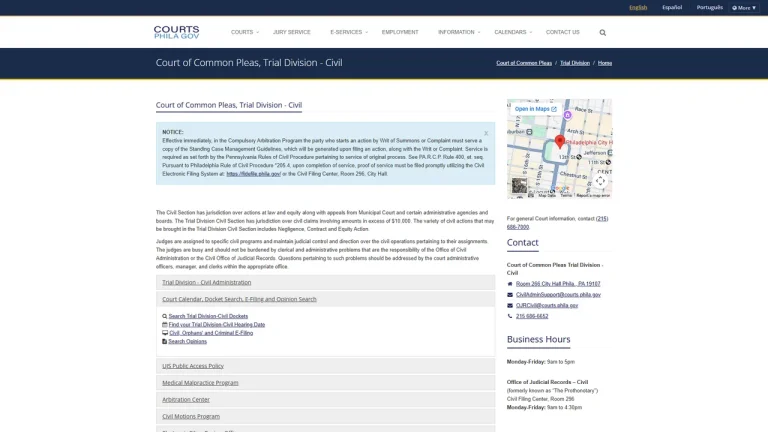
Philadelphia Civil Court - Philadelphia, PA

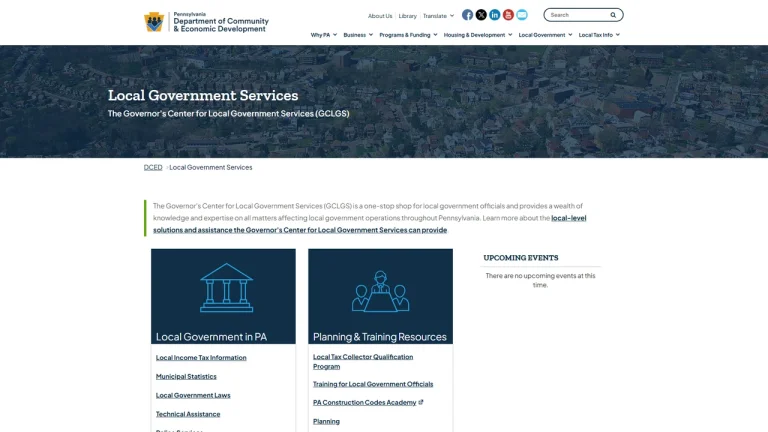
Governor's Center for Local Government Services - Pittsburgh, PA




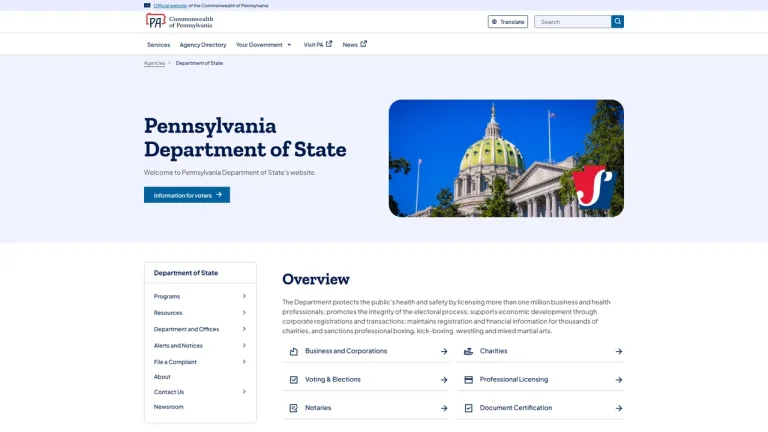
State Board of Social Workers, Marriage & Family Therapists & Professional Counselors - Harrisburg, PA
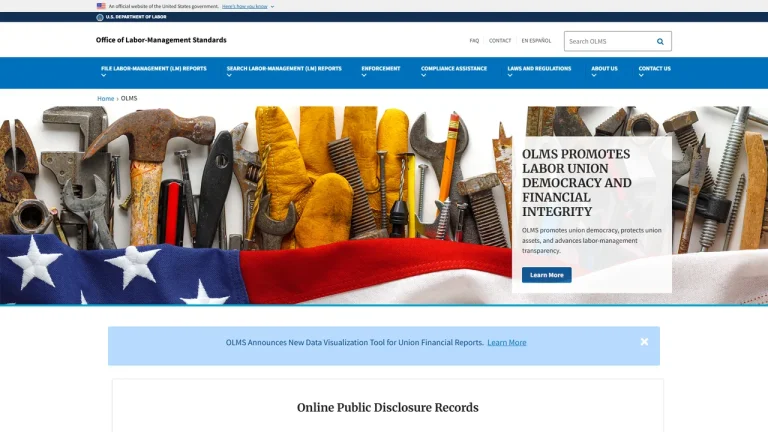
U.S. Department of Labor - Office of Labor-Management Standards - Philadelphia, PA
Philadelphia Police Neighborhood Services Unit - Philadelphia, PA
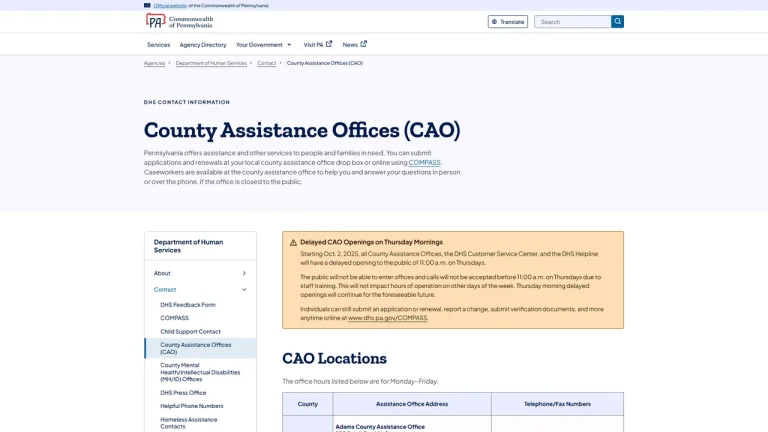
Philadelphia County Assistance Office: Boulevard District - Philadelphia, PA
The Commonwealth of Pennsylvania Legal and Administrative Structure
The Commonwealth of Pennsylvania maintains an integrated legal and administrative network coordinated from the State Capitol in Harrisburg and deployed across all 67 counties. From large metropolitan legal centers in Philadelphia and Pittsburgh to rural county seats, public legal resources enable residents, businesses, and legal professionals to access official judicial filings, statutory archives, and state executive services.
Pennsylvania public legal administration is organized across three constitutional branches: the executive departments under the Governor of Pennsylvania, the Unified Judicial System (UJS) under the Supreme Court of Pennsylvania, and the General Assembly. Key administrative operations include vital records management through the Pennsylvania Department of Health, business entity registrations via the Pennsylvania Department of State, and driver and motor vehicle compliance managed by PennDOT.
Engaging directly with certified state and county legal institutions ensures compliance with the Pennsylvania Consolidated Statutes and localized county rules. Our directory centralizes physical courthouse locations, administrative open records contacts, online registry portals, and detention facilities across the Commonwealth to simplify your legal research and filing requirements.
Pennsylvania Public Legal Resource Access and Fee Schedules
| Service / Matter | Required Documents / Prerequisites | Statutory Fee (USD) | Processing Timeline |
|---|---|---|---|
| Certified Vital Record Copy (Birth/Death) | Valid government photo identification, signed application, direct relationship proof | $20 statutory state fee | 10 - 20 business days (standard mail) or expedited online |
| Right-to-Know Law (RTKL) Records Request | Standard Pennsylvania Office of Open Records (OOR) application form | Free inspection ($0.25 per page duplication) | 5 business days mandatory statutory response window |
| Unified Judicial System (UJS) Docket Search | Case participant name, docket number, or court jurisdiction identifier | Free online search ($5 - $25 for certified record copies) | Instant online access via UJS Web Portal |
| Corporate Entity Good Standing Certificate | Pennsylvania Department of State corporate entity identification number | $40 statutory certification fee | Instant electronic download or 3 - 5 business days |
Critical Legal Deadlines & Statutes in Pennsylvania
Statutory timelines in Pennsylvania strictly govern public records access, administrative appeals, and actions against public entities. Under the Pennsylvania Right-to-Know Law, codified at 65 P.S. § 67.901, state and local government agencies must respond to a formal public records request within 5 business days of receipt. An agency may invoke a 30-calendar-day extension under 65 P.S. § 67.902 only with formal written notice citing specific statutory justifications such as redaction requirements or legal review.
Appealing an adverse administrative ruling is subject to mandatory jurisdictional limits. Under the Pennsylvania Administrative Agency Law, codified at 2 Pa. C.S. § 702, an aggrieved party must file a petition for review in the Commonwealth Court of Pennsylvania within 30 days of the mailing date of the final agency order, pursuant to 42 Pa. C.S. § 5571. Missing this 30-day jurisdictional window permanently forfeits your right to judicial review.
For tort or personal injury claims involving Commonwealth or municipal agencies, Pennsylvania enforces mandatory preliminary notification rules. Under 42 Pa. C.S. § 5522, a claimant must provide formal written notice of intent to file a claim within 6 months of the incident, while general tort statutes of limitations under 42 Pa. C.S. § 5524 enforce a strict two-year filing period.
Direct Agency Access vs. Retaining Legal Counsel
Citizens and business operators can independently manage many administrative interactions across the Commonwealth. Direct access is ideal for tasks such as ordering birth certificates from the Pennsylvania Department of Health in New Castle, searching statewide court dockets on the UJS Web Portal, filing initial business formations through the Department of State online portal, or submitting routine open records inquiries to municipal open records officers.
However, retaining a licensed Pennsylvania attorney is essential when administrative proceedings become adversarial. When a Commonwealth licensing board initiates professional license disciplinary proceedings through the Bureau of Professional and Occupational Affairs (BPOA), or when the Department of Revenue issues formal tax assessments, an attorney ensures evidentiary rules are observed. Legal counsel protects your procedural due process rights, manages formal discovery, and builds a comprehensive evidentiary record necessary for subsequent appellate review in the Commonwealth Court.
Red Flags & Public Resource Protections
- Deceptive Third-Party Filing Sites: Be cautious of commercial websites that charge high surcharges ($50 to $120) to download standard state forms or vital records applications that are available directly from Commonwealth agencies for minimal statutory fees.
- Spoofed Government Renewal Notices: Fraudulent organizations frequently mail misleading invoices to business owners demanding mandatory annual minutes or corporate certificates. Legitimate filings are processed exclusively through the Pennsylvania Department of State.
- Unverified Jail Inmate Bond Solicitations: Ensure that bail arrangements for individuals held in county correctional facilities or state correctional institutions (PADOC) are processed through the official county clerk of courts or licensed surety agents registered with the Pennsylvania Insurance Department.
- Unofficial Court Docket Databases: Access case transcripts and court histories strictly through the Pennsylvania Unified Judicial System domain (pacourts.us) to prevent accessing outdated or incomplete public docket entries.
Frequently Asked Questions
Where is the headquarters of Pennsylvania state legal administration located?
The central headquarters for Pennsylvania government agencies and the supreme judicial leadership are located in the Capitol Complex in Harrisburg. However, the Supreme Court of Pennsylvania and appellate courts hold regular court sessions in Harrisburg, Philadelphia, and Pittsburgh.
How do I obtain certified birth or death records in Pennsylvania?
Certified vital records are issued by the Pennsylvania Department of Health, Bureau of Health Statistics and Registries, headquartered in New Castle. Applications can be submitted online through the state-approved vital records vendor or mailed directly to the bureau with the statutory $20 fee and required government identification.
What is the role of the Pennsylvania Office of Open Records?
The Pennsylvania Office of Open Records (OOR) is an independent state agency in Harrisburg that enforces the Right-to-Know Law. The OOR issues binding final determinations when state or local government agencies deny public access to public records or agency data.
How can the public verify an attorney license in Pennsylvania?
Attorney licensure is regulated by the Disciplinary Board of the Supreme Court of Pennsylvania. The public can verify an attorney active status, bar number, disciplinary history, and registered business address using the consumer search tool on the Disciplinary Board website.
What is the Unified Judicial System Web Portal?
The Pennsylvania Unified Judicial System (UJS) Web Portal is the state official public repository for court information. It provides public access to case dockets, court calendars, and appellate opinions across Magisterial District Courts, Common Pleas Courts, the Commonwealth Court, the Superior Court, and the Supreme Court of Pennsylvania.