
Wrongful Termination Lawyers in Atlanta
Retaining an experienced Atlanta wrongful termination lawyer protects your career and legal rights. Dedicated counsel navigates complex employment regulations, pursuing fair severance and out-of-court settlements to avoid prolonged litigation. Explore our curated directory below to schedule a case review with a trusted Atlanta advocate.

Law Offices of Attorney Arnold J. Lizana III - Atlanta, GA

The Devadoss Law Firm PLLC - Atlanta, GA

Berman Fink Van Horn P.C. - Atlanta, GA

Beal Sutherland Berlin and Brown - Atlanta, GA
Allen Lightcap, Attorney at Law - Atlanta, GA

Anthony Dawkins, P.C. - Atlanta, GA
Williams Oinonen LLC - Atlanta, GA

The Forsythe Law Firm, LLC - Atlanta, GA
Moeller Barbaree LLP - Atlanta, GA
Martin and Martin, LLP - Atlanta, GA

Hasson Law Group LLP - Atlanta, GA
Hawkins Parnell and Young, LLP - Atlanta, GA
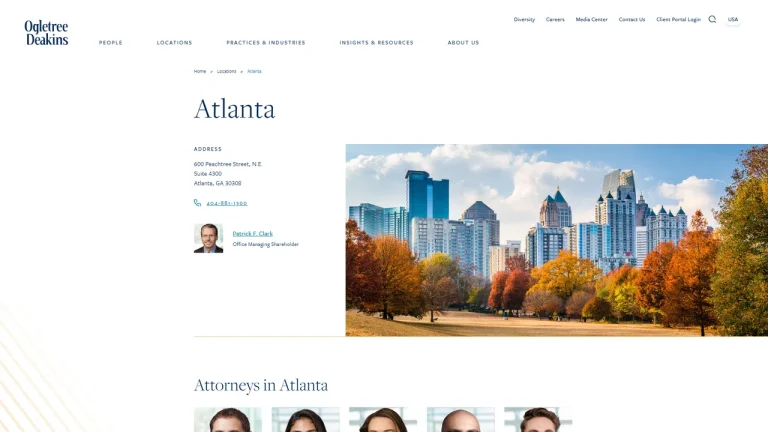
Ogletree Deakins - Atlanta, GA
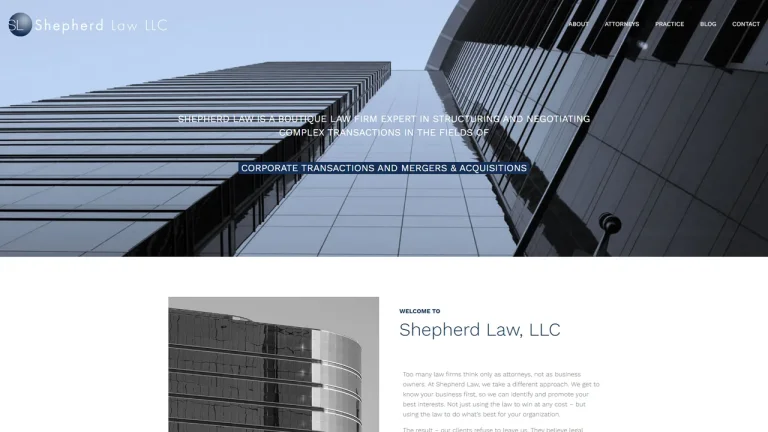
Shepherd Law, LLC - Atlanta, GA
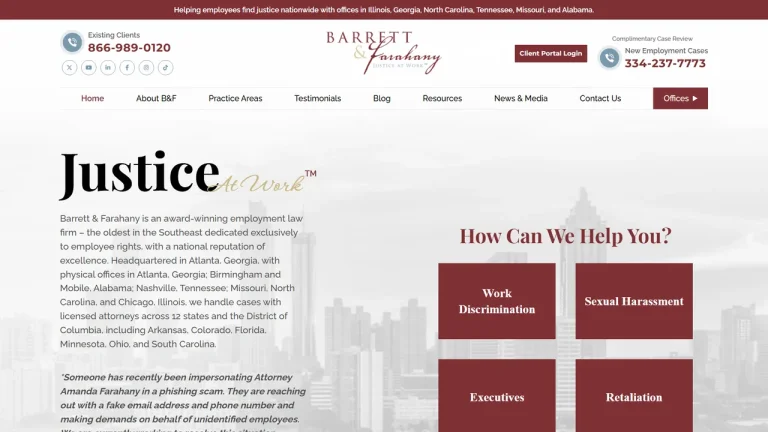
Barrett & Farahany - Atlanta, GA

Fidlon Legal, PC - Atlanta, GA

Feldman Legal Group - Atlanta, GA

Buckley Bala Wilson Mew LLP - Atlanta, GA
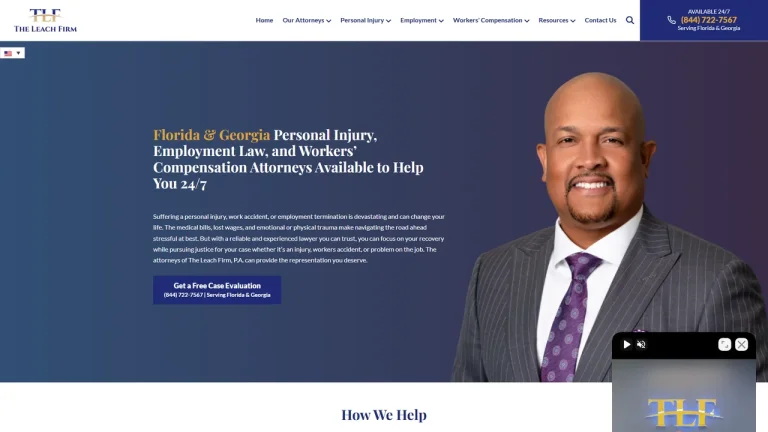
The Leach Firm - Atlanta, GA

The Law Office of Anthony Hall, LLC - Atlanta, GA

Rollins Law Group, LLC - Atlanta, GA

Leeds Law Firm - Atlanta, GA

Southworth PC - Atlanta, GA
Navigating Wrongful Termination in Atlanta and Fulton County
Georgia enforces a strict at-will employment doctrine, making unlawful discharge claims exceptionally complex. Wrongful termination litigation originating in Atlanta is primarily adjudicated in the Fulton County Superior Court or DeKalb County Superior Court, or filed in the U.S. District Court for the Northern District of Georgia, located in downtown Atlanta.
Disputes frequently emerge across key economic centers, from Fortune 500 corporate offices in Buckhead and tech enterprises in Midtown to logistics and transportation hubs surrounding Hartsfield-Jackson International Airport. Skilled employment litigators understand the legal standards of the Atlanta Judicial Circuit and evaluate internal company policies, performance records, and termination notices to establish unlawful employer conduct.
Engaging a local attorney ensures immediate preservation of vital workplace communications, digital correspondence, and witness statements. Atlanta employment lawyers routinely negotiate executive severance packages and navigate administrative filings to secure financial recovery and protect professional reputations.
Wrongful Termination Case Scenarios and Legal Investment Profiles
| Case Scenario | Fee Structure | Estimated Cost (USD) | Key Cost Determinants |
|---|---|---|---|
| Executive Severance & Release Negotiation | Flat Fee / Hourly Rate | $1,500 - $4,500 ($350 - $600/hr) | Executive compensation package, equity vesting, non-compete covenants. |
| Retaliatory Discharge (Whistleblower / OSHA) | Contingency / Hybrid | 33.3% - 40% of recovery | Protected activity documentation, temporal proximity, internal compliance reports. |
| Breach of Written Employment Contract | Hourly Retainer | $3,500 - $10,000+ retainer ($300 - $550/hr) | Contractual termination clauses, liquidated damages provisions, mitigation of damages. |
| Federal Statutory Termination (Title VII / FMLA) | Contingency Fee | 33.3% - 40% of recovery | EEOC determination status, employer defense counsel posture, back pay calculations. |
Critical Legal Deadlines & Statutes in Georgia
Under O.C.G.A. § 34-7-1, an employment relationship with no fixed duration is terminable at will by either party with or without cause. However, statutory exceptions protect employees from retaliatory and discriminatory discharges. When a termination involves discrimination under federal civil rights statutes, an administrative charge must be submitted to the Equal Employment Opportunity Commission (EEOC) within 180 days under 42 U.S. Code § 2000e-5(e)(1).
For termination actions involving retaliatory discharge under the Family and Medical Leave Act, claimants must initiate legal proceedings within two years under 29 U.S. Code § 2617(c), or within three years if the employer committed a willful violation. When an unlawful termination violates an express written employment contract, Georgia law establishes a six-year statute of limitations pursuant to O.C.G.A. § 9-3-24, whereas oral agreements carry a four-year limit under O.C.G.A. § 9-3-25. Public sector employees seeking whistleblower protection must file within one year under O.C.G.A. § 45-1-4.
Magistrate Court Limits vs. Federal and Superior Court Litigation
The Fulton County Magistrate Court and DeKalb County Magistrate Court possess jurisdiction over small civil monetary controversies capped at $15,000 pursuant to O.C.G.A. § 15-10-2. While appropriate for recovering an isolated final paycheck or unreimbursed business expenses, Magistrate Courts cannot adjudicate complex wrongful termination lawsuits. They lack jurisdiction over federal employment statutes and cannot grant equitable remedies such as reinstatement or front pay.
Challenging an unlawful dismissal requires comprehensive discovery, electronic records subpoenas, and deposition testimony under the Federal Rules of Civil Procedure or the Georgia Civil Practice Act. Self-represented litigants facing seasoned corporate defense teams routinely face summary dismissal under the at-will employment doctrine. Retaining an experienced employment litigator ensures that statutory exceptions are properly pled, evidence is effectively preserved, and legal rights are fully asserted.
Red Flags When Selecting an Atlanta Wrongful Termination Lawyer
- Guaranteeing substantial financial recoveries before thoroughly examining employment contracts, severance proposals, and personnel records.
- Failing to advise clients of the rigid 180-day EEOC charge filing deadline for claims involving discrimination or civil rights retaliation.
- Demanding non-refundable upfront fees without offering a clear engagement agreement explaining contingency or hourly fee frameworks.
- Lack of substantive litigation and trial experience in the U.S. District Court for the Northern District of Georgia.
Frequently Asked Questions
What qualifies as wrongful termination under Georgia law?
Because Georgia is an at-will state, termination is only wrongful if it violates specific federal or state statutes-such as anti-discrimination laws, wage protections, or whistleblower statutes-or constitutes a direct breach of a written employment contract.
How long do I have to file an unlawful termination lawsuit in Atlanta?
Deadlines vary significantly depending on the legal theory. Discrimination-related claims require an EEOC charge within 180 days, FMLA violations must be filed within two to three years, and written contract breaches carry a six-year limit under Georgia law.
Should I sign a severance agreement before consulting an attorney?
No. Signing a severance agreement typically requires executing a comprehensive release of all legal claims against the employer. An attorney can review the agreement to evaluate potential claims and negotiate improved severance terms or extended benefits.
What damages can be recovered in an Atlanta wrongful termination claim?
Depending on the applicable statutory framework, recoverable damages may include back pay, front pay, value of lost benefits, compensatory damages for emotional distress, punitive damages, and statutory attorney fees.
Can an employer fire an employee for reporting corporate misconduct?
Under specific federal statutes and state whistleblower provisions for public employees, retaliation against an individual who reports illegal corporate practices, financial fraud, or workplace safety hazards is strictly prohibited.