
Workplace Discrimination Lawyers in Baltimore
Find top workplace discrimination lawyers in Baltimore, Maryland. Dedicated employment attorneys hold employers accountable, fight bias, and secure justice. Retaining experienced Baltimore legal counsel ensures strict adherence to MCCR and EEOC deadlines and resolves workplace disputes through structured negotiation or aggressive litigation. Browse our directory below to schedule a consultation with an established Baltimore employment attorney today.
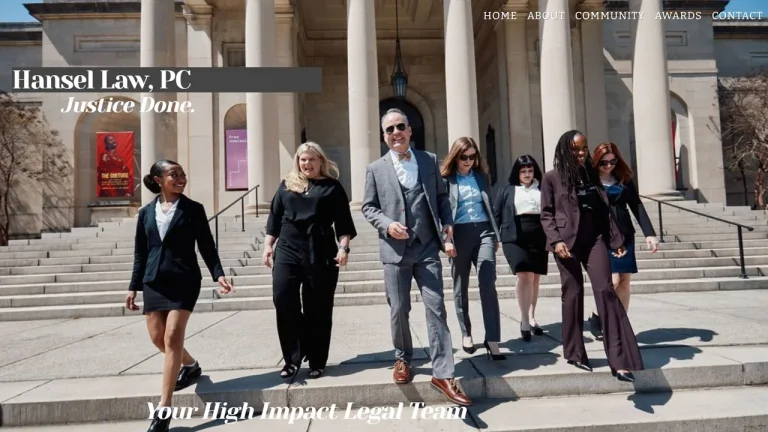
Hansel Law, PC - Baltimore, MD
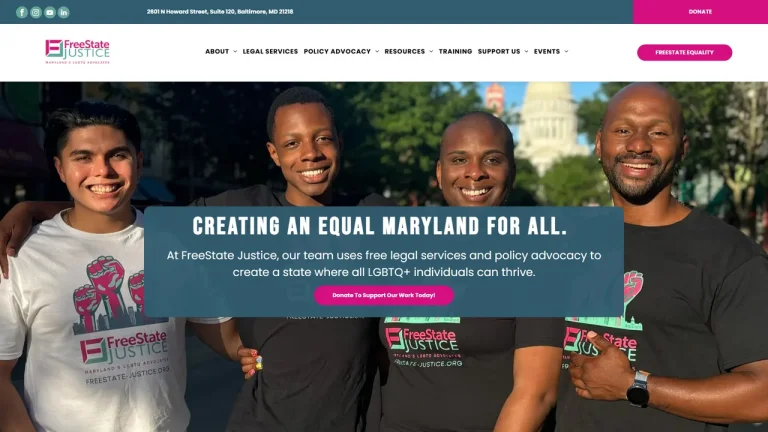
FreeState Justice - Baltimore, MD
Saul Ewing LLP - Baltimore, MD
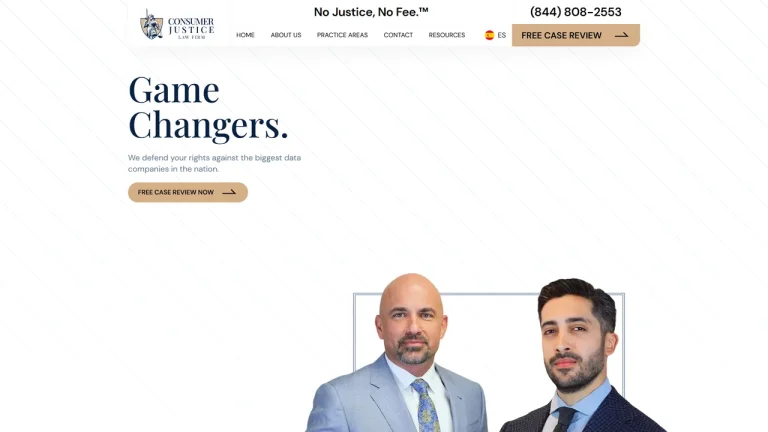
Consumer Justice Law Firm - Baltimore, MD
Gallagher LLP - Baltimore, MD

KSC Law - Baltimore, MD
Womble Bond Dickinson (US) LLP - Baltimore, MD

Lawrence Law, LLC - Baltimore, MD

Nathan & Kamionski LLP - Baltimore, MD

Goldberg Segalla - Baltimore, MD
Kiernan Trebach LLP - Baltimore, MD
Ballard Spahr LLP - Baltimore, MD
The Law Office of Curtis Cooper LLC - Baltimore, MD
Schlachman, Belsky, Weiner & Davey, P.A. - Baltimore, MD
Fedder & Janofsky LLC - Baltimore, MD
DLA Piper LLP - Baltimore, MD
Anderson Coe & King, LLP - Baltimore, MD
Karpinski, Cornbrooks & Karp, P.A. - Baltimore, MD
HKM Employment Attorneys LLP - Baltimore, MD
Shawe & Rosenthal - Baltimore, MD
Wilson Elser - Baltimore, MD
Smithey Law Group LLC - Baltimore, MD
Gordon Feinblatt LLC - Baltimore, MD
Combating Employment Discrimination Throughout Baltimore
Workplace discrimination undermines employee dignity and disrupts careers across Baltimore's major economic sectors, including healthcare networks, biotech research centers, municipal agencies, and hospitality venues. Employees in Baltimore City have a right to equal treatment free from discrimination based on race, sex, age, disability, religion, sexual orientation, or gender identity.
Workplace bias claims in Baltimore originate before administrative enforcement agencies. The Maryland Commission on Civil Rights (MCCR) is headquartered in downtown Baltimore at 6 Saint Paul Street, while the federal Equal Employment Opportunity Commission (EEOC) operates its Baltimore Field Office at the G.H. Fallon Federal Building at 31 Hopkins Plaza. Lawsuits proceed to the Baltimore City Circuit Court on Calvert Street or the U.S. District Court for the District of Maryland on Lombard Street.
Retaining an experienced Baltimore workplace discrimination lawyer is crucial to overcoming complex employer defenses. Local counsel conducts thorough factual investigations, drafts detailed administrative charges, navigates statutory damage caps, and holds discriminatory employers accountable before state and federal juries.
Estimated Legal Costs and Retainer Schedules for Baltimore Discrimination Cases
| Case Scenario | Fee Structure | Estimated Cost (USD) | Key Cost Determinants |
|---|---|---|---|
| MCCR / EEOC Charge Drafting & Investigation | Hourly Retainer / Flat Fee | $2,000 - $5,500 | Witness statements, comparative employee records, administrative mediation participation. |
| Federal Title VII or ADA Discrimination Lawsuit | Contingency Fee (33.3% - 40%) | $7,500 - $20,000 (Advanced Expenses) | Electronic discovery (e-mails and personnel files), employer summary judgment defense. |
| Hostile Work Environment & Harassment Trial | Contingency Fee + Litigation Expenses | $15,000 - $40,000 (Expenses) | Psychological expert evaluations, deposition of corporate executives, multi-day jury trial. |
| Executive Severance & Pre-Suit Settlement Negotiation | Hourly / Contingency Percentage | $1,500 - $4,500 | High-value equity compensation, non-disparagement covenants, pre-charge resolution. |
Critical Legal Deadlines & Statutes in Maryland
Workplace discrimination claims in Baltimore are governed by overlapping state and federal civil rights statutes. Under the Maryland Fair Employment Practices Act, codified at Md. Code Ann., State Gov't § 20-606, employers are prohibited from failing or refusing to hire, discharging, or otherwise discriminating against any individual with respect to compensation or terms of employment based on protected characteristics.
Before initiating a civil lawsuit, employees must satisfy administrative exhaustion requirements. Under Md. Code Ann., State Gov't § 20-1004, an administrative complaint must be filed with the MCCR within 300 days of the alleged discrimination. Under federal law, 42 U.S. Code § 2000e-5 provides a dual-filing deadline of 300 days to submit a charge to the EEOC. For unlawful harassment claims under recent amendments to Maryland law, the state administrative filing window extends to 3.5 years from the date of the alleged incident.
Once the administrative agency issues a Right to Sue letter or the mandatory waiting period expires, judicial deadlines take effect. Pursuant to Md. Code Ann., State Gov't § 20-1013, a civil action alleging discrimination must be filed in court within two years from the date of the unlawful practice (or within three years for harassment claims). Under federal law, 42 U.S. Code § 2000e-5(f)(1) imposes a strict 90-day deadline to file a federal lawsuit after receiving an EEOC Notice of Right to Sue.
Small Claims Limits vs. Professional Representation in Baltimore
Under Md. Code Ann., Cts. & Jud. Proc. § 4-405, the Small Claims Division of the District Court of Maryland for Baltimore City handles small debt disputes up to $5,000. However, workplace discrimination claims can never be brought in small claims court. State and federal discrimination statutes require pre-suit administrative filing through the MCCR or EEOC, which small claims courts have no power to adjudicate.
Navigating employment discrimination pro se puts employees at a severe disadvantage. Corporate employers routinely deploy defense counsel to submit lengthy position statements designed to discredit unrepresented workers. If a claimant misses the 90-day federal filing window under 42 U.S. Code § 2000e-5(f)(1), their federal civil rights claims are permanently extinguished. A seasoned Baltimore workplace discrimination attorney knows how to uncover comparative data showing disparate treatment, defeat summary judgment motions in federal court, and secure damages for lost wages and emotional distress.
Red Flags When Hiring a Baltimore Workplace Discrimination Lawyer
- Missing the 90-day EEOC Right to Sue deadline: Federal courts strictly enforce the 90-day statutory window under 42 U.S. Code § 2000e-5(f)(1); any attorney who delays filing your complaint past this deadline permanently destroys your federal claim.
- Lack of familiarity with local MCCR and EEOC field offices: Ensure your counsel regularly files charges with the MCCR on Saint Paul Street and the EEOC Baltimore Field Office at Hopkins Plaza.
- Refusing to explain the burden of proving pretext: Beware of lawyers who promise quick settlements without explaining the McDonnell Douglas burden-shifting framework required to prove that the employer's stated reason was pretextual.
- Unclear cost-advancement agreements: Ensure your fee agreement clearly states whether the law firm advances deposition, transcript, and filing costs or requires upfront payments.
Frequently Asked Questions
What is the deadline for filing an employment discrimination charge in Baltimore?
Under Md. Code Ann., State Gov't § 20-1004 and federal law, you have 300 days from the discriminatory act to file with the MCCR or EEOC, though state harassment claims allow up to 3.5 years.
Where is the EEOC office located in Baltimore?
The EEOC Baltimore Field Office is located at the G.H. Fallon Federal Building, 31 Hopkins Plaza, Suite 1432, in downtown Baltimore.
What is the Maryland Commission on Civil Rights (MCCR)?
The MCCR is Maryland's state civil rights enforcement agency, headquartered at 6 Saint Paul Street in Baltimore, responsible for investigating violations of the Maryland Fair Employment Practices Act.
How long do I have to file a federal lawsuit after receiving a Right to Sue letter?
Under 42 U.S. Code § 2000e-5(f)(1), you have exactly 90 days from the date you receive the EEOC Notice of Right to Sue to file your lawsuit in federal court.
What damages can be recovered in a workplace discrimination case?
Claimants may recover back pay, front pay, compensatory damages for emotional distress, punitive damages, and statutory attorney's fees under state and federal law.