
Wage & Hour Lawyers in Boston
Resolving workplace wage disputes in Boston requires skilled legal advocacy to enforce Massachusetts mandatory treble damages and statutory protections. Experienced employment attorneys routinely secure back pay, overtime compensation, and misclassification remedies through pre-trial negotiations and mediation. Explore our verified directory below to schedule an initial consultation with a reputable Boston wage attorney.

Littler Mendelson P.C. - Boston, MA
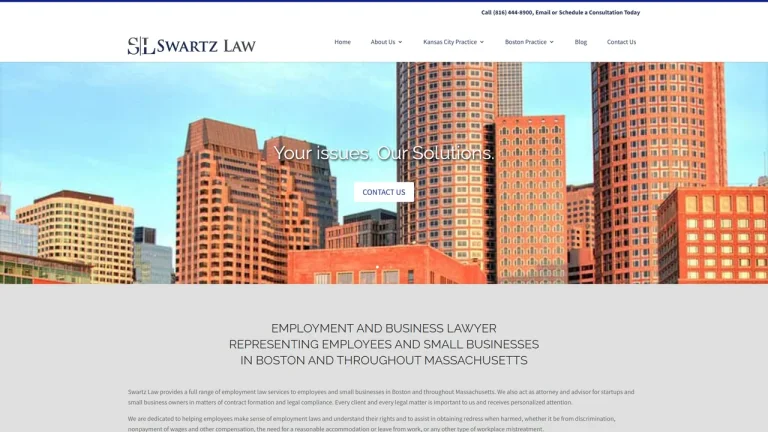
Swartz Law, LLC - Boston, MA
Feinberg, Dumont & Brennan - Boston, MA

Milligan Rona Duran & King LLC - Boston, MA
Ogletree Deakins - Boston, MA
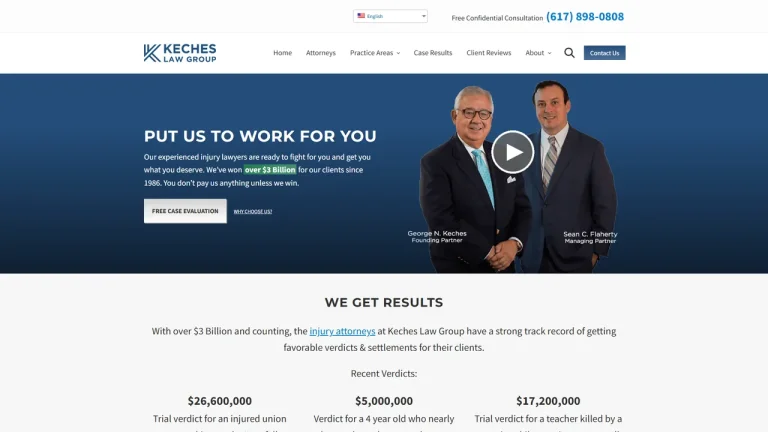
Keches Law Group - Boston, MA

Pierce Davis & Perritano LLP - Boston, MA

Hirsch Roberts Weinstein LLP - Boston, MA
Bello Welsh LLP - Boston, MA

Stephen Reich Law - Boston, MA
The Law Office Of Alan H. Crede - Boston, MA
Lichten & Liss-Riordan, P.C. - Boston, MA

Bond, Schoeneck & King PLLC - Boston, MA
Kavaja Law - Boston, MA

Todd & Weld LLP - Boston, MA
Pyle Rome Ehrenberg PC - Boston, MA
Rodman Employment Law - Boston, MA
Conforto Law Group, P.C. - Boston, MA

Melick & Porter, LLP - Boston, MA
Greene and Hafer LLC - Boston, MA
Barton Gilman LLP - Boston, MA

Rights Protection Law Group, PLLC - Boston, MA

Fox Rothschild LLP - Boston, MA
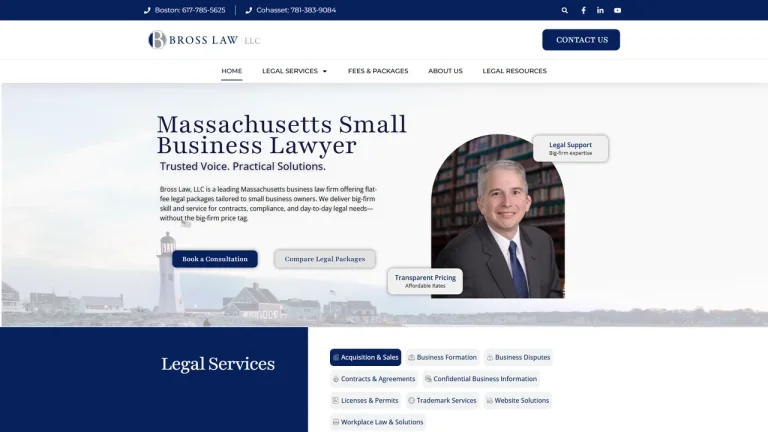
Bross Law, LLC - Boston, MA
Navigating Boston Wage & Hour Litigation and Local Workplace Protections
Employees and businesses operating across Boston must navigate one of the most stringent statutory wage frameworks in the nation. Whether dealing with tech corridors in the Seaport District, financial service firms along State Street, or the extensive hospitality sector in Back Bay and Downtown Crossing, wage disputes require strict adherence to local court procedures and state regulatory mandates. Retaining a dedicated Boston wage and hour lawyer ensures compliance with mandatory administrative filing steps and protects statutory rights in high-stakes compensation conflicts.
Jurisdiction over Boston employment wage claims is primarily exercised by the Suffolk County Superior Court located at the Suffolk County Courthouse on Pemberton Square, as well as the Boston Municipal Court Central Division housed within the Edward W. Brooke Courthouse on New Chardon Street. In matters involving federal Fair Labor Standards Act provisions alongside state claims, litigation proceeds before the U.S. District Court for the District of Massachusetts at the John Joseph Moakley U.S. Courthouse on Fan Pier Boulevard. Navigating these courtrooms demands deep procedural familiarity with local judicial rules and trial session management.
Before initiating private court litigation, workers in Boston are required to interface with the Massachusetts Attorney General's Fair Labor Division to obtain a formal right-to-sue authorization. Qualified legal counsel manages this exhaustion process seamlessly, coordinating evidence collection from Dorchester, Roxbury, South Boston, and neighboring metro employment centers to establish clear liability and calculate statutory damages before an employer conceals payroll records or dissipates assets.
Boston Wage & Hour Legal Fee Estimates
| Case Scenario | Fee Structure | Estimated Cost (USD) | Key Cost Determinants |
|---|---|---|---|
| Unpaid Overtime & Minimum Wage Claims | Contingency (Statutory Fee-Shifting) | $0 upfront (33.3% - 40% of recovery) | Clarity of timekeeping records, employer payroll compliance, and availability of statutory attorney fee awards. |
| Independent Contractor Misclassification | Contingency / Hybrid Retainer | $0 upfront or $3,000 - $7,500 retainer | Application of the three-prong ABC legal test, degree of employer behavioral control, and total misclassified earnings. |
| Executive Severance & Commission Disputes | Hourly Rate or Fixed Advisory Fee | $350 - $650 per hour ($2,500 - $6,000 initial retainer) | Complexity of executive compensation agreements, non-solicitation covenants, and deferred incentive equity packages. |
| Class & Collective Wage Litigation | Contingency (Court-Approved) | $0 upfront (Court-approved percentage) | Size of affected Boston workforce class, discovery scale across corporate databases, and contested defense motions. |
Critical Legal Deadlines & Statutes in Massachusetts
Wage compensation rights in Boston are governed by several key statutes enforced throughout Suffolk County. The Massachusetts Wage Act under Mass. Gen. Laws ch. 149, § 148 dictates that employers must pay earned wages, accrued vacation time, and earned commissions according to strict bi-weekly or weekly statutory schedules. Failure to pay on the designated pay date constitutes an immediate statutory violation.
Under Mass. Gen. Laws ch. 149, § 150, employees have a strict 3-year statute of limitations from the date of the violation to file a civil complaint in court. Crucially, this statute mandates the award of treble damages (triple back wages) and reasonable attorney's fees to prevailing employees, removing judicial discretion to waive liquidated damages. This statute also requires claimants to file a non-payment of wage complaint with the Massachusetts Attorney General's Fair Labor Division to obtain a statutory right-to-sue letter prior to entering civil court.
Worker classification disputes are governed by Mass. Gen. Laws ch. 149, § 148B, which enforces an uncompromising three-prong ABC test requiring the employer to prove an individual is free from control, performs work outside the usual course of business, and is customarily engaged in an independent trade. Overtime compensation is protected under Mass. Gen. Laws ch. 151, § 1A, establishing a right to one and one-half times the regular rate for hours worked beyond 40 per workweek.
Small Claims Limits vs. Professional Wage Representation
In Massachusetts, the small claims division handles civil disputes where the amount in controversy does not exceed $7,000, as codified under Mass. Gen. Laws ch. 218, § 21. While an unrepresented employee can technically file an unpaid wage claim within the small claims sessions of the Boston Municipal Court Central Division or community divisions like the Dorchester Municipal Court, pursuing wage claims without an attorney often results in severe financial losses.
Because the Massachusetts Wage Act mandates automatic treble damages, an initial claim for $2,500 in unpaid tips or overtime immediately becomes a $7,500 claim, exceeding the small claims jurisdictional ceiling. Moving into the regular civil session of the Boston Municipal Court or Suffolk County Superior Court unlocks full pre-trial discovery, depositions, and mandatory defendant-paid attorney fees under Mass. Gen. Laws ch. 149, § 150. Hiring legal counsel ensures that complex accounting records are subpoenaed and corporate officers are held personally liable, an outcome rarely achieved through informal small claims dockets.
Red Flags When Hiring a Boston Wage & Hour Attorney
- Demanding large upfront non-refundable retainers for straightforward wage claims, ignoring that Massachusetts law provides for mandatory fee-shifting paid by non-compliant employers.
- Pressuring an employee to accept a quick settlement for actual back pay alone without computing mandatory treble damages and statutory interest.
- Failing to file the required administrative notice with the Massachusetts Attorney General's Fair Labor Division prior to filing a complaint in Suffolk County courts.
- Lacking trial experience in the Edward W. Brooke Courthouse or the Moakley Federal Courthouse regarding local wage discovery procedures.
Frequently Asked Questions
Are treble damages mandatory in Boston wage lawsuits?
Yes. Under Massachusetts General Laws Chapter 149 Section 150, courts are required to award treble damages (three times the actual unpaid wages) along with litigation costs and reasonable attorney fees whenever an employer violates the state Wage Act, regardless of whether the employer acted in good faith.
Do I need to notify the Massachusetts Attorney General before suing an employer?
Yes. Employees must submit a formal complaint to the Massachusetts Attorney General Fair Labor Division. Once the Attorney General issues a right-to-sue authorization or declines to take direct enforcement action, your attorney can immediately initiate formal civil proceedings in the appropriate Boston court.
How does Massachusetts law determine if a Boston worker is an independent contractor?
Massachusetts applies a strict statutory three-prong test under General Laws Chapter 149 Section 148B. An employer must prove the worker is free from control and direction, performs services outside the employer usual course of business, and is customarily engaged in an independently established business. If the employer fails any single prong, the worker is classified as an employee entitled to wage protections.
Can individual business owners in Boston be held personally liable for unpaid wages?
Yes. Under the Massachusetts Wage Act, corporate officers, including presidents, treasurers, and managers who exercise operational control over payroll, are subject to personal liability alongside the company for unpaid minimum wages, overtime, and earned vacation pay.
What is the statute of limitations for filing an unpaid overtime claim in Boston?
The statute of limitations for Wage Act claims in Massachusetts is three years from the date the compensation violation occurred. Because the administrative filing with the Attorney General tolls the clock temporarily, consulting a Boston employment attorney promptly ensures claims remain fully actionable.