
Employment & Labor Lawyers in New York
Connect with top New York employment and labor lawyers to protect your workplace rights, recover unpaid wages, and resolve employment disputes effectively. Experienced legal counsel safeguards employees and businesses under complex New York Labor Law frameworks while resolving grievances through pre-trial mediation and structured negotiation. Explore our verified statewide directory below to schedule a confidential consultation with dedicated New York workplace attorneys.
Leo Fraser Attorney at Law - NYC, New York

Woods Lonergan PLLC - NYC, New York

Hinman, Howard & Kattell, LLP - Syracuse, NY

Ford O’Brien Landy LLP - NYC, New York
Rissmiller PLLC - NYC, New York
The Maddox Firm LLC - NYC, New York
Herskovits PLLC - NYC, New York
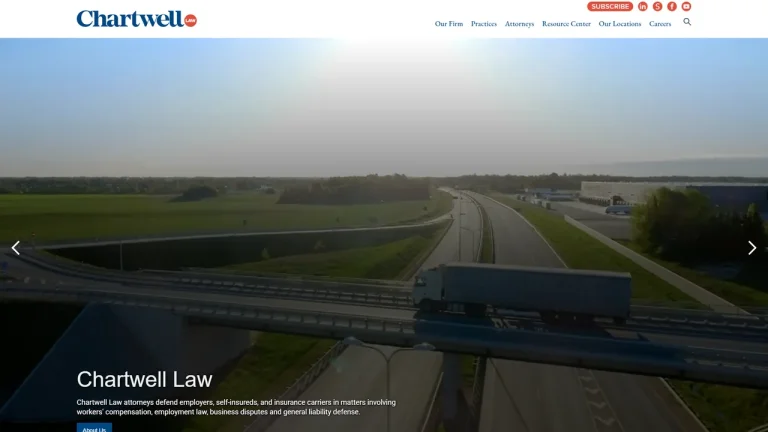
Chartwell Law - NYC, New York
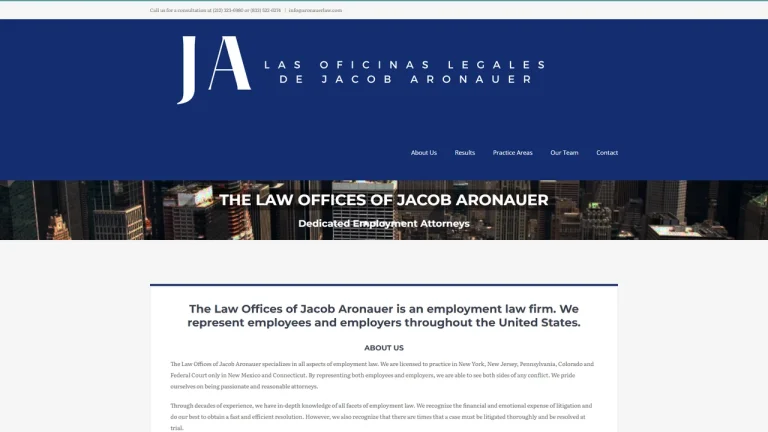
Law Offices of Jacob Aronauer - NYC, New York
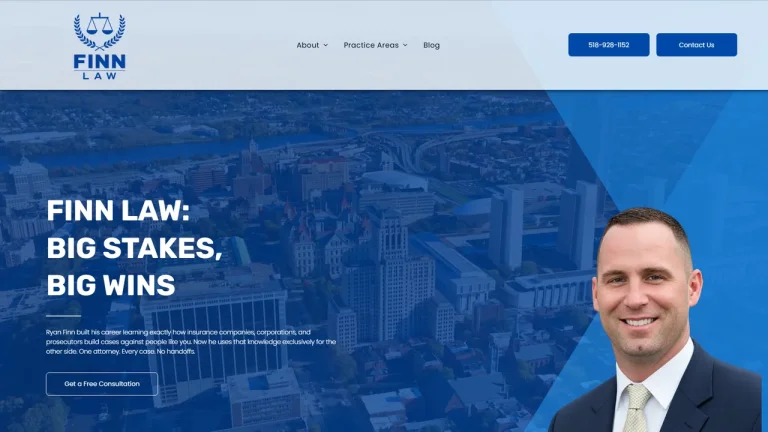
Finn Law Offices - Albany, NY
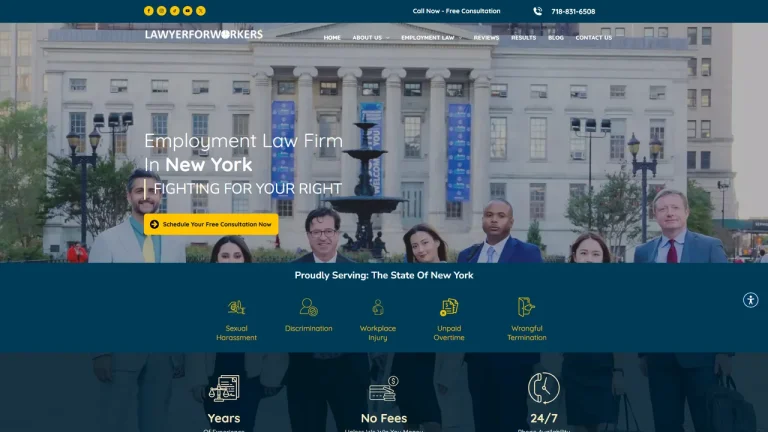
Law Office of Yuriy Moshes, P.C. (LawyerForWorkers) - NYC, New York
Smith Dominelli & Guetti, LLC - Albany, NY
Rapaport Law Firm - NYC, New York

Evans Fox LLP - Rochester, NY
Schwartz Perry & Heller LLP - NYC, New York
Cardi & Edgar, LLP - NYC, New York

Whiteman Osterman & Hanna LLP - Albany, NY
Law Office of Regina Sarkis, PLLC - Rochester, NY
Underberg & Kessler LLP - Rochester, NY

Thomas & Solomon PLLC - Rochester, NY
Law Office of Thomas V. Purpi, P.C. - NYC, New York

DeHeng Chen LLC - NYC, New York
Moore Kuehn, PLLC - NYC, New York
Danny Grace PLLC - NYC, New York
Workplace Legal Practice Across New York State Courts and Agencies
Employment and labor relations across the Empire State are governed by some of the most comprehensive worker protection statutes and commercial regulatory systems in the country. From corporate headquarters in Manhattan and financial technology centers in Long Island to manufacturing and healthcare employers in Buffalo, Rochester, Syracuse, and Albany, employment disputes involve complex intersections of state and federal law. Legal proceedings originate before state administrative bodies, such as the New York State Division of Human Rights and the New York State Department of Labor, as well as the New York State Supreme Court and federal district courts across the Southern, Eastern, Northern, and Western Districts of New York.
New York maintains distinct statutory schemes addressing minimum wage schedules, mandatory overtime premiums, wage notices, and workplace harassment protections. Both employers and employees must navigate strict compliance standards under the New York Labor Law and the New York State Human Rights Law. When disputes arise-whether involving unpaid commissions, misclassification of independent contractors, restrictive non-compete covenants, or retaliatory termination-timely legal intervention provides strategic clarity and prevents protracted litigation through the New York State Courts Electronic Filing system.
Retaining an experienced New York employment attorney ensures your statutory rights are asserted with appropriate evidentiary backing. Whether drafting airtight executive severance agreements, conducting internal workplace investigations, or initiating collective actions for wage theft, skilled counsel provides seasoned advocacy before administrative hearing officers, arbitration panels, and trial juries statewide.
Employment Matter Scenarios, Billing Frameworks, and Cost Determinants
| Case Scenario | Fee Structure | Estimated Cost (USD) | Key Cost Determinants |
|---|---|---|---|
| Severance Agreement Review & Negotiation | Flat Fee / Hourly ($350 - $650/hr) | $1,500 - $4,500 | Executive compensation tier, equity vesting, non-compete scope |
| Unpaid Wages & Overtime Collective Action | Contingency Fee (33.3% statutory fee shift) | $0 upfront (recovered from defendant) | Class size, timecard records audit, liquidated damage calculations |
| Workplace Discrimination / Harassment Claim | Contingency / Hybrid Retainer | $0 upfront to $5,000 retainer | Administrative agency vs. court filing, economic loss documentation |
| Employer Policy Handbook & Compliance Audit | Flat Fee | $2,500 - $8,000 | Workforce headcount, multi-location operations, industry regulations |
Critical Legal Deadlines & Statutes in New York
Workplace disputes in New York are governed by demanding statutory time limitations that vary widely depending on the legal doctrine and the chosen forum. Under the New York Labor Law, wage and hour claims-including unpaid overtime, illegal tip pooling, and failure to provide wage notices-carry a generous 6-year statute of limitations pursuant to N.Y. Lab. Law § 663(3). Under N.Y. Lab. Law § 198(1-a), prevailing employees are entitled to recover the full amount of underpayments plus 100% liquidated damages and mandatory attorney fees unless the employer proves a good-faith defense.
For employment discrimination and sexual harassment claims brought under the New York State Human Rights Law, aggrieved individuals have 3 years from the date of the unlawful act to commence a direct civil lawsuit in court pursuant to N.Y. C.P.L.R. § 214(2). Alternatively, if filing an administrative complaint with the New York State Division of Human Rights under N.Y. Exec. Law § 297(5), unlawful discrimination claims must generally be filed within 1 year, while sexual harassment complaints can be submitted within 3 years. Filing federal claims under Title VII of the Civil Rights Act requires lodging a charge of discrimination with the Equal Employment Opportunity Commission within 300 days of the retaliatory act. Retaliation protections for employees reporting statutory violations are codified under N.Y. Lab. Law § 740, which enforces a 2-year limitation period for civil actions.
Small Claims Limits vs. Professional Legal Representation
New York provides simplified small claims tribunals designed for modest monetary disputes, but jurisdictional ceilings and procedural boundaries vary across the state. In New York City, the Small Claims Part of the Civil Court handles claims up to $10,000 under N.Y. City Civ. Ct. Act § 1801. In City Courts outside New York City, the ceiling is $5,000 under N.Y. Uniform City Ct. Act § 1801, while Town and Village Justice Courts maintain a limit of $3,000 pursuant to N.Y. Uniform Justice Ct. Act § 1801. Individuals can utilize these local courts without legal counsel to recover modest unpaid final wages, unreturned tool deposits, or clear expense reimbursements.
However, substantive employment claims-such as systemic wage theft, non-compete enforcement, complex executive compensation disputes, or workplace discrimination-far exceed small claims caps and require proceedings in the New York State Supreme Court or federal court. Small claims tribunals lack equitable jurisdiction to order workplace reinstatement, void unlawful restrictive covenants, or issue class-wide discovery subpoenas. Furthermore, corporate entities appearing in New York courts of record cannot represent themselves and must retain licensed legal counsel. Retaining an experienced New York labor attorney ensures that statutory fee-shifting provisions and liquidated damages are fully utilized to maximize recovery.
Red Flags When Hiring a New York Lawyer
- Upfront Fee Demands for Clear Wage Claims: Be cautious of lawyers who charge large upfront retainers for straightforward wage and hour disputes; the New York Labor Law contains mandatory attorney fee-shifting provisions under N.Y. Lab. Law § 198 designed to handle valid cases on contingency.
- Guaranteed Administrative Severance Multipliers: Distrust attorneys who promise specific severance payout amounts before reviewing written employment agreements, employee handbooks, and personnel performance files.
- Lack of Dual Forum Experience: Avoid practitioners who exclusively handle administrative agency complaints but lack trial experience in the New York State Supreme Court or federal district courts if settlement negotiations stall.
- Overlooking Non-Compete Enforceability: Beware of counsel who treats restrictive covenants casually; New York courts apply rigorous common law reasonableness standards that require careful legal analysis before taking a new job.
Frequently Asked Questions
What is the statute of limitations for unpaid wages in New York?
Under the New York Labor Law, workers have up to 6 years to file a lawsuit to recover unpaid wages, minimum wage violations, and overtime compensation.
Can an employee recover liquidated damages for wage violations in New York?
Yes, New York Labor Law allows employees to recover 100% liquidated damages on top of the unpaid wages, effectively doubling the recovery unless the employer proves a good-faith basis.
Are non-compete agreements enforceable in New York?
Non-competes are scrutinized strictly by New York courts and are only enforceable if they protect legitimate business interests, are reasonable in geographic scope and duration, and do not impose undue hardship.
How long do I have to report workplace discrimination in New York?
You have 3 years to file a lawsuit in New York State Supreme Court, or 1 year (3 years for sexual harassment) to file an administrative complaint with the New York State Division of Human Rights.
Does New York require mandatory annual sexual harassment prevention training?
Yes, under New York Labor Law § 201-g, all employers in the state must provide annual interactive sexual harassment prevention training to all employees regardless of hours worked.