
Harassment Lawyers in Columbus
Addressing unlawful harassment in Columbus requires prompt legal counsel to protect your personal safety, professional career, and statutory rights. An experienced attorney can obtain emergency civil protection orders or file administrative discrimination charges before strict deadlines expire. Explore our directory below to consult verified harassment lawyers serving Franklin County.

FLC | Legal Counsel - Columbus, OH
Michael D. Christensen Law Offices, LLC - Columbus, OH
Bryant Legal, LLC - Columbus, OH
Epstein Becker Green - Columbus, OH

Fisher & Phillips LLP - Columbus, OH

John M. Stephen (Porter Wright Morris & Arthur LLP) - Columbus, OH
Reminger Co., LPA - Columbus, OH
Andrew J. Ruzicho - Columbus, OH

Porter Wright Morris and Arthur LLP: Reichwein Diane C. - Columbus, OH
Gittes Law Group - Columbus, OH
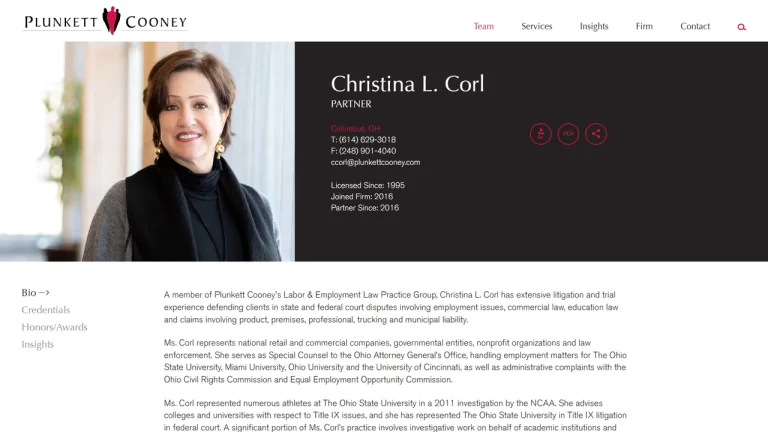
Christina L. Corl - Plunkett Cooney - Columbus, OH
The Schodzinski Law Firm LLC - Columbus, OH

Biller and Kimble, LLC - Columbus, OH
AW Law - Education Rights Law Firm - Columbus, OH
Williams & Finkbine Co., LLC - Columbus, OH
Nilges Draher LLC - Columbus, OH
Cassone Law Offices LLC - Columbus, OH

Marshall Forman & Schlein LLC - Columbus, OH

Oliver Law Office - Columbus, OH
Alvin J. McKenna - Columbus, OH

Wick Law Offices LLC - Columbus, OH
Spitz, The Employee’s Law Firm - Columbus, OH

Coffman Employment Lawyers - Columbus, OH
Harassment Litigation Across Columbus & Franklin County Courts
Unlawful harassment in Columbus occurs in varied environments, from corporate workplaces in the Arena District and Easton Town Center to severe personal stalking across Franklin County residential neighborhoods. Under Ohio law, victims of persistent harassment have legal avenues for relief, including workplace discrimination claims and emergency judicial orders. Determining whether your situation involves employment discrimination under state civil rights statutes or interpersonal stalking dictates the appropriate legal strategy and judicial venue.
Harassment matters originating in Columbus are litigated primarily within the Franklin County Court of Common Pleas at 345 South High Street in Downtown Columbus. Workplace sexual harassment, racial discrimination, and retaliatory termination claims must comply with administrative exhaustion procedures through the Ohio Civil Rights Commission central office on East Broad Street or the Equal Employment Opportunity Commission. Federal statutory claims are filed in the United States District Court for the Southern District of Ohio at the Joseph P. Kinneary U.S. Courthouse. Retaining an experienced Columbus harassment lawyer ensures evidence is preserved and statutory claims are timely asserted.
Typical Costs & Fee Structures for Harassment Legal Matters
| Case Scenario | Fee Structure | Estimated Cost (USD) | Key Cost Determinants |
|---|---|---|---|
| Workplace Sexual Harassment & Hostile Environment | Contingency (33.3% - 40%) | $0 Upfront ($3,000 - $12,000 expenses) | Employer size, HR complaint records, retaliatory firing, supervisor liability |
| Civil Stalking Protection Order (CSPO Petition) | Flat Fee or Hourly ($275 - $500/hr) | $2,000 - $6,000 | Electronic evidence volume, witness depositions, contested full hearing duration |
| Executive / Management Harassment Defense | Hourly Billing ($350 - $650/hr) | $5,000 - $25,000+ | Internal investigation scope, corporate severance terms, indemnification rights |
| Pre-Suit Harassment Severance Negotiation | Flat Retainer + Contingency Split | $1,500 - $5,500 | Negotiation leverage, company exposure, non-disparagement covenants, release scope |
Critical Legal Deadlines & Statutes in Ohio
Pursuing workplace harassment remedies in Ohio requires strict adherence to statutory limitation periods. Under the Ohio Employment Law Uniformity Act codified at Ohio Rev. Code § 4112.052, an employee alleging unlawful workplace harassment or discrimination under Ohio Rev. Code § 4112.02 must file a charge with the Ohio Civil Rights Commission within two years from the date of the unlawful practice. Filing with the OCRC is a mandatory prerequisite before filing a civil lawsuit in the Franklin County Court of Common Pleas. If pursuing federal claims under Title VII of the Civil Rights Act pursuant to 42 U.S. Code § 2000e-5, the administrative charge must be cross-filed within 300 days of the harassment incident.
For personal harassment and stalking outside the employment context, victims can petition for a Civil Stalking Protection Order under Ohio Rev. Code § 2903.214 in the General Division of the Court of Common Pleas, or a Domestic Violence Civil Protection Order under Ohio Rev. Code § 3113.31 in the Domestic Relations Division if the perpetrator is a family or household member. An ex parte temporary protection order can be granted immediately, but Ohio law mandates a full evidentiary hearing within 7 to 10 court days, requiring rapid preparation of witness testimony, digital messages, and physical evidence.
Small Claims Limitations vs. Professional Harassment Representation
The Small Claims Division of the Franklin County Municipal Court maintains a jurisdictional limit of $6,000 under Ohio Rev. Code § 1925.02. However, small claims courts possess zero equitable power to issue restraining orders, grant injunctions, or adjudicate workplace discrimination claims. Small claims jurisdiction is restricted entirely to minor actions for monetary damages, making it unavailable for stopping ongoing harassment or addressing career-ending retaliation.
Workplace harassment cases involve complex affirmative legal defenses, such as employer claims that an employee failed to use internal reporting procedures. Attempting to navigate OCRC administrative charges or federal court dockets without legal counsel routinely results in administrative dismissals or waived claims. A seasoned Columbus harassment lawyer issues immediate preservation demands to prevent the destruction of surveillance video and corporate emails, drafts administrative complaints, and represents clients in federal or state court to secure compensation for emotional distress, lost wages, and punitive damages.
Red Flags When Selecting a Columbus Harassment Lawyer
- Bypassing Mandatory OCRC Administrative Filings: Avoid attorneys who attempt to file an employment harassment lawsuit directly in state court without first exhausting administrative remedies with the Ohio Civil Rights Commission under Ohio Rev. Code § 4112.052.
- Guaranteed Payout Promises: Legitimate legal practitioners cannot guarantee specific settlement amounts; liability depends entirely on admissible documentation, witness credibility, and employer response.
- Demanding Large Upfront Retainers for Wage & Discrimination Claims: For wrongful termination and harassment claims with clear liability, reputable employee-side attorneys work primarily on a contingency fee basis with expenses advanced.
- Lack of Franklin County Trial Practice: Ensure your legal counsel has routine courtroom experience presenting evidence before the judges and magistrates at 345 South High Street in Columbus.
Frequently Asked Questions
What is the deadline to file a workplace harassment claim in Columbus?
Under Ohio Rev. Code § 4112.052, you must file a charge of discrimination with the Ohio Civil Rights Commission within two years of the alleged harassment. Federal Title VII claims require filing with the EEOC within 300 days.
What is a Civil Stalking Protection Order in Franklin County?
Under Ohio Rev. Code § 2903.214, a Civil Stalking Protection Order is a court order issued by the Franklin County Court of Common Pleas prohibiting an individual who has engaged in a pattern of menacing conduct from contacting, following, or approaching you, your home, or your workplace.
Can I be fired for reporting sexual harassment in Columbus?
No. Under Ohio Rev. Code § 4112.02 and federal law, retaliating against an employee for reporting harassment, participating in an internal investigation, or filing an administrative charge is unlawful and creates an independent legal cause of action for retaliation.
Where are harassment lawsuits filed in Columbus?
State civil protection orders and discrimination lawsuits are litigated in the Franklin County Court of Common Pleas on South High Street. Federal harassment claims proceed in the U.S. District Court for the Southern District of Ohio on Marconi Boulevard.
What evidence is necessary to prove workplace harassment in Ohio?
Key evidence includes copies of text messages, emails, voicemails, documented dates and descriptions of incidents, eyewitness statements, performance reviews, and records showing formal complaints were submitted to human resources or management.