
Probate Lawyers in Houston
Retaining an experienced Houston probate lawyer ensures your loved one's estate is administered efficiently through the Harris County probate courts while protecting inherited assets. Dedicated local attorneys guide executors through Texas statutory deadlines, resolve heirship disputes, and utilize streamlined probate options to avoid prolonged courtroom delays. Explore our verified directory below to schedule a consultation with top-rated probate attorneys in Houston.

Nimmons & Fronterhouse - Houston, TX

Houston Probate Attorneys Kreig LLC - Houston, TX

Law Thompson, P.C. - Houston, TX
Heights Law Group, Estate Planning & Probate - Houston, TX

Law Office of Ali Younes - Houston, TX

Strickland Law Firm, PLLC - Houston, TX

SimpleLawTX - Carey Worrell - Houston, TX
The Schwartz Law Firm, PLLC - Houston, TX
Mitchell Tax Law - Houston, TX
Duffley Law - Houston, TX

Roger G. Jain and Associates, P.C. - Houston, TX
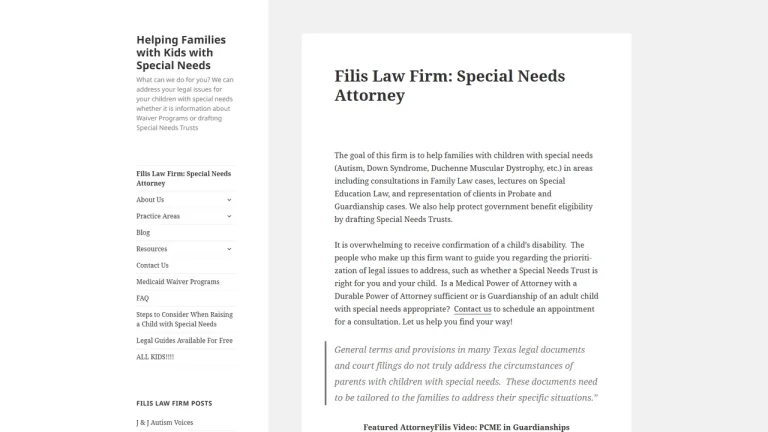
Filis Law Firm - Houston, TX

Holland Elder Law Firm - Houston, TX
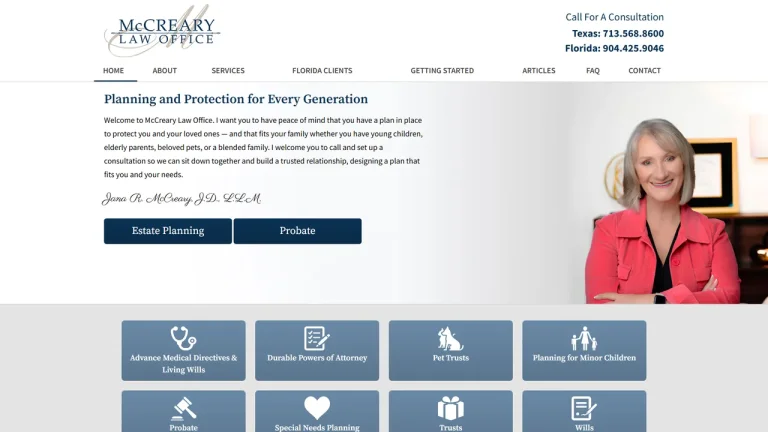
McCreary Law Office, PLLC - Houston, TX
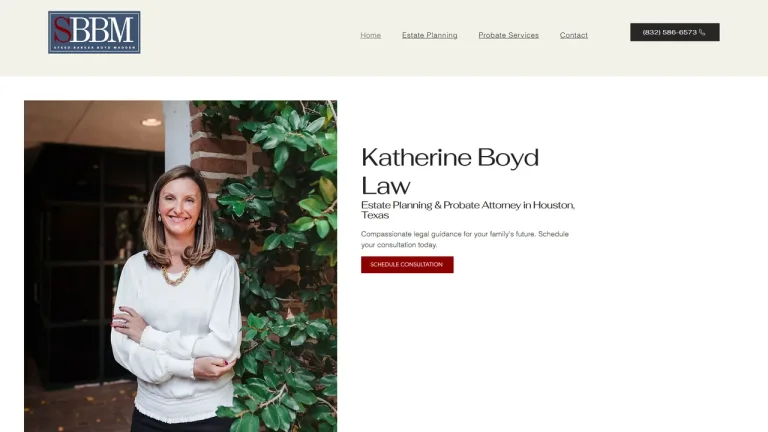
Katherine Boyd Law - Houston, TX

Law Office of Daniel E. McCarty Jr. - Houston, TX

Law Office of Vivian Nguyen - Houston, TX

The Kruckemeyer Law Firm - Houston, TX

Gregg & Gregg, P.C. - Houston, TX

Monks Law Firm - Houston, TX

Featherston Tran, PLLC - Houston, TX

Law Office of Nicholas Abaza - Houston, TX
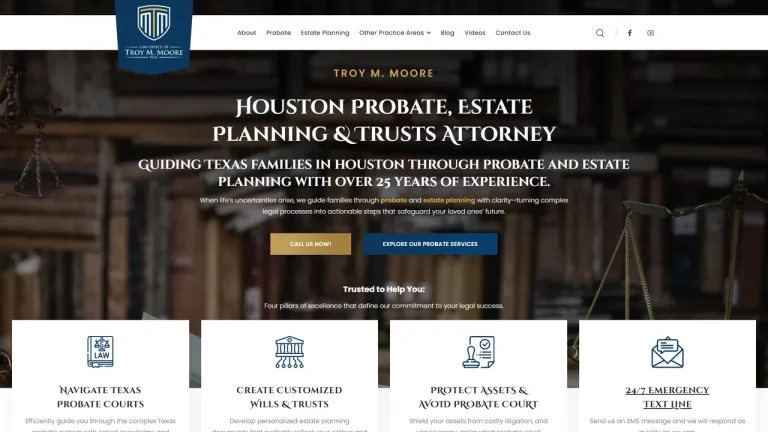
Law Office of Troy M. Moore, PLLC - Houston, TX

Navigating the Harris County Probate Courts in Houston
Administering an estate in Houston requires navigating the specialized probate court system of Harris County. Unlike many Texas jurisdictions where county courts at law handle estate dockets alongside civil disputes, Harris County maintains five dedicated statutory probate courts-Probate Courts No. 1, 2, 3, 4, and 5-located in the Harris County Civil Courthouse at 201 Caroline Street in Downtown Houston. All filings are processed electronically through eFileTexas and overseen by the Harris County Clerk's Probate Department.
Texas is known for an efficient estate administration process when a decedent leaves a valid will designating an independent executor. An experienced Houston probate attorney works to qualify the estate for independent administration, which minimizes courtroom hearings, eliminates the need for expensive judicial surety bonds, and empowers the executor to settle debts and distribute property with limited court intervention. This streamlined approach serves families throughout the metropolitan area, from Memorial and River Oaks to Sugar Land, The Woodlands, and Katy.
When a loved one passes away without a will (intestate), or when family conflicts arise regarding the validity of a testamentary document, formal legal advocacy becomes critical. Houston probate lawyers initiate heirship proceedings, coordinate with court-appointed attorneys ad litem, and litigate contested matters to protect your statutory inheritance rights.
Houston Probate Case Scenarios and Legal Fee Schedules
| Case Scenario | Fee Structure | Estimated Cost (USD) | Key Cost Determinants |
|---|---|---|---|
| Uncontested Independent Administration (With Valid Will) | Flat Fee | $1,500 - $3,500 | Self-proving affidavit validity, beneficiary cooperation, and single appearance before a Harris County probate judge. |
| Muniment of Title (Real Property Transfer Without Debts) | Flat Fee | $1,200 - $2,500 | Absence of unsecured creditor obligations, deed records in Harris County, and simplified single-hearing probate. |
| Contested Will Contest or Fiduciary Breach Action | Retainer plus Hourly ($350 - $650/hr) | $10,000 - $50,000+ | Testamentary capacity challenges, undue influence claims, forensic accounting, and evidentiary depositions. |
| Intestate Determination of Heirship (No Will) | Staged Retainer or Hourly | $3,500 - $7,500 | Court-appointed attorney ad litem fees, family tree verification, and locating distant or unknown heirs. |
Critical Legal Deadlines & Statutes in Texas
Estate administration in Texas is governed by the Texas Estates Code, which imposes precise statutory timeframes. Under Tex. Estates Code § 256.003, a will must be offered for probate within four years from the date of the testator's death; failing to file within this four-year window generally bars the document from being probated, forcing the estate into intestate distribution unless exceptional circumstances apply.
Once letters testamentary or letters of administration are granted, the personal representative must publish a mandatory notice to general creditors in a local newspaper of general circulation within 30 days under Tex. Estates Code § 308.051. Furthermore, within 60 calendar days of the probate order, the executor must provide certified written notice to all named beneficiaries pursuant to Tex. Estates Code § 308.002. The executor must also prepare and submit a verified Inventory, Appraisement, and List of Claims within 90 days of qualification pursuant to Tex. Estates Code § 309.051, or file an Affidavit in Lieu of Inventory if all beneficiaries consent and statutory requirements are met. The statutory foundation for independent administration is codified at Tex. Estates Code § 401.001.
Small Claims Court Limits vs. Statutory Probate Representation
Harris County Justice of the Peace (JP) Courts maintain small claims jurisdiction capped at $20,000 under Tex. Gov't Code § 27.031. While an individual may appear pro se in a JP court for minor breach-of-contract or property damage disputes, Texas Justice Courts possess zero subject-matter jurisdiction over probate, wills, or estate administration. Exclusive original probate jurisdiction in Houston is vested in the five Harris County Statutory Probate Courts under Tex. Estates Code § 32.005.
Under established Texas jurisprudence, an executor or administrator represents third-party interests, including creditors and heirs. Because a non-attorney cannot represent the legal rights of other persons, Texas courts hold that non-lawyers attempting to handle probate administration without counsel are engaging in the unauthorized practice of law. Consequently, the judges of Harris County Probate Courts 1 through 5 routinely require executors to be represented by a licensed attorney, ensuring that title transfers, creditor priorities, and fiduciary accountings comply with statutory rules.
Red Flags When Hiring a Houston Probate Attorney
- Percentage-of-Estate Fee Demands: Attorneys who insist on charging a fixed percentage of the gross estate value rather than a flat fee or transparent hourly rate, which is unnecessary under Texas independent administration.
- Overlooking Streamlined Texas Alternatives: Practitioners who fail to discuss cost-effective alternatives like Muniment of Title or Small Estate Affidavits when the estate qualifies.
- Unfamiliarity with Harris County Local Rules: Out-of-county lawyers who do not know the specific local practices, submission dockets, and requirements of Harris County Probate Courts 1 through 5.
- Opaque Expense Disclosures: Retainers that fail to explain separate out-of-pocket costs, such as publication fees, county clerk filing costs, and court investigator fees.
Frequently Asked Questions
How long do I have to probate a will in Houston, Texas?
Under Tex. Estates Code § 256.003, you have exactly four years from the date of the decedent's death to file an application for probate. If you miss this deadline, the will can typically only be admitted as a Muniment of Title to clear real estate records, provided you can prove you were not in default for failing to file on time.
Can an executor represent an estate in Harris County Probate Court without an attorney?
No. Under Texas law, an executor represents the fiduciary interests of estate beneficiaries and creditors, not just their own. Representing an estate pro se constitutes the unauthorized practice of law, and judges in the five Harris County Statutory Probate Courts require a licensed attorney to represent the estate representative.
What is the difference between independent and dependent administration in Texas?
Under Tex. Estates Code § 401.001, independent administration allows an executor to manage the estate, settle debts, and distribute assets without judicial supervision once the will is admitted and the inventory is approved. Dependent administration requires court approval and judicial hearings for virtually every action, including paying creditors and selling estate property.
What is probate as a Muniment of Title in Texas?
Probate as a Muniment of Title is a simplified Texas legal proceeding used when the decedent left a valid will and there are no unpaid estate debts, other than liens on real estate. The probate order acts as an official legal instrument to transfer title of property, real estate, and financial accounts directly to named beneficiaries without opening a full administration.
Where are probate hearings held in Harris County?
Probate matters for Houston residents are adjudicated in the Harris County Civil Courthouse, located at 201 Caroline Street, Downtown Houston, TX 77002. Probate Courts No. 1, 2, 3, 4, and 5 are housed within this facility, though many routine, uncontested prove-up hearings are conducted via teleconference.