
Federal Agencies in Connecticut
Access official contacts, jurisdictional guidelines, and public filing procedures for federal agencies across Connecticut. Navigating federal administrative procedures requires strict adherence to statutory deadlines and formal agency protocols. Explore our verified directory below to locate regional offices, schedule appointments, and access vital federal services.
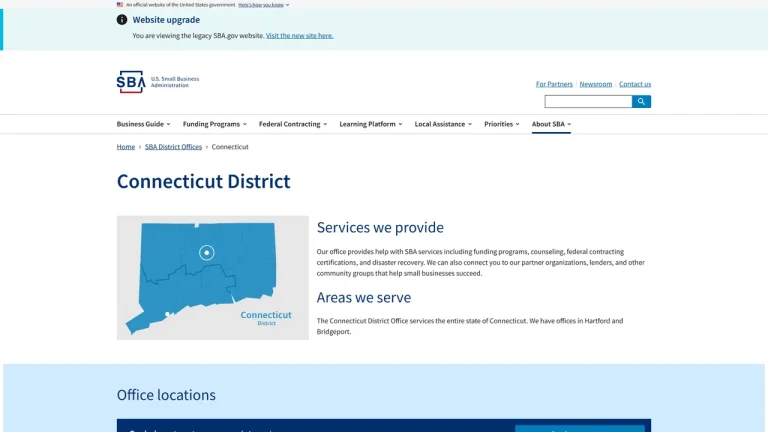
Small Business Administration - Connecticut District Office - Hartford, CT

Internal Revenue Service (IRS) Taxpayer Assistance Center - Bridgeport, CT
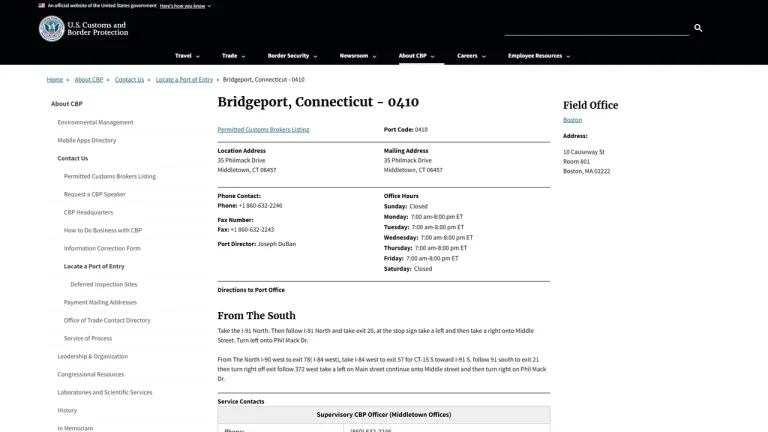
U.S. Customs and Border Protection - Bridgeport Port of Entry - Bridgeport, CT

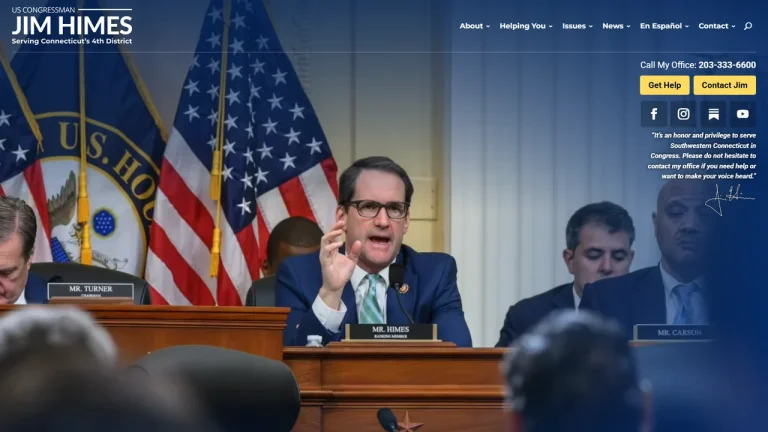
Congressman Jim Himes - Bridgeport Office - Bridgeport, CT




Navigating Federal Agency Jurisdiction and Administration in Connecticut
Federal executive departments and independent agencies maintain an active operational presence throughout Connecticut, administering federal statutes, managing public benefit programs, and enforcing regulatory standards. These regional divisions handle essential government functions ranging from social insurance and immigration processing to federal workplace oversight and revenue administration. Key offices are centralized within Connecticut major population centers, including Hartford, New Haven, Bridgeport, and Stamford.
The federal administrative system in Connecticut operates alongside the judicial authority of the United States District Court for the District of Connecticut, which holds proceedings in the Abraham A. Ribicoff Federal Building in Hartford, the Richard C. Lee United States Courthouse in New Haven, and the Brien McMahon Federal Building in Bridgeport. Decisions originating within these regional agencies and courts fall under the appellate jurisdiction of the United States Court of Appeals for the Second Circuit.
Interacting with regional federal branches-such as the Social Security Administration, the Internal Revenue Service, the U.S. Citizenship and Immigration Services Hartford Field Office, or the Occupational Safety and Health Administration-requires compliance with the Code of Federal Regulations and agency-specific administrative protocols. Understanding how to access records, lodge appeals, and file verified documents ensures administrative matters proceed without preventable procedural delays.
Common Federal Agency Services, Filing Requirements, and Statutory Fees
| Service / Matter | Required Documents / Prerequisites | Statutory Fee (USD) | Processing Timeline |
|---|---|---|---|
| Freedom of Information Act (FOIA) Request | Written request identifying specific agency records, requester category, and fee waiver justification if applicable | $0 search/review fees for standard public requests; duplication fees vary | 20 to 30 business days statutory determination |
| Social Security Disability Appeal (Hearing Request) | Form SSA-501 or Form HA-501, denial notice, updated medical records, and earnings history | $0 (No government filing fee) | 7 to 14 months to administrative law judge hearing |
| Application for Naturalization (USCIS Form N-400) | Proof of permanent residency, continuous physical presence records, and background documentation | $710 to $760 depending on online or paper submission | 6 to 11 months for interview scheduling in Hartford |
| Administrative Tort Claim (Standard Form 95) | Completed SF-95 detailing incident, basis of government liability, and sum-certain monetary demand | $0 (No filing fee required) | 6 months statutory investigation window |
Critical Legal Deadlines & Statutes in Connecticut
Administrative actions involving federal agencies are subject to rigid statutory limitations that dictate when claims, responses, and appeals must be initiated. Under the federal Freedom of Information Act, codified at 5 U.S. Code § 552, agencies have an initial statutory mandate of 20 business days to determine whether to comply with a formal records request, with possible 10-day extensions for unusual circumstances.
For individuals asserting injury or property damage caused by federal personnel operating within Connecticut, an administrative claim must be submitted pursuant to the Federal Tort Claims Act under 28 U.S. Code § 2675. Claimants must present their administrative claim on Standard Form 95 within 2 years of accrual under 28 U.S. Code § 2401. If the administrative agency denies the claim or fails to make a final disposition within 6 months, the claimant has 6 months from the date of mailing of the final denial notice to commence a civil lawsuit in the U.S. District Court for the District of Connecticut.
Individuals seeking review of administrative benefit determinations, such as Social Security Disability insurance claims, must request an administrative hearing or appeals council review within strictly 60 calendar days from receipt of the denial notice pursuant to 42 U.S. Code § 405. Similarly, employment discrimination claims against non-federal entities deferred through the Equal Employment Opportunity Commission must be filed within 300 calendar days under 42 U.S. Code § 2000e-5 due to Connecticut state anti-discrimination administrative enforcement mechanisms.
Direct Agency Interaction vs. Retaining Legal Counsel
Many administrative interactions with federal agencies located in Connecticut can be conducted directly by citizens without legal representation. Routine tasks such as submitting initial applications for retirement benefits through the Social Security Administration, downloading official tax forms from an IRS Taxpayer Assistance Center, requesting military service records through the National Archives, or filing general public records inquiries under FOIA are structured for public self-service via standardized forms and online portals.
However, when administrative proceedings become adversarial or involve formal evidentiary standards, retaining an attorney admitted to practice before federal administrative boards or the U.S. District Court for the District of Connecticut is vital. Representation is strongly advised during formal administrative law judge (ALJ) hearings, complex immigration removal or asylum interviews before USCIS, comprehensive federal tax audits, Occupational Safety and Health Review Commission proceedings, or when appealing an agency final rule under the Administrative Procedure Act codified at 5 U.S. Code § 702. Attorneys ensure procedural compliance, cross-examine technical witnesses, and preserve errors for judicial review through the Second Circuit Court of Appeals.
Red Flags and Deceptive Practices in Federal Agency Transactions
- Third-party commercial websites charging exorbitant fees for government application forms-such as USCIS petitions, passport applications, or EIN registrations-that are provided free or at statutory cost on official .gov portals.
- Imposter phone calls, automated voice messages, or urgent emails falsely purporting to originate from the Internal Revenue Service, Social Security Administration, or Department of Homeland Security demanding immediate monetary wire transfers, prepaid debit cards, or cryptocurrency.
- Unaccredited individuals or non-attorney notarios marketing guaranteed approvals, expedited visa interviews, or guaranteed disability awards before regional federal offices.
- Communications directing users away from official federal electronic filing portals, such as the federal court CM/ECF and PACER systems or official agency .gov subdomains, toward unsecured private payment gateways.
Frequently Asked Questions
Where are the primary federal administrative offices and courthouses in Connecticut?
Federal agency operations and courthouses are concentrated primarily in Hartford, New Haven, and Bridgeport. The U.S. District Court for the District of Connecticut maintains courthouses in all three cities, alongside major regional administrative divisions including the USCIS Field Office in Hartford, regional SSA hearing offices, and IRS Taxpayer Assistance Centers located across Hartford, New Haven, Waterbury, and Stamford.
How do I submit a formal Freedom of Information Act (FOIA) request to a federal office in Connecticut?
FOIA requests must be submitted directly to the designated FOIA public liaison or disclosure office of the specific federal agency holding the records. Requests must be in writing, describe the desired documents with reasonable specificity, and indicate willingness to pay applicable search and duplication fees under 5 U.S. Code § 552. Most agencies now accept submissions through their official web portals.
What is the deadline to appeal an unfavorable federal administrative ruling?
Deadlines depend strictly on the governing federal statute. For example, Social Security benefit denials require filing an appeal within 60 days of receiving the notice under 42 U.S. Code § 405, while Federal Tort Claims Act claims must be filed in federal district court within 6 months of an agency final administrative denial under 28 U.S. Code § 2401. Missing statutory deadlines generally forfeits the right to appeal.
Can a non-lawyer represent me in a federal administrative proceeding in Connecticut?
Certain agencies, such as the Social Security Administration, allow qualified non-attorney representatives who meet federal regulatory standards to assist claimants. However, representation in the U.S. District Court for the District of Connecticut or formal Second Circuit appellate proceedings requires an active license and formal bar admission. Claimants should verify credentials through the Connecticut Bar or relevant federal agency registries.
How can I verify whether an agency notice or communication is an authentic federal inquiry?
Authentic federal agency correspondence arrives via official United States Postal Service mail displaying an official department seal, statutory authority citations, and official government contact details. Official federal agencies do not initiate contact via unsolicited text messages, phone calls requesting immediate remote wire payments, or emails from non-.gov domain addresses.