
County & City Agencies in Illinois
Navigating municipal departments and county government agencies across Illinois ensures compliance with local ordinances, zoning rules, and public records access. Local boards and administrative bodies oversee vital public services across all incorporated cities and rural townships. Explore our verified public directory below to identify key municipal buildings, county commissioners, and administrative agencies throughout Illinois.

City of Chicago Office of the Mayor - Chicago, IL



Board of Election Commissioners for the City of Chicago - Chicago, IL


Chicago Office of Emergency Management and Communications (OEMC) - Chicago, IL
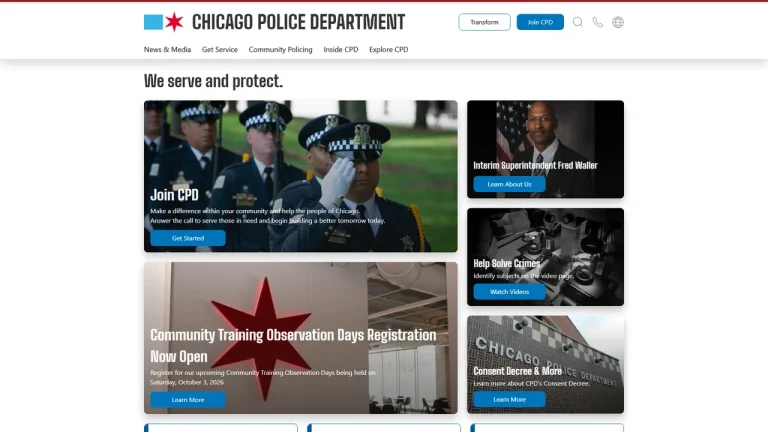

George W. Dunne Cook County Administration Building - Chicago, IL

Clerk of the Circuit Court, Domestic Relations Division - Chicago, IL
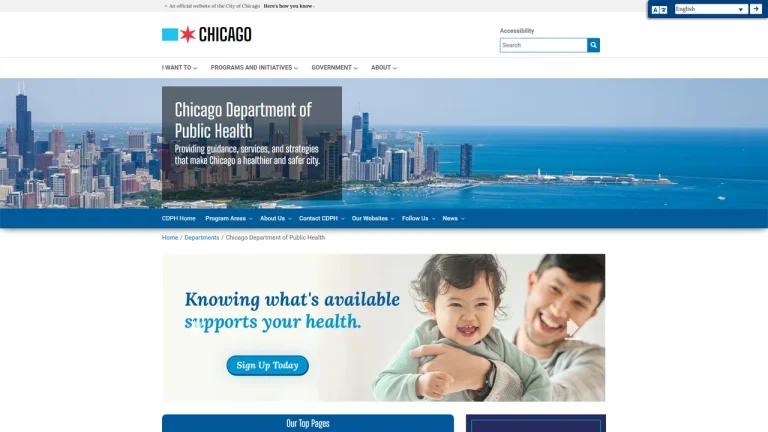
Local Government Authority and Municipal Jurisdictions in Illinois
Local administration across Illinois is structured through 102 county governments and more than 1,200 municipalities, operating under the constitutional provisions of home rule and non-home rule authority. In major metropolitan areas, county governance is directed by elected boards of commissioners-such as the Cook County Board of Commissioners in Chicago, the DuPage County Board in Wheaton, and the Lake County Board in Waukegan. These county entities manage public health divisions, property assessment procedures, and countywide zoning regulations in unincorporated territories.
At the city and village level, municipal administrations-including the City of Chicago, Aurora, Rockford, Joliet, Naperville, and the state capital of Springfield-exercise regulatory power through municipal codes. City departments oversee local building inspections, commercial licensing, environmental standards, and administrative adjudication bureaus that resolve non-traffic municipal ordinance violations outside the formal circuit court system.
Township governments further operate throughout most Illinois counties, administering road maintenance, property assessment valuations, and general local assistance. Interfacing with these tiered local authorities requires navigating specific statutory frameworks governing public information disclosures, municipal licensing boards, and local ordinance dispute resolution.
Local Agency Permitting, Records & Administrative Appeal Schedules
| Service / Matter | Required Documents / Prerequisites | Statutory Fee (USD) | Processing Timeline |
|---|---|---|---|
| Municipal FOIA Public Records Request | Written FOIA Form, Specific Record Description | $0 (First 50 B&W pages free; $0.15/page thereafter) | 5 business days (statutory deadline) |
| Commercial Building Permit Application | Architectural Plans, Plat of Survey, Contractor License | $150 to $2,000+ (Scaled to construction valuation) | 15 to 30 business days |
| Municipal Retail Business License | City Application, Zoning Sign-Off, Illinois Tax ID (IBT) | $75 to $500 (Varies by municipal category) | 14 to 30 calendar days |
| Zoning Board of Appeals Variance | Property Deed, Hardship Justification, Site Plan, Legal Notice | $250 to $1,000 administrative filing fee | 30 to 60 calendar days (hearing dependent) |
| Administrative Adjudication Hearing | Ordinance Citation Notice, Photo Evidence, Appearance Form | Varies by underlying municipal citation | Scheduled within 21 to 45 calendar days |
Critical Legal Deadlines & Statutes in Illinois
Engaging with county and municipal agencies involves rigid statutory time constraints. Under the Illinois Freedom of Information Act pursuant to 5 ILCS 140/3, a public body must respond to a non-commercial records request within five business days of receipt, with a single five-day extension permitted for specified statutory reasons. If an agency denies a request, the applicant has sixty calendar days to submit a request for review to the Public Access Counselor (PAC) in the Office of the Illinois Attorney General pursuant to 5 ILCS 140/9.5.
For individuals asserting tort, personal injury, or property damage claims against an Illinois county, township, or municipal entity, the Local Governmental and Governmental Employees Tort Immunity Act establishes a strict one-year statute of limitations under 745 ILCS 10/8-101. In administrative adjudication matters, appeals challenging municipal hearing officer decisions must be filed in the Circuit Court within thirty-five calendar days from the date the final administrative order was served pursuant to the Administrative Review Law under 735 ILCS 5/3-103.
Direct Agency Access vs. Retaining Legal Counsel
Illinois residents and small business owners can routinely manage standard administrative interactions directly with city and county offices without retaining private legal counsel. Direct public functions include submitting online FOIA requests, pulling routine residential repair permits, registering local commercial trade names, paying municipal parking or red-light camera citations, and attending public township board meetings.
Conversely, retaining licensed legal counsel is critical when presenting complex zoning variance or special use requests before a municipal Plan Commission or Zoning Board of Appeals. Professional legal advocacy is likewise essential when defending against major municipal building code citations involving daily fines, facing commercial liquor license revocation proceedings, or filing a civil lawsuit subject to the strict statutory bars of the Local Governmental and Governmental Employees Tort Immunity Act.
Red Flags & Regulatory Compliance Warnings
- Predatory FOIA Filing Websites: Commercial portals frequently mislead citizens into paying monthly subscription fees to submit Illinois FOIA requests that public agencies process directly for free.
- Phony Municipal Code Violation Notices: Beware fraudulent letters or text messages threatening property liens or arrest for fictitious municipal ordinance violations unless paid via unverified digital links.
- Unregistered Building Permit Expediters: Avoid hiring unlicensed consultants who promise expedited permit issuance from municipal building departments without providing verifiable municipal licenses.
- Deceptive Property Tax Assessment Appeals: Solicitations from private firms demanding upfront non-refundable retainers to challenge county property tax assessments that property owners can appeal directly to their County Board of Review.
Frequently Asked Questions
What is the statutory deadline for an Illinois public body to respond to a FOIA request?
Pursuant to 5 ILCS 140/3, an Illinois public body must respond to a non-commercial records request within five business days after receipt, unless a formal statutory extension is invoked.
What is the statute of limitations to sue a city or county government in Illinois?
Under the Local Governmental and Governmental Employees Tort Immunity Act pursuant to 745 ILCS 10/8-101, any civil tort lawsuit against a local public entity must be commenced within one year from the date of injury.
What is an administrative adjudication hearing in Illinois municipalities?
Administrative adjudication is a quasi-judicial municipal system authorized by 65 ILCS 5/1-2.1-1 where an administrative law officer hears city ordinance violations, such as building code infractions and parking tickets, outside the circuit court.
How do I appeal a municipal administrative hearing decision in Illinois?
Under the Illinois Administrative Review Law pursuant to 735 ILCS 5/3-103, you must file an administrative review complaint in the Circuit Court within thirty-five calendar days of the decision.
What is the difference between home rule and non-home rule municipalities in Illinois?
Under Article VII of the Illinois Constitution, home rule municipalities (cities with over 25,000 residents or approved by referendum) hold broader regulatory, taxing, and licensing powers than non-home rule bodies, which are strictly limited by state statutes.