
Federal Agencies in New Hampshire
Navigating federal agencies in New Hampshire requires understanding administrative pathways across regional offices and the federal judicial district in Concord. Many public records requests, veteran benefit inquiries, and routine social security filings can be completed directly through established federal service portals. Utilize our verified directory below to locate authorized federal departments, regional offices, and compliance guidelines throughout New Hampshire.



New Hampshire Army National Guard - Recruiting - Concord, NH
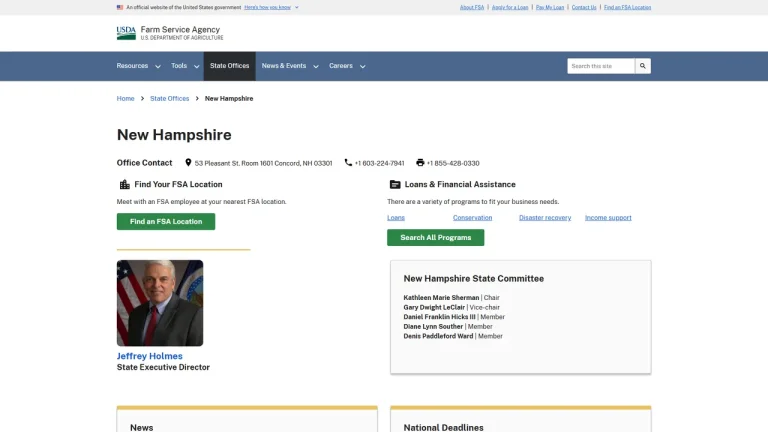


Internal Revenue Service (IRS) Taxpayer Assistance Center - Manchester, NH
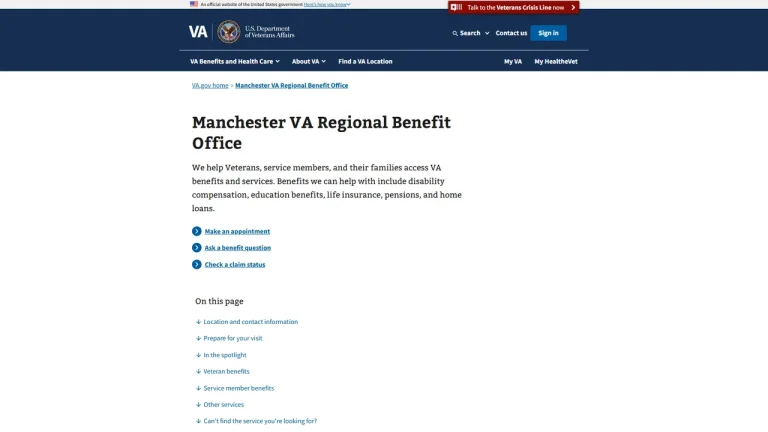
VA Manchester Regional Office - Manchester, NH

The Federal Administrative & Judicial Framework in New Hampshire
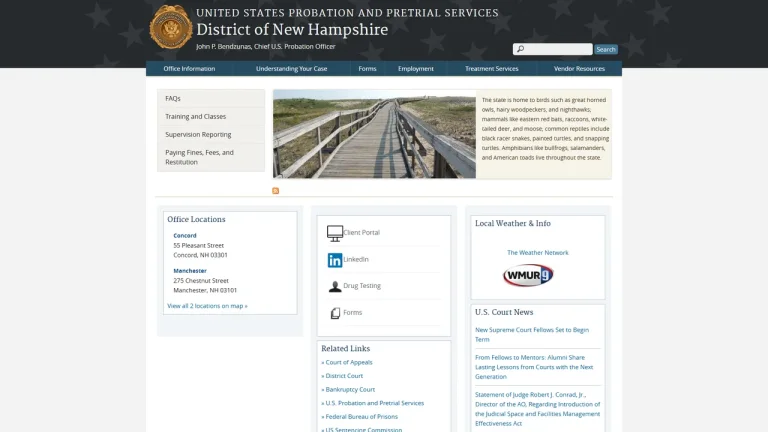
Federal governmental administration across the State of New Hampshire is centered in the state capital of Concord, with major regional field offices operating in Manchester, Nashua, and Portsmouth. The cornerstone of the federal judicial system in the state is the United States District Court for the District of New Hampshire, located in the Warren B. Rudman United States Courthouse on Pleasant Street in Concord. The court exercises original jurisdiction over federal questions, maritime disputes, and diversity of citizenship actions across all 10 counties.
Federal executive agencies maintain substantial footprints within the state to deliver administrative and regulatory services. The United States Attorney's Office for the District of New Hampshire enforces federal criminal statutes and represents the United States in civil litigation in Concord. The Social Security Administration (SSA) operates public field offices in Manchester, Concord, Nashua, Portsmouth, Keene, and Littleton, while U.S. Citizenship and Immigration Services (USCIS) administers naturalization ceremonies, green card processing, and asylum interviews through its Manchester Field Office.
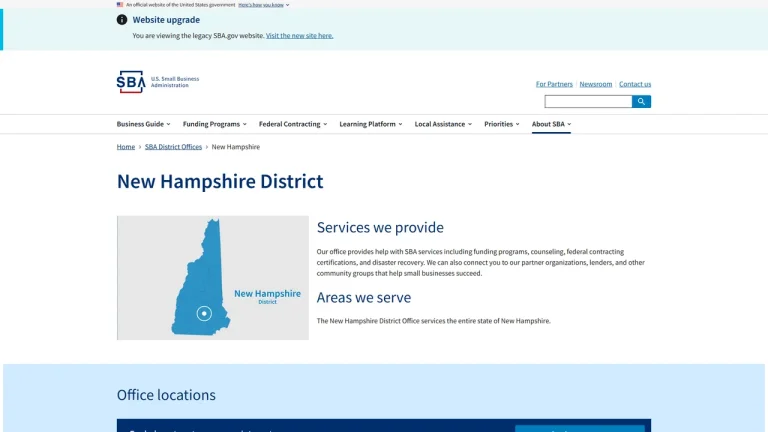
Other key federal installations include the Manchester VA Medical Center serving New Hampshire veterans, the Small Business Administration (SBA) New Hampshire District Office in Concord, and regional enforcement branches of the Occupational Safety and Health Administration (OSHA) and Environmental Protection Agency (EPA) Region 1. Proper engagement with these agencies requires adhering to federal administrative procedures and agency-specific filing standards.
Common Federal Agency Filings & Statutory Timelines
| Service / Matter | Required Documents / Prerequisites | Statutory Fee (USD) | Processing Timeline |
|---|---|---|---|
| Freedom of Information Act (FOIA) Request | Written request, clear description of records, requester fee category | $0 base filing fee; search/duplication fees apply | 20 business days statutory determination |
| Federal Tort Claims Act (FTCA) Claim | Executed Standard Form 95 (SF-95), itemized damages, sum certain | $0 statutory administrative fee | 6 months agency administrative review period |
| Social Security Disability ALJ Hearing Request | Reconsideration denial notice, Form HA-501, updated medical records | $0 administrative appeal fee | 9 to 14 months to hearing date |
| EEOC Workplace Discrimination Charge | Formal charge questionnaire, employer identifiers, factual narrative | $0 filing fee | 300 calendar days under dual-filing agreement |
Critical Legal Deadlines & Statutes in New Hampshire
Engaging with federal entities operating within New Hampshire requires meticulous adherence to federal statutory limitations. The United States District Court for the District of New Hampshire is established as a single judicial district under 28 U.S. Code § 111. Under the Freedom of Information Act, 5 U.S. Code § 552, federal agencies have a statutory deadline of 20 business days to determine whether to comply with an official records request.
When filing an administrative claim against the federal government for injury or property damage resulting from employee negligence, 28 U.S. Code § 2401 requires presenting a completed Form SF-95 to the appropriate agency within 2 years of the accrual of the claim. Workplace discrimination claims involving federal oversight under 42 U.S. Code § 2000e-5 are subject to an extended 300-day filing window in New Hampshire due to the worksharing agreement between the EEOC and the New Hampshire Commission for Human Rights established under N.H. Rev. Stat. Ann. § 354-A:1. Appeals from the District of New Hampshire to the First Circuit Court of Appeals must be filed within 30 days, or 60 days when the federal government is a party, under 28 U.S. Code § 2107.
Direct Citizen Access vs. Federal Legal Representation
Citizens regularly interact with federal agencies directly for standard administrative needs. Individuals do not need an attorney to apply for retirement or survivor benefits through local Social Security field offices, submit initial FOIA requests to regional federal departments, check immigration petition statuses online, or access veterans' care at the Manchester VA Medical Center. Federal agencies maintain customer service divisions designed to process routine public requests without formal legal barriers.
However, retaining an attorney admitted to the Bar of the United States District Court for the District of New Hampshire is essential during adversarial or formal administrative proceedings. Legal counsel is necessary when responding to federal grand jury subpoenas issued by the U.S. Attorney, navigating contested administrative law judge (ALJ) hearings, defending against federal regulatory enforcement actions brought by the EPA or OSHA, or filing civil rights and tort litigation in federal court. An attorney ensures compliance with the Federal Rules of Civil Procedure and local court rules in Concord.
Red Flags & Federal Agency Pitfalls
- Third-Party Federal Form Fees: Beware of commercial websites that charge fees to file standard federal forms, schedule immigration appointments, or obtain an Employer Identification Number (EIN), all of which are available for free on official .gov websites.
- Omission of the Sum Certain on Form SF-95: Failing to specify a precise, definite monetary amount on an administrative tort claim under 28 U.S.C. § 2401 creates a jurisdictional defect that will invalidate future federal lawsuits.
- Bypassing Administrative Remedy Exhaustion: Filing a civil lawsuit in federal court before exhausting all mandatory administrative appeals with the specific agency results in immediate dismissal for lack of jurisdiction.
- Federal Impersonation Scams: Federal agencies, including the IRS and SSA, will never contact individuals by phone or email demanding immediate payment via wire transfer, cryptocurrency, or gift cards to avoid arrest or license revocation.
Frequently Asked Questions
Where is the federal courthouse located in New Hampshire?
The United States District Court for the District of New Hampshire is located inside the Warren B. Rudman United States Courthouse at 55 Pleasant Street in Concord, New Hampshire. It handles all federal civil, criminal, and bankruptcy cases in the state.
Which federal appellate court hears appeals from New Hampshire?
Appeals from the United States District Court for the District of New Hampshire are heard by the United States Court of Appeals for the First Circuit, which is headquartered at the John Joseph Moakley United States Courthouse in Boston, Massachusetts.
Where is the USCIS field office in New Hampshire?
The U.S. Citizenship and Immigration Services (USCIS) field office in New Hampshire is located at 1000 Elm Street, Suite 200, in Manchester. This office conducts naturalization interviews, permanent residency reviews, and biometric appointments.
How do I file a claim against the federal government for injury in New Hampshire?
Under the Federal Tort Claims Act, you must complete and submit Standard Form 95 (SF-95) directly to the regional office of the federal agency whose employee caused the injury or property damage within two years of the incident, including a specific sum certain dollar amount.
What identification is required to enter a federal building in New Hampshire?
Visitors must present a valid government-issued photo ID that complies with REAL ID standards, such as an approved state driver's license, passport, or military ID. All visitors and belongings must pass through airport-style security screening before entry.