
Recorder of Deeds in Philadelphia
Accessing the Philadelphia Recorder of Deeds ensures official recording and protection of real property titles, deeds, and encumbrances across the county. Whether conducting ownership searches or filing land records, using authorized municipal registry services prevents title defects. Explore our directory below to locate municipal filing offices, review Philadox recording tools, and access verified public resources.
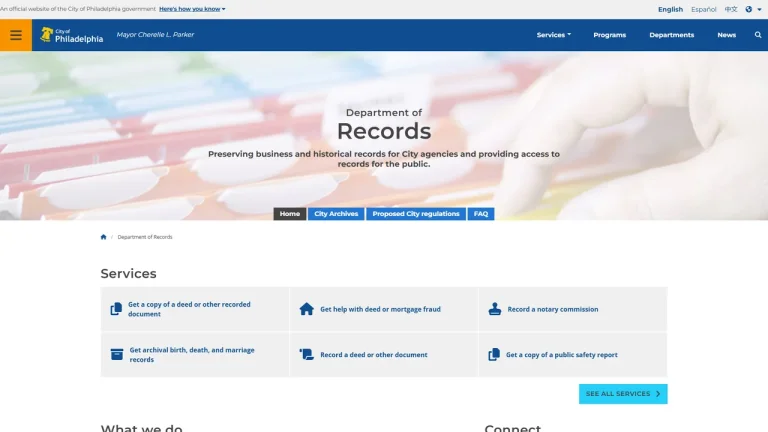
Jurisdiction and Authority of the Philadelphia Records Department
In the consolidated City and County of Philadelphia, the functions of the traditional county recorder of deeds are administered directly by the Philadelphia Department of Records. Operating primarily out of City Hall in Center City, the Department of Records serves as the statutory repository for all real property instruments executed within county boundaries. From historic brownstones in Rittenhouse Square and Society Hill to commercial parcels in University City and residential subdivisions in Northeast Philadelphia, every real estate conveyance must be formally registered here to establish legal priority.
The department maintains both physical archives and electronic registries through the Philadox online system, enabling title examiners, lending institutions, and property owners to verify ownership chains and identify outstanding liens. Recording an instrument provides constructive legal notice to all subsequent purchasers and encumbrancers under Pennsylvania property law. Without timely and accurate indexing by the Department of Records, property conveyances remain vulnerable to competing claims, unreleased mortgages, and municipal tax liens.
Standard Philadelphia Recording Fees and Processing Schedules
| Service / Matter | Required Documents / Prerequisites | Statutory Fee (USD) | Processing Timeline |
|---|---|---|---|
| Standard Deed Recording | Executed deed, Philadelphia Transfer Tax Certification, Certificate of Address | $256.00 base fee + local transfer tax | 1 to 3 business days (electronic) |
| Mortgage Recording | Original mortgage instrument, legal property description, completed cover sheet | $256.00 base fee (up to 4 pages) | 1 to 3 business days |
| Mortgage Satisfaction Piece | Executed satisfaction document referencing original mortgage book and page | $56.00 recording fee | 24 to 48 hours |
| Certified Copy of Recorded Deed | Document ID number, parcel identifier, or grantor/grantee index details | $40.00 search fee + $2.00 per page | Same-day walk-in / 5 days online |
Critical Property Recording Statutes and Deadlines in Pennsylvania
Pennsylvania operates under a strict race-notice recording statute codified under 21 Pa. C.S. § 351. Under this statutory framework, an unrecorded deed or property conveyance is fraudulent and void against any subsequent bona fide purchaser or mortgagee who records their instrument first without notice of the prior unrecorded transaction. This makes immediate recordation imperative upon closing any real estate transfer in Philadelphia County.
When a mortgage loan is fully satisfied, lenders are bound by 21 Pa. C.S. § 705, which mandates that the mortgagee enter satisfaction of record within sixty days of receiving full payment and a formal written request from the mortgagor. Failure to comply can subject noncompliant lenders to statutory damages. In addition, real estate transfers are governed by the municipal recording provisions of Phila. Code § 19-1400, which imposes strict payment deadlines for the Philadelphia Realty Transfer Tax prior to any deed acceptance by the Department of Records.
Direct Agency Access vs. Retaining Legal Counsel
Members of the public are legally permitted to access the Department of Records independently to conduct deed searches, review public property archives, or request certified copies of previously recorded instruments. Straightforward administrative requests, such as obtaining a duplicate copy of a deed for home improvement financing or verifying a mortgage release, can typically be completed directly at City Hall without legal representation.
Conversely, retaining an experienced real estate attorney is strongly advised when navigating complex title transfers, addressing inherited properties, or curing defects of record. Property disputes involving tangled titles, where a resident occupies a home passed down across generations without formal probate administration, require comprehensive legal proceedings before the Philadelphia Court of Common Pleas or Orphans' Court Division. Similarly, resolving boundary disputes, unreleased liens from defunct financial entities, or fraudulent quitclaim filings demands formal legal representation rather than standard clerical submissions.
Deed Fraud Warnings and Recording Process Red Flags
- Beware of unauthorized third-party mailings offering to supply a copy of your residential deed for exorbitant service fees exceeding standard Department of Records statutory rates.
- Exercise extreme caution regarding unsolicited quitclaim deed solicitations, which are frequently used by fraudulent operators attempting predatory deed theft or unauthorized title transfers.
- Never submit property documents that lack complete notary acknowledgments, required certificate of residency addresses, or exact parcel identification numbers, as incomplete filings will be rejected.
- Avoid executing deeds prepared without professional title searches, which leaves buyers exposed to undisclosed municipal utility liens, code violation judgments, and unpaid real estate taxes.
Frequently Asked Questions
Where is the Philadelphia Department of Records physically located?
The public deed recording and document examination offices of the Philadelphia Department of Records are situated within City Hall, Room 156, located at Broad and Market Streets in Center City Philadelphia.
What is the Philadox system and how is it accessed?
Philadox is the official web-based search and retrieval portal maintained by the Philadelphia Department of Records. It allows property owners, title companies, and legal professionals to view and download historical and current deeds, mortgages, and property transfers dating back several decades.
What is a tangled title in Philadelphia and how is it resolved?
A tangled title occurs when an individual lives in a home they consider their own, but their name is not formally on the recorded deed, often due to an informal family transfer following the death of the record owner. Resolving a tangled title requires opening an estate in the Register of Wills or filing an action to quiet title in the Philadelphia Court of Common Pleas.
How does the Philadelphia Realty Transfer Tax impact deed recording?
Before any deed can be officially recorded, the Philadelphia Department of Records requires payment of both state and local realty transfer taxes. The local transfer tax must be remitted alongside the state transfer tax and the appropriate recording fees at the time of submission.
Can a homeowner add or remove a family member from a Philadelphia deed independently?
While self-prepared deeds can technically be submitted for recording, creating a deed without legal counsel can trigger unintentional tax liabilities, violate existing mortgage covenants, or create severe clouds on title. Retaining a licensed attorney ensures proper legal structuring.