
Legal Resources in Philadelphia
Navigating public legal resources in Philadelphia provides direct access to court dockets, municipal agencies, detention facilities, and vital records. Understanding jurisdictional boundaries across county courts and city departments ensures efficient administrative filings and public access. Use the comprehensive directory below to locate official contact details and service requirements.

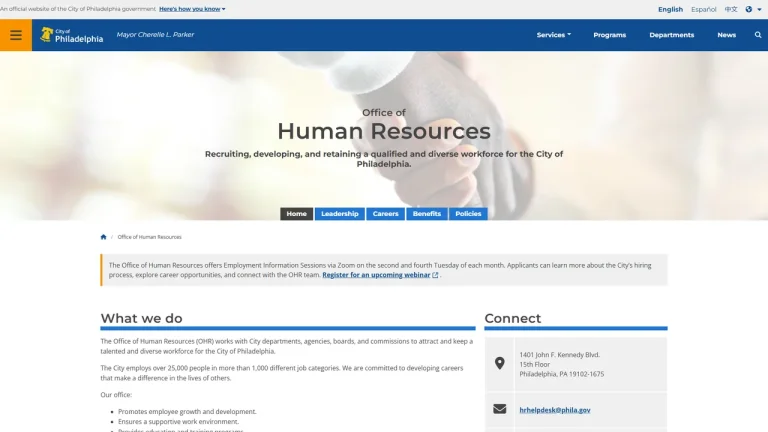
Philadelphia Personnel Department - Philadelphia, PA
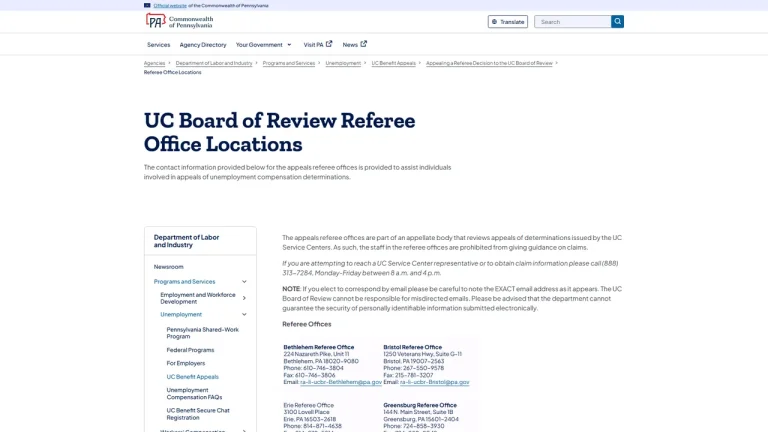


USDA Food Safety and Inspection Service - Philadelphia, PA

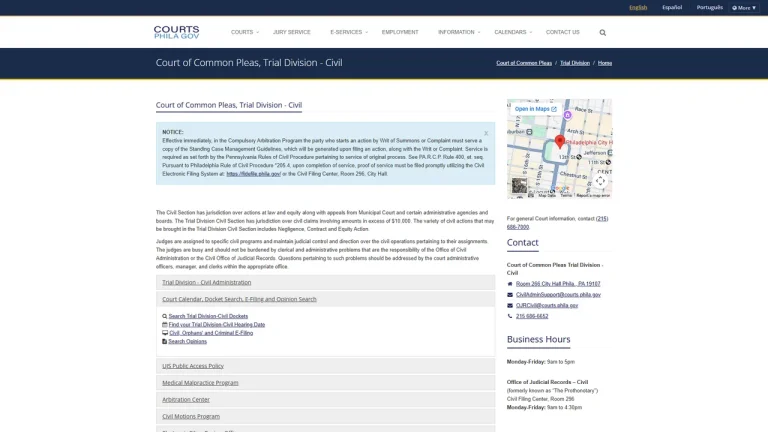
Philadelphia Civil Court - Philadelphia, PA
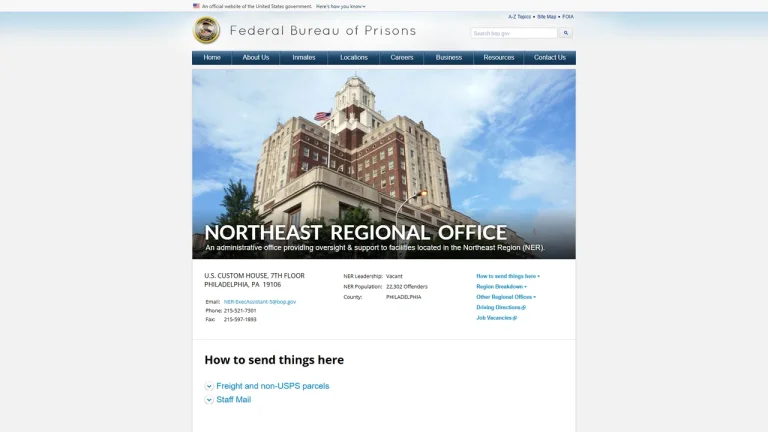
Federal Bureau of Prisons: Northeast Regional Office - Philadelphia, PA

Office of Arts, Culture and the Creative Economy - Philadelphia, PA
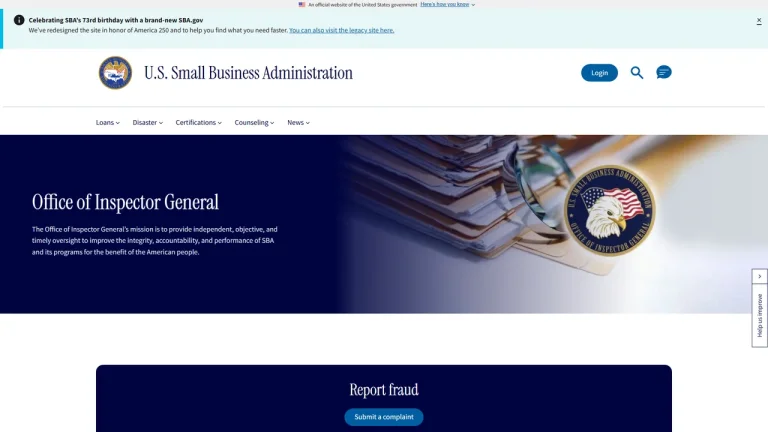
US Small Business Administration - Office of Inspector General - Philadelphia, PA


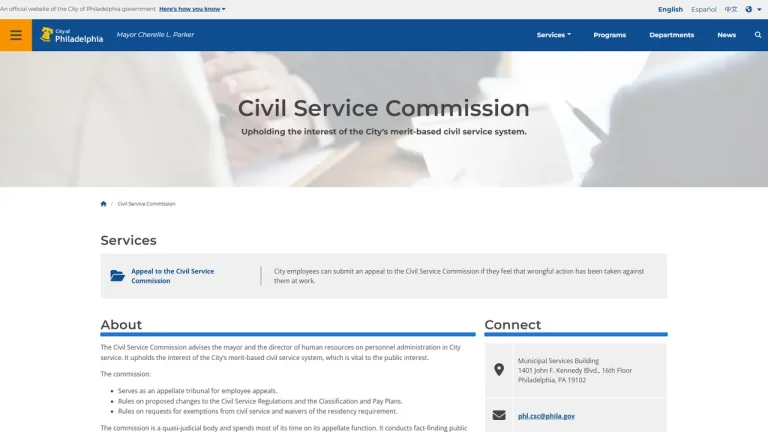
Philadelphia Civil Service Commission - Philadelphia, PA
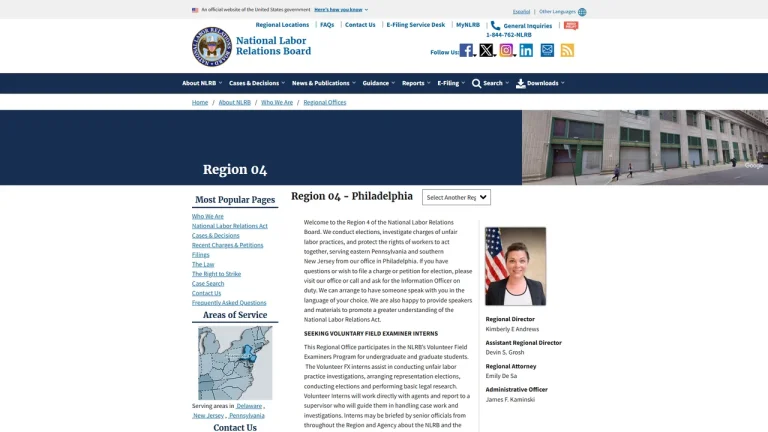
National Labor Relations Board - Region 4 - Philadelphia, PA
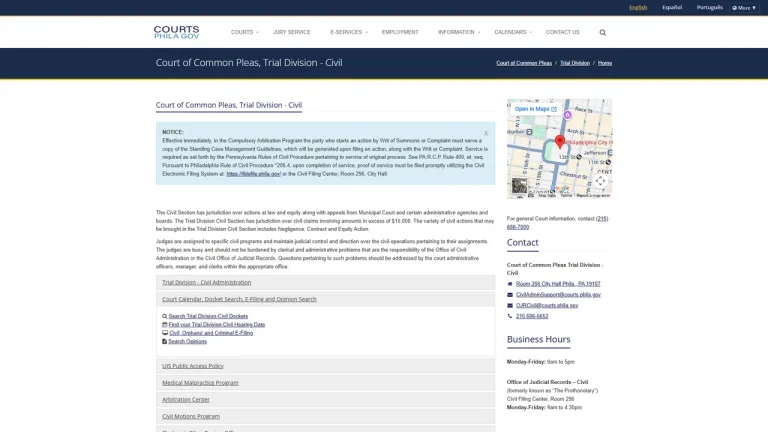
Common Pleas Court-Civil Trial - Philadelphia, PA
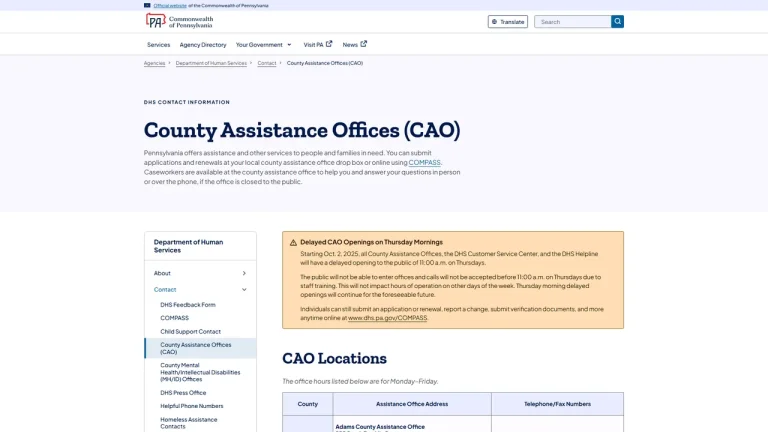
Philadelphia County Assistance Office - Delancey District - Philadelphia, PA
Philadelphia Procurement Division - Philadelphia, PA

Navigating Municipal and Judicial Institutions in Philadelphia
Philadelphia maintains a consolidated city-county governmental framework, meaning county operations and municipal governance are unified under the First Judicial District of Pennsylvania. Navigating public legal resources across this dense urban center requires an understanding of distinct departmental jurisdictions, statutory archives, and court facilities distributed throughout Center City and outlying municipal districts.
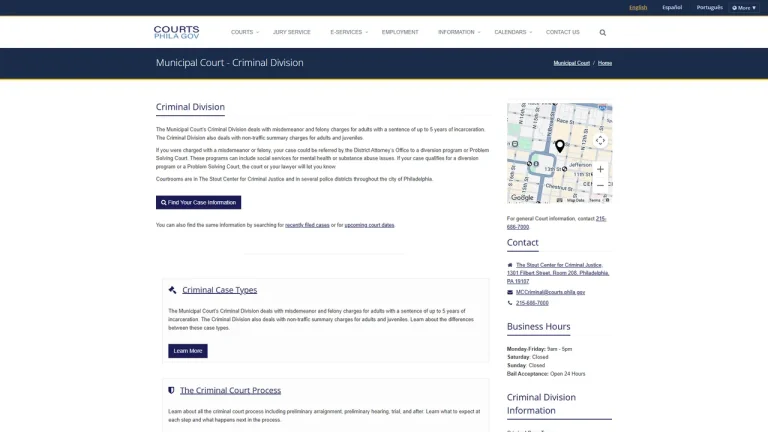
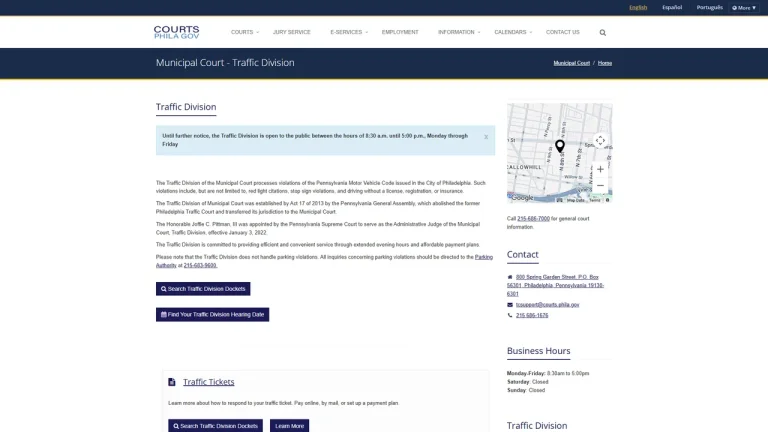
The judiciary is anchored by two primary facilities in downtown Philadelphia. Civil litigation, family division matters, and probate filings are concentrated in historic Philadelphia City Hall at Broad and Market Streets, as well as the Family Court building at 1501 Arch Street. Criminal arraignments, preliminary hearings, and felony trials proceed within the Juanita Kidd Stout Center for Criminal Justice at 1301 Filbert Street, while summary offenses and small claims sit at the Philadelphia Municipal Court on Chestnut Street.
County law enforcement and corrections are divided between municipal policing and sheriff oversight. The Philadelphia Police Department, headquartered at Broad and Callowhill Streets, oversees public safety and initial incident reports. County detention facilities-including the Curran-Fromhold Correctional Facility (CFCF) and the Philadelphia Industrial Correctional Center (PICC)-are situated along State Road under the jurisdiction of the Philadelphia Department of Prisons.
Public Services, Statutory Fees & Processing Timelines
| Service / Matter | Required Documents / Prerequisites | Statutory Fee (USD) | Processing Timeline |
|---|---|---|---|
| Philadelphia Civil & Criminal Docket Search | Case caption, OTN number, or party name via UJS Web Portal | Free online / $0.25 per page copy | Immediate electronic access |
| Certified Deed & Land Record Request | Property address or OPA parcel number at Department of Records | $2.00 per page + $2.00 cert | Same-day in person / 5 to 10 days mail |
| Philadelphia Police Incident Report (82-49) | DC incident number, valid government ID, self-addressed stamped envelope | $25.00 statutory fee | 7 to 14 business days |
| Inmate Bail Processing & Release | Inmate PID number, cashier check or card, valid government photo ID | 10% bail deposit + $10 fee | 4 to 8 hours post-clerk verification |
Critical Legal Deadlines & Statutes in Pennsylvania
Navigating governmental agencies and court filings in Philadelphia demands strict compliance with Pennsylvania statutory timeframes. When requesting government documents, citizens rely on the Pennsylvania Right-to-Know Law under 65 P.S. § 67.901, which mandates that municipal agencies must respond within five business days. If the agency requires an extension under 65 P.S. § 67.902, they must notify the requester, and denials must be appealed to the Pennsylvania Office of Open Records within 15 business days under 65 P.S. § 67.1101.
For individuals asserting injury or property claims against the City of Philadelphia, strict administrative notice rules apply. Under the Pennsylvania Political Subdivision Tort Claims Act at 42 Pa. C.S. § 5522(a), a formal written notice of claim must be served on the City within six months of the incident date. Failure to meet this six-month deadline permanently bars any subsequent civil lawsuit against municipal authorities.
In criminal matters, constitutional prompt arraignment protections are governed by Pennsylvania Rules of Criminal Procedure under Pa. R. Crim. P. 516. Individuals arrested without a warrant must be brought before an Arraignment Court Magistrate (ACM) without unnecessary delay, typically within hours of booking at the Stout Center for Criminal Justice.
Direct Agency Access vs. Retaining Legal Counsel
Many administrative functions in Philadelphia can be accomplished independently without private legal representation. Residents can directly pull property deeds from the Department of Records in City Hall Room 156, check court dockets on the Pennsylvania Unified Judicial System (UJS) Web Portal, request crash reports from the Police Records Department, or file small claims under $12,000 in the Philadelphia Municipal Court.
However, when liberty or substantial assets are at stake, attempting to navigate public institutions pro se carries severe risks. Arraignments and bail hearings at the Stout Center require criminal defense counsel to challenge excessive bail conditions. Similarly, appeals before the Philadelphia Zoning Board of Adjustment (ZBA), complex tax disputes before the Board of Revision of Taxes (BRT), and probate contests in Orphans' Court require formal legal representation to avoid fatal procedural errors.
Public Resource Red Flags & Scams to Avoid
- Commercial websites that charge $30 to $100 for basic court dockets, judicial forms, or public records that the Commonwealth of Pennsylvania provides for free on the UJS Web Portal.
- Unauthorized bail runners soliciting families outside 1301 Filbert Street or detention facilities, charging unregulated fees in violation of Philadelphia court rules.
- Telephone impostors claiming to be Philadelphia Sheriff deputies or Municipal Court clerks demanding immediate gift card or cryptocurrency payments to cancel missed jury duty warrants.
- Unlicensed legal consultants or notaries offering formal legal services or immigration filings without admission to the Bar of the Supreme Court of Pennsylvania.
Frequently Asked Questions
Where can I look up court case records in Philadelphia for free?
You can search public civil and criminal case records at no charge using the Pennsylvania Unified Judicial System (UJS) Web Portal. For detailed civil dockets in the Philadelphia Court of Common Pleas, use the First Judicial District electronic filing system.
Where do I post bail for an individual detained in Philadelphia?
Bail can be posted 24 hours a day at the Juanita Kidd Stout Center for Criminal Justice located at 1301 Filbert Street, or directly at the Curran-Fromhold Correctional Facility (CFCF) on State Road. You must provide the detainee's identification number and a valid government photo ID.
How do I obtain a copy of an official police report in Philadelphia?
Police incident reports (Form 82-49) are obtained through the Philadelphia Police Department Records Processing Unit. You must submit the District Control (DC) number, an application, and the statutory fee by mail or in person.
Where are deed and real estate records filed in Philadelphia?
Real estate transfers, mortgages, and property deeds are recorded and maintained by the Philadelphia Department of Records, situated in Room 156 of City Hall. Records can also be inspected electronically through the city's official records search system.
When do I need to hire a lawyer instead of handling an agency matter myself?
You should hire an attorney whenever you face criminal accusations, contested hearings, municipal administrative enforcement, or civil litigation involving more than $12,000. Lawyers ensure adherence to procedural deadlines and protect your constitutional rights.