
Courts in Pittsburgh
Access verified courts in Pittsburgh and Allegheny County through our comprehensive judicial directory. From the Allegheny County Court of Common Pleas to Pittsburgh Municipal Court and federal venues, understanding local filing procedures protects your rights. Explore verified courthouse locations, fee schedules, and official clerk resources below to manage your case.


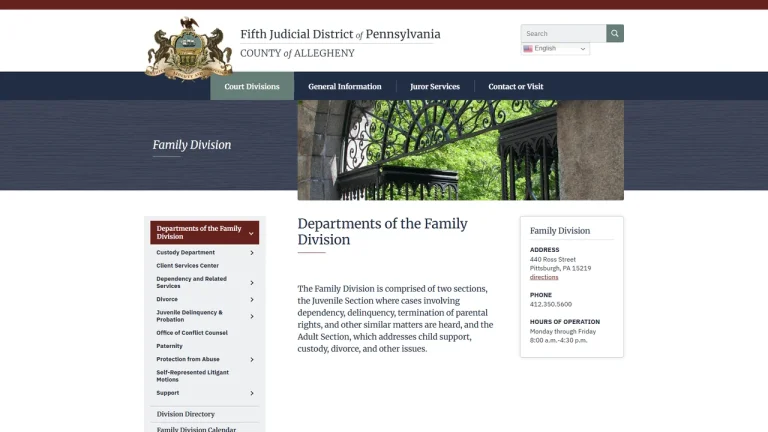
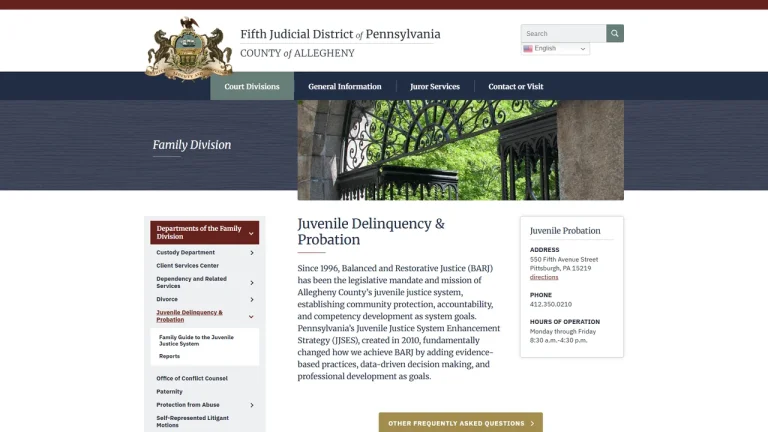
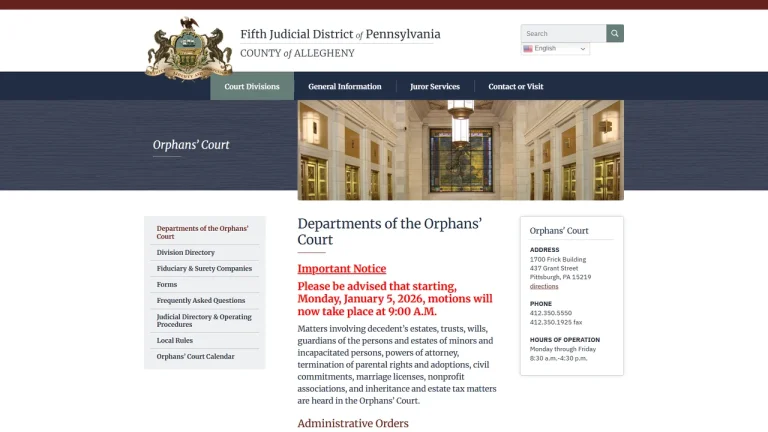
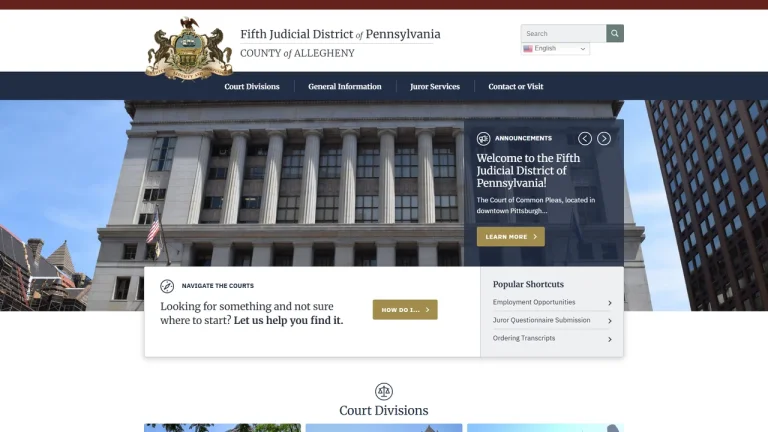
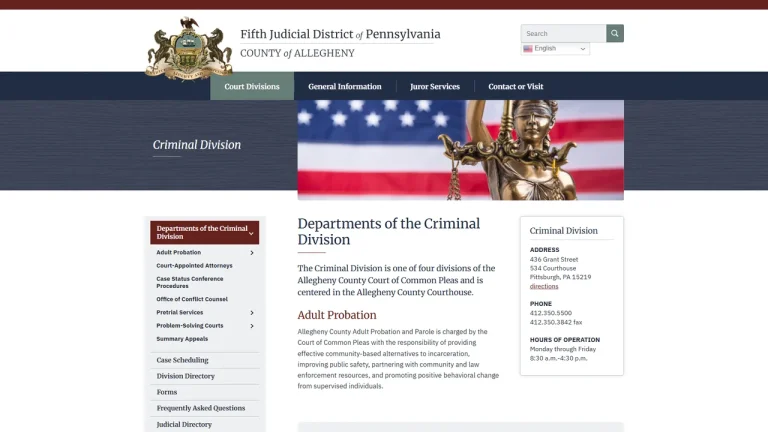
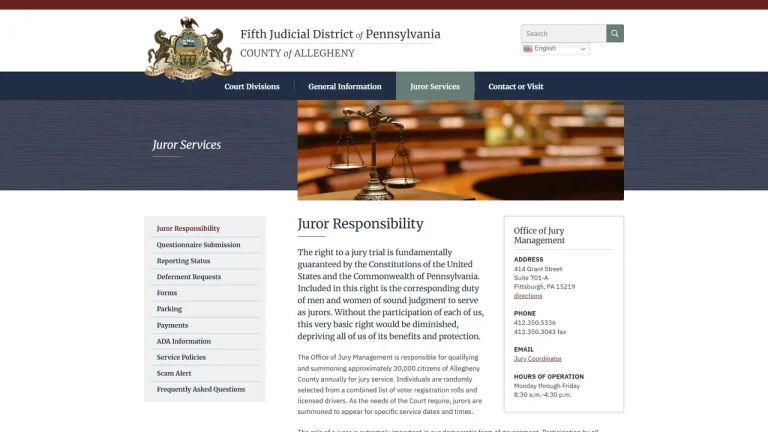
Allegheny County Office of Jury Management - Pittsburgh, PA

US Pretrial Services - Western District of Pennsylvania - Pittsburgh, PA
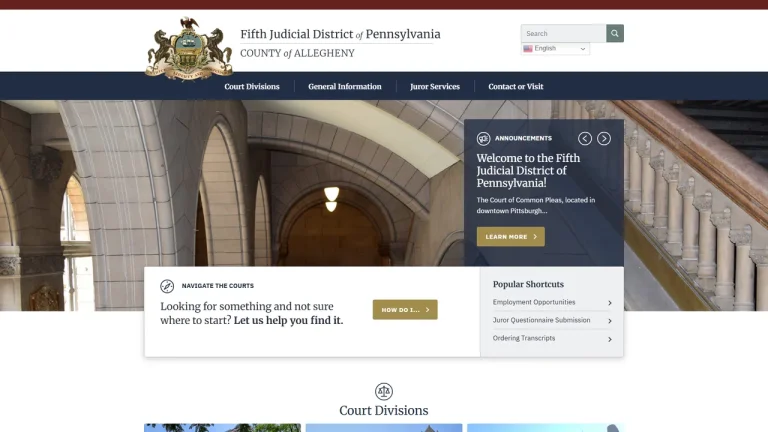
The Judicial Framework and Court Structure in Pittsburgh
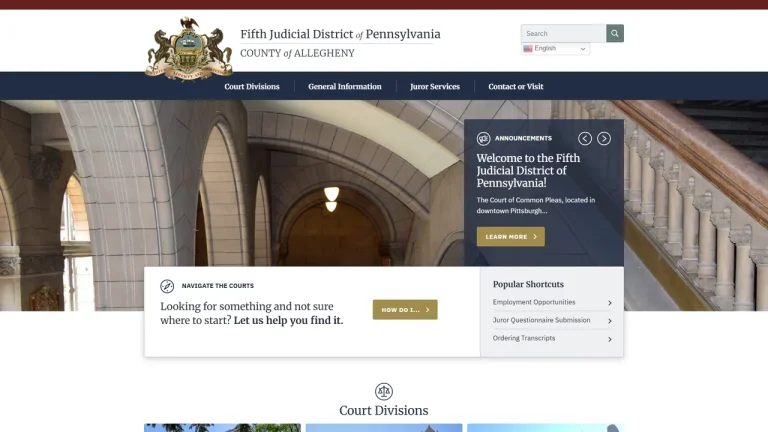
Pittsburgh anchors a major regional judicial hub in Western Pennsylvania, serving as the county seat of Allegheny County and the host city for the 5th Judicial District of Pennsylvania. Judicial administration is centralized along the prominent Grant Street legal corridor in Downtown Pittsburgh, flanked by Ross Street and Forbes Avenue, serving surrounding neighborhoods including Oakland, Shadyside, Lawrenceville, the South Side, and the North Shore.
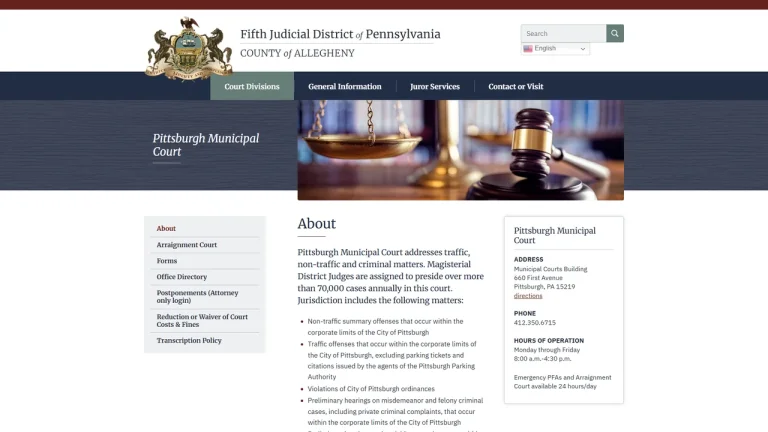
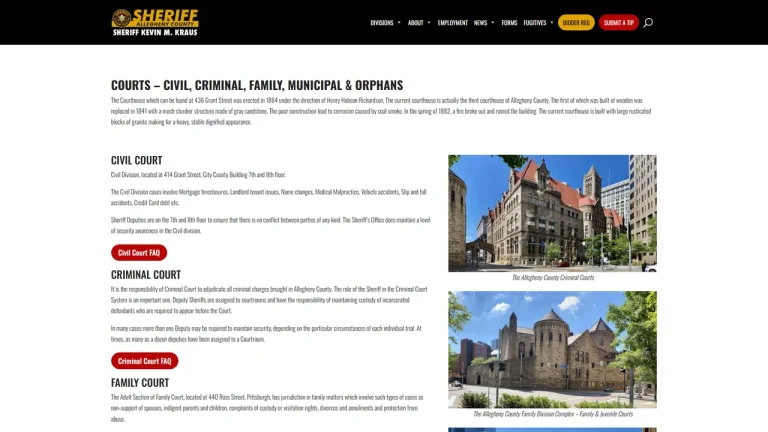
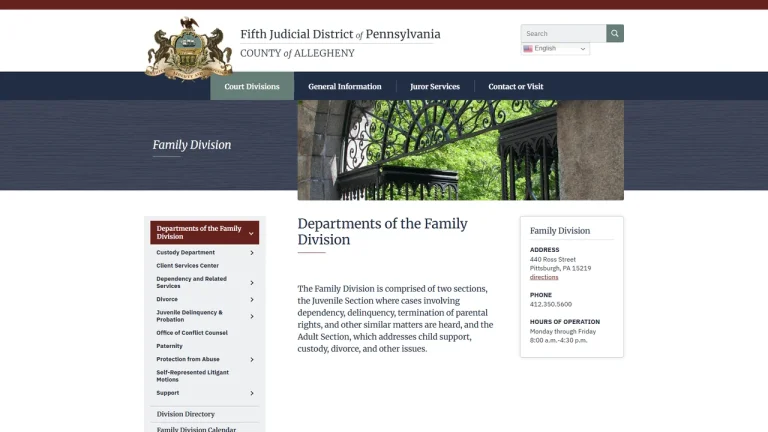
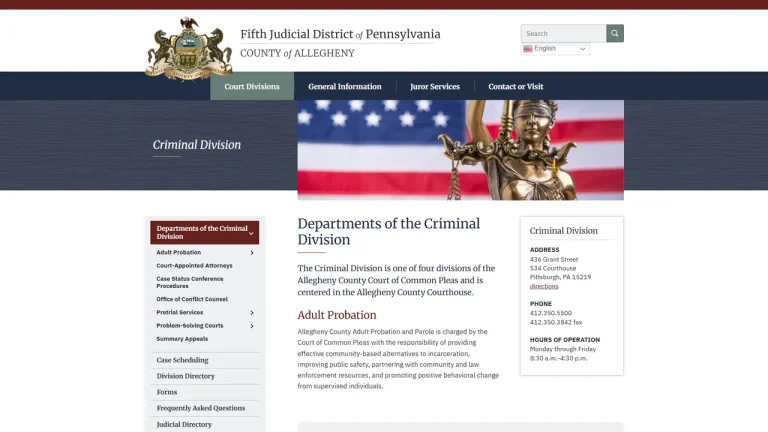
Local summary proceedings, traffic citations, preliminary arraignments, and minor civil landlord-tenant disputes within city borders are handled by the Pittsburgh Municipal Court, located on First Avenue. County-wide trial jurisdiction resides with the Allegheny County Court of Common Pleas, split between the landmark Allegheny County Courthouse on Grant Street (Criminal Division) and the City-County Building (Civil Division), alongside the Family Law Center on Ross Street.
In addition to county tribunals, Pittsburgh is home to the United States District Court for the Western District of Pennsylvania, seated at the Joseph F. Weis, Jr. U.S. Courthouse on Grant Street. The city also hosts regular argument sessions for the Supreme Court of Pennsylvania and the Superior Court of Pennsylvania. Navigating this court system requires strict observance of local Allegheny County court rules and state civil and criminal procedures.
Key Judicial Services and Statutory Court Fees in Allegheny County
| Service / Matter | Required Documents / Prerequisites | Statutory Fee (USD) | Processing Timeline |
|---|---|---|---|
| Pittsburgh Municipal Court Traffic / Summary Plea | Traffic citation or summons, driver's license number, written plea submission | Statutory fine plus $38.00 municipal court cost | Hearing scheduled within 3 to 6 weeks |
| Court of Common Pleas Civil Action Complaint | Civil cover sheet, verified complaint or praecipe for writ, electronic filing | $208.50 Department of Court Records fee | Docket number issued within 24 to 48 hours |
| Magisterial Small Claims Filing (Under $12,000) | Form AOPC 308A complaint, itemized damages proof, defendant service address | $65.00 - $135.00 tiered by claim and service | Hearing held within 30 to 45 calendar days |
| Family Division Divorce Complaint Filing | Complaint in divorce, confidential document form, counseling notice affidavit | $225.00 initial complaint filing fee | Processed within 3 to 5 business days |
Critical Legal Deadlines & Statutory Timelines in Pennsylvania
Litigation in Pittsburgh courts is governed by mandatory statutory limitation periods established under the Pennsylvania Consolidated Statutes and Pennsylvania Rules of Civil Procedure. Missing these deadlines can result in the permanent forfeiture of legal claims or the entry of default judgment:
Personal injury and property damage actions must be commenced within two years from the date of injury accrual under 42 Pa. C.S. § 5524. Breach of contract lawsuits carry a four-year statute of limitations pursuant to 42 Pa. C.S. § 5525. Any individual intending to initiate an injury or property damage claim against the City of Pittsburgh, Allegheny County, or a local municipal agency must deliver a formal written notice of claim within six months of the occurrence under 42 Pa. C.S. § 5522(a).
In the Allegheny County Court of Common Pleas, a defendant served with a civil complaint has exactly twenty calendar days to file responsive pleadings or preliminary objections pursuant to Pa. R.C.P. No. 1026. Following an adverse judgment in a small claims action, an appeal to the Court of Common Pleas must be filed within thirty calendar days under Pa. R.C.P.M.D.J. No. 1002(A), or within ten calendar days if the judgment involves residential landlord-tenant eviction under Pa. R.C.P.M.D.J. No. 1002(B). Appeals from final Common Pleas orders to the Pennsylvania Superior Court or Commonwealth Court must be lodged within thirty calendar days under Pa. R.A.P. 903(a).
Small Claims and Self-Representation vs. Legal Representation
Self-represented individuals can resolve certain routine matters in Pittsburgh courts without professional counsel. Magisterial District Courts and the Pittsburgh Municipal Court provide accessible dockets where pro se litigants can pursue small claims up to $12,000, contest summary traffic tickets, or handle straightforward residential security deposit disputes. The Allegheny County Department of Court Records and the Law Library also offer standardized pro se filing packets.
However, once litigation enters the Allegheny County Court of Common Pleas, formal procedural rules demand legal expertise. Navigating complex discovery schedules, drafting preliminary objections, and presenting admissible trial evidence require licensed legal counsel. Under Pennsylvania Rule of Civil Procedure 2177, corporations, limited liability companies, and partnerships cannot represent themselves in Common Pleas courts and must appear through a licensed attorney. Retaining counsel is also critical in felony criminal prosecutions, contentious child custody disputes in the Family Law Center, and equity proceedings before the Commerce and Complex Litigation Center.
Red Flags and Court Registry Consumer Warnings
- Beware of unauthorized third-party websites charging subscription fees to view Pennsylvania court dockets; public case information for Common Pleas and Municipal courts is freely accessible through the Pennsylvania Unified Judicial System (UJS) Web Portal.
- Avoid unregulated document preparation services offering low-cost representation in Allegheny County courtrooms; drafting pleadings or advising litigants without a license from the Supreme Court of Pennsylvania violates state law.
- Guard against telephone scammers posing as Allegheny County Sheriff deputies or court clerks demanding payment via wire transfers or prepaid cards to cancel bench warrants for missed jury duty; courts never demand payment over the phone.
- Ensure any lawyer representing you in Pittsburgh courts is an active member in good standing with the Disciplinary Board of the Supreme Court of Pennsylvania.
Frequently Asked Questions
Where is the Allegheny County Court of Common Pleas located?
The court operates across Downtown Pittsburgh: the Criminal Division is at the Allegheny County Courthouse (436 Grant Street), the Civil Division is in the City-County Building (414 Grant Street), and the Family Division is at the Family Law Center (550 Ross Street).
What is the monetary limit for small claims in Pittsburgh?
Magisterial District Courts and the Pittsburgh Municipal Court have jurisdiction over civil claims up to $12,000 under 42 Pa. C.S. § 1123. Claims exceeding this limit must be filed in the Court of Common Pleas.
Where is Pittsburgh Municipal Court located?
Pittsburgh Municipal Court is located at 660 First Avenue, Pittsburgh, PA 15219. It handles municipal code violations, traffic citations, preliminary arraignments, and preliminary hearings.
How do I search court records in Allegheny County?
Civil and criminal court records can be searched online through the Allegheny County Department of Court Records portal and the Pennsylvania Unified Judicial System (UJS) Web Portal, or in person at the courthouse record rooms.
Can an LLC represent itself in the Allegheny County Court of Common Pleas?
No. Under Pennsylvania court rules, corporations and limited liability companies cannot represent themselves in the Court of Common Pleas and must be represented by an attorney admitted to the Pennsylvania Bar.