
Specialty Courts (Drug, Family, Juvenile) in Pennsylvania
Specialty and problem-solving courts across Pennsylvania provide specialized adjudication for family domestic disputes, juvenile matters, and rehabilitative diversion. Navigating these dockets requires adherence to strict statutory timelines established by the Administrative Office of Pennsylvania Courts. Explore our statewide directory below to locate local specialty divisions, review program eligibility standards, and connect with qualified legal advocates.

U.S. Bankruptcy Court for the Eastern District of Pennsylvania

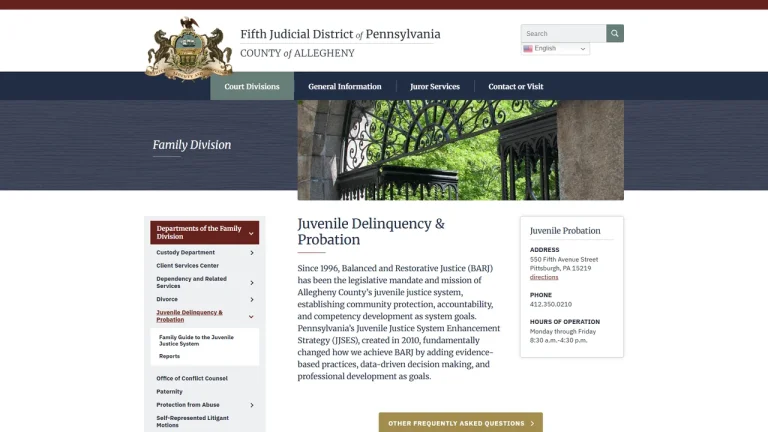


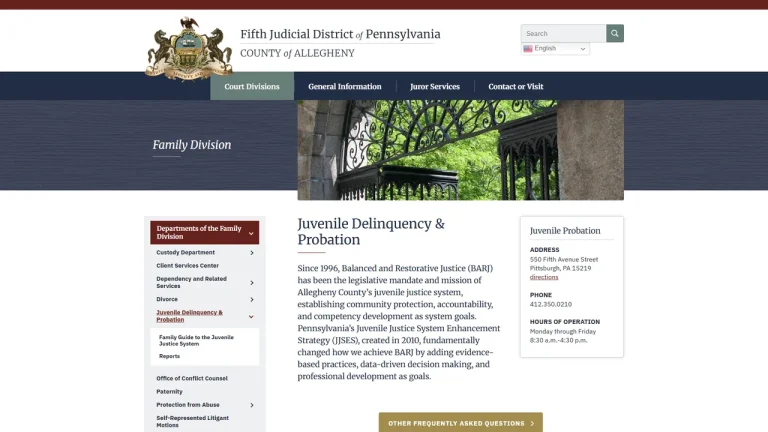
Allegheny County Sheriff's Office: Juvenile Division - Pittsburgh, PA
Pennsylvania Specialty Courts and Problem-Solving Dockets
Pennsylvania's judicial system includes a comprehensive network of specialized and problem-solving court programs designed to address underlying social, psychological, and behavioral challenges within the justice system. Guided by statewide operational standards established by the Administrative Office of Pennsylvania Courts (AOPC) in Harrisburg, specialty divisions are embedded within county Courts of Common Pleas across the Commonwealth's 60 judicial districts. These include Adult Drug Treatment Courts, Veterans Courts, Mental Health Courts, and Driving Under the Influence (DUI) Treatment Courts.
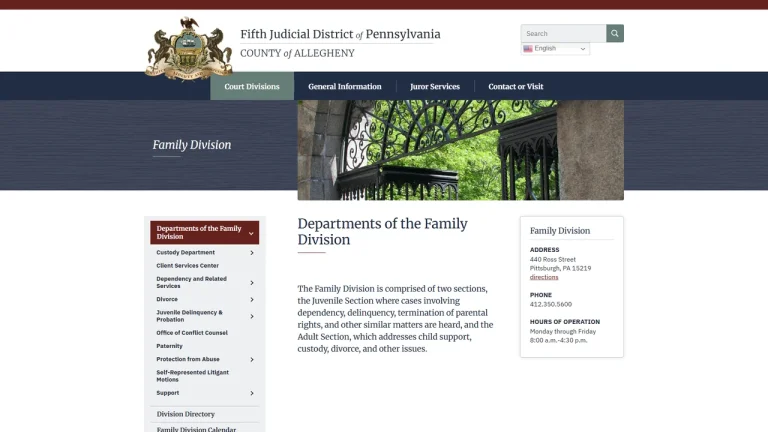
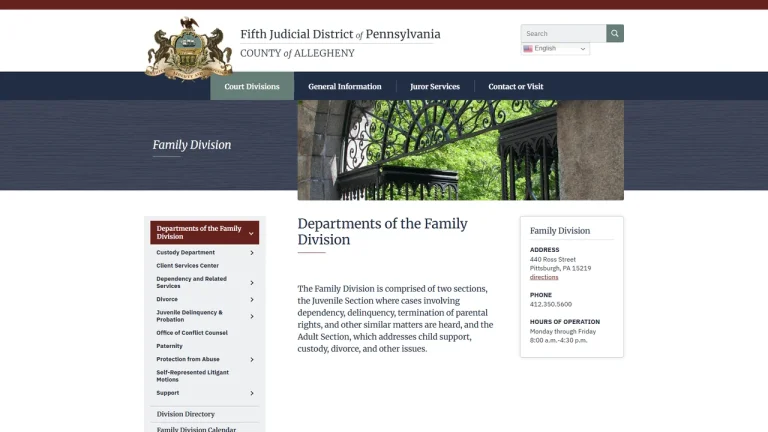
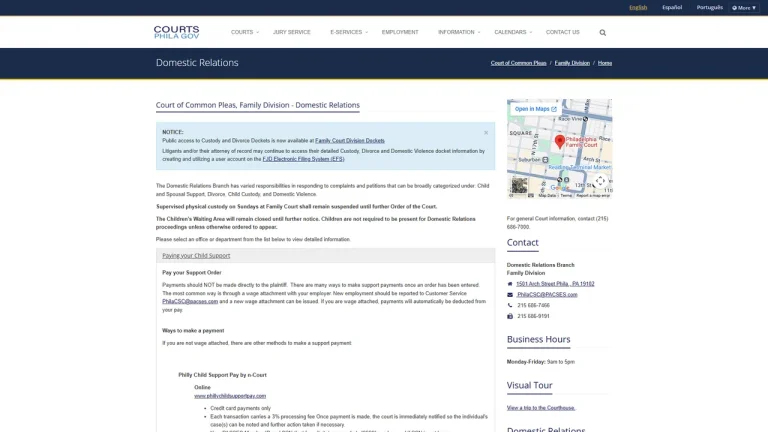
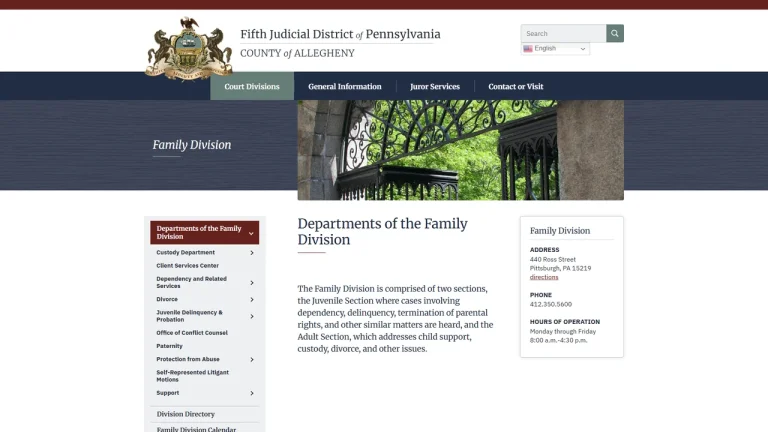
Alongside problem-solving criminal diversion programs, Pennsylvania maintains dedicated Family Court Divisions and Domestic Relations Sections (DRS) in each judicial district. Family courts oversee child custody conciliation, divorce, equitable distribution, and domestic violence proceedings governed by the Protection From Abuse (PFA) Act. Domestic Relations Sections manage the administrative establishment, enforcement, and modification of child and spousal support orders through the statewide Pennsylvania Child Support Enforcement System (PACSES).
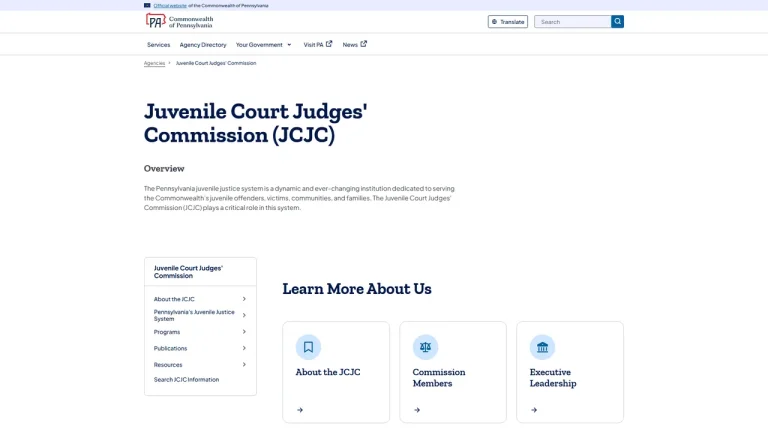
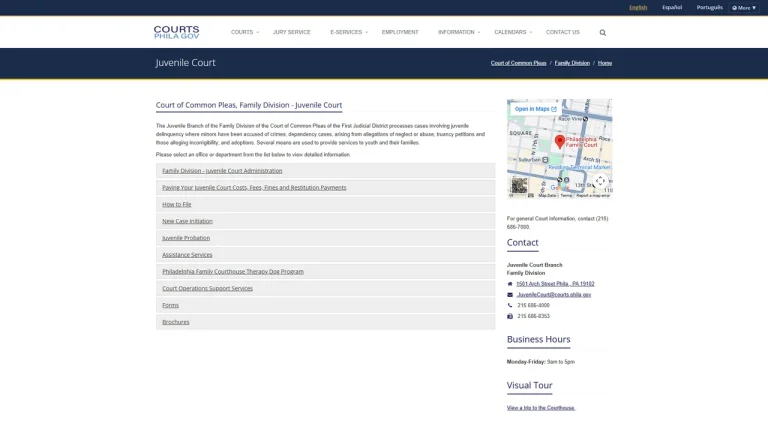
Juvenile delinquency and dependency matters are adjudicated in specialized Juvenile Courts in accordance with the Pennsylvania Juvenile Act and policy guidelines from the Juvenile Court Judges' Commission (JCJC). These proceedings prioritize rehabilitation, community protection, and juvenile accountability over punitive incarceration, utilizing informal adjustments, consent decrees, and community-based supervision programs.
Specialty Court Procedures, Prerequisites, and Standard Timelines
| Service / Matter | Required Documents / Prerequisites | Statutory Fee (USD) | Processing Timeline |
|---|---|---|---|
| Adult Drug Treatment Court Admission | Clinical addiction evaluation, DA diversion approval, non-violent offense verification | $0 application fee (Program fees $500 - $1,500) | 14 - 30 calendar days for intake screening |
| Emergency Protection From Abuse (PFA) Order | Verified PFA petition, domestic relationship proof, affidavit of immediate abuse | $0 filing fee (Mandated by state statute) | Immediate ex parte hearing; final hearing in 10 days |
| Child Support Establishment (DRS / PACSES) | Child birth certificate, income documentation, parent identification, custody order | $0 - $40.25 (Depending on public assistance status) | Conference scheduled within 30 - 45 calendar days |
| Juvenile Delinquency Informal Adjustment | Juvenile probation intake report, parent consent, victim restitution agreement | $0 filing fee | Supervision duration up to 6 months |
Critical Legal Deadlines & Statutes in Pennsylvania
Specialty and problem-solving courts in Pennsylvania enforce rigid statutory timelines to protect due process and family stability. Under the Juvenile Act (42 Pa. C.S. § 6332), when a juvenile is taken into custody, an informal detention hearing must be held before a judge or juvenile court hearing officer within 72 hours to determine whether detention remains warranted. If the juvenile remains detained, the formal adjudicatory hearing must commence within ten calendar days of the detention petition filing under 42 Pa. C.S. § 6335.
In domestic violence proceedings under the Protection From Abuse Act (23 Pa. C.S. § 6107), an ex parte temporary order requires a full evidentiary hearing within ten business days, at which both parties have the opportunity to present testimony and evidence. In child and spousal support proceedings before the Domestic Relations Section, if a party disputes a support conference officer's proposed order, a written demand for a de novo court hearing or exceptions must be filed within twenty calendar days pursuant to Pa. R. Civ. P. 1910.12. Problem-solving court contracts are governed by statutory standards under 42 Pa. C.S. § 916, requiring prompt compliance benchmarks to prevent program revocation.
Direct Access vs. Specialized Legal Representation
Certain administrative functions within Pennsylvania specialty courts can be accessed directly without an attorney. For example, individuals seeking protection from domestic violence can file emergency PFA petitions pro se through county prothonotary counters or court domestic violence intake units with the assistance of court-affiliated victim advocates. Similarly, parents can initiate child support applications online through the state PACSES portal or attend initial Domestic Relations Section conciliation conferences without private counsel.
However, substantive legal representation is vital in adversarial or liberty-impacting matters. Under 42 Pa. C.S. § 6337, juveniles facing delinquency petitions have an absolute statutory right to counsel at all stages of proceedings. In treatment court diversion programs, entering a formal plea agreement requires waiving fundamental constitutional rights, including trial rights and speedy trial guarantees under Pa. R. Crim. P. 600. An experienced defense attorney ensures that treatment program agreements do not impose disproportionate sanctions and protects clients during violation or termination hearings.
Red Flags & Specialty Court Consumer Warnings
Participants and families navigating Pennsylvania specialty courts and family dockets should exercise caution against deceptive practices:
- Private substance rehabilitation facilities promising guaranteed acceptance or entry into county drug treatment courts without formal district attorney or judicial approval.
- Commercial online services charging fees for standard Pennsylvania child support calculators, divorce forms, or custody modification templates freely provided by the Unified Judicial System.
- Solicitations guaranteeing immediate expungement of juvenile records without judicial review under Pennsylvania juvenile record sealing standards.
- Unauthorized legal consultants claiming they can secure ex parte dismissals of Domestic Relations Section support enforcement warrants through unofficial channels.
Frequently Asked Questions
What are the eligibility requirements for Pennsylvania Drug Treatment Courts?
Eligibility criteria vary by county but generally require that the defendant be diagnosed with a moderate-to-severe substance use disorder, have committed a non-violent offense, have no prior convictions for violent felonies, and receive approval from the county District Attorney's Office and the treatment court team pursuant to 42 Pa. C.S. § 916.
What happens if a participant fails to complete a problem-solving court program?
If a participant is revoked from a drug, mental health, or veterans treatment court due to non-compliance or new criminal offenses, the case is returned to the regular criminal trial docket. If the individual entered a post-plea program, the court will proceed directly to sentencing based on the entered guilty plea.
Are juvenile court records completely confidential in Pennsylvania?
Under 42 Pa. C.S. § 6307, juvenile proceedings and records are generally confidential and shielded from public inspection. However, exceptions exist for serious felony offenses committed by juveniles fourteen years of age or older, where delinquency petitions and dispositions may be open to public inspection.
How does the Domestic Relations Section determine child support amounts?
Child support in Pennsylvania is calculated using the Income Shares Model codified in the Pennsylvania Support Guidelines under 23 Pa. C.S. § 4322 and Pa. R. Civ. P. 1910.16-1. The formula considers the net monthly incomes of both parents, health insurance expenses, child care costs, and physical custody percentage.
Can a final Protection From Abuse (PFA) order be modified or dismissed early?
Yes. Under 23 Pa. C.S. § 6108, either party may petition the Court of Common Pleas to modify or dismiss a final PFA order. A formal hearing is held where the court evaluates whether circumstances have changed significantly and whether the plaintiff's safety remains protected.