
Wrongful Termination Lawyers in Sacramento
Fired illegally in Sacramento, CA? Connect with top wrongful termination lawyers to enforce your rights under California labor codes and seek full compensation. Local employment attorneys frequently negotiate confidential severance packages and pre-suit settlements, shielding you from drawn-out litigation. Explore our Sacramento directory below to schedule an evaluation with an experienced advocate.

George F. Allen, Attorney at Law, Sacramento, CA

Finley Employment Law - Sacramento, CA
Aecus Law Workplace Investigations - Sacramento, CA
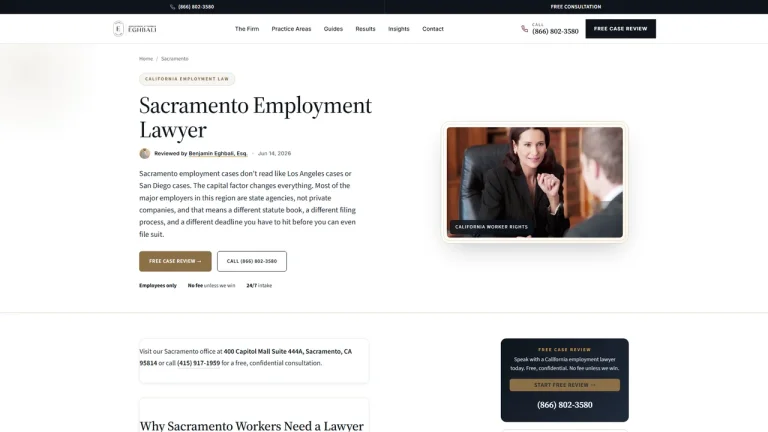
Eghbali Law Firm - Sacramento, CA
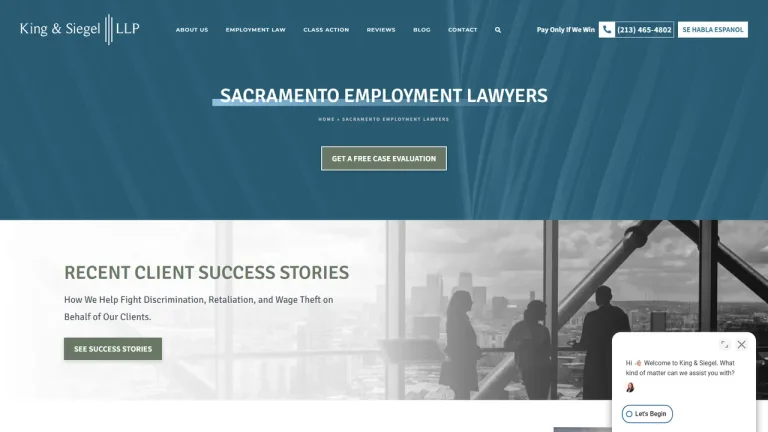
King & Siegel LLP - Sacramento, CA

G. Eric Lambdin - Attorney at Law - Sacramento, CA
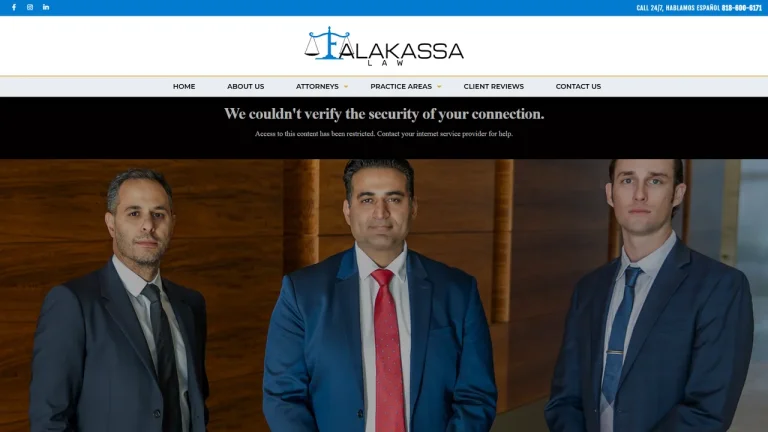
Falakassa Law P.C. - Sacramento, CA

Littler Mendelson P.C. - Sacramento, CA
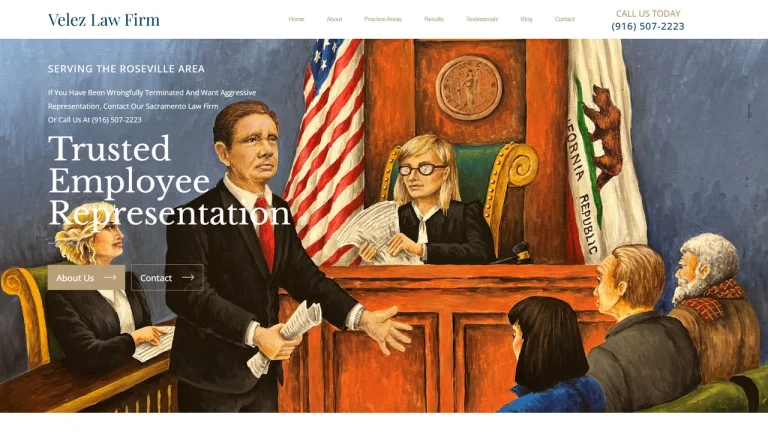
Velez Law Firm - Sacramento, CA
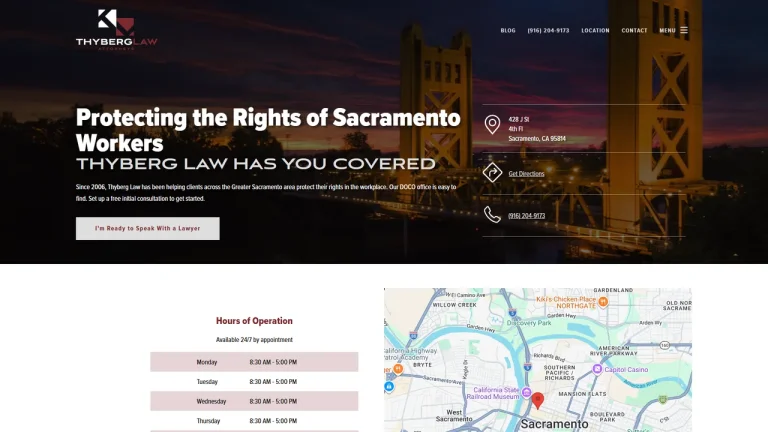
Thyberg Law - Sacramento, CA
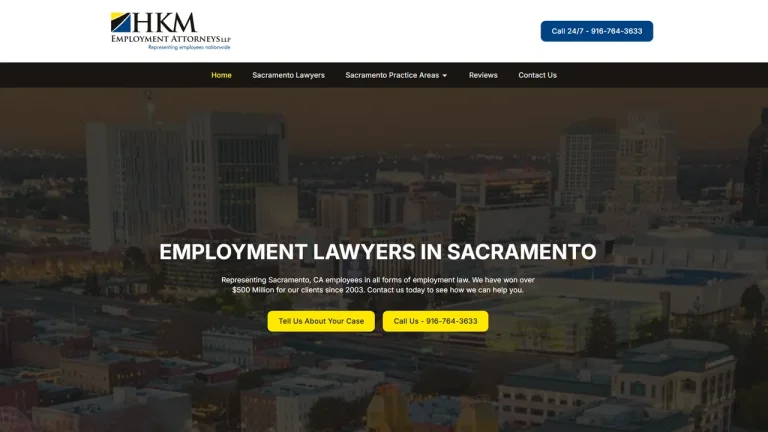
HKM Employment Attorneys LLP - Sacramento, CA
Stephen Danz and Associates, Sacramento, CA

Richardson Employment Law, P.C. Sacramento, CA
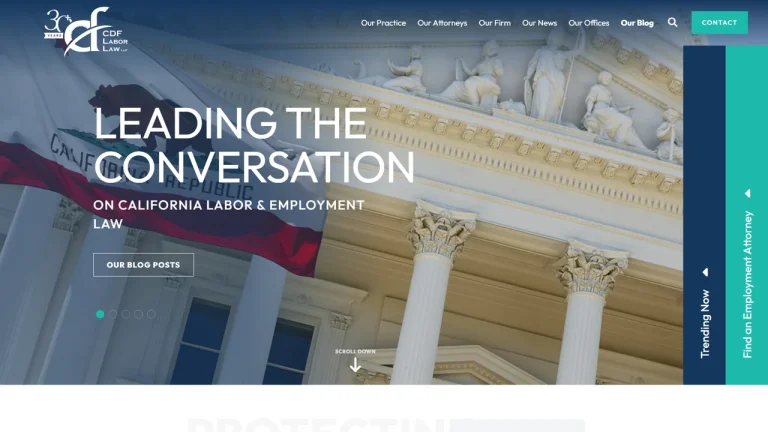
CDF Labor Law LLP - Sacramento, CA
Erkel Law, P.C. - Sacramento, CA

Asbill Law Group, APLC - Sacramento, CA

Reed Williams, A Professional Law Corporation - Sacramento, CA
Omega Law Group Accident and Injury Attorneys - Sacramento, CA
Matern Law Group, PC - Sacramento, CA
Employment Lawyers Group - Sacramento, CA
Western States Employment Law, PC - Sacramento, CA
Webber & Egbert Employment Law, P.C. - Sacramento, CA
Law Office of Barbara M. Jacobson - Sacramento, CA
Wrongful Termination Jurisdiction in Sacramento County
While employment in California is presumed to be at-will under Cal. Lab. Code § 2922, employers are strictly prohibited from discharging workers for reasons that violate fundamental public policy, statutory protections, or contractual obligations. In Sacramento, wrongful dismissals frequently involve retaliation against employees who blow the whistle on regulatory violations, assert lawful wage and hour rights, report workplace safety hazards, or exercise medical leave protections.
The workplace ecosystem of Sacramento presents unique legal dynamics due to the heavy concentration of state governmental agencies, regional healthcare networks like UC Davis Health and Sutter Health, public utilities, logistics enterprises, and technology contractors across Downtown, Natomas, Rancho Cordova, and Elk Grove. Wrongful termination lawsuits for private sector workers are litigated in the Sacramento County Superior Court at the Gordon D. Schaber Courthouse on 9th Street. State civil service employees face distinct dual tracks, requiring appeals before the California State Personnel Board (SPB) or the California Civil Rights Department (CRD), both of which are headquartered directly in Sacramento.
Sacramento Wrongful Termination Legal Costs and Retainer Structures
| Case Scenario | Fee Structure | Estimated Cost (USD) | Key Cost Determinants |
|---|---|---|---|
| Severance Agreement Review & Negotiation | Flat Fee or Hourly | $850 - $3,000 | Waiver of statutory claims, restrictive covenants, executive equity compensation, bonus entitlements |
| Public Policy Retaliation Lawsuit (Tameny) | Contingency Fee | 33.3% - 40% of recovery | Direct vs. circumstantial proof of pretext, lost future wages, emotional distress severity |
| Whistleblower Discharge (Cal. Lab. Code § 1102.5) | Contingency + Fee Shifting | 33% - 40% of award | Agency reporting documentation, employer paper trail, front-pay economic models |
| State Civil Service SPB Disciplinary Appeal | Hourly Retainer | $350 - $600 / hr ($5,000 - $15,000 retainer) | Administrative hearing length, Skelly hearing records, civil service classification rules |
Critical Legal Deadlines & Statutes in California
Strict limitation periods dictate when a wrongfully discharged worker in Sacramento must act. Common law tort actions for wrongful termination in violation of public policy carry a two-year statute of limitations pursuant to Cal. Civ. Proc. Code § 335.1. Whistleblower claims brought under California's comprehensive whistleblower statute, Cal. Lab. Code § 1102.5, must be filed within three years under Cal. Civ. Proc. Code § 338.
When a dismissal involves unlawful discrimination, harassment, or retaliation under the Fair Employment and Housing Act, administrative exhaustion is mandatory. Claimants must submit an intake complaint to the California Civil Rights Department (CRD) within three years of the unlawful termination under Cal. Gov. Code § 12960. Once the CRD issues a Right-to-Sue notice, the worker has strictly one year to file a civil lawsuit under Cal. Gov. Code § 12965. Public entity workers must also satisfy the California Government Claims Act by filing a government tort claim within six months under Cal. Gov. Code § 911.2, while state civil service employees must appeal to the SPB within twenty calendar days under Cal. Gov. Code § 19575.
Sacramento Small Claims Limitations vs. Civil Court Action
Sacramento County resolves small claims at the Carol Miller Justice Center, where disputes are capped at $12,500 for individual claims under Cal. Civ. Proc. Code § 116.221. Under Cal. Civ. Proc. Code § 116.530, legal counsel is prohibited from representing individuals during small claims hearings. While small claims can resolve an isolated dispute over unreimbursed mileage, it is fundamentally ill-equipped for wrongful termination claims.
Wrongful termination disputes routinely involve lost earning capacity, future front pay, retirement benefits, and severe emotional distress damages that vastly exceed small claims jurisdictional ceilings. Litigating in the Sacramento County Superior Court allows an experienced attorney to subpoena company emails, conduct depositions of supervisory personnel, and invoke statutory fee shifting under Cal. Gov. Code § 12965 and Cal. Lab. Code § 1102.5, compelling employers to pay employee legal fees upon prevailing.
Red Flags When Selecting a Sacramento Wrongful Termination Lawyer
- Law firms demanding hefty non-refundable cash retainers for private sector termination claims that qualify for traditional contingency representation.
- Attorneys who guarantee specific financial settlements or jury verdicts without reviewing employer disciplinary memos, personnel files, or separation paperwork.
- Practitioners unfamiliar with the critical distinction between private-sector civil suits and the strict six-month public entity tort claim deadlines under the California Government Claims Act.
- Lawyers who urge clients to sign rapid severance agreements without analyzing potential claims under California's Fair Employment and Housing Act.
Frequently Asked Questions
What constitutes unlawful wrongful termination in Sacramento?
Wrongful termination in California occurs when an employer discharges an employee in violation of legal statutes or established public policy. Key violations include terminating an employee for disclosing illegal company practices under Cal. Lab. Code § 1102.5, discriminating against protected classes under Cal. Gov. Code § 12940, firing a worker for requesting medical leave, or dismissing an employee for refusing to participate in unlawful commercial activities.
How does wrongful termination differ for California state civil service employees in Sacramento?
Permanent California civil service employees hold property rights in their jobs and can only be dismissed for cause. Following a disciplinary termination, state workers must receive a Skelly hearing and can appeal the dismissal to the California State Personnel Board (SPB) pursuant to Cal. Gov. Code § 19575 within twenty days, in addition to pursuing discrimination or retaliation claims before the CRD.
What damages are recoverable in a Sacramento wrongful termination lawsuit?
A prevailing employee can recover past lost wages (back pay), future lost earnings (front pay), loss of health insurance and retirement benefits, compensation for emotional distress, and court costs. If the employer acted with malice, oppression, or fraud, punitive damages may be awarded under Cal. Civ. Code § 3294.
Does signing a severance agreement forfeit my right to sue for wrongful termination?
Generally, yes. Severance agreements include broad liability waivers releasing the employer from past legal claims. However, under California law, an agreement cannot waive certain non-waivable statutory rights, such as filing workers' compensation claims or participating in agency investigations. Having an attorney review the agreement before signing is essential to determine whether the severance offered adequately compensates for potential claims.
How do contingency fees work in Sacramento wrongful termination cases?
Under a contingency fee arrangement, the attorney advances litigation costs and does not bill the client hourly. Legal fees are calculated as an agreed percentage (typically 33% to 40%) deducted from the recovery if the case results in a settlement or jury award. If no monetary recovery is achieved, the client owes zero attorney fees.