
Wrongful Termination Lawyers in Pittsburgh
Partnering with a seasoned Pittsburgh wrongful termination lawyer protects your career, dignity, and workplace rights under state and federal employment laws. Experienced counsel assesses unlawful retaliation and discrimination claims to secure favorable pre-trial resolutions, avoiding prolonged court disputes. Explore our directory below to connect with trusted Allegheny County employment advocates.

Marshall Dennehey, P.C. - Pittsburgh, PA

Bononi & Company, P.C. - Pittsburgh, PA

Eckert Seamans - Pittsburgh, PA

Leech Tishman Fuscaldo & Lampl - Pittsburgh, PA

The Lynch Law Group, LLC - Pittsburgh, PA
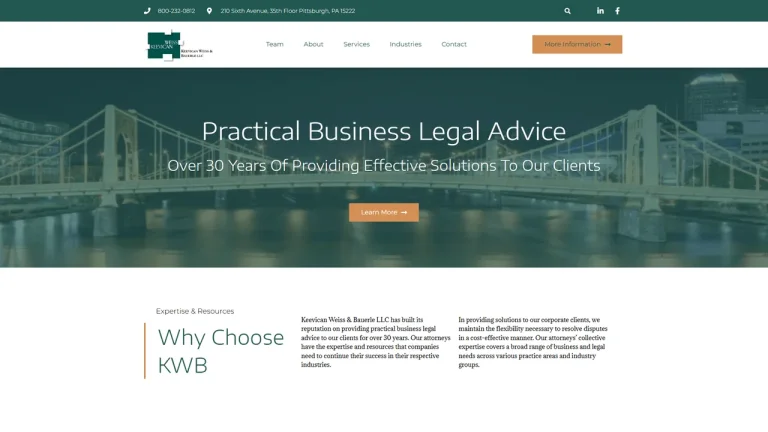
Keevican Weiss & Bauerle LLC - Pittsburgh, PA
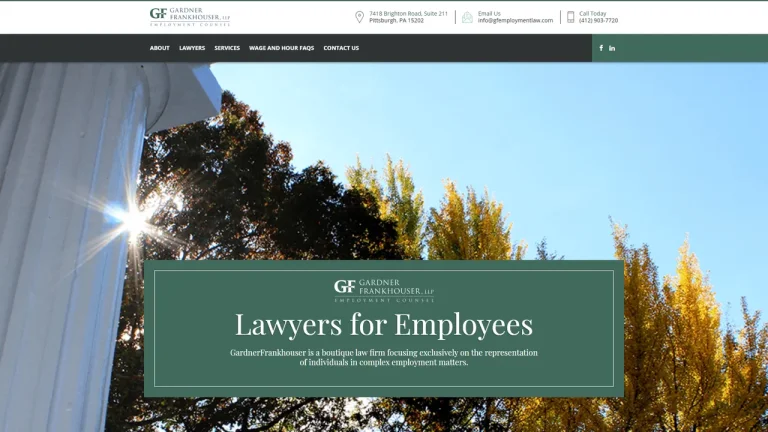
GardnerFrankhouser, LLP - Pittsburgh, PA

Feldstein Grinberg Lang & McKee, P.C. - Pittsburgh, PA

Cohen Seglias Pallas Greenhall & Furman PC - Pittsburgh, PA
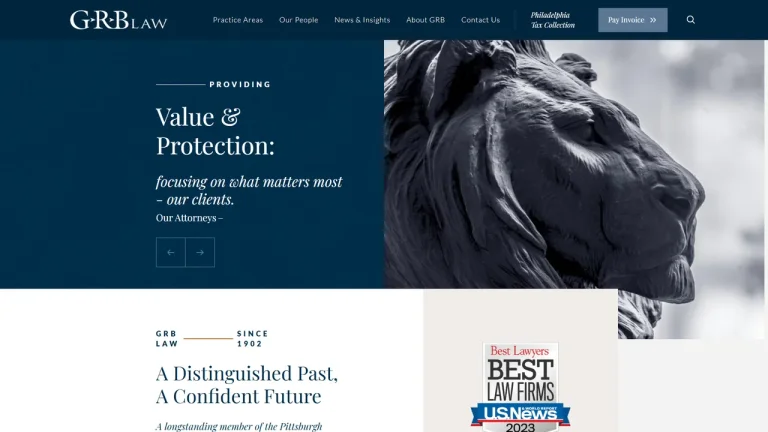
GRB Law - Pittsburgh, PA

Jones Gregg Creehan & Gerace, LLP - Pittsburgh, PA
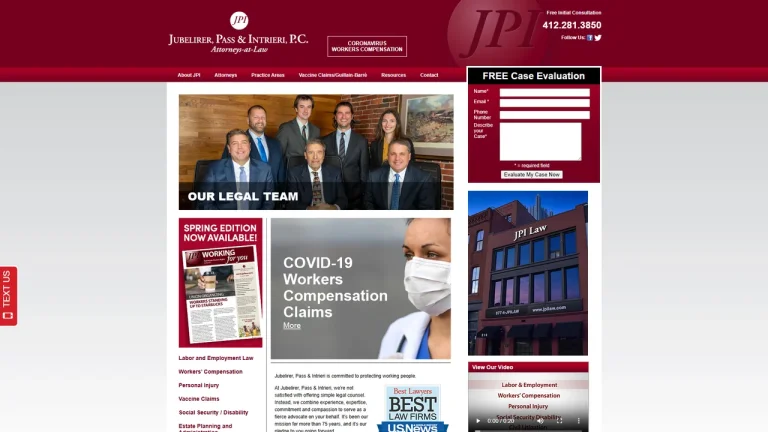
Jubelirer, Pass & Intrieri, P.C. - Pittsburgh, PA
Stember Cohn & Davidson-Welling, LLC - Pittsburgh, PA
Dentons Cohen & Grigsby - Pittsburgh, PA

Morgan & Morgan - Pittsburgh, PA
Kisner Law LLC - Pittsburgh, PA

Frost Brown Todd - Pittsburgh, PA

Saul Ewing LLP - Pittsburgh, PA
Blank Rome LLP - Pittsburgh, PA
Yukevich Marchetti Fischer & Zangrilli, P.C. - Pittsburgh, PA
Knox McLaughlin Gornall & Sennett, P.C. - Pittsburgh, PA

Adamczyk Law Offices, L.L.P. - Pittsburgh, PA

Bennington Law Firm, LLC - Pittsburgh, PA

Challenging Unlawful Discharge Across Pittsburgh and Allegheny County
Pennsylvania strictly adheres to the common law doctrine of at-will employment, allowing employers to terminate an employment relationship at any time for any reason or no reason at all. However, critical statutory and public policy exceptions strictly prohibit employers from firing workers based on unlawful discrimination, retaliation, or whistleblowing. Throughout Pittsburgh's diverse economy-spanning healthcare networks like UPMC and AHN, higher education institutions, financial services, tech campuses, and manufacturing centers in Downtown, Oakland, North Shore, and Monroeville-employees hold enforceable legal protections against wrongful termination.
Resolving employment claims in Allegheny County requires navigating specialized administrative tribunals and judicial forums. Discrimination complaints under state law must initially be filed with the Pennsylvania Human Relations Commission (PHRC) Pittsburgh Regional Office at Piatt Place on Fifth Avenue. Parallel federal claims fall under the Equal Employment Opportunity Commission (EEOC) Pittsburgh Area Office at the William S. Moorhead Federal Building on Liberty Avenue. Once administrative remedies are exhausted, civil actions are initiated either in the Allegheny County Court of Common Pleas on Grant Street or the U.S. District Court for the Western District of Pennsylvania.
Demonstrating wrongful termination requires gathering immediate evidence showing that an employer's stated justification was pretextual. Seasoned Pittsburgh employment attorneys examine workplace communications, evaluate performance reviews, interview colleagues, and review corporate severance agreements. Securing counsel early preserves digital records and positions displaced employees for meaningful financial recovery through negotiated settlements or court trials.
Legal Fee Structures for Pittsburgh Wrongful Termination Claims
| Case Scenario | Fee Structure | Estimated Cost (USD) | Key Cost Determinants |
|---|---|---|---|
| Severance Review & Non-Compete Evaluation | Flat Fee / Hourly | $750 - $2,500 | Severance agreement complexity, release covenants, executive compensation terms |
| Administrative Charge Filing (PHRC & EEOC) | Contingency / Blended | 30% - 35% of Recovery | Charge drafting complexity, rebuttal statements, mandatory conciliation sessions |
| Retaliation & Whistleblower Litigation | Contingency (33.3% - 40%) | $0 Out-of-Pocket | Direct evidence of retaliatory animus, employer size, back-pay and front-pay calculations |
| Federal Discrimination & Jury Trial Action | Contingency (33.3% - 40%) | 33.3% - 40% of Verdict / Award | Deposition volume, expert economic testimony, discovery disputes, Western District trial calendar |
Critical Legal Deadlines & Statutes in Pennsylvania
Wrongful termination claims are subject to some of the strictest administrative filing deadlines in Pennsylvania law. Under the Pennsylvania Human Relations Act, codified at 43 P.S. § 959, an employee alleging discrimination based on race, sex, age, disability, or religion must file a formal complaint with the PHRC within 180 days of the discriminatory termination. Missing this 180-day deadline permanently bars state-level discrimination claims.
Because Pennsylvania is a deferral state with a work-sharing agreement between the PHRC and the EEOC, federal discrimination claims under Title VII, the ADA, or the ADEA can be cross-filed within 300 days of the adverse employment action pursuant to 42 U.S. Code § 2000e-5(e)(1). Once the EEOC completes its review and issues a Notice of Right to Sue, the claimant must commence a lawsuit in federal court within 90 days of receipt under 42 U.S. Code § 2000e-5(f)(1).
Specialized claims carry separate statutory time limitations. Public employees and workers at entities funded by public authorities pursuing claims under the Pennsylvania Whistleblower Law must file their lawsuit within 180 days of the retaliatory act pursuant to 43 P.S. § 1424(a). Common law tort claims for wrongful discharge in violation of recognized public policy-such as termination for filing a workers' compensation claim under the Pennsylvania Workers' Compensation Act-must be filed within Pennsylvania's 2-year personal injury limitation period under 42 Pa. C.S. § 5524(7).
Magisterial District Court Limits vs. Comprehensive Civil Court Litigation
In Allegheny County, Magisterial District Courts handle civil claims up to a statutory limit of $12,000 under 42 Pa. C.S. § 1515. Employees seeking recovery solely for earned but unpaid final wages, unremitted bonuses, or withheld PTO can pursue actions under the Pennsylvania Wage Payment and Collection Law pursuant to 43 P.S. § 260.9a in Magisterial District Court without legal counsel.
Conversely, substantive wrongful termination lawsuits involve complex administrative prerequisites, burden-shifting legal frameworks, and extensive economic damages that exceed small claims jurisdiction. Claims asserting unlawful discharge, hostile work environments, or retaliatory firing belong in the Allegheny County Court of Common Pleas under 42 Pa. C.S. § 931 or the U.S. District Court for the Western District of Pennsylvania.
Corporate defense firms frequently file motions to dismiss and summary judgment motions to eliminate claims before trial. Facing experienced defense attorneys without dedicated representation creates an extreme disadvantage for employees during depositions, electronic discovery, and damages calculations.
Red Flags When Selecting a Pittsburgh Wrongful Termination Attorney
- Lawyers who promise specific financial recoveries or guarantee trial victories, which violates the Pennsylvania Rules of Professional Conduct.
- Attorneys demanding large, non-refundable upfront retainers for standard wrongful termination or discrimination claims rather than offering contingency arrangements.
- Firms that push clients into premature, low-value severance settlements to avoid conducting depositions or filing suit in the Western District of Pennsylvania.
- Inexperience with the dual-filing procedures and cross-authorization protocols between the PHRC regional office and the EEOC area office in Pittsburgh.
Frequently Asked Questions
What qualifies as wrongful termination under Pennsylvania law?
In Pennsylvania, wrongful termination occurs when an employer fires an employee in violation of federal or state anti-discrimination statutes, in retaliation for reporting illegal conduct or filing a workers' compensation claim, or in direct violation of clear public policy, such as refusing to commit a crime or participating in jury service.
What is the deadline for filing a workplace discrimination claim in Pittsburgh?
You must file a state complaint with the Pennsylvania Human Relations Commission (PHRC) within 180 days of the termination under 43 P.S. § 959. For federal claims under EEOC jurisdiction, the deadline is 300 days under 42 U.S. Code § 2000e-5(e)(1) due to the dual-filing agreement between the PHRC and the EEOC.
Can I sue my employer for firing me after reporting illegal activity in Pennsylvania?
Yes. If you work for a public employer or an entity funded by public monies, you are protected under the Pennsylvania Whistleblower Law pursuant to 43 P.S. § 1423. In the private sector, employees who report statutory violations or refuse to engage in unlawful acts may pursue common law wrongful discharge claims under recognized public policy exceptions.
How do contingency fees work in Pittsburgh wrongful termination cases?
Under a contingency fee arrangement, you do not pay hourly attorney fees out-of-pocket. Your legal counsel receives an agreed-upon percentage, typically between 33.3% and 40%, of the gross settlement or court judgment. If your attorney does not recover compensation on your behalf, you do not owe attorney fees.
What damages can I recover in a Pittsburgh wrongful termination lawsuit?
Recoverable damages may include back pay (lost wages from termination to resolution), front pay (future lost earnings), lost employment benefits, compensation for emotional distress, and attorney fees under applicable civil rights statutes. In cases of willful or egregious employer conduct, punitive damages may also be awarded by the court.