
Wrongful Termination Lawyers in Seattle
Consulting a skilled Seattle wrongful termination lawyer protects your career, professional reputation, and financial security after an unlawful firing. Dedicated employment attorneys assist discharged workers in negotiating severance packages, pursuing discrimination claims, and holding employers accountable under Washington law. Review our verified directory below to schedule a case evaluation with local King County counsel.
Seattle Litigation Group, PLLC - Seattle, WA
Law Offices of Alex J. Higgins - Seattle, WA
Stockwell Law Firm PLLC - Seattle, WA
Rocke Law Group, PLLC - Seattle, WA
Taren Law Group PLLC - Seattle, WA
Owen | Vanderbrug - Seattle, WA

Patty Rose Law - Employment , Civil Rights and Appeals - Seattle, WA
Mann & Kytle PLLC - Seattle, WA
MBE Law Group - Seattle, WA

Maloney O'Laughlin, PLLC - Seattle, WA
Frank Freed Subit & Thomas LLP - Seattle, WA

Smyth & Mason PLLC - Seattle, WA
Emery | Reddy, PC - Seattle, WA
HKM Employment Attorneys LLP - Seattle, WA
Rekhi & Wolk, PS - Seattle, WA
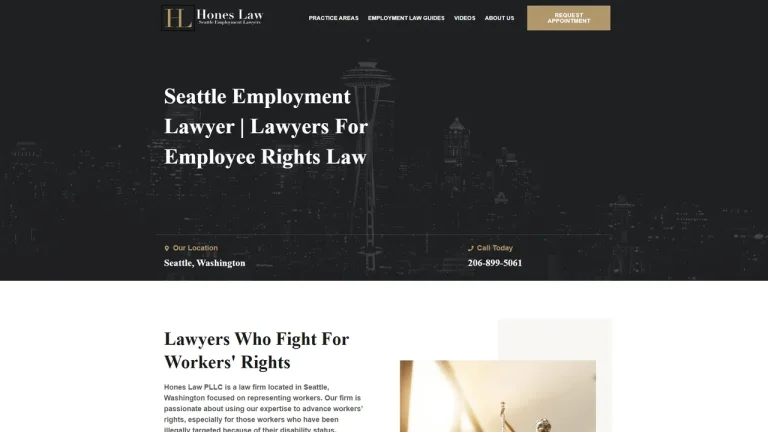
Hones Law - Seattle, WA
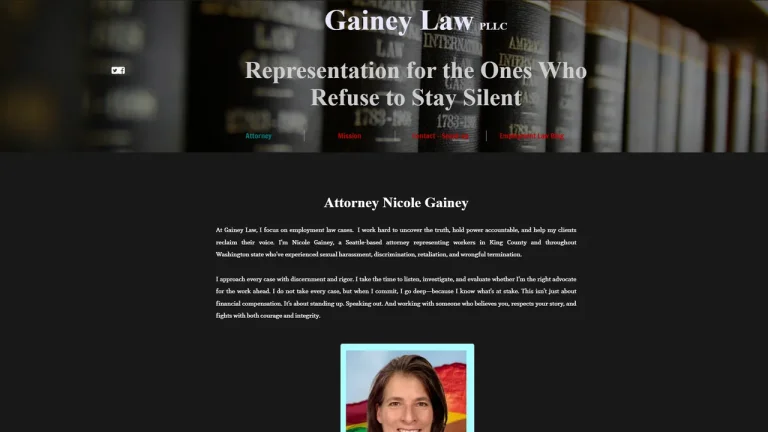
Gainey Law, PLLC - Seattle, WA
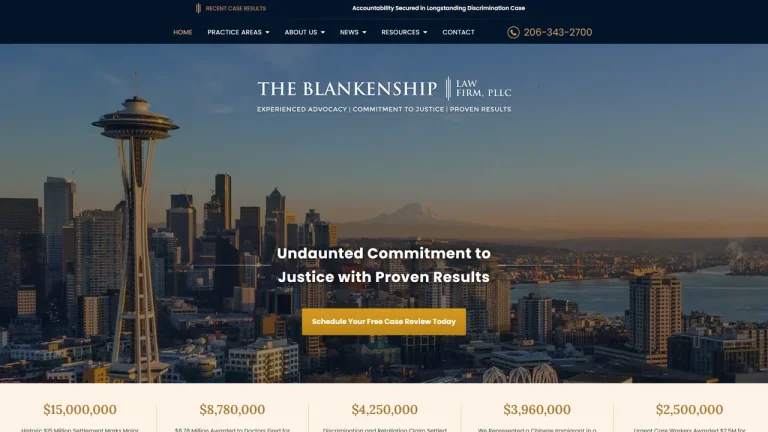
The Blankenship Law Firm, PLLC - Seattle, WA
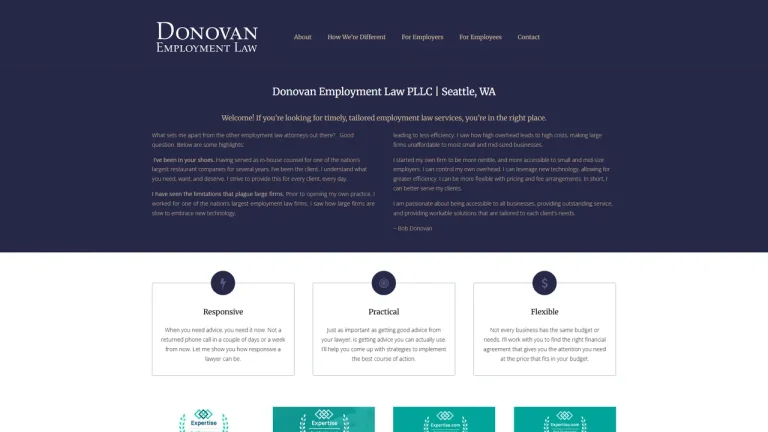
Donovan Employment Law, PLLC - Seattle, WA

Seattle Employment Law Partners - Seattle, WA
Littler Mendelson P.C. - Seattle, WA
Alex Berger Attorney at Law - Seattle, WA

Nolan Lim Law Firm - Seattle, WA
Protecting Employee Rights in Seattle and King County Workplaces
Although Washington operates as an at-will employment jurisdiction, employers cannot discharge workers for illegal discriminatory reasons, in breach of employment contracts, or in violation of clear public policy. Seattle enforces some of the most robust worker protections in the state, shielding employees across high-tech companies, biomedical research centers, maritime enterprises at the Port of Seattle, and healthcare institutions across King County.
Wrongful termination disputes originating in Seattle are primarily adjudicated in the King County Superior Court at the King County Courthouse on 3rd Avenue or the Maleng Regional Justice Center in Kent. Claimants may also initiate administrative complaints before the Seattle Office for Civil Rights under municipal codes, the Washington State Human Rights Commission, or the Equal Employment Opportunity Commission Seattle Field Office. Resolving unlawful discharge claims demands seasoned local advocates skilled in navigating both state courts and administrative venues.
A dedicated Seattle employment lawyer investigates company records, identifies unlawful retaliation, and calculates lost earnings, benefits, and equity awards. Whether challenging a discriminatory layoff in South Lake Union or negotiating an executive severance package in Bellevue, local counsel provides the trial readiness necessary to hold employers accountable.
Wrongful Termination Legal Fees and Representation Structures
| Case Scenario | Fee Structure | Estimated Cost (USD) | Key Cost Determinants |
|---|---|---|---|
| Severance Package Review & Negotiation | Flat Fee / Hourly ($350 - $550/hr) | $750 - $2,500 | Complexity of executive agreements, stock option vesting periods, non-compete provisions, and release waivers |
| Administrative Agency Charge (SOCR / WSHRC / EEOC) | Hourly / Partial Contingency | $1,500 - $5,000 (or % of award) | Documentation gathering, witness interview statements, participation in conciliation, and multi-agency filing strategy |
| Wrongful Discharge Lawsuit (King County Superior Court) | Contingency (33.3% - 40%) | $0 upfront (% of recovery) | Total lost compensation, deposition schedules, discovery disputes, employer resistance, and trial length |
| Executive Retaliation & Whistleblower Litigation | Hybrid / Hourly ($450 - $750/hr) | $25,000 - $120,000+ | Electronic forensic discovery, expert economic loss evaluations, mandatory arbitration disputes, and public relations impact |
Critical Legal Deadlines & Statutes in Washington
Workplace discrimination and retaliatory discharge are prohibited under the Washington Law Against Discrimination (WLAD) pursuant to RCW 49.60.030 and RCW 49.60.180. The statute of limitations for filing a civil lawsuit in court under WLAD or for common law wrongful discharge in violation of public policy is 3 years under RCW 4.16.080(2).
For administrative remedies, complaints with the Seattle Office for Civil Rights under SMC 14.04.090 or the Washington State Human Rights Commission under RCW 49.60.230 must be filed within 6 months (180 days) of the discriminatory termination. Federal EEOC charges must be submitted within 300 days of the unlawful action in Washington due to state-level deferral agreements.
Washington also enforces the Silenced No More Act under RCW 49.44.211, which invalidates non-disclosure and non-disparagement agreements that attempt to restrict employees from discussing illegal workplace discrimination, harassment, or wage violations. In addition, retaliatory termination for asserting wage claims under the Washington Minimum Wage Act is prohibited under RCW 49.46.100, with wage recovery claims subject to a 3-year limitations window under RCW 4.16.080(3).
Small Claims Limitations vs. Professional Employment Representation
The King County District Court Small Claims Division operates with a jurisdictional maximum of $10,000 for claims brought by natural persons under RCW 12.40.010. Furthermore, under RCW 12.40.080, attorneys are generally excluded from representing parties in Washington small claims hearings without leave of the judge.
Pursuing a wrongful termination claim in small claims court is rarely advisable. Wrongful discharge claims in Seattle routinely involve substantial back pay, future lost earnings, medical benefits losses, and emotional distress damages that exceed the $10,000 threshold. Crucially, small claims courts cannot award statutory attorney's fees under RCW 49.60.030(2) or issue equitable remedies such as personnel record expungement or reinstatement. Professional employment lawyers possess the discovery tools to depose corporate decision-makers and hold employers fully accountable in King County Superior Court.
Red Flags to Avoid When Selecting a Seattle Employment Lawyer
- Upfront Retainer Demands on Clear Contingency Claims: Be cautious of attorneys demanding substantial non-refundable retainers for strong liability wrongful discharge cases that standard Seattle firms handle on contingency.
- Unrealistic Settlement Promises: Avoid lawyers who guarantee six- or seven-figure recoveries during an initial consultation without having reviewed performance records, company emails, or termination letters.
- Unfamiliarity with Seattle Municipal Employment Ordinances: Choose an attorney who actively practices in King County and understands local ordinances enforced by the Seattle Office for Civil Rights.
- Pressuring Premature Lowball Settlements: Steer clear of legal counsel who aggressively urge you to accept the employer's initial severance offer rather than evaluating potential retaliation or discrimination claims under Washington statutes.
Frequently Asked Questions
What qualifies as wrongful termination under Washington State law?
Wrongful termination occurs when an employer fires a worker for an unlawful reason, such as discrimination based on protected classes under RCW 49.60.180, retaliation for reporting workplace safety or wage violations, refusing to commit an illegal act, or violating an express employment contract.
Can an at-will employee in Seattle sue for wrongful termination?
Yes. While at-will employees can be discharged for any lawful reason or no reason at all, the at-will doctrine does not permit employers to terminate workers for reasons that violate anti-discrimination statutes, employment contracts, or Washington public policy.
What is the impact of the Washington Silenced No More Act on severance agreements?
Under RCW 49.44.211, employers cannot enforce non-disclosure or non-disparagement provisions that prevent an employee from disclosing or discussing illegal workplace harassment, discrimination, or retaliation. Provisions violating this statute are void and unenforceable under Washington law.
What financial compensation can I recover in a Washington wrongful termination case?
Damages may include back pay (lost wages from termination to resolution), front pay (future lost compensation), lost retirement and healthcare benefits, emotional distress damages, and statutory attorney's fees under RCW 49.60.030(2).
Do I have to file an administrative complaint before suing my employer in court?
Under the Washington Law Against Discrimination, you are not required to exhaust administrative remedies and can file directly in King County Superior Court within 3 years. However, claims under federal statutes like Title VII require an initial administrative filing with the EEOC or SOCR.