
Police & Sheriff Departments in Connecticut
Navigating law enforcement and records requests in Connecticut requires understanding the state's distinct municipal police and judicial marshal systems. While municipal police and State Police troopers enforce criminal statutes, civil process and courthouses rely on specialized state marshals. Explore our comprehensive statewide directory below to access facility details, report protocols, and legal counsel.

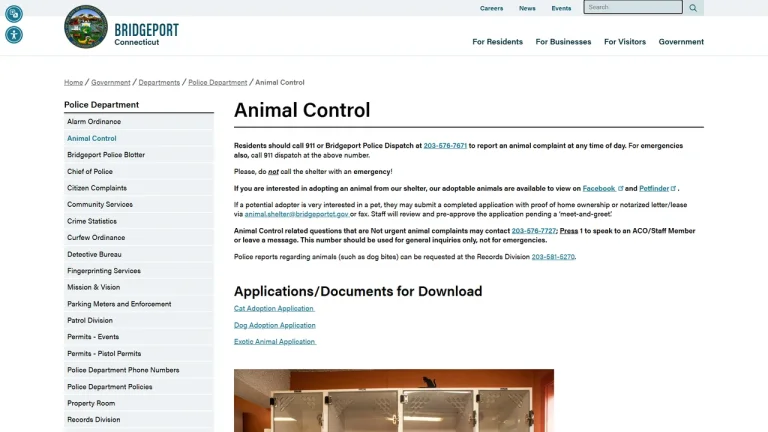
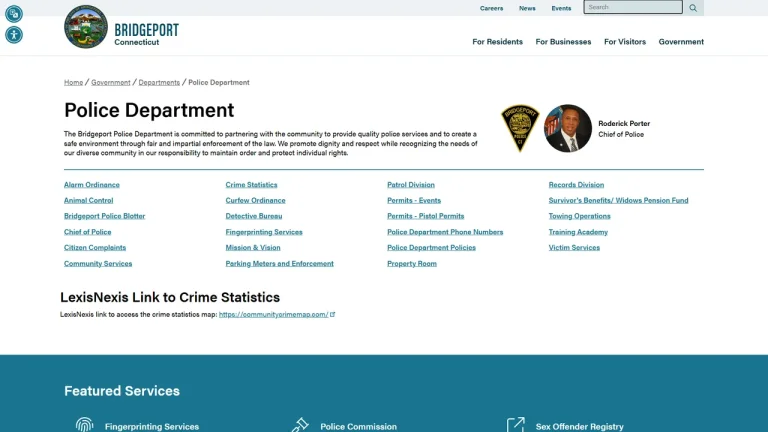
Bridgeport Police Department - Pistol Permits - Bridgeport, CT



Connecticut Law Enforcement Structure & Marshals System
Connecticut maintains a distinct law enforcement infrastructure that differs fundamentally from traditional county-based structures. Because Connecticut abolished county government in 1960 and eliminated the county sheriff system in 2000, primary policing is executed by municipal police departments in major cities like Bridgeport, New Haven, Hartford, and Stamford, and by the Connecticut State Police under the Division of Emergency Services and Public Protection across rural municipalities.
Civil legal process, eviction executions, and asset seizures are handled by independent State Marshals regulated under the State Marshal Commission, rather than county deputies. Courthouse security, prisoner detention transfers, and lockup supervision in the Connecticut Superior Court system are conducted by Judicial Marshals operating under the state Judicial Branch.
Furthermore, Connecticut does not operate county jails. Pretrial detainees and sentenced offenders are held within state correctional facilities administered directly by the unified Connecticut Department of Correction. Knowing which municipal police department, state police troop, or marshal division holds authority is essential for securing police records, posting bond, or asserting constitutional defenses.
Connecticut Police Records & Law Enforcement Service Procedures
| Service / Matter | Required Documents / Prerequisites | Statutory Fee (USD) | Processing Timeline |
|---|---|---|---|
| Police Incident / Crash Report (Municipal) | Case incident number, party identification, written public records request | $0.50 per page (C.G.S. § 1-212) | 4-10 business days |
| State Police Accident Report (DESPP) | Completed Form SP-180-C, driver names, date and location of incident | $16.00 search fee | 2-4 weeks online or mail |
| State Pistol Permit Application (DESPP / Police) | NRA basic pistol certificate, fingerprint background clearance, local approval | $70.00 local + $70.00 state | 8-12 weeks statutory review |
| Civil Process Service by State Marshal | Summons, complaint, or writ signed by an attorney or court clerk | $30.00 - $50.00 base + mileage | 1-5 business days |
Critical Law Enforcement Deadlines & Constitutional Protections
Interactions with Connecticut law enforcement are governed by strict statutory rules and constitutional safeguards. Under the Connecticut Freedom of Information Act, codified at Conn. Gen. Stat. § 1-210, public agencies must respond to public records requests within 4 business days of receipt. If an arrest occurs, arrest blotters and charging documents are public records under Conn. Gen. Stat. § 1-215, unless sealed by court order or subject to statutory juvenile erasure.
For custodial interrogations involving major felony offenses, Conn. Gen. Stat. § 54-1k requires electronic recording of statements conducted at law enforcement facilities. Failure to comply with these recording protocols allows defense counsel to challenge the admissibility of unrecorded confessions before the Connecticut Superior Court.
Arrestees held on bond have the right to prompt bail review by a Bail Commissioner under Conn. Gen. Stat. § 54-63c before being presented in court. Formal arraignment must take place at the next court business day session of the Superior Court for the Geographical Area (G.A.) in which the alleged offense occurred, per Conn. Gen. Stat. § 54-1g.
Direct Agency Interaction vs. Retaining Defense Counsel
Certain routine administrative tasks do not require hiring private legal counsel. Citizens can directly request motor vehicle accident reports from municipal police stations, apply for local security clearance, or file identity theft complaints with their local police department independently.
However, when law enforcement interactions cross into criminal investigations, administrative questioning, or potential civil liability, retaining an experienced Connecticut criminal defense attorney is vital:
- Custodial Interrogations: Never answer investigator inquiries or sign written statements during felony inquiries without an attorney present to protect your rights under the Fifth Amendment.
- Arraignment and Bond Hearings: Legal representation before the Superior Court G.A. judge is crucial to secure non-financial conditions of release or reduce excessive bond amounts set by police.
- Asset Forfeiture & Seizure: If police seize cash, vehicles, or property under state statutory seizure warrants, immediate legal motions must be filed in court to contest forfeiture proceedings.
- Challenging Pistol Permit Denials: If a municipal police chief denies a temporary pistol permit under the "suitability" standard of Conn. Gen. Stat. § 29-28, formal administrative appeals must be filed with the Board of Firearms Permit Examiners.
Red Flags & Scams Involving Connecticut Law Enforcement
Citizens must be aware of prevalent fraudulent schemes and unauthorized practices involving law enforcement:
- Phone Impersonators claiming to be "Connecticut Sheriffs" or State Police officers demanding urgent payments via gift cards, wire transfers, or cryptocurrency to dismiss pending arrest warrants; authentic Connecticut agencies never accept electronic payment for warrant cancellations over the telephone.
- Predatory bail bond runners demanding non-refundable fees exceeding statutory maximums regulated by the Connecticut Insurance Department, or soliciting business inside municipal police lockups.
- Unlicensed process servers attempting to execute eviction lockouts or property attachments without holding an active State Marshal license under the State Marshal Commission.
- Private background check websites charging exorbitant monthly subscriptions for public police blotter records that are available at nominal statutory copy rates directly from local police departments.
Frequently Asked Questions
Does Connecticut have county sheriffs?
No. Connecticut abolished the county sheriff system in 2000. Law enforcement is conducted by municipal police departments and the Connecticut State Police, while civil process service is managed by State Marshals and courthouse security by Judicial Marshals.
How do I obtain a copy of a police accident report in Connecticut?
For accidents investigated by a local municipal department, submit a public records request to that town's police records division. For collisions on state highways investigated by the Connecticut State Police, purchase reports online through the DESPP portal or file Form SP-180-C.
Where are individuals detained after an arrest in Connecticut?
Arrestees are held initially in municipal police department holding cells or State Police troop barracks. If unable to post bail before arraignment, they are transferred directly to state correctional facilities managed by the Connecticut Department of Correction.
What is the statutory deadline to respond to a police records request in Connecticut?
Under Conn. Gen. Stat. § 1-210, public agencies must issue an initial response to written Freedom of Information Act requests within 4 business days of receipt.
Who serves legal summonses and eviction notices in Connecticut?
Under Conn. Gen. Stat. § 6-38a, civil process, summonses, and eviction executions must be served by licensed Connecticut State Marshals or authorized judicial officers, rather than regular police officers.