
Public Records & Filing Offices in Connecticut
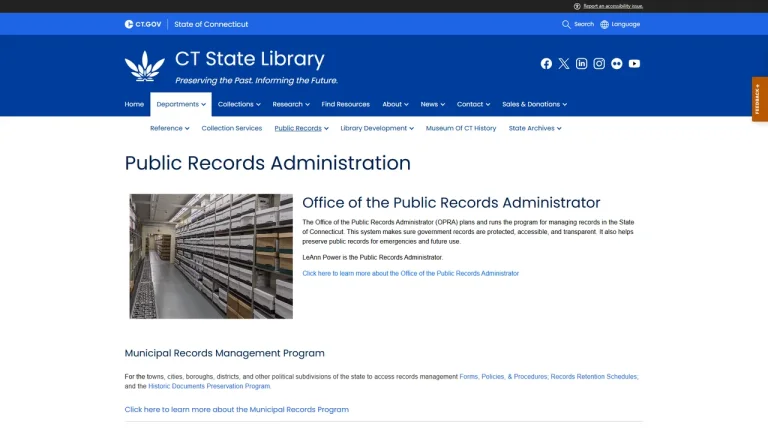
Connecticut public records and filing offices maintain vital certificates, land recordings, and state corporate registries under strict statutory disclosure standards. Knowing proper submission channels and Freedom of Information rules guarantees timely document retrieval and legal compliance. Use our directory below to locate verified recording clerks and state records repositories.

Official Public Records Infrastructure and Statutory Recording Repositories in Connecticut
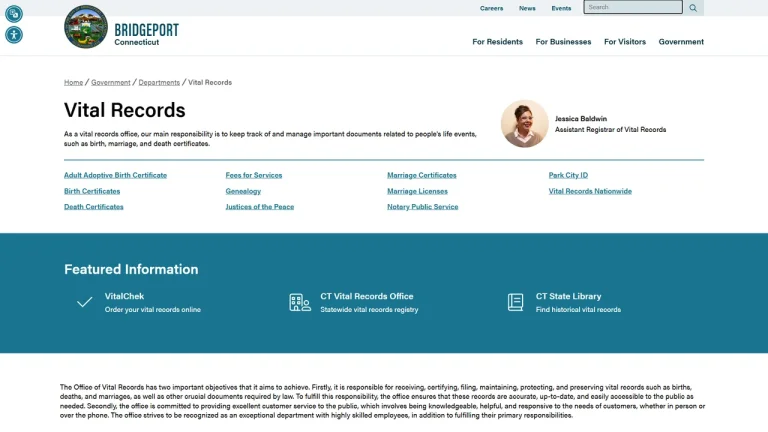
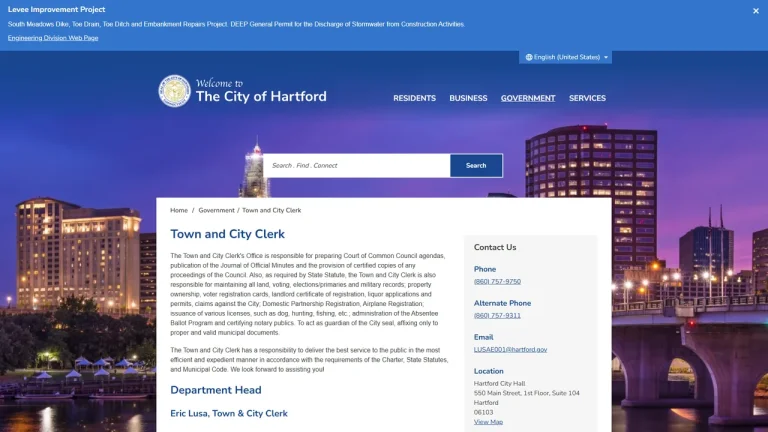
Public records administration and statutory document filing in Connecticut follow an established municipal and statewide structure. Unlike jurisdictions that utilize county-level registers of deeds, Connecticut relies on its 169 municipal Town Clerks to record, index, and preserve real property transactions, mortgages, deeds, and local vital statistics. From the municipal centers of Hartford, New Haven, and Waterbury to suburban town halls, the Town Clerk serves as the essential public recording official for property and vital documents.
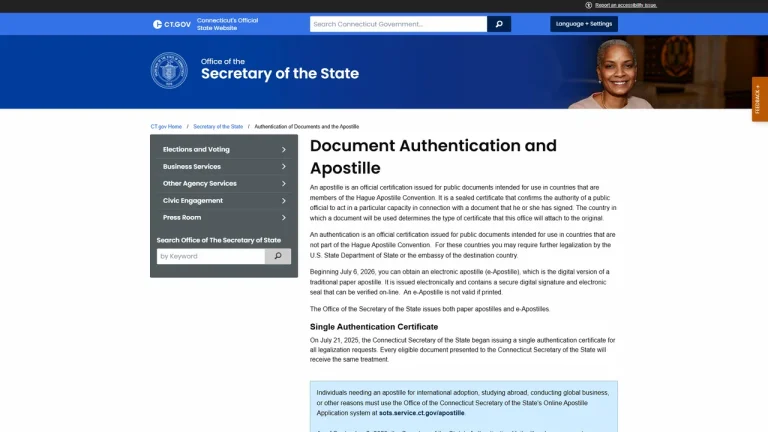
At the state level, centralized commercial and legal registries are maintained in Hartford by executive agencies and the Connecticut Judicial Branch. The Commercial Recording Division of the Office of the Secretary of the State administers business filings, corporate formations, and Uniform Commercial Code (UCC) financing statements. Meanwhile, the Connecticut Department of Public Health Vital Records Section maintains statewide archives of birth, marriage, and death records, and the Judicial Branch provides access to civil, housing, and criminal court dockets.
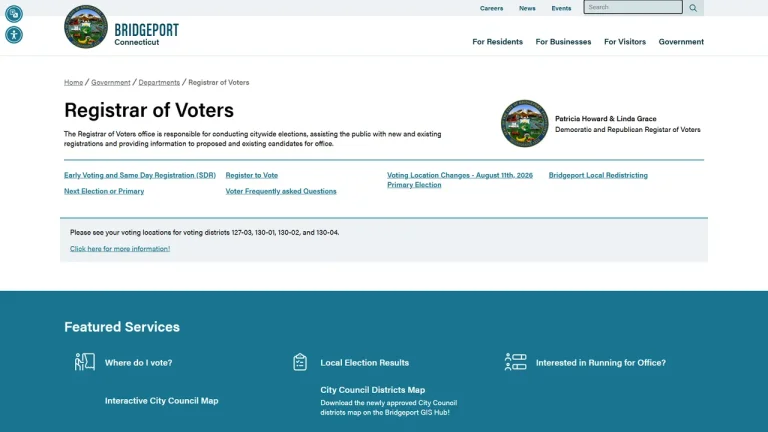
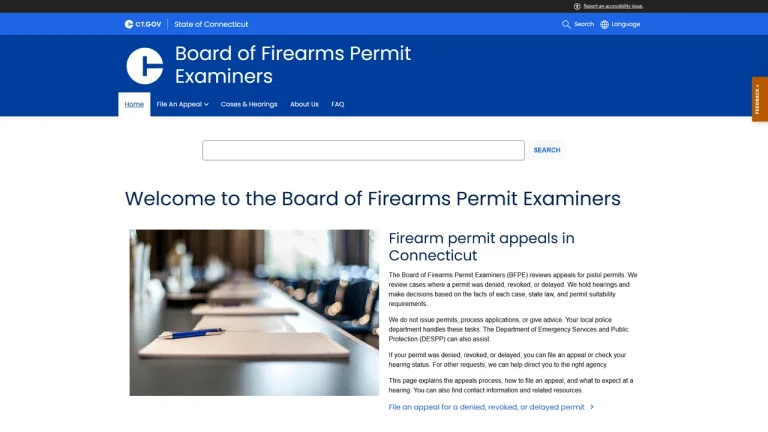
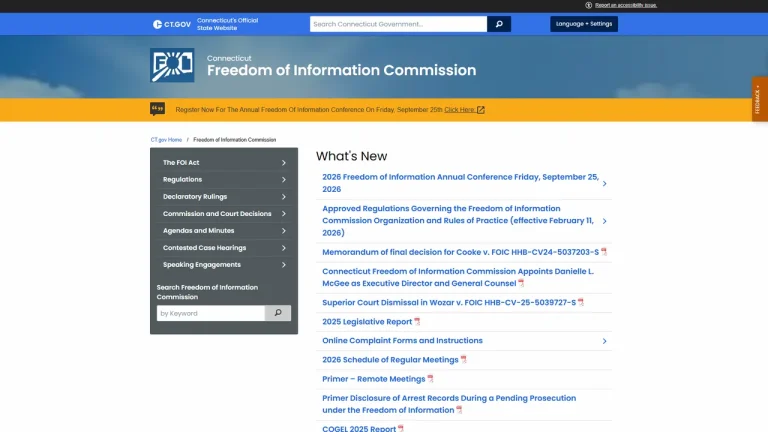
Public transparency and disclosure protocols are governed by the Connecticut Freedom of Information Act (FOIA), which guarantees citizen access to governmental records. The Freedom of Information Commission, headquartered in Hartford, adjudicates disclosure disputes and enforces statutory compliance across all state and municipal agencies. Navigating this network requires identifying whether your target document is maintained by a local Town Clerk or a central state depository.
Connecticut Public Record Requests, Statutory Fees, and Filing Timelines
| Service / Matter | Required Documents / Prerequisites | Statutory Fee (USD) | Processing Timeline |
|---|---|---|---|
| Certified Vital Record Copy (Birth, Death, Marriage) | Government-issued photo ID, proof of legal interest/relationship, signed request form | $20 per certified copy | Same-day in person; 2 to 4 weeks by mail |
| Municipal Real Property Document Recording | Original deed, mortgage, or release, executed notarial acknowledgment, conveyance tax forms | $60 first page; $5 each additional page | Immediate recordation; 1 to 3 business days indexing |
| UCC-1 Financing Statement Filing (SOTS) | Standard UCC-1 financing statement form, debtor and secured party legal data | $25 paper filing; $50 electronic filing | 1 to 3 business days online |
| Freedom of Information (FOI) Public Record Request | Written request identifying reasonably described public records held by agency | Up to $0.50 per standard page | Acknowledgment within 4 business days |
Critical Legal Deadlines & Statutes in Connecticut
Public record retention and filing processes in Connecticut operate under strict legal timelines established by state statute. Under the Connecticut Freedom of Information Act, public agencies must acknowledge or respond to written requests for public records within four business days, as mandated by Conn. Gen. Stat. § 1-206(a). If an agency denies inspection or fails to respond within this period, the requester must file a formal appeal with the Connecticut Freedom of Information Commission within 30 days of the denial or constructive denial under Conn. Gen. Stat. § 1-206(b).
For real property interests, recording timelines dictate legal priority. Under Connecticut's race-notice real property recording statute, Conn. Gen. Stat. § 47-10, an unrecorded conveyance is not effectual against any person other than the grantor and their heirs, unless recorded on the town land records. Furthermore, contractors seeking to secure payment for labor or materials must record a certificate of mechanic's lien in the local Town Clerk's office within 90 days of performing work, in accordance with Conn. Gen. Stat. § 49-34.
Self-Filing Record Requests vs. Retaining Legal Counsel
The vast majority of public record requests-such as obtaining certified copies of birth certificates from a Town Clerk, reviewing property boundaries in land records, or verifying corporate entities on the Secretary of the State's CONCORD database-are straightforward procedures that individuals can accomplish independently. Routine document reproduction fees are standardized by statute, allowing members of the public to obtain municipal filings without legal assistance. When small financial record disputes arise under $5,000, they can be addressed in the Small Claims Session pursuant to Conn. Gen. Stat. § 51-15.
Conversely, retaining legal counsel is highly recommended when dealing with complex real property title defects, mechanics' lien foreclosures, lis pendens filings, or formal FOIA appeals. If an agency withholds critical public documents under contested statutory exemptions, a licensed attorney can navigate evidentiary hearings before the Freedom of Information Commission and preserve issues for subsequent appeal to the Connecticut Superior Court. Experienced legal counsel ensures strict adherence to technical recording requirements, preventing clouding of title or loss of lien rights.
Red Flags & Consumer Warnings for Public Record Inquiries
- Deceptive commercial websites charging inflated convenience fees ($50 to $100) for standard vital records that are directly obtainable from municipal Town Clerks for the statutory $20 fee.
- Misleading direct mail solicitations sent to recent property buyers demanding urgent payment for property deeds or property profile packages that are already public record.
- Commercial search engines misrepresenting themselves as official portals of the Connecticut Secretary of the State or Judicial Branch while requiring recurring subscription fees.
- Unsecured websites requesting personal identifiable information, such as Social Security numbers, without verified state security encryption or governmental domain credentials.
Frequently Asked Questions
Where are land records and deeds recorded in Connecticut?
In Connecticut, land records, deeds, and mortgages are recorded directly with the Town Clerk of the specific municipality where the real property is located, as Connecticut does not have county recording offices.
What is the statutory deadline for an agency to answer a FOIA request in Connecticut?
Under Conn. Gen. Stat. § 1-206(a), a Connecticut public agency must acknowledge or comply with a public records request within four business days, or the request may be deemed denied.
How can I appeal a denied public records request in Connecticut?
Appeals must be filed in writing with the Connecticut Freedom of Information Commission within 30 days of the denial or failure to comply, pursuant to Conn. Gen. Stat. § 1-206(b).
Where can I verify business registrations and corporate filings in Connecticut?
Corporate records, trade entity formations, and UCC filings are maintained centrally by the Commercial Recording Division of the Connecticut Secretary of the State via the online CONCORD database.
What is the cost of obtaining a certified vital record copy in Connecticut?
State law establishes a fee of $20 per certified copy for birth, marriage, and death certificates obtained from either the local municipal Town Clerk or the Connecticut Department of Public Health Vital Records Section.