
Federal Agencies in Chicago
Federal agencies in Chicago administer essential regulatory, immigration, judicial, and social benefit programs across northeastern Illinois. Understanding agency protocols, jurisdictional boundaries, and administrative filing requirements helps ensure your federal matters are handled efficiently. Access our detailed directory below to connect with Chicago federal agency offices, regional headquarters, and public service counters.

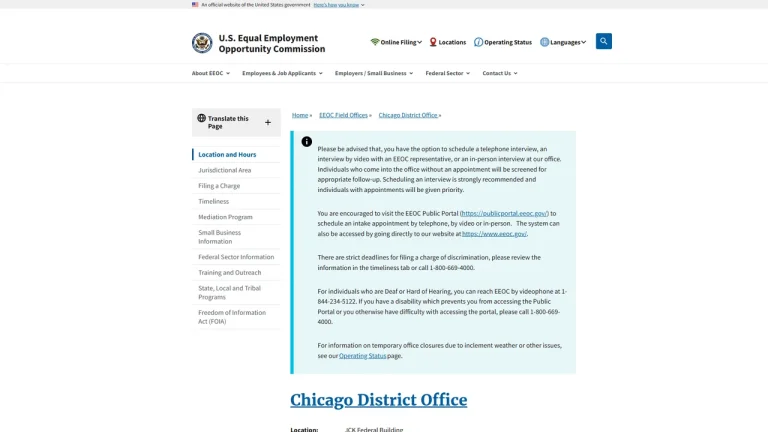
U.S. Equal Employment Opportunity Commission-Chicago District - Chicago, IL
Internal Revenue Service (IRS) Taxpayer Assistance Center - Chicago, IL

Federal Defender Program, Northern District of Illinois - Chicago, IL
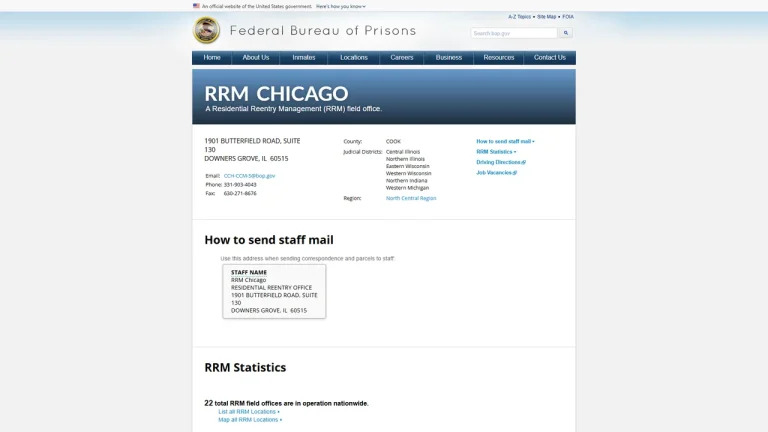
Federal Bureau of Prisons Community Corrections Office - Chicago, IL

U.S. Department of Health and Human Services Region 5 - Chicago, IL

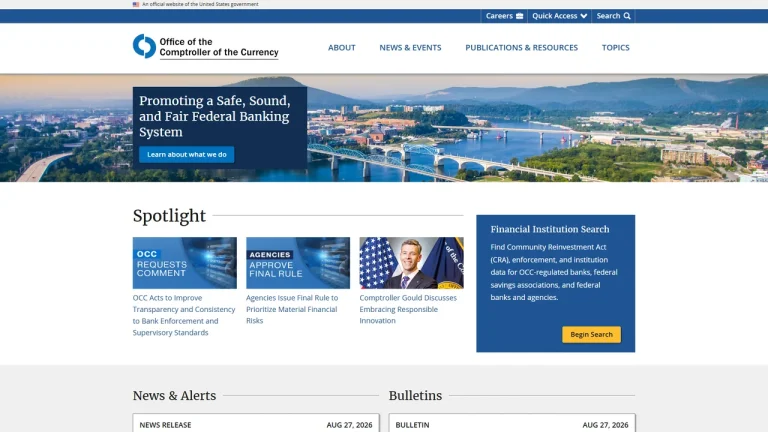
US Comptroller of the Currency - Chicago, IL
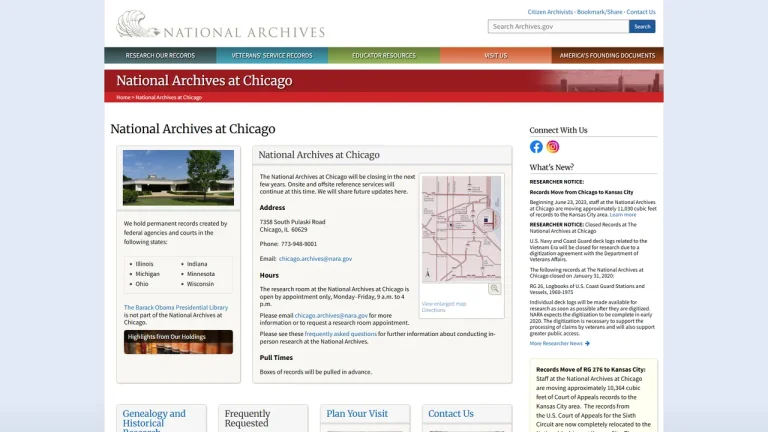

Regional Federal Infrastructure and Public Administration in Chicago
Chicago serves as the primary federal administrative and judicial center of the American Midwest. Federal oversight spans critical commercial, immigration, civil rights, and regulatory fields affecting Cook County residents and regional businesses. The cornerstone of the federal judicial system in Chicago is the Everett McKinley Dirksen U.S. Courthouse at 219 S. Dearborn Street in the downtown Loop. This complex houses the United States District Court for the Northern District of Illinois (Eastern Division), the United States Court of Appeals for the Seventh Circuit, and the regional headquarters of the United States Attorney Office.
Major federal executive departments maintain regional administrative centers across adjacent complexes. The John C. Kluczynski Federal Building at 230 S. Dearborn Street accommodates public-facing agencies including the Social Security Administration (SSA), the Internal Revenue Service (IRS) Taxpayer Assistance Center, the U.S. Department of State Chicago Passport Agency, and the regional office of the Equal Employment Opportunity Commission (EEOC). Across the street at 77 W. Jackson Boulevard, the Ralph H. Metcalfe Federal Building houses regional branches of the Environmental Protection Agency (EPA Region 5) and the Department of Housing and Urban Development (HUD).
Immigration administration in Chicago is distributed between key entities. U.S. Citizenship and Immigration Services (USCIS) operates its regional field office and asylum offices at 101 W. Ida B. Wells Drive, while formal removal hearings and asylum adjudications proceed before the Executive Office for Immigration Review (EOIR / Chicago Immigration Court) at 525 W. Van Buren Street and 55 E. Monroe Street.
Common Federal Agency Services, Filing Requirements, and Schedules
| Service / Matter | Required Documents / Prerequisites | Statutory Fee (USD) | Processing Timeline |
|---|---|---|---|
| EEOC Charge of Employment Discrimination | Intake questionnaire, detailed narrative, employer data | $0 statutory fee | 180 to 300 days for administrative determination |
| Federal Agency Records Request (5 U.S. Code § 552) | Written FOIA request specifying agency records | $0 search fee (copy fees may apply) | 20 business days statutory initial response window |
| USCIS Adjustment of Status (Form I-485) | Form I-485, certified birth record, medical exam I-693 | $1,440 statutory filing fee | 8 - 14 months average processing duration |
| Federal Civil Lawsuit Filing (Dirksen Courthouse) | Federal complaint, civil cover sheet, summons via CM/ECF | $405 statutory district filing fee | Immediate electronic case docketing |
Critical Legal Deadlines & Statutes in Illinois
Interacting with federal agencies requires strict observance of administrative limitations. Under federal civil rights statutes, particularly 42 U.S. Code § 2000e-5, an employee in Illinois alleging employment discrimination must file a formal Charge of Discrimination with the EEOC within 300 days of the unlawful act. This extended 300-day window applies because Illinois is a deferral state with its own enforcement agency, the Illinois Department of Human Rights (IDHR); missing this deadline permanently bars federal Title VII claims.
When requesting government agency records under the federal Freedom of Information Act, codified at 5 U.S. Code § 552, federal agencies have a statutory deadline of 20 business days to determine whether to comply with a request. When asserting tort claims against the federal government-such as a vehicle collision involving a USPS postal truck in Chicago-the Federal Tort Claims Act under 28 U.S. Code § 2401 requires filing a formal administrative Form SF-95 with the appropriate agency within two years from the incident date before any federal court action can be initiated.
Direct Public Access vs. Retaining Federal Legal Counsel
Citizens can independently complete numerous routine administrative tasks at Chicago federal offices. Individuals can schedule appointments at the Kluczynski Building for replacement Social Security cards, access IRS taxpayer account records, submit routine FOIA requests, or apply for expedited travel passports at the Chicago Passport Agency without legal representation.
However, when dealing with formal adjudications, federal legal representation becomes essential. Navigating deportation and asylum proceedings under 8 U.S. Code § 1229a at the Chicago Immigration Court without an immigration lawyer routinely leads to removal orders. Similarly, responding to a federal grand jury subpoena, defending an SEC investigation, or prosecuting an administrative disability appeal requires attorneys admitted to practice before the U.S. District Court for the Northern District of Illinois or the Seventh Circuit Bar.
Red Flags When Navigating Federal Agencies in Chicago
- "Notario" and Unauthorized Immigration Scams: Never use non-attorney "notarios" or unauthorized document preparers for USCIS filings; in the United States, notaries have no legal training and cannot represent you before federal agencies.
- Fraudulent Look-Alike Federal Websites: Be vigilant against commercial websites impersonating official portals (.gov); never pay fees for downloadable federal forms or basic agency appointment scheduling.
- Expedited Passport Fee Gouging: Do not pay third-party couriers hundreds of dollars for appointments at the Chicago Passport Agency; appointments must be booked directly through the official U.S. Department of State system.
- Ignoring Federal Notice to Appear (NTA) Deadlines: Never disregard official notices from the Chicago Immigration Court or federal agencies; missing a hearing date results in an automatic order of removal in absentia.
Frequently Asked Questions
Where is the federal courthouse located in Chicago?
The federal courts in Chicago are located at the Everett McKinley Dirksen U.S. Courthouse, 219 S. Dearborn Street, Chicago, IL 60604. It houses the U.S. District Court for the Northern District of Illinois and the U.S. Court of Appeals for the Seventh Circuit.
How long do I have to file an EEOC employment discrimination complaint in Chicago?
Under 42 U.S. Code § 2000e-5, because Illinois operates the Illinois Department of Human Rights, workers in Chicago have up to 300 days from the date of the discriminatory incident to file a charge with the EEOC Chicago District Office.
Where is the Chicago Immigration Court located?
The Executive Office for Immigration Review (EOIR) operates Chicago Immigration Court locations at 525 W. Van Buren Street and 55 E. Monroe Street in Downtown Chicago, conducting formal removal and asylum hearings.
Can I get an emergency passport in Chicago for urgent travel?
Yes. The Chicago Passport Agency, located in the John C. Kluczynski Federal Building at 230 S. Dearborn Street, issues urgent passports for documented international travel departing within 14 calendar days, by appointment only.
What is the difference between Cook County Circuit Court and the U.S. District Court?
The Circuit Court of Cook County is a state court handling Illinois statutory and common law matters including state crimes, local family law, and state torts. The U.S. District Court for the Northern District of Illinois is a federal court handling cases involving federal statutes, U.S. constitutional questions, and diversity actions exceeding $75,000.