
State & Local Courts in Illinois
Illinois state and local courts deliver justice through a unified judicial system of Circuit, Appellate, and Supreme Court branches across all 102 counties. Understanding circuit court divisions, mandatory eFileIL protocols, and filing deadlines guarantees your pleadings are timely heard. Use our statewide judicial directory below to locate local county courthouses, clerks, and court rules.

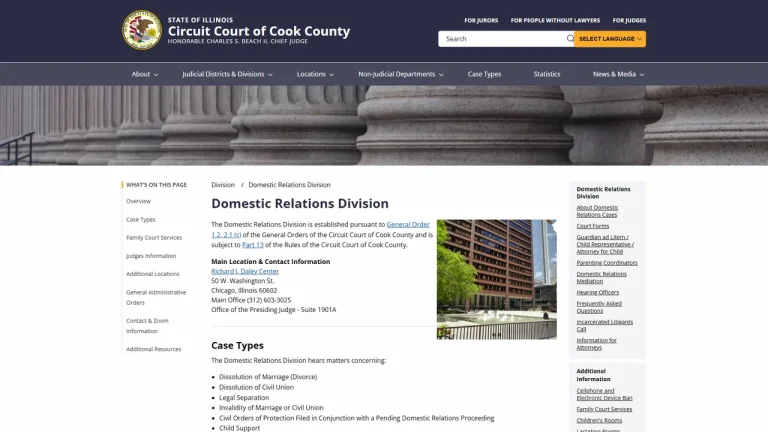
Clerk of the Circuit Court, Domestic Relations Division - Chicago, IL
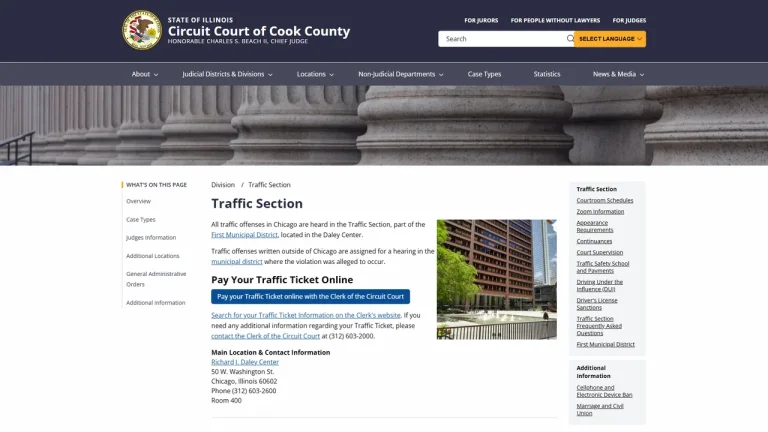
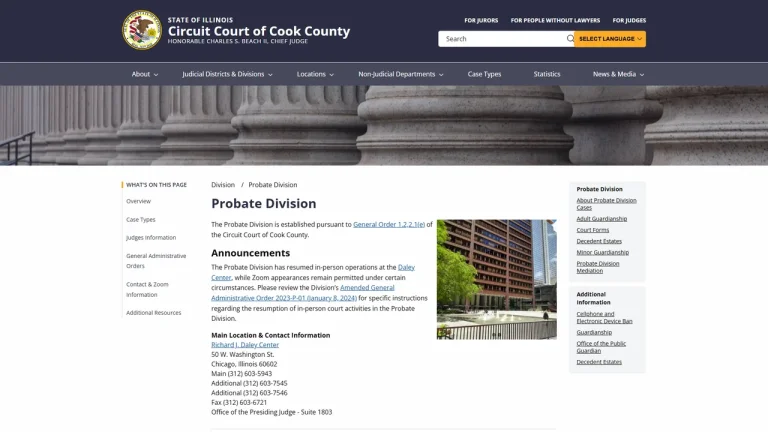
Circuit Court of Cook County - Probate Division (Daley Center) - Chicago, IL
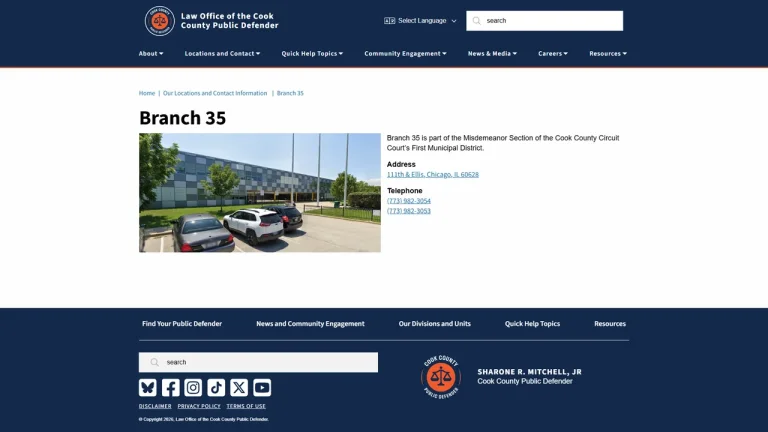
Circuit Court Branch 43 & 44 (Harrison & Kedzie) - Chicago, IL


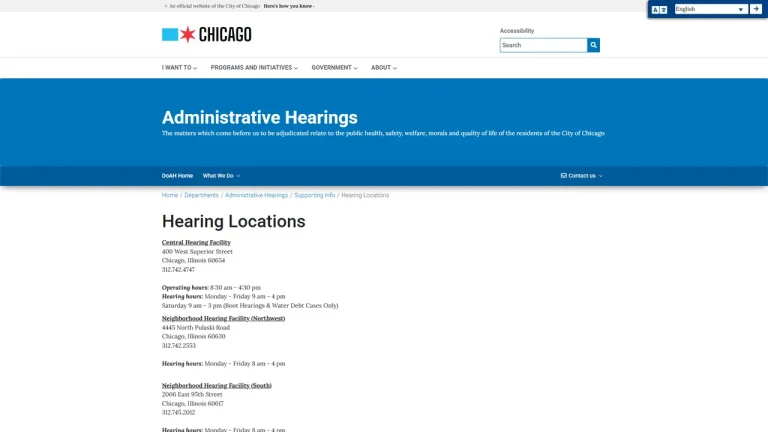
City of Chicago Department of Administrative Hearings - Chicago, IL
The Illinois Unified Judicial System and Circuit Court Structure
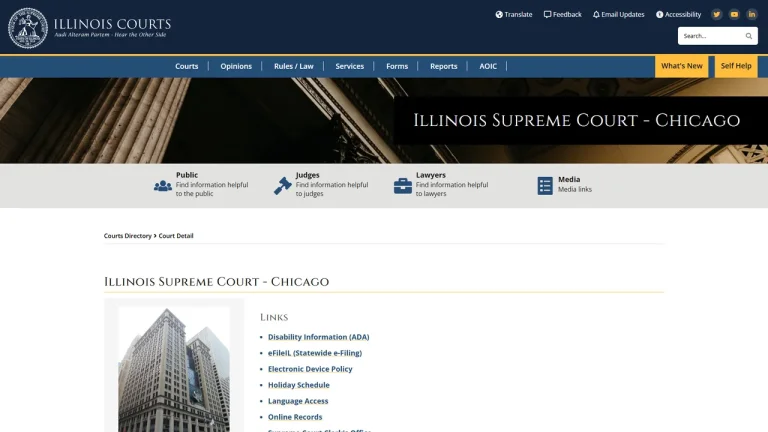
The Illinois state court system operates under Article VI of the Illinois Constitution, establishing a centralized, unified judicial branch. The highest judicial authority in the state is the Supreme Court of Illinois, which sits at the Supreme Court Building in Springfield and maintains second-seat courtrooms at the Michael A. Bilandic Building in Chicago. The Illinois Appellate Court reviews circuit court decisions across five designated appellate districts, with the First District serving Cook County and districts two through five serving northern, central, and southern Illinois counties.
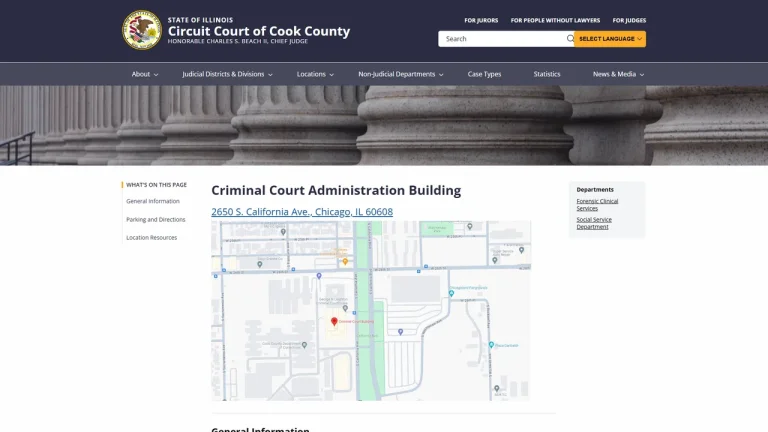
Original trial jurisdiction resides in the Circuit Courts, divided into 24 judicial circuits alongside the Circuit Court of Cook County. Cook County operates the largest unified trial court in the nation, maintaining specialized court facilities at the Richard J. Daley Center in downtown Chicago for civil litigation, Chancery, and Law Division matters, and the Leighton Criminal Court Building at 26th and California for felony proceedings, along with five suburban municipal district courthouses.
Across the collar counties and downstate circuits-including the 18th Judicial Circuit in DuPage County, the 19th Judicial Circuit in Lake County, and the 16th Judicial Circuit in Kane County-circuit courts adjudicate civil lawsuits, family dissolutions, probate administration, and local municipal ordinance violations. All Illinois circuit courts enforce mandatory electronic filing for civil proceedings through the statewide eFileIL system.
Illinois Circuit Court Fees, Action Types, and Timelines
| Service / Matter | Required Documents / Prerequisites | Statutory Fee (USD) | Processing Timeline |
|---|---|---|---|
| Circuit Court Major Civil Lawsuit (Law Division) | Summons, complaint, civil cover sheet, jury demand (if requested) | $300 to $400+ (varies by circuit) | 30 days for defendant appearance/answer |
| Small Claims Complaint Filing (Under $10,000) | Small claims complaint, contract/invoice documentation, summons | $80 to $190 (graduated by claim amount) | Return date scheduled in 21 to 40 days |
| Dissolution of Marriage (Divorce Petition) | Petition for dissolution, summons, comprehensive financial affidavit | $250 to $388 statutory court fee | 30 days for response; 90+ days judgment |
| Notice of Appeal to Illinois Appellate Court | Notice of appeal filed in Circuit Court, docketing statement | $50 statutory appellate fee | 30 days statutory window to file notice |
Critical Legal Deadlines & Statutes in Illinois State Courts
State court practice in Illinois is governed by mandatory timelines set forth in the Supreme Court Rules and the Illinois Code of Civil Procedure. When a defendant is served with a summons in a civil action over $50,000, Ill. Sup. Ct. R. 181 requires filing a written appearance and answer or responsive motion within 30 days of service. Failing to enter an appearance within this period permits the entry of a default judgment on liability.
Appellate filing deadlines are strictly enforced without room for procedural error. Under Ill. Sup. Ct. R. 303(a)(1), a notice of appeal must be filed with the clerk of the circuit court within 30 days after the entry of the final judgment appealed from. Personal injury actions must be commenced within two years from the date of accrual pursuant to 735 ILCS 5/13-202, whereas claims based on written contracts carry a 10-year statute of limitations under 735 ILCS 5/13-206.
Small Claims Court Self-Representation vs. Circuit Court Legal Counsel
Illinois Circuit Courts maintain a simplified small claims track designed for self-represented litigants. Under Ill. Sup. Ct. R. 281, civil actions based on tort, contract, or unliquidated claims not exceeding $10,000 qualify for small claims procedures. Under Ill. Sup. Ct. R. 287, depositions and formal discovery are barred without leave of court, making it feasible for individuals to pursue minor property or debt disputes pro se.
However, when litigating complex matters in the Law Division, Chancery injunctions, contested divorces, or felony charges, representation by an attorney licensed by the Illinois Supreme Court and regulated by the Attorney Registration and Disciplinary Commission (ARDC) is essential. Navigating formal motion practice under 735 ILCS 5/2-615 and 735 ILCS 5/2-619, managing extensive discovery, and presenting evidence before juries requires specialized trial advocacy to prevent claims from being dismissed with prejudice.
Red Flags & Consumer Warnings for Illinois Court Filings
- Commercial websites charging excessive surcharges for filing court documents rather than utilizing certified Electronic Filing Service Providers (EFSPs) on the official eFileIL network.
- Scam phone calls where callers impersonate circuit court deputies or clerks demanding immediate payment for missed jury service or outstanding court fees.
- Unlicensed legal document services or unauthorized preparers offering representation in Illinois circuit courts, which can lead to dismissed claims or defective filings.
- Filing in the incorrect suburban municipal district of Cook County or the wrong judicial circuit, resulting in unnecessary transfer motions and procedural delays.
Frequently Asked Questions
What is the financial limit for small claims cases in Illinois?
Under Ill. Sup. Ct. R. 281, small claims actions in Illinois circuit courts are limited to civil controversies where the amount in dispute does not exceed $10,000.
What electronic filing system is required in Illinois state courts?
Illinois circuit courts mandate electronic document submission for civil cases through the statewide eFileIL system via authorized Electronic Filing Service Providers (EFSPs).
How many days do I have to answer a civil lawsuit in an Illinois circuit court?
Pursuant to Ill. Sup. Ct. R. 181, a defendant must file an appearance and answer or responsive motion within 30 days after being served with the summons and complaint.
Where are the chambers of the Illinois Supreme Court located?
The Illinois Supreme Court is headquartered in the Supreme Court Building in Springfield, while also maintaining permanent chambers and a second courtroom at the Michael A. Bilandic Building in Chicago.
What is the deadline to appeal a circuit court judgment in Illinois?
Under Ill. Sup. Ct. R. 303(a)(1), a notice of appeal must be filed with the clerk of the circuit court within 30 days after the entry of the final judgment.