
Courts in Boston
Access official court dockets, judicial procedures, and filing rules for state and federal courts in Boston, Massachusetts. From the Suffolk County Superior Court and Boston Municipal Court to appellate sessions at Pemberton Square, judicial proceedings require strict statutory adherence. Browse our verified legal directory below to locate courthouse facilities, clerk offices, and qualified local counsel.
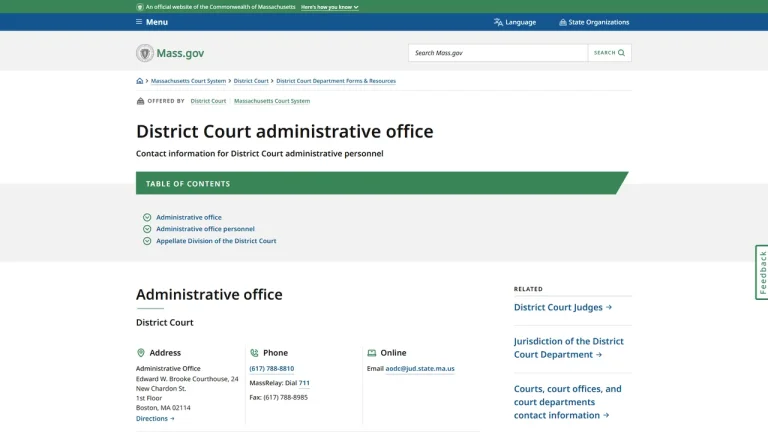
District Court Administration Office - Boston, MA
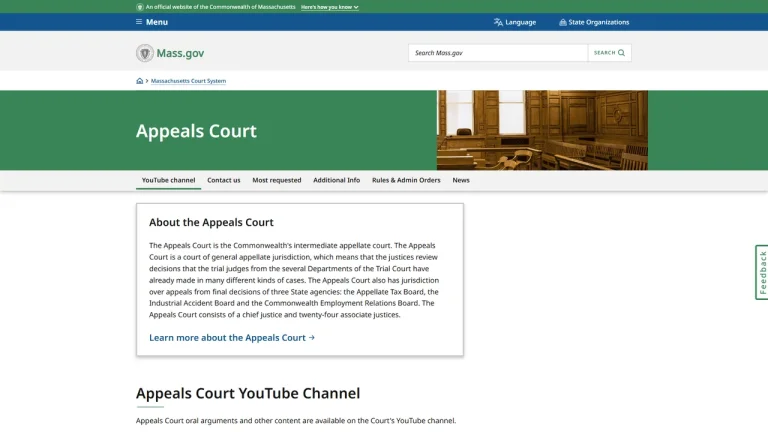


Massachusetts Appeals Court Clerk's Office - Boston, MA
United States Bankruptcy Court District of Massachusetts - Boston, MA
Judicial Administration & Court Jurisdiction in Boston
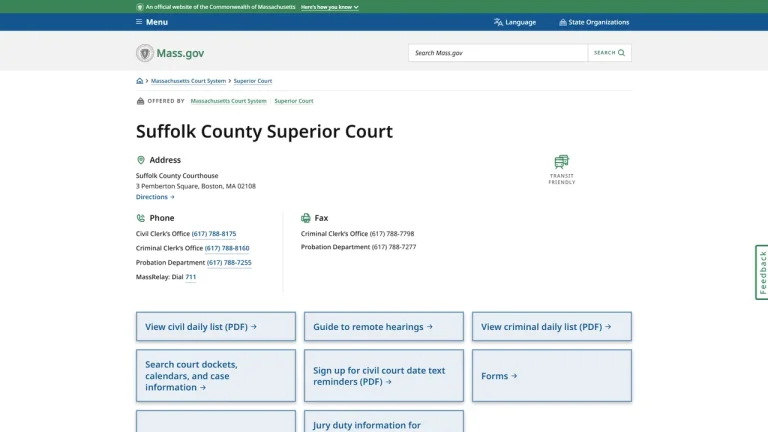
Boston serves as the administrative and judicial center for both Suffolk County and the Commonwealth of Massachusetts. Trial court operations are anchored by the Suffolk County Superior Court, located at 3 Pemberton Square, which exercises general trial jurisdiction over major civil litigation where damages exceed $50,000, equitable matters, and felony criminal prosecutions.
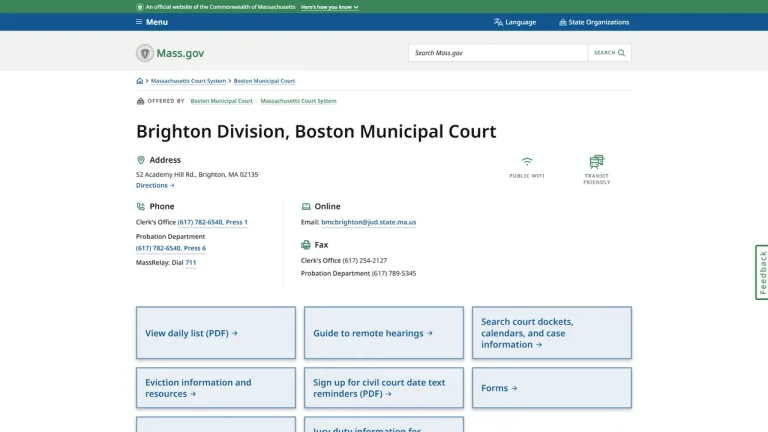
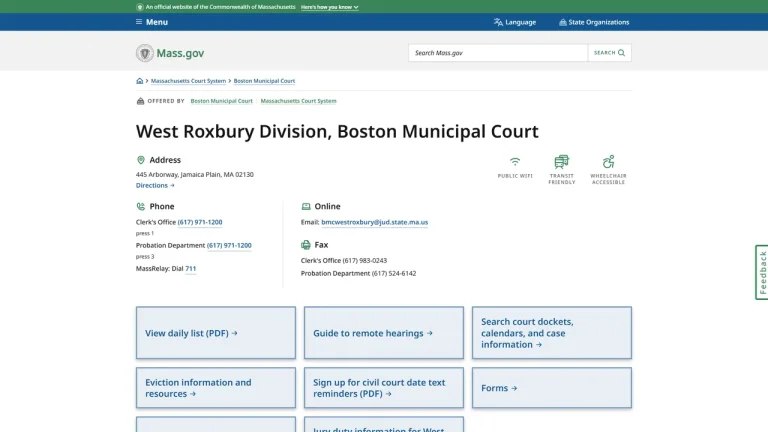
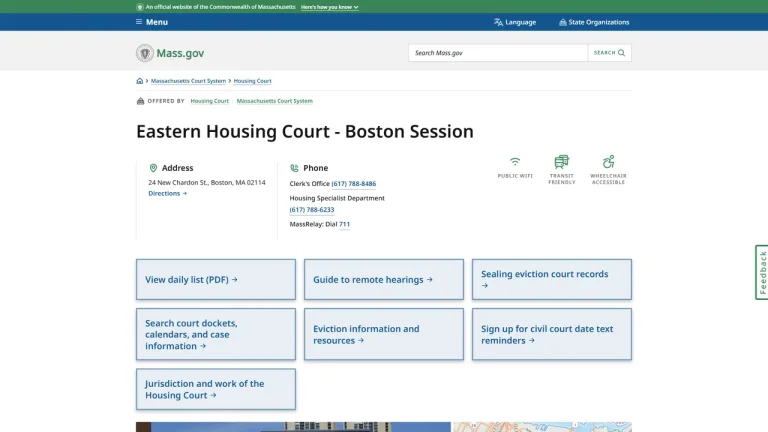
High-volume civil, criminal, and summary process proceedings are conducted at the Edward W. Brooke Courthouse at 24 New Chardon Street. This modern judicial complex houses the Boston Municipal Court Central Division, the Boston Housing Court, the Suffolk Probate and Family Court, and the Boston Juvenile Court. Additional community-based divisions of the Boston Municipal Court operate throughout municipal neighborhoods, including Dorchester, Roxbury, South Boston, East Boston, Charlestown, Brighton, and West Roxbury.
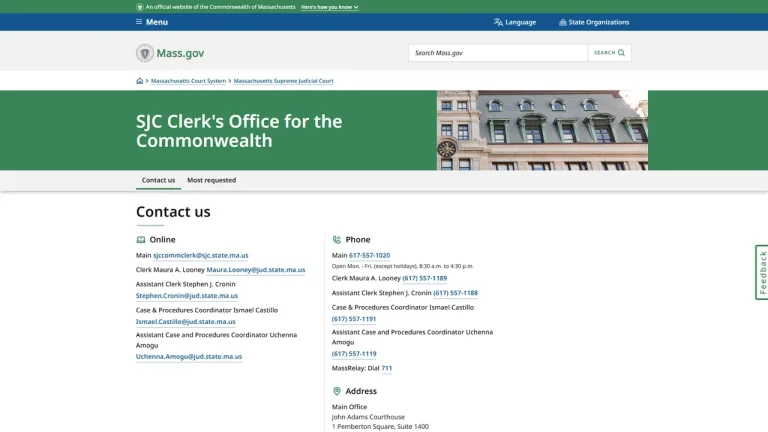
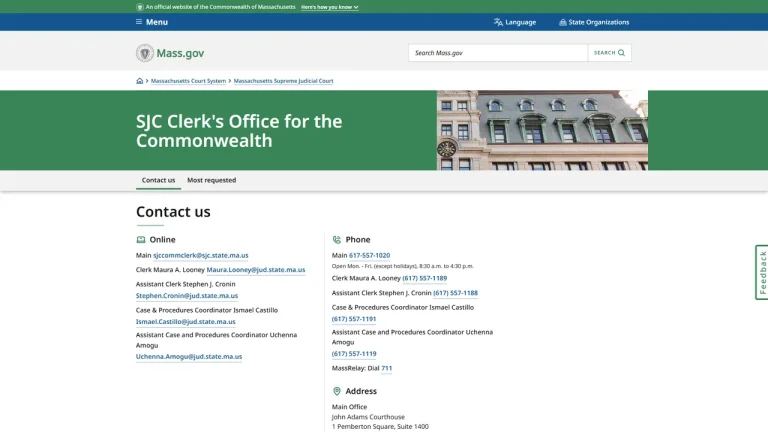
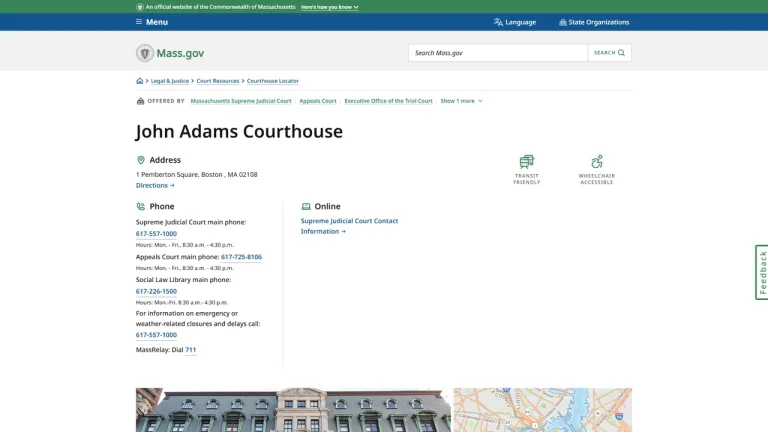
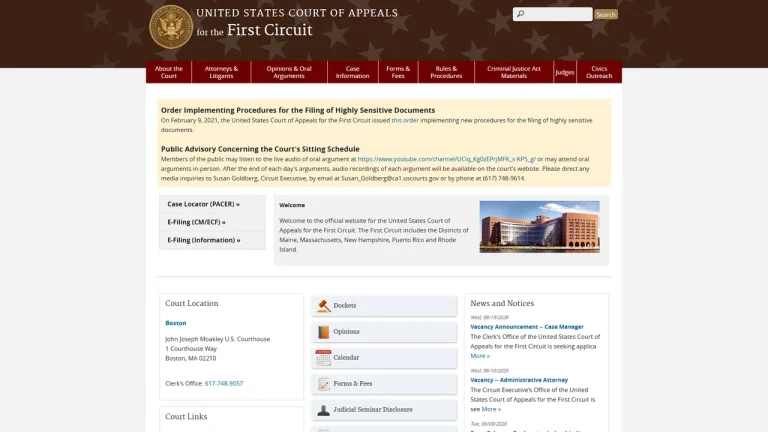
Appellate jurisprudence for the Commonwealth is seated in Boston at the historic John Adams Courthouse on Pemberton Square, which accommodates the Supreme Judicial Court and the Massachusetts Appeals Court. Furthermore, federal litigation across the region is adjudicated at the John Joseph Moakley United States Courthouse, situated at 1 Courthouse Way on Fan Pier in the Seaport District.
Boston Court Filing Schedules & Fee Matrix
| Service / Matter | Required Documents / Prerequisites | Statutory Fee (USD) | Processing Timeline |
|---|---|---|---|
| Boston Municipal Court Small Claims ($7,000 or less) | Statement of Small Claim, verified contract or invoice receipt, defendant residential address | $40 to $150 statutory tiered entry fee | Hearing scheduled within 30 to 60 days |
| Suffolk Superior Court Civil Action ($50,000+) | Civil complaint, summons, civil tracking statement, electronic filing via eFileMA | $275 statutory entry fee + summons surcharge | Tracking order generated within 30 days of entry |
| Boston Housing Court Summary Process (Eviction) | Summary process summons and complaint, verified notice to quit, active rental registration | $120 statutory entry fee + deputy sheriff service | Trial scheduled 14 to 21 days from formal entry |
| Notice of Appeal to Massachusetts Appeals Court | Notice of appeal filed in trial court, entry fee deposit, assembly of trial record | $300 appellate entry fee + transcript costs | Notice due within 30 days of final judgment entry |
Critical Legal Deadlines & Statutes in Massachusetts
Judicial proceedings in Boston are governed by the Massachusetts General Laws and statewide procedural rules. Under Mass. Gen. Laws ch. 260, § 2A, actions of tort, including personal injury and property damage claims, must be commenced within three years after the cause of action accrues. Contract actions operate under a six-year limitation period pursuant to Mass. Gen. Laws ch. 260, § 2.
Informal monetary disputes are governed by Mass. Gen. Laws ch. 218, § 21, which establishes a jurisdictional limit of $7,000 for small claims actions in the Boston Municipal Court, excluding property damage claims arising from motor vehicle collisions where statutory caps are waived. Notice of appeal requirements in civil actions are controlled by Mass. R. App. P. 4, requiring formal filing within 30 days from entry of judgment.
Summary process eviction matters are subject to strict expedited appellate rules under Mass. Gen. Laws ch. 239, § 5, requiring an aggrieved party to file a notice of appeal within 10 days of receipt of written judgment. In consumer actions, claimants must issue a formal 30-day demand letter pursuant to Mass. Gen. Laws ch. 93A, § 9 prior to initiating court proceedings.
Direct Court Navigation vs. Retaining Legal Counsel
Litigants in Boston can manage specific limited matters without private counsel. The small claims sessions of the Boston Municipal Court and non-complex administrative housing mediation sessions at the Brooke Courthouse provide simplified procedural paths and court service centers that assist self-represented parties with document preparation.
However, representation by an attorney licensed by the Massachusetts Board of Bar Overseers is essential when litigating cases in the Suffolk County Superior Court or contested matters in the Housing Court. Navigating the Massachusetts Rules of Civil Procedure, executing electronic filings through the eFileMA system, managing formal depositions, and preserving evidentiary objections require experienced advocacy. In commercial litigation and complex domestic relations cases, self-representation exposes litigants to severe procedural defaults and claim forfeitures.
Red Flags & Warnings in Boston Court Matters
- Deceptive commercial websites charging inflated fees to download official Massachusetts court forms that are provided free by the Trial Court.
- Missing the strict 10-day appeal deadline in summary process actions under Massachusetts General Laws Chapter 239, which terminates appellate remedies.
- Ignoring electronic service notices generated through the eFileMA portal, leading to automatic default judgments in the Suffolk County Superior Court.
- Retaining non-attorney paralegals or unaccredited advocates who are not licensed by the Supreme Judicial Court to provide legal representation.
Frequently Asked Questions
Where is the primary civil trial court located in Boston?
The Suffolk County Superior Court is located at 3 Pemberton Square in Downtown Boston, adjudicating civil disputes involving claims over $50,000, equitable relief, and felony indictments.
What courts operate inside the Edward W. Brooke Courthouse?
Located at 24 New Chardon Street, the Brooke Courthouse houses the Boston Municipal Court Central Division, the Boston Housing Court, the Suffolk Probate and Family Court, and the Boston Juvenile Court.
What is the Small Claims limit in Boston?
Under Massachusetts statute, the jurisdictional limit for small claims in the Boston Municipal Court is $7,000, although this statutory cap does not apply to property damage claims resulting from motor vehicle accidents.
What appellate courts are housed in the John Adams Courthouse?
The John Adams Courthouse at 1 Pemberton Square houses both the Supreme Judicial Court, the highest appellate court in Massachusetts, and the Massachusetts Appeals Court.
Is electronic filing mandatory in Suffolk County courts?
Yes. Licensed Massachusetts attorneys are required to submit filings electronically through the statewide eFileMA platform for civil actions in the Superior Court and Boston Municipal Court.