
Courts in New York City
Navigate the complex New York City court system across all five boroughs, including Supreme, Civil, Criminal, Family, and Surrogate's Courts in each county. Understanding jurisdictional boundaries, electronic filing requirements, and court appearance protocols ensures your legal matters are handled properly. Explore our directory below to locate verified courthouse addresses, clerk contact details, and calendaring resources.

DMV Traffic Violations Bureau (TVB) Manhattan South - New York, NY

Queens Criminal Courthouse (Supreme Court, Criminal Term & NYC Criminal Court)



Daniel Patrick Moynihan Courthouse (U.S. District Court, Southern District of New York)

Environmental Control Board (OATH Hearings Division) - New York, NY
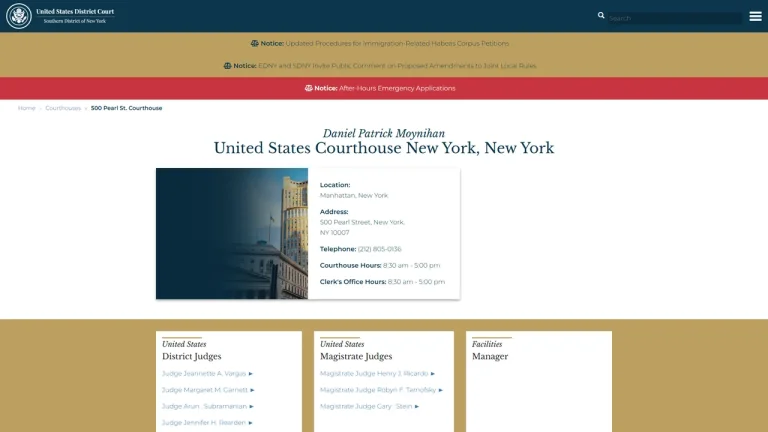
U.S. District Court - Southern District of New York - New York, NY
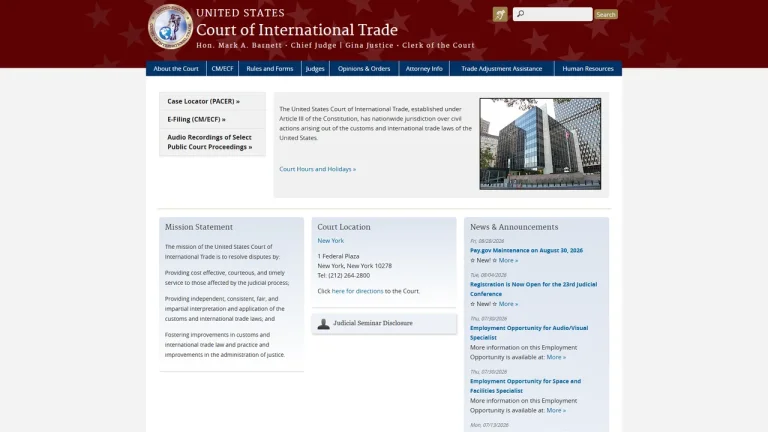
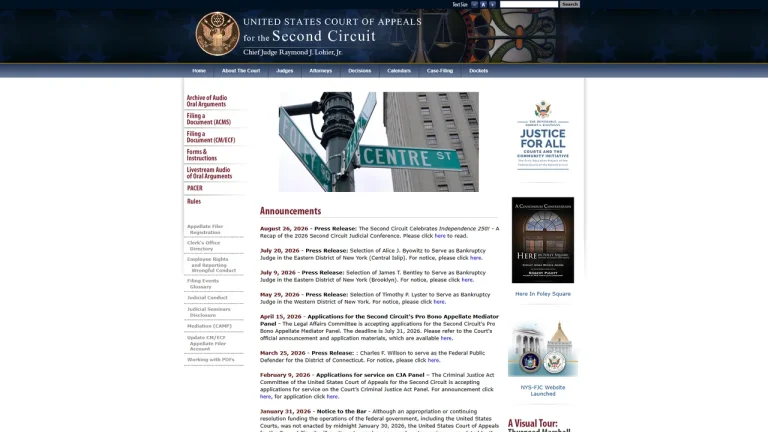
Thurgood Marshall United States Courthouse (U.S. Court of Appeals for the Second Circuit) - Philadelphia, PA


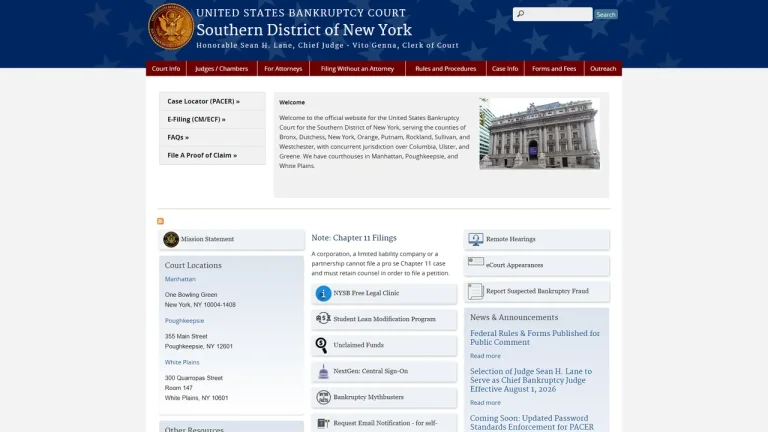
United States Bankruptcy Court, Southern District of New York
The Unified Court System Across New York City's Five Counties
The judicial landscape of New York City operates under the New York State Unified Court System, administered through the Office of Court Administration (OCA). Court facilities are organized on a county basis throughout New York County (Manhattan), Kings County (Brooklyn), Queens County, Bronx County, and Richmond County (Staten Island). Matching your legal dispute to the correct court tier and county venue is mandatory for procedural compliance.
Trial courts of general jurisdiction are the Supreme Courts in each borough, which handle major civil litigation exceeding $50,000, equitable actions, and felony criminal indictments. Notable complexes include 60 Centre Street and 111 Centre Street in Manhattan, 360 Adams Street in Brooklyn, 88-11 Sutphin Boulevard in Jamaica, Queens, 851 Grand Concourse in the Bronx, and 26 Central Avenue in Staten Island. Specialized commercial matters are assigned to the Commercial Division of the Supreme Court.
Lower-tier matters are handled by the New York City Civil Court (presiding over civil lawsuits up to $50,000, Housing Part landlord-tenant actions, and Small Claims up to $10,000), the New York City Criminal Court (handling arraignments and misdemeanor trials), Family Court, and Surrogate's Court (managing probate and trust administrations in facilities such as 31 Chambers Street in Manhattan). Electronic court filing is administered via the New York State Courts Electronic Filing (NYSCEF) portal.
Filing Fees & Jurisdictional Limits in New York City Courts
| Service / Matter | Required Documents / Prerequisites | Statutory Fee (USD) | Processing Timeline |
|---|---|---|---|
| NYC Civil Court Small Claims Action | Statement of claim, valid NYC residential or business address of defendant | $15 (claims up to $1,000) / $20 (up to $10,000) | 4 to 8 weeks to initial evening hearing |
| Supreme Court Request for Judicial Intervention (RJI) | Completed RJI form, stamped index number, motion or conference request | $95 | Assigned to IAS Judge within 5 to 10 days |
| Housing Court Non-Payment / Holdover Petition | Notice to quit or statutory rent demand, petition, predicate notice affidavit | $45 | 14 to 30 days to initial court return date |
| Surrogate's Court Probate Petition | Original will, certified death certificate, family tree, citation or waivers | $45 to $1,250 (graduated by estate value) | 4 to 12 weeks for Letters Testamentary |
Critical Legal Deadlines & Statutes in New York Courts
Strict statutory windows regulate civil litigation, responsive pleadings, and appeals across New York City courthouses. When a defendant is served with a summons and complaint in the New York Supreme or Civil Court, the responsive deadline is strictly controlled. Under N.Y. C.P.L.R. § 320(a), a defendant must serve an answer within twenty days if served by personal in-hand delivery within New York State, or within thirty days if service is completed by substituted delivery or outside the state.
For personal injury actions based on negligence, plaintiffs must commence a lawsuit within three years pursuant to N.Y. C.P.L.R. § 214. Breach of contract actions are subject to a six-year limitations period under N.Y. C.P.L.R. § 213(2). If you obtain an unfavorable judgment or order, a Notice of Appeal must be filed within thirty days from service of the order with notice of entry under N.Y. C.P.L.R. § 5513.
Criminal proceedings adhere to mandatory statutory speedy trial timelines codified under N.Y. Crim. Proc. Law § 30.30, requiring the prosecution to announce trial readiness within ninety days for Class A misdemeanors and within six months for felony indictments. The monetary jurisdiction of the Small Claims Part of the Civil Court is capped at $10,000 under N.Y. City Civ. Ct. Act § 1801.
Pro Se Access in NYC Courts vs. Mandatory Legal Counsel
The Unified Court System provides dedicated public Help Centers inside Civil, Supreme, and Family Court buildings across the five boroughs. These centers provide self-represented litigants with standardized forms, unrepresented litigant guides, and basic filing instruction. Self-representation is common and manageable in the Small Claims Part of the Civil Court, for uncontested adult name changes, and in uncontested matrimonial actions without marital property or minor children.
However, substantial litigation requires retaining licensed legal counsel. Under N.Y. C.P.L.R. § 321(a), corporations, limited liability companies, and partnerships cannot represent themselves in the Supreme Court or Civil Court and must retain counsel. Litigating complex business disputes in the Supreme Court Commercial Division, defending against criminal indictments, or navigating high-conflict custody trials requires mastery of the New York Civil Practice Law and Rules, the New York Rules of Evidence, and local court parts that self-represented individuals cannot safely handle.
Red Flags & Courthouse Warnings for NYC Court Users
- Unauthorized Solicitations Outside Courthouses: Avoid individuals loitering outside facilities on Foley Square, 100 Centre Street, or 851 Grand Concourse offering paid assistance with court paperwork or legal representation.
- Imposter Jury Duty Telephone Scams: Beware of callers claiming you missed jury service in New York County or Kings County demanding immediate payment of fines via wire transfer or gift cards to avoid arrest.
- Third-Party Court Record Fees: Never pay private companies for standard court calendars or docket records that are freely accessible through official public portals such as WebCivil Supreme and WebCivil Local.
- Unlicensed Document Preparation Services: Steer clear of non-lawyer petition mills whose improper drafting of predicate notices in Housing Court causes immediate case dismissal with statutory cost penalties.
Frequently Asked Questions
What is the dollar limit for Small Claims Court in New York City?
The maximum monetary limit in the Small Claims Part of the New York City Civil Court is $10,000. Claims seeking monetary damages up to this limit can be filed without an attorney in the borough where either party resides or maintains a place of business.
How can I check the status of my civil court case online?
You can track civil cases filed in New York City Supreme and Civil Courts using the state's public eCourts system, specifically WebCivil Supreme and WebCivil Local, which provide appearance dates, motion outcomes, and assigned judges.
Can a corporate entity sue or be sued in Small Claims Court?
A corporation cannot initiate a claim in the standard Small Claims Part but must file in the Commercial Small Claims Part. However, a corporation can be named as a defendant in Small Claims Court and can appear through an authorized corporate officer.
Where are criminal arraignments held in New York City?
Arraignments take place in the New York City Criminal Court building in each borough: 100 Centre Street in Manhattan, 120 Schermerhorn Street in Brooklyn, 125-01 Queens Boulevard in Queens, 215 East 161st Street in the Bronx, and 67 Targee Street in Staten Island.
What is the mandatory timeline to answer a Supreme Court summons?
A defendant has twenty days to serve an answer or motion to dismiss if personally served within New York State, or thirty days if service was executed by substituted delivery or outside the state pursuant to civil practice statutes.