
State & Local Courts in Harrisburg
Access verified Harrisburg courts and Dauphin County judicial divisions through our local directory. Find civil, criminal, and appellate courthouse contacts, administrative filing guidelines, and jurisdiction rules across the Commonwealth. Explore verified courthouse addresses and official clerk resources below to manage your proceeding.



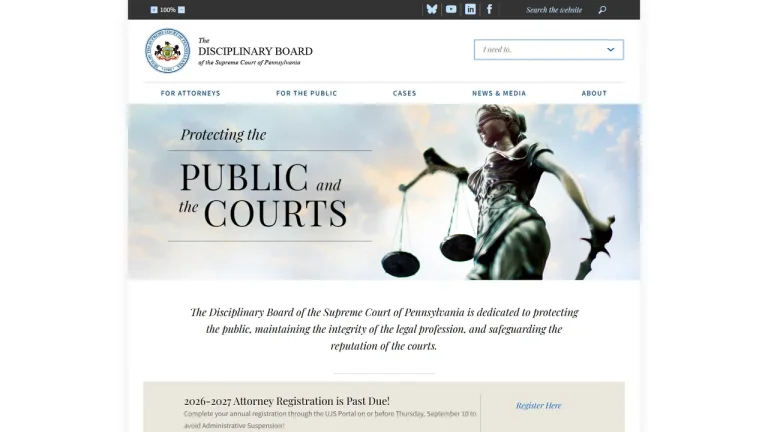
Disciplinary Board of the Supreme Court of Pennsylvania - Harrisburg, PA
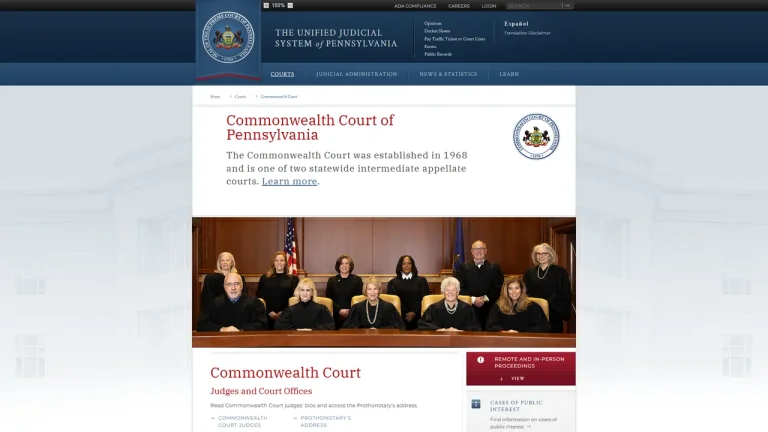



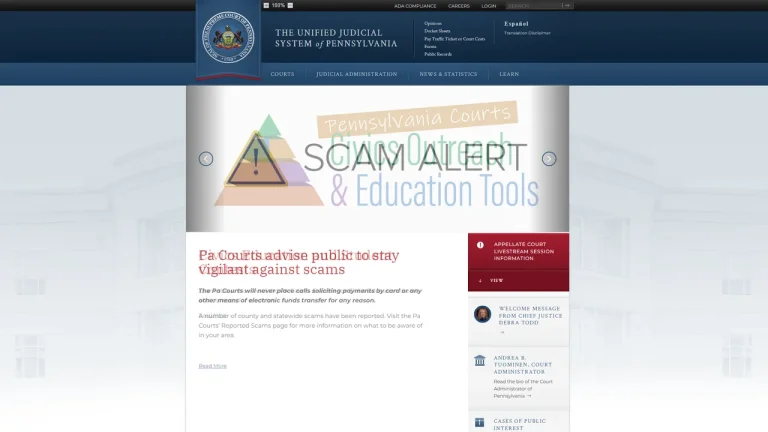
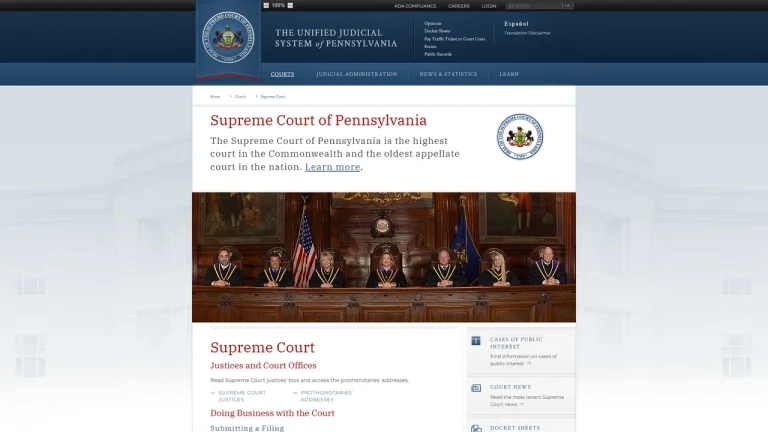
Administrative Office of Pennsylvania Courts - Harrisburg, PA


Pennsylvania Lawyers Fund for Client Security - Harrisburg, PA

State Judicial Hierarchy and Court Administration in Harrisburg
Harrisburg serves as both the county seat of Dauphin County and the capital of the Commonwealth of Pennsylvania, creating a distinctive multi-tiered judicial environment. Local, county, and statewide tribunals operate across downtown legal hubs situated along Market Street, Front Street, and Commonwealth Avenue. Residents from Midtown, Allison Hill, Uptown, and Shipoke interact with these forums for civil disputes, criminal trials, and statutory appeals.
At the local level, Magisterial District Courts handle preliminary criminal arraignments, summary traffic offenses, and municipal code violations. County-wide original jurisdiction resides with the Dauphin County Court of Common Pleas (12th Judicial District) at the Dauphin County Courthouse on Market Street, which administers civil, criminal, family, and orphans' court divisions.
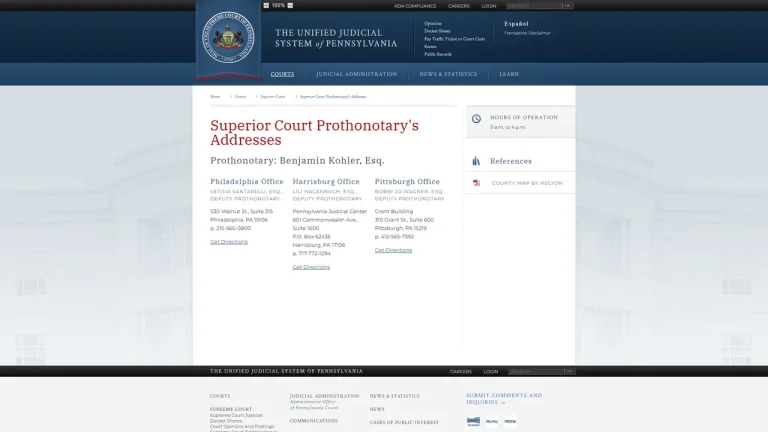
Harrisburg also serves as the operational seat of Pennsylvania's statewide appellate judiciary at the Pennsylvania Judicial Center. The Supreme Court of Pennsylvania, the Superior Court of Pennsylvania, and the Commonwealth Court of Pennsylvania convene here to decide constitutional questions, commercial appeals, and state agency litigation.
Key Court Services and Statutory Fee Schedule
| Service / Matter | Required Documents / Prerequisites | Statutory Fee (USD) | Processing Timeline |
|---|---|---|---|
| Magisterial District Civil Complaint (Under $12,000) | Form AOPC 308A, itemized statement of claim, defendant address verification | $65.00 - $135.00 tiered by claim and service | Hearing scheduled within 30 to 45 calendar days |
| Common Pleas Civil Complaint / Writ of Summons | Civil cover sheet, verified complaint or praecipe, PACFile submission | $216.75 statutory prothonotary fee | Docket number issued within 24 to 48 hours |
| Family Division Child Custody Complaint | Complaint for custody, confidential info form, criminal record verification | $143.75 initial filing fee | Custody conciliation conference within 4 to 6 weeks |
| Notice of Appeal from Summary Conviction | Notice of appeal form, copy of magisterial citation, transcript receipt | $60.00 clerk of courts fee | De novo hearing scheduled in 30 to 60 days |
Critical Legal Deadlines & Statutory Timelines in Pennsylvania
Civil and criminal actions in Harrisburg are governed by strict statutory deadlines established by the Pennsylvania Consolidated Statutes and the Pennsylvania Rules of Civil Procedure. Missing a jurisdictional window can result in waiver of claims or immediate entry of default judgment:
Under Pennsylvania law, personal injury and wrongful death lawsuits must be filed within two years of injury accrual pursuant to 42 Pa. C.S. § 5524. Breach of written contract claims carry a four-year statute of limitations under 42 Pa. C.S. § 5525. If asserting a tort claim against the City of Harrisburg, Dauphin County, or an affiliated municipal entity, the claimant must deliver formal written notice within six months of the occurrence under 42 Pa. C.S. § 5522(a).
In the Dauphin County Court of Common Pleas, a defendant served with a civil complaint must file responsive pleadings or preliminary objections within twenty calendar days pursuant to Pa. R.C.P. No. 1026. Following an adverse judgment in Magisterial District Court, a party wishing to appeal must file a notice of appeal within thirty calendar days under Pa. R.C.P.M.D.J. No. 1002(A), or within ten calendar days if the judgment involves residential landlord-tenant eviction under Pa. R.C.P.M.D.J. No. 1002(B). Appeals from final Common Pleas orders to the Pennsylvania Superior Court or Commonwealth Court must be lodged within thirty calendar days under Pa. R.A.P. 903(a).
Self-Representation vs. Retaining Admitted Pennsylvania Counsel
Individuals can manage specific routine judicial tasks in Harrisburg without retaining an attorney. Magisterial District Courts provide accessible dockets where pro se litigants can resolve small claims under $12,000, contest minor traffic citations, or handle basic security deposit disputes. Litigants can also access self-help materials and standardized civil complaint forms through the Dauphin County Prothonotary and Law Library.
However, once litigation enters the Dauphin County Court of Common Pleas or state appellate courts, retaining licensed counsel is critical. Pennsylvania formal pleading rules, pre-trial motion practice, and strict statutory rules of evidence present severe hazards for unrepresented parties. Furthermore, under Pennsylvania Rule of Civil Procedure 2177, corporations, limited liability companies, and partnerships are legally barred from appearing pro se and must retain an attorney admitted to the Pennsylvania Bar. Professional representation is also vital in complex felony trials, contentious custody trials, and Commonwealth Court challenges against state regulatory agencies.
Protective Safeguards and Judicial Scam Warnings
- Avoid third-party commercial portals charging recurring fees to look up Pennsylvania court dockets; public case information for Common Pleas and Magisterial courts is freely accessible through the official Pennsylvania Unified Judicial System (UJS) Web Portal.
- Be vigilant against telephone scams where callers claim to be Dauphin County Sheriff deputies or court clerks demanding payment via wire transfers or prepaid cards to clear failure-to-appear warrants for missed jury duty; court personnel never request telephone payments.
- Beware of non-attorney document preparation businesses that claim to represent litigants in Dauphin County courtrooms; drafting formal pleadings without a license from the Supreme Court of Pennsylvania constitutes unauthorized practice of law.
- Verify that any attorney handling your legal proceedings in Harrisburg is active and in good standing with the Disciplinary Board of the Supreme Court of Pennsylvania.
Frequently Asked Questions
Where is the Dauphin County Court of Common Pleas located?
The Dauphin County Court of Common Pleas is located at the Dauphin County Courthouse, 101 Market Street, Harrisburg, PA 17101. It houses courtrooms, the Prothonotary, the Clerk of Courts, and the Register of Wills.
What is the jurisdictional dollar limit for Harrisburg small claims courts?
Magisterial District Courts in Harrisburg possess statutory subject-matter jurisdiction over civil claims where the amount in controversy does not exceed $12,000 under 42 Pa. C.S. § 1123.
How do I search public court records in Dauphin County?
You can access civil, criminal, and magisterial records online through the Pennsylvania Unified Judicial System (UJS) Web Portal or inspect case files at the Prothonotary's Office in the Dauphin County Courthouse.
What is the role of the Commonwealth Court of Pennsylvania in Harrisburg?
The Commonwealth Court of Pennsylvania, located at the Pennsylvania Judicial Center, is a specialized appellate court handling civil actions involving state agencies, municipal regulatory matters, and public sector employment appeals.
Can a corporation file a lawsuit pro se in Dauphin County Common Pleas?
No. Under Pennsylvania court rules, business entities including LLCs and corporations cannot represent themselves in the Court of Common Pleas and must be represented by an attorney admitted to the Pennsylvania Bar.