
County Clerk in Philadelphia
Navigating county clerk functions in Philadelphia requires understanding the city-county consolidated structure where records and filings are managed across specialized offices. From real estate deed recordings and marriage licenses to civil court dockets, official documentation is administered under Pennsylvania statutory mandates. Explore our directory below to locate the appropriate filing division, review documentation requirements, and connect with qualified local legal counsel.
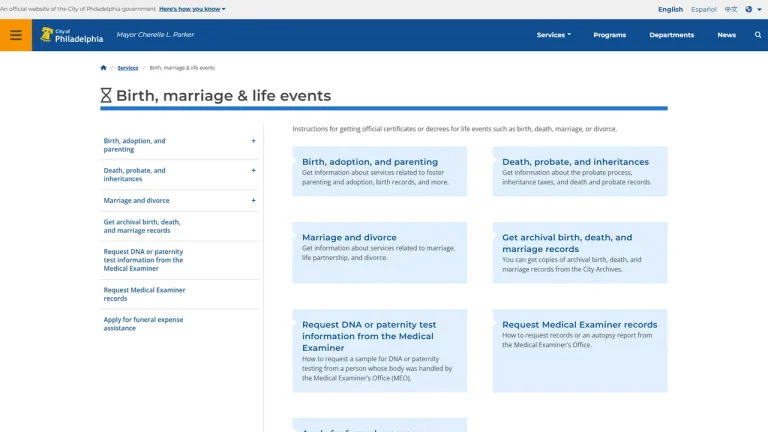
Philadelphia Marriage License - Philadelphia, PA
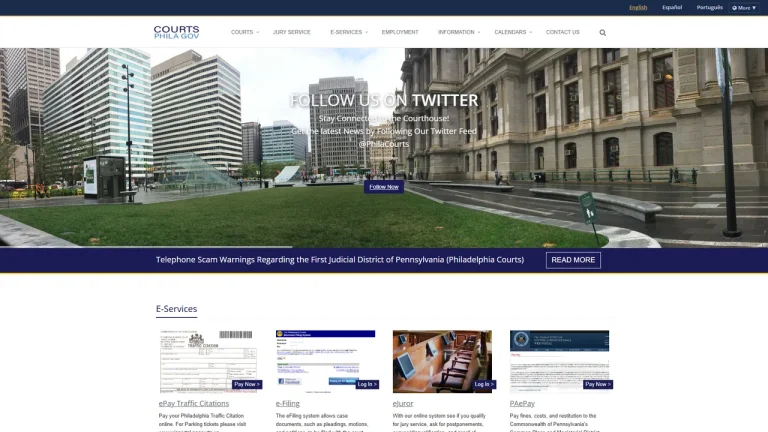
Philadelphia Office of the Clerk of Quarter Sessions - Philadelphia, PA
The Consolidated County Clerk Framework in Philadelphia
Unlike traditional Pennsylvania counties that maintain an individual, elected County Clerk, Philadelphia functions under a unified city-county administration established through the 1854 Act of Consolidation and the 1951 Philadelphia Home Rule Charter. As a result, standard county clerical functions are distributed across three distinct governmental entities: the Philadelphia Department of Records, the Office of Judicial Records (OJR), and the Philadelphia Register of Wills.
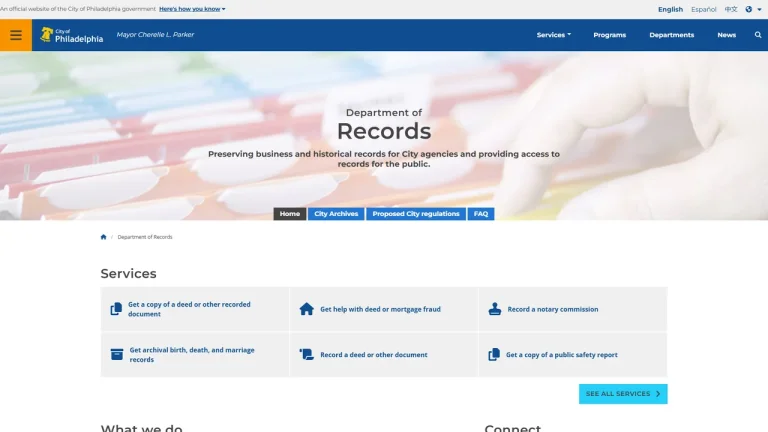
The Philadelphia Department of Records executes the duties of the county recorder of deeds, custodian of city archives, and registrar of vital municipal filings, operating from offices inside Philadelphia City Hall and the Municipal Services Building. The Office of Judicial Records serves as the clerk of court and prothonotary for the First Judicial District of Pennsylvania, maintaining court dockets for the Court of Common Pleas Civil Division at City Hall and the Criminal Division at the Juanita Kidd Stout Center for Criminal Justice on Filbert Street.
The Register of Wills, located in Room 180 of City Hall, oversees the probate of wills, the grant of letters of administration, and the issuance of marriage licenses. Whether residents reside in Center City, Manayunk, Germantown, Passyunk Square, or Mayfair, accessing official county-level records requires engaging the specific administrative division that possesses statutory jurisdiction over that document class.
Primary Philadelphia County Records Services and Statutory Fees
| Service / Matter | Required Documents / Prerequisites | Statutory Fee (USD) | Processing Timeline |
|---|---|---|---|
| Marriage License Application | Valid government photo ID, Social Security numbers, certified divorce decrees or death certificates if applicable | $90.00 base application fee | 3-day statutory waiting period after interview |
| Grant of Letters of Administration / Probate | Original Will, certified death certificate, formal probate petition, personal identification of estate fiduciary | $100.00 - $600.00+ (Based on gross probate value) | 5 - 15 business days |
| Deed & Land Record Registration | Executed original deed, Certificate of Compliance, Realty Transfer Tax return | $256.75 base recording fee | 5 - 10 business days |
| Civil Court Filing / Docket Commencement | Civil court cover sheet, verified complaint or praecipe, entry of appearance form | $300.00 - $350.00 initial commencement fee | Same-day electronic filing via PACFile portal |
Critical Legal Deadlines & Statutes in Pennsylvania
Navigating Philadelphia county clerical filings is governed by strict statutory schedules under Commonwealth law. When submitting a marriage license application to the Register of Wills pursuant to 23 Pa. C.S. § 1303, a mandatory three-day statutory waiting period must elapse prior to license issuance, and the resulting license remains valid for exactly sixty calendar days. In estate proceedings governed by the Probate, Estates and Fiduciaries Code (20 Pa. C.S. § 901), estate creditors must present formal claims within one year following the first published notice of the grant of letters.
For real estate transactions, recording deeds and mortgages with the Department of Records is necessary under 16 P.S. § 9701 and 21 P.S. § 351 to secure legal priority against subsequent third-party purchasers. In civil court matters managed by the Office of Judicial Records, any formal notice of appeal challenging a final order of the Philadelphia Court of Common Pleas must be docketed within thirty calendar days under Pa. R.A.P. 903 and 42 Pa. C.S. § 5571.
Self-Service Filings vs. Professional Legal Representation
Routine clerical requests across Philadelphia county offices can be completed directly by members of the public through accessible administrative channels. Individuals can search historical land records, request certified deed copies from the Department of Records, apply for a marriage license with the Register of Wills, or verify public judgment dockets through the Office of Judicial Records online portal without engaging formal legal counsel.
Conversely, substantive legal and court filings involve procedural complexities that warrant retained counsel. Opening probate for contested estates, handling intestate administrations, or appearing before the Register of Wills or the Orphans' Court Division requires experienced estate counsel to ensure fiduciary duties comply with Commonwealth statutes. Similarly, filing civil complaints, litigating property liens, or pursuing emergency injunctions requires deep familiarity with the First Judicial District local court rules and the Pennsylvania Rules of Civil Procedure.
Red Flags & Consumer Fraud Protection
When searching for Philadelphia county clerical records or filing documentation, residents should guard against deceptive practices and misleading entities:
- Unofficial commercial websites charging high surcharges for standard public deed copies or marriage application packets that can be obtained directly from city agencies at statutory rates.
- Deceptive mailings targeting recent home purchasers with solicitations for paid property deed monitoring or transfer certificates, ignoring the City of Philadelphia free Deed Fraud Notification program.
- Unauthorized non-lawyer services offering legal probate representation or document preparation for Orphans' Court proceedings, which constitutes the unauthorized practice of law.
- Deceptive payment demands alleging delinquent recording fees, active court judgments, or estate penalties payable via prepaid debit cards, gift cards, or unverified wire systems.
Frequently Asked Questions
Why is there no single office named County Clerk in Philadelphia?
Following the 1854 Act of Consolidation and the 1951 Philadelphia Home Rule Charter, city and county administrative functions were consolidated. Traditional county clerk duties are divided among the Philadelphia Department of Records (for land records and deeds), the Office of Judicial Records (for civil and criminal court dockets), and the Register of Wills (for probate and marriage licenses).
Where can I research recorded deeds and property records in Philadelphia?
Deeds, mortgages, and land records can be inspected through the Philadelphia Department of Records public search portal or in person at City Hall. The department maintains historical archives and electronic indexes where certified copies of real estate documents may be purchased.
What responsibilities are handled by the Office of Judicial Records?
The Office of Judicial Records (OJR) functions as the clerk of courts and prothonotary for the First Judicial District of Pennsylvania. The OJR Civil Division at City Hall manages civil dockets, liens, and appeals, while the Criminal Division at the Juanita Kidd Stout Center for Criminal Justice maintains criminal case records and bail dockets.
How long is a marriage license valid after issuance in Philadelphia?
Under 23 Pa. C.S. § 1303, a marriage license issued by the Philadelphia Register of Wills remains valid for sixty calendar days from the date of issuance. Pennsylvania law enforces a mandatory three-day statutory waiting period following the application interview before the license can be used.
How do I access Philadelphia Court of Common Pleas case dockets online?
Case dockets and filings for the Philadelphia Court of Common Pleas can be accessed electronically through the First Judicial District portal, while statewide court records and electronic case filings are available via the Pennsylvania Unified Judicial System web portal (UJS Web Portal) and the PACFile electronic filing system.