
State & Local Courts in Pennsylvania
Navigating the Unified Judicial System of Pennsylvania requires understanding the distinct jurisdictions of appellate, common pleas, and minor courts statewide. Whether filing a civil claim or researching public dockets, proceedings adhere to strict Commonwealth civil and appellate procedural rules. Explore our verified directory below to identify local courthouses, access statewide electronic filing resources, and connect with experienced Pennsylvania litigation counsel.
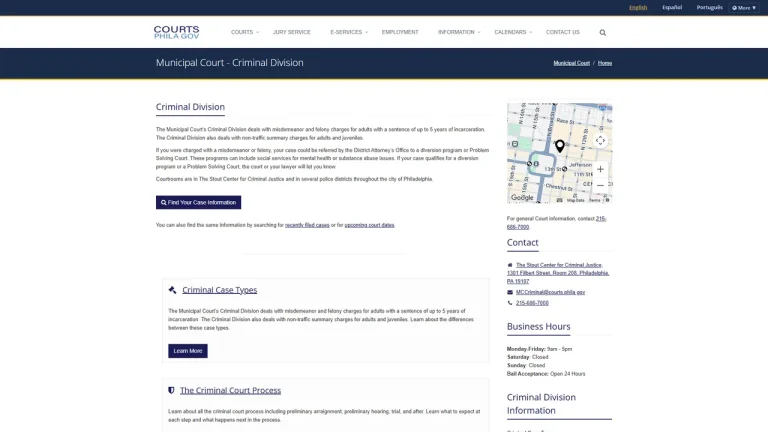
Juanita Kidd Stout Center for Criminal Justice - Philadelphia, PA
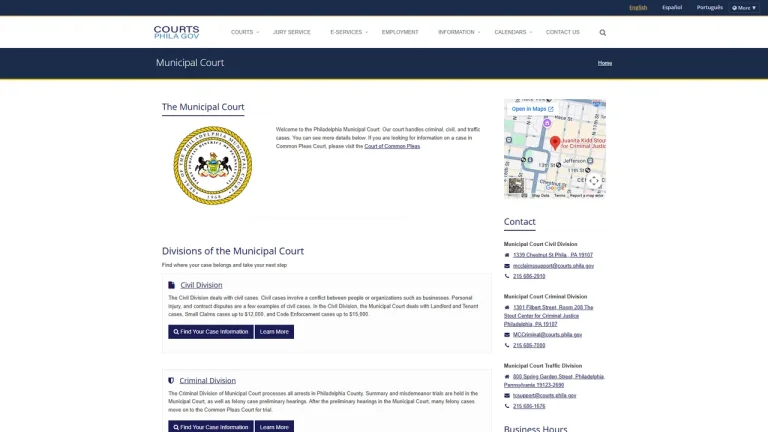
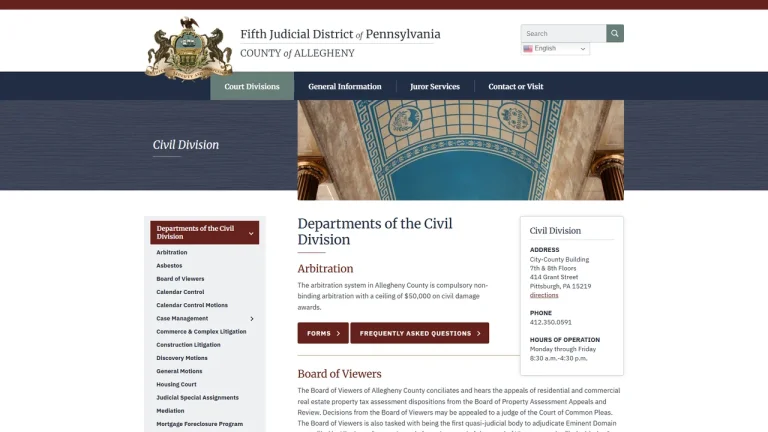
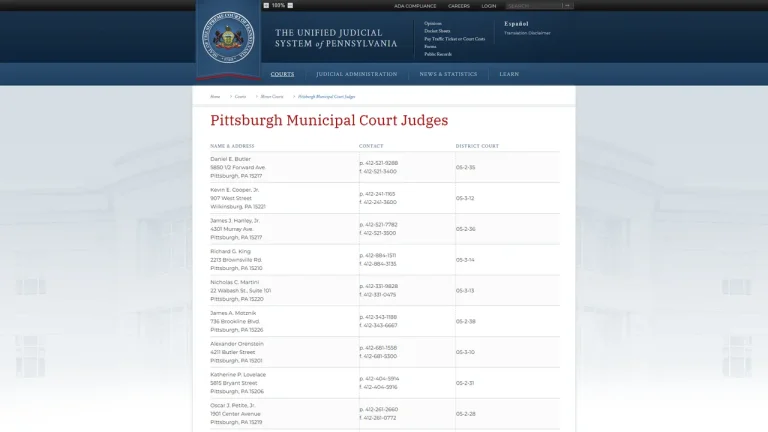


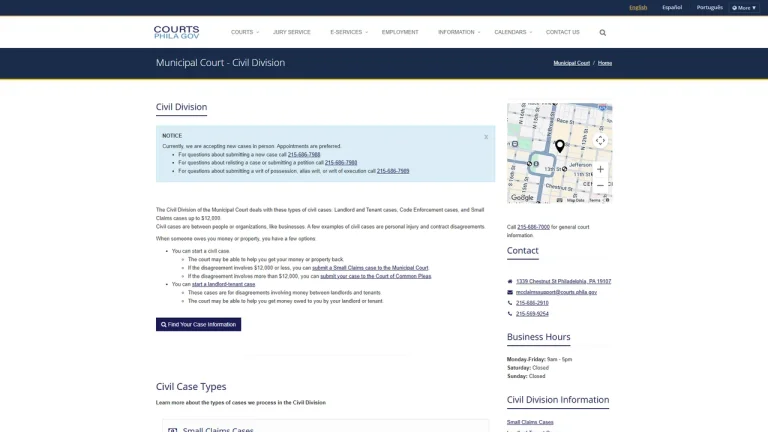
Philadelphia Municipal Court - Civil Division - Philadelphia, PA
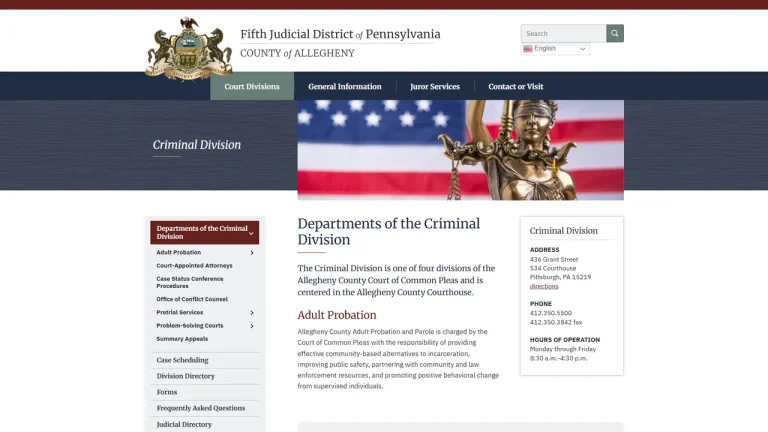
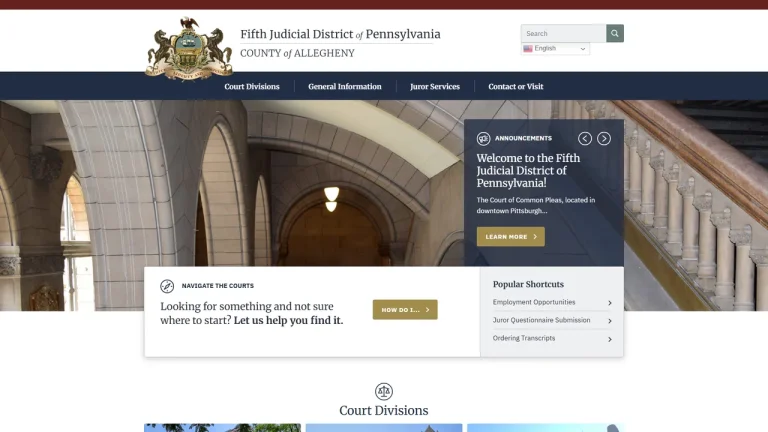
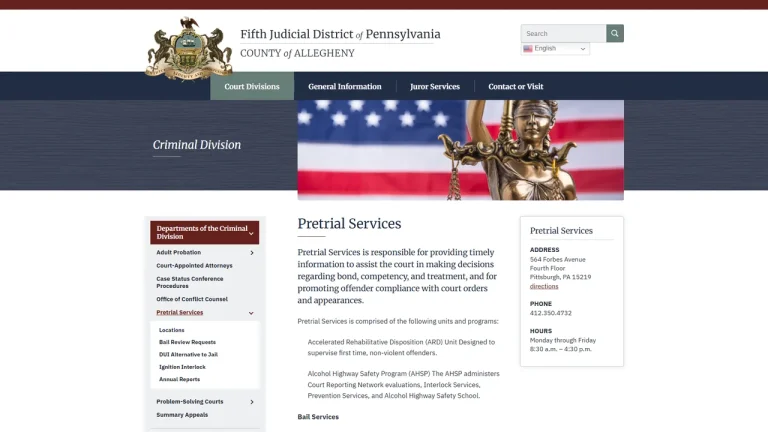

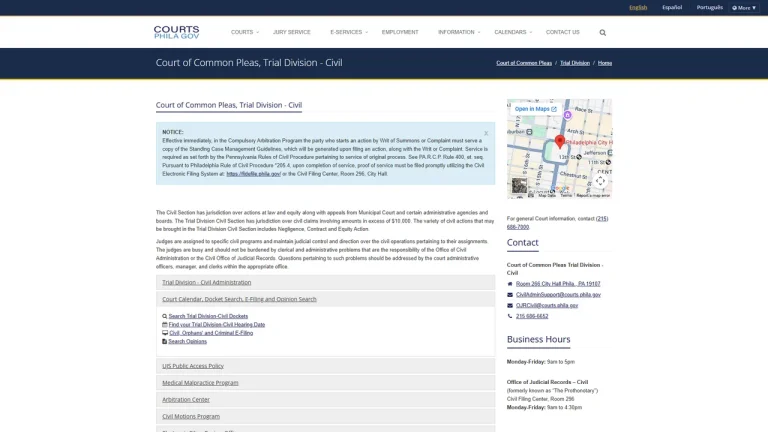
Court-Common Pleas Arbitration - Philadelphia, PA
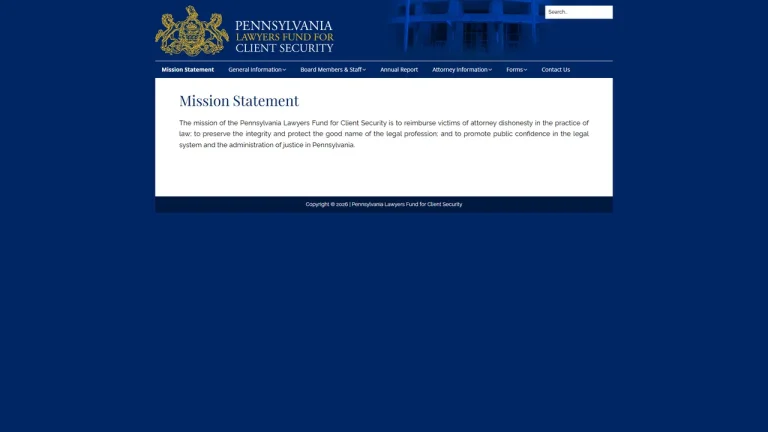
Pennsylvania Lawyers Fund for Client Security - Harrisburg, PA


The Unified Judicial System of Pennsylvania
Pennsylvania operates a unified judicial system established under Article V of the Pennsylvania Constitution, administered centrally by the Administrative Office of Pennsylvania Courts (AOPC) in Harrisburg. The state judicial hierarchy features a three-tiered structure consisting of minor courts of limited jurisdiction, the Courts of Common Pleas as general trial courts, and two intermediate appellate courts overseen by the Supreme Court of Pennsylvania. The Supreme Court of Pennsylvania, sitting regularly in Harrisburg, Philadelphia, and Pittsburgh, serves as the ultimate judicial authority on Commonwealth constitutional interpretation and procedural rulemaking.
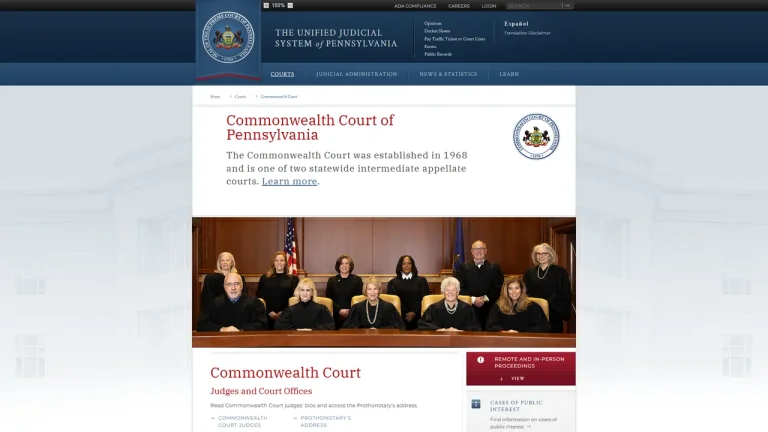
Intermediate appellate review is divided between the Superior Court of Pennsylvania and the Commonwealth Court of Pennsylvania. While the Superior Court hears direct appeals in civil, family, and criminal matters from county trial courts, the Commonwealth Court is a unique statewide tribunal with original and appellate jurisdiction over actions involving state agencies, local government disputes, municipal regulatory determinations, and taxation appeals.
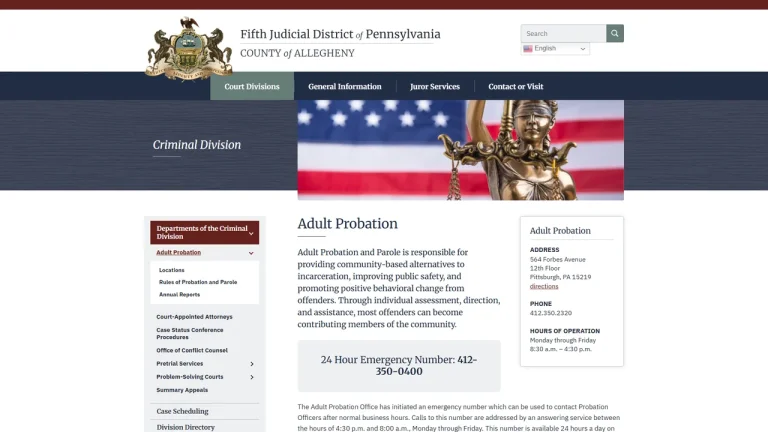
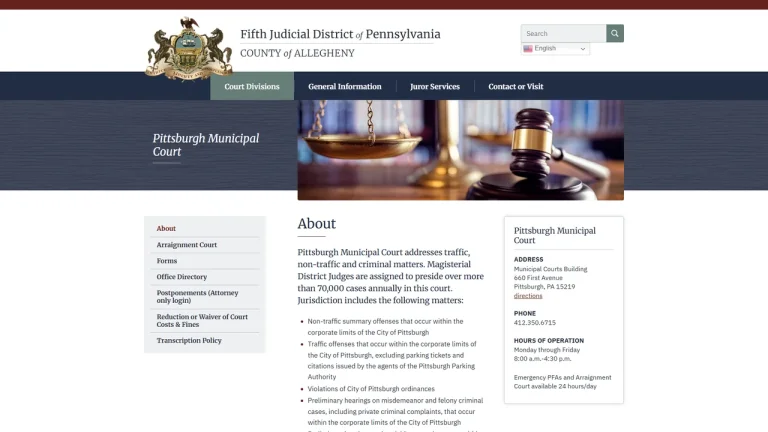
Trial-level general jurisdiction is distributed across 60 judicial districts spanning Pennsylvania's 67 counties, each centered around a county Court of Common Pleas-such as the First Judicial District in Philadelphia, the Fifth Judicial District in Allegheny County, and multi-county or single-county judicial districts throughout Central, Eastern, and Western Pennsylvania. Minor courts comprise Magisterial District Courts across 66 counties and the specialized Philadelphia Municipal Court, handling initial criminal arraignments, preliminary hearings, and small claims actions.
Pennsylvania Court Filings, Documentation, and Statutory Fees
| Service / Matter | Required Documents / Prerequisites | Statutory Fee (USD) | Processing Timeline |
|---|---|---|---|
| Civil Complaint Filing (Court of Common Pleas) | Civil cover sheet, verified complaint or praecipe for writ of summons, notice to defend | $150.00 - $350.00 (Varies by county prothonotary) | Same-day docketing via PACFile or county portal |
| Small Claims Filing (Magisterial District Court) | Civil complaint form, itemized statement of damages, defendant service address | $60.00 - $160.00 (Graduated by claim amount) | Hearing scheduled within 30 - 60 calendar days |
| Notice of Appeal to Superior / Commonwealth Court | Notice of appeal, docketing statement, copy of appealed final order, proof of service | $90.25 appellate filing fee plus county clerk fee | Mandatory 30-day jurisdictional filing window |
| Certified Court Record / Docket Search | Case caption, docket number, formal records request form | $5.00 - $25.00 per certification | Instant online verification; 3 - 5 business days via mail |
Critical Legal Deadlines & Statutes in Pennsylvania
Navigating Pennsylvania trial and appellate courts requires strict adherence to mandatory procedural deadlines codified in the Pennsylvania Consolidated Statutes and court rules. Under Pa. R.A.P. 903 and 42 Pa. C.S. § 5571, a notice of appeal challenging a final order or judgment of a Court of Common Pleas must be filed within exactly thirty calendar days of the entry of the order on the court docket. Missing this thirty-day jurisdictional deadline permanently divests intermediate appellate courts of authority to review the case.
In the Court of Common Pleas, post-trial motions must be filed within ten calendar days after the verdict or notice of nonsuit pursuant to Pa. R. Civ. P. 227.1 to preserve appellate claims. If a party seeks to appeal a civil judgment rendered by a Magisterial District Judge, a notice of appeal must be filed with the county prothonotary within thirty days under Pa. R.C.P.M.D.J. 1002, whereas residential landlord-tenant eviction judgments carry an expedited ten-day appeal window. For underlying civil actions, personal injury lawsuits must be initiated within two years under 42 Pa. C.S. § 5524, and breach of contract actions within four years under 42 Pa. C.S. § 5525.
Direct Court Access vs. Professional Legal Representation
Self-represented litigants may access minor judicial venues directly for straightforward disputes. In Pennsylvania Magisterial District Courts and the Philadelphia Municipal Court, individuals can file small claims up to the statutory maximum of $12,000 under 42 Pa. C.S. § 1515 without retaining counsel. Citizens can also directly access docket sheets and case summaries through the public Pennsylvania Unified Judicial System (UJS) Web Portal, request certified marriage or deed certificates, or satisfy summary traffic citations without legal representation.
However, navigating the Court of Common Pleas or intermediate appellate courts without counsel poses severe procedural hazards. Pennsylvania court rules strictly enforce technical pleading requirements, preliminary objections, and formal discovery schedules. Furthermore, under Pennsylvania common law, corporations, limited liability companies, and partnerships cannot appear pro se and must be represented by an attorney admitted to practice by the Supreme Court of Pennsylvania. Skilled litigation counsel manages evidentiary burdens, preserves trial objections, and conducts formal appellate briefing before the Superior and Commonwealth Courts.
Red Flags & Courthouse Fraud Protection
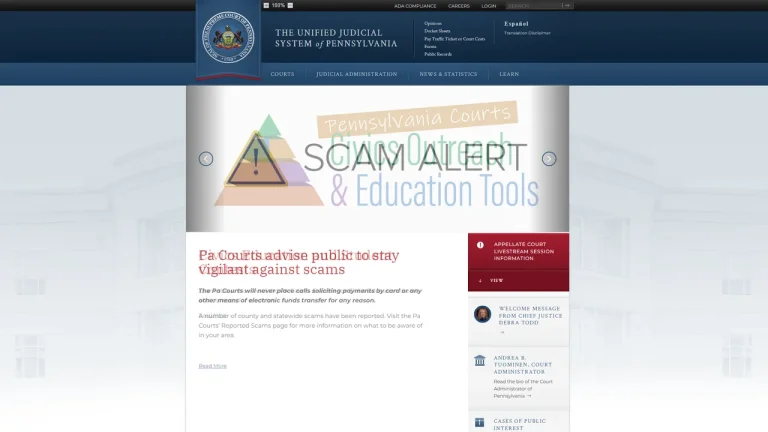
Members of the public interacting with Pennsylvania judicial resources should protect themselves against deceptive practices and fraudulent operations:
- Commercial websites charging recurring subscription fees or exaggerated document surcharges for basic court records freely accessible via the official Pennsylvania Unified Judicial System (UJS) Web Portal.
- Impostor telephone calls or text messages purporting to originate from county sheriff offices or court clerks alleging an active arrest warrant for failure to report for jury duty and demanding payment via prepaid cards.
- Unlicensed non-attorney entities offering "paralegal filing services" to draft substantive pleadings or civil complaints for Common Pleas litigation, which constitutes the unauthorized practice of law.
- Deceptive collection communications threatening immediate wage garnishment or asset seizure without an active civil judgment docketed in the county Court of Common Pleas.
Frequently Asked Questions
What is the difference between the Superior Court and the Commonwealth Court of Pennsylvania?
The Superior Court of Pennsylvania is an intermediate appellate court that handles appeals in general civil, criminal, and family law matters from the Courts of Common Pleas. The Commonwealth Court of Pennsylvania is a specialized intermediate appellate court that handles matters involving state administrative agencies, municipal regulatory decisions, public employee disputes, and original civil actions against the Commonwealth government.
What is the jurisdictional limit for small claims in Pennsylvania?
Under 42 Pa. C.S. § 1515, the monetary jurisdictional limit for civil claims brought in Pennsylvania Magisterial District Courts and the Philadelphia Municipal Court Civil Division is capped at $12,000, excluding statutory court costs and interest.
How can I access Pennsylvania court dockets and filings online?
The Unified Judicial System of Pennsylvania provides public docket sheets, calendar listings, and case summaries through the UJS Web Portal. Attorneys and authorized parties file court documents electronically through PACFile, the statewide appellate and common pleas electronic filing platform.
Can a corporation represent itself in a Pennsylvania Court of Common Pleas?
No. Under Pennsylvania law, incorporated business entities, including corporations and LLCs, cannot be represented by a non-lawyer officer or member in the Court of Common Pleas, Commonwealth Court, or Superior Court. All business entities must retain legal counsel licensed by the Supreme Court of Pennsylvania.
What happens if I miss the 30-day deadline to appeal a Pennsylvania court judgment?
The 30-day deadline to file a notice of appeal under Pa. R.A.P. 903 is strictly jurisdictional. If the deadline is missed, the appellate court cannot hear the appeal and will dismiss the matter, unless the appellant can satisfy the rigorous legal standard for an appeal nunc pro tunc based on extraordinary circumstances or administrative court breakdown.