
Wage & Hour Lawyers in Kansas
Resolving unpaid wages, overtime violations, or misclassification in Kansas requires strategic enforcement under state and federal employment laws. Experienced Kansas wage and hour attorneys represent workers in recovered tip pools, minimum wage violations, and statutory penalty claims before the Kansas Department of Labor and federal courts. Explore our verified directory below to consult an experienced Kansas employment attorney and protect your earned compensation.
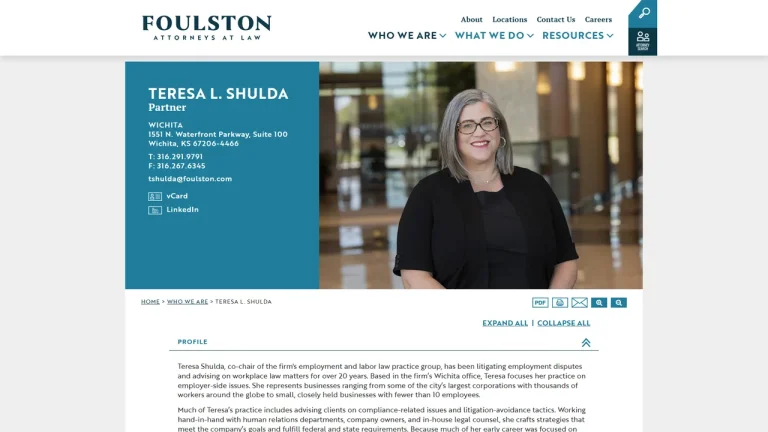
Teresa L. Shulda - Foulston Siefkin LLP - Wichita, KS
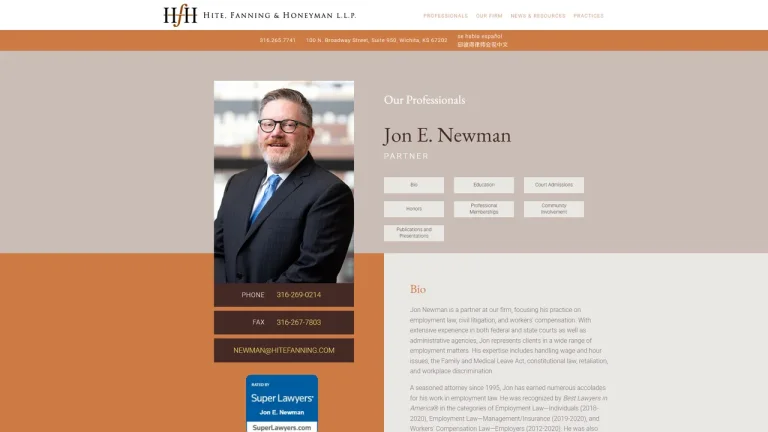
Jon E. Newman - Wichita, KS

Snyder Law Firm LLC - Overland Park, KS
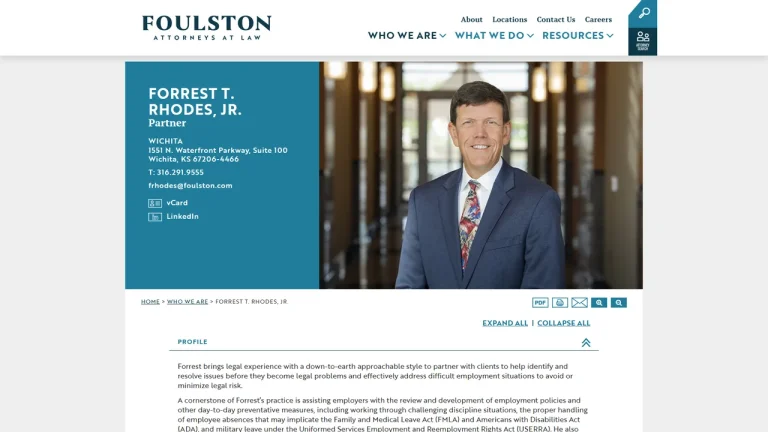
Forrest T. Rhodes Jr. - Wichita, KS

Swartz Law, LLC - Overland Park, KS

Employee and Labor Law Group of KC - Overland Park, KS

Jackson Lewis PC - Overland Park, KS

Littler Mendelson P.C. - Overland Park, KS

McAnany, Van Cleave and Phillips, P.A. - Kansas City, KS

The Owens Law Firm, L.L.C. - Overland Park, KS

Kansas Employee Lawyer - Hite, Fanning & Honeyman, LLP - Wichita, KS
Liesmann Law - Topeka, KS
Pate & Paugh, LLC - Wichita, KS
Galdean Law Firm - Wichita, KS

Colantuono Guinn Keppler LLC - Overland Park, KS
Blake & Uhlig PA - Overland Park, KS
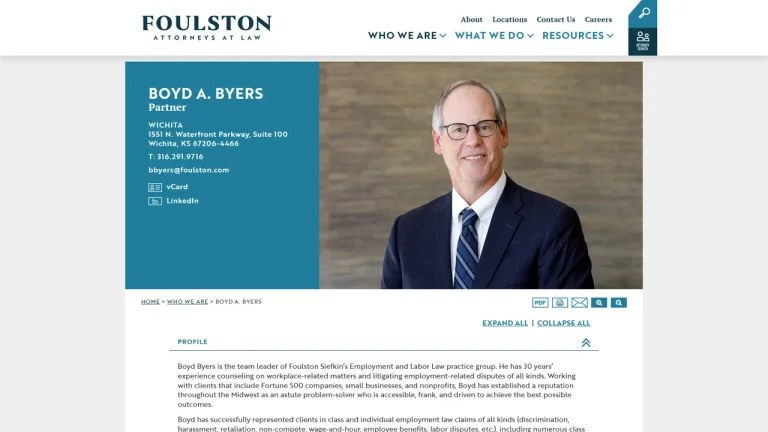
Boyd A. Byers - Wichita, KS

Tara Eberline, Attorney at Law - Overland Park, KS
Evans & Dixon, LLC - Overland Park, KS
Law Office of Albert F. Kuhl - Overland Park, KS
Doyle & Bruce LLC - Kansas City, KS
Dugan Schlozman - Overland Park, KS
Sean McGivern - Graybill & Hazlewood, L.L.C. - Wichita, KS
Kansas Wage Regulations and Judicial District Jurisdiction
Workers in Kansas are entitled to accurate, timely compensation under the Kansas Wage Payment Act (KWPA) pursuant to Kan. Stat. Ann. § 44-313 and the federal Fair Labor Standards Act (FLSA) under 29 U.S. Code § 201. Whether facing unpaid overtime in manufacturing centers or off-the-clock demands in healthcare, legal remedies exist to recover earned earnings.
Wage disputes are resolved through administrative claims before the Kansas Department of Labor (KDOL) in Topeka or through formal civil litigation. State claims are filed in the Kansas District Court across the state's 31 judicial districts-such as Johnson County (10th District in Olathe), Sedgwick County (18th District in Wichita), or Shawnee County (3rd District in Topeka)-via Kansas Courts eFiling, while collective FLSA actions proceed in the U.S. District Court for the District of Kansas.
Engaging an attorney licensed by the Kansas Bar Association (KBA) ensures accurate auditing of pay records, enforcement of statutory liquidated damages against bad-faith employers, and representation in multi-plaintiff collective wage recovery actions.
Kansas Wage and Hour Legal Fee Frameworks
| Case Scenario | Fee Structure | Estimated Cost (USD) | Key Cost Determinants |
|---|---|---|---|
| Unpaid Overtime / Off-the-Clock Work | Contingency (33.33% - 40%) | $0 Upfront ($5,000 - $45,000+ recovered) | Timecard audit records, manager text communications, willful violation evidence. |
| Independent Contractor Misclassification | Contingency (33.33%) | $0 Upfront ($10,000 - $75,000+ recovered) | Degree of employer behavioral control, economic reality test, statutory penalties. |
| KDOL Administrative Wage Claim | Flat Fee / Contingency | $750 - $2,500 | Kansas Department of Labor hearing representation, employer insolvency risk. |
| Collective Action FLSA Lawsuit | Statutory Fee / Contingency | $0 Upfront ($50,000 - $500,000+ recovered) | Class size, multi-facility payroll discovery, U.S. District Court motions. |
Critical Wage Deadlines & Statutes in Kansas
Timing is crucial when pursuing wage theft claims in Kansas. Under the Kansas Wage Payment Act, actions based on statutory liability or unwritten employment agreements must be filed within three years under Kan. Stat. Ann. § 60-512, while claims based upon written employment contracts carry a five-year limitation under Kan. Stat. Ann. § 60-511. Administrative wage claims filed directly with the Kansas Department of Labor must typically be submitted within one year of the unpaid wage accrual pursuant to KDOL agency regulations.
For federal claims under the Fair Labor Standards Act, the general statute of limitations is two years, expanding to three years for willful employer violations pursuant to 29 U.S. Code § 255(a). Additionally, under Kan. Stat. Ann. § 44-315, employers who willfully withhold wages upon employee separation are subject to a statutory penalty of 1 percent per day up to a maximum of 100 percent of the unpaid wages, creating significant financial liability for non-compliant employers.
Small Claims Limitations vs. District Court Wage Litigation
The Kansas Small Claims Court, established under Kan. Stat. Ann. § 61-2703, has a jurisdictional recovery ceiling of $4,000. Under Kan. Stat. Ann. § 61-2707, attorneys are expressly prohibited from appearing at the initial small claims trial, meaning an employee must appear pro se.
While small claims is suitable for simple, isolated final paychecks under $4,000, it cannot handle systemic wage theft, misclassification, or collective actions. Employers facing wage claims routinely retain counsel to appeal any adverse small claims ruling to the District Court under Kan. Stat. Ann. § 61-2709, where formal procedural rules apply. Retaining a wage lawyer to file in the Kansas District Court or federal court unlocks statutory attorney fee recovery under 29 U.S. Code § 216(b) and Kan. Stat. Ann. § 44-324, compelling employers to pay legal fees upon a successful verdict.
Red Flags to Avoid When Selecting a Kansas Wage Attorney
- Demanding upfront hourly retainers from workers seeking unpaid wages rather than taking the case on a contingency or fee-shifting basis.
- Failing to analyze whether employer violations were willful, forfeiting the expanded three-year statute of limitations under 29 U.S. Code § 255(a).
- Inexperience with both the Kansas Department of Labor administrative process and the U.S. District Court for the District of Kansas.
- Overlooking the 100 percent statutory penalty available under Kan. Stat. Ann. § 44-315 for willful wage withholding.
Frequently Asked Questions
What constitutes wage theft under the Kansas Wage Payment Act?
Under Kan. Stat. Ann. § 44-314, wage theft occurs when an employer fails to pay all earned wages on regularly scheduled paydays, makes unauthorized paycheck deductions, fails to pay overtime, or refuses to pay accrued vacation or paid time off required by employment policy upon separation under Kan. Stat. Ann. § 44-315.
Can an employer deduct register shortages or damages from an employee paycheck in Kansas?
No. Under Kan. Stat. Ann. § 44-319, an employer cannot make deductions from wages unless authorized by law, requested by the employee for health or retirement benefits, or signed by the employee in writing for the employer's benefit without coercion. Deductions for cash drawer shortages or broken equipment are strictly prohibited.
How does overtime pay work under Kansas and federal law?
Under 29 U.S. Code § 207 and Kan. Stat. Ann. § 44-1204, non-exempt employees who work more than forty hours in a single workweek are entitled to overtime pay at a rate not less than one and one-half times their regular hourly rate. Simply paying an employee a salary does not automatically exempt them from overtime pay.
What penalties can an employer face for willfully withholding wages in Kansas?
Under Kan. Stat. Ann. § 44-315, if an employer willfully fails to pay wages to a separated employee, the employer is assessed a civil penalty of 1 percent of the unpaid wages for each day payment is delayed, up to a statutory maximum penalty of 100 percent of the unpaid wages.
Can an employer fire an employee for filing a wage claim in Kansas?
No. Both Kansas common law and federal law under 29 U.S. Code § 215(a)(3) prohibit retaliatory discharge. Terminating or disciplining an employee for asserting statutory wage rights constitutes unlawful retaliation, authorizing the worker to seek reinstatement, lost wages, and emotional distress damages.