
Legal Resources in the United States
Accessing public legal resources in the United States requires navigating the complex dual jurisdictional structure of federal and state government bodies. Understanding court jurisdictions, statutory filing rules, and official agency registries safeguards your constitutional protections. Browse our nationwide directory below to connect with federal and state courthouses, public filing repositories, and regulatory offices across the country.
Maine Bureau of Corporations, Elections and Commissions - Ballard Center - Augusta, ME
Maine Division of Financial and Personnel Services - Augusta, ME




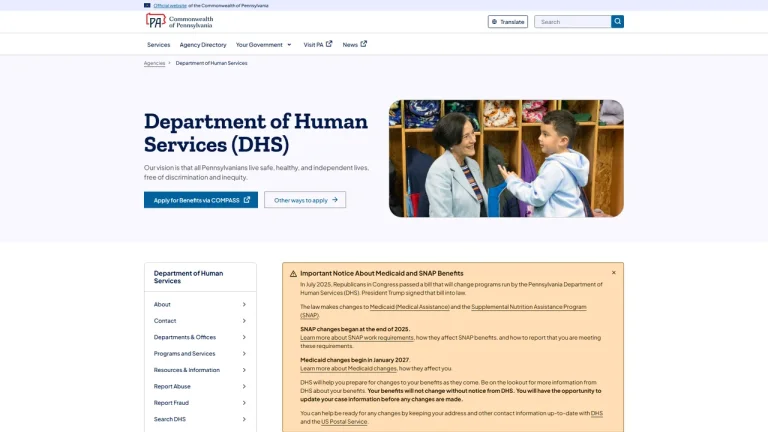
Department of Human Services Bureau of Equal Opportunity - Harrisburg, PA
The Dual Sovereignty Framework of United States Legal Resources
The legal infrastructure of the United States operates under the foundational doctrine of dual sovereignty established by Article III and the Tenth Amendment of the United States Constitution. Government legal institutions are divided into two distinct levels: the federal system-headquartered in Washington, D.C., and distributed across 94 federal judicial districts and 12 regional appellate circuits-and individual state jurisdictions encompassing 50 separate state court systems and executive regulatory departments.
Federal judicial authority, codified at 28 U.S. Code § 1331 for federal questions and 28 U.S. Code § 1332 for diversity of citizenship, is exercised through the Supreme Court of the United States, regional Circuit Courts of Appeals, and regional U.S. District Courts. Federal executive agencies-including the Department of Justice (DOJ), the Federal Bureau of Investigation (FBI), the Equal Employment Opportunity Commission (EEOC), and the Internal Revenue Service (IRS)-administer nationwide statutory codes and administrative regulations.
Concurrently, the overwhelming volume of citizen interactions takes place within state and local government systems. State supreme courts, county courthouses, and municipal agencies govern real property conveyances, criminal prosecutions, family relations, and local business licensing. Successfully navigating legal resources across the country requires understanding whether an issue falls under federal statutory preemption or state jurisdiction.
Standard National Legal Resources & Administrative Services
| Service / Matter | Required Documents / Prerequisites | Statutory Fee (USD) | Processing Timeline |
|---|---|---|---|
| Federal District Court Civil Filing | Summons, complaint, civil cover sheet (Form JS-44) | $405.00 ($350 filing fee plus $55 administrative fee under 28 U.S. Code § 1914) | Immediate electronic docketing via CM/ECF |
| Federal FOIA Public Records Request | Written request, proof of identity, agency record specifications | $0.00 base request fee (Statutory duplication costs apply beyond basic limits) | 20 working days statutory determination window |
| PACER Federal Court Docket Search | Registered PACER login credentials, case number or party name | $0.10 per page ($3.00 maximum cap per document; free if under $30/quarter) | Immediate online docket access |
| Federal Administrative Tort Claim (SF-95) | Completed Standard Form 95, itemized damages, supporting evidence | $0.00 statutory submission fee | 6-month statutory agency review period |
Critical Legal Deadlines & Statutes in the United States
Navigating the federal and national legal system involves strict compliance with procedural deadlines and limitation periods that cannot be equitably relaxed. When asserting injury or property loss claims against a federal agency, the Federal Tort Claims Act (FTCA) controls under 28 U.S. Code § 2401(b), requiring a claimant to present a formal administrative claim (Standard Form 95) within two years of the accrual date. Following agency denial, any federal civil action must be initiated within six months.
In federal civil litigation, responsive pleading deadlines are rigidly enforced. Under Fed. R. Civ. P. 12(a)(1)(A)(i), a defendant served with a federal civil summons must file an answer or pre-answer motion within 21 calendar days, extended to 60 calendar days when the defendant is the United States or a federal agency under Fed. R. Civ. P. 12(a)(2).
For litigation originating in state courts that involves federal questions or diversity of citizenship, defendants seeking federal forum review must comply with removal procedures under 28 U.S. Code § 1446(b), which mandates filing a notice of removal within 30 days after receiving the initial state pleading. In appellate practice, a Notice of Appeal in a civil case must be filed within 30 days of the entry of judgment pursuant to Fed. R. App. P. 4(a)(1)(A), or within 60 days if the United States is a named party.
Direct Agency Access vs. Legal Counsel
Citizens have extensive direct access to government repositories and administrative agencies across the United States. Members of the public can independently submit Freedom of Information Act (FOIA) requests under 5 U.S. Code § 552, monitor federal court dockets via the Public Access to Court Electronic Records (PACER) system, submit workplace discrimination complaints to the EEOC, and access standardized pro se self-help forms through state court administrative portals.
However, securing an attorney licensed by the relevant state bar and admitted to federal district courts is imperative when entering adversarial proceedings. In federal litigation, corporations and business entities are legally barred from appearing pro se under 28 U.S. Code § 1654 and must be represented by an admitted attorney. Retaining counsel is equally crucial when litigating federal constitutional claims under 42 U.S. Code § 1983, responding to federal grand jury subpoenas, managing complex electronic discovery, or appealing administrative agency determinations under the Administrative Procedure Act.
Red Flags & Public Warnings
- Federal Impersonation Wire Fraud Schemes: Scammers frequently pose as federal law enforcement agents from the FBI, DEA, or U.S. Marshals, demanding immediate payment via wire transfer or cryptocurrency to resolve alleged warrants; federal agencies never demand payment by telephone.
- Predatory Online Document Surcharges: Avoid private commercial platforms that charge subscription fees for free government documents, standard court forms, or FOIA request submissions; official forms are accessible without cost directly from government websites (.gov).
- Failing to Establish Federal Subject-Matter Jurisdiction: Filing a lawsuit in federal district court without properly alleging federal question jurisdiction under 28 U.S. Code § 1331 or complete diversity under 28 U.S. Code § 1332 results in immediate dismissal.
- Unauthorized Document Preparers: Legal representation requires formal admission to practice; relying on non-lawyer document preparers or unauthorized legal advisors risks procedural default and forfeiture of claims.
Frequently Asked Questions
What is the difference between federal court and state court jurisdiction?
Federal courts have limited jurisdiction covering federal statutes, constitutional claims, and diversity cases exceeding $75,000 under 28 U.S. Code § 1332. State courts are courts of general jurisdiction handling state laws, family law, contracts, and most local torts.
How do I search federal court dockets and filings nationwide?
Public access to federal district, bankruptcy, and appellate court case records is available nationwide through the Public Access to Court Electronic Records (PACER) system or at federal courthouse clerk offices.
What is the statutory deadline for a federal agency to respond to a FOIA request?
Under 5 U.S. Code § 552, federal agencies have 20 working days from the date of receipt to make a formal determination regarding whether they will comply with the public records request.
Can a corporation represent itself in federal court without an attorney?
No. Under federal common law and 28 U.S. Code § 1654, corporations, partnerships, and limited liability companies cannot proceed pro se and must be represented by an admitted attorney in federal court.
What is the deadline for appealing a decision from a federal district court?
Under Fed. R. App. P. 4(a)(1)(A), a Notice of Appeal in a civil action must be filed within 30 days after the entry of judgment, or within 60 days if the United States government is a party.