
State Agencies in Chicago
Accessing Illinois state agencies in Chicago provides residents and businesses with direct pathways for regulatory compliance, licensing, and public records. Major state departments located throughout the Loop and Downtown Chicago handle vital administrative hearings, consumer protections, and professional credentials. Explore our directory below to locate verified contact details, service hours, and department addresses across Cook County.

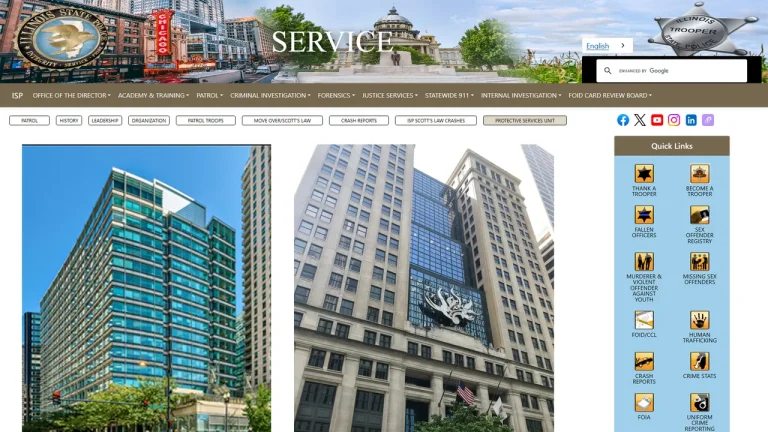
Illinois Department of Transportation (IDOT) Emergency Traffic Patrol - Chicago, IL

Chicago South Illinois Secretary of State Facility - Chicago, IL
State of Illinois Department of Veterans’ Affairs (Cook County) - Chicago, IL
Illinois Department of Financial and Professional Regulation (IDFPR) - Chicago, IL





Illinois State Government Infrastructure in Chicago
As the economic center of Illinois, Chicago hosts major regional headquarters for state executive departments and regulatory commissions. While the state capital is in Springfield, the vast majority of commercial regulation, administrative hearings, and public enforcement actions in Cook County are administered directly from state facilities in Downtown Chicago. Primary state operations are concentrated in the Loop and Near West Side, anchored by the Michael A. Bilandic Building at 160 North LaSalle Street and modern state facilities at 555 West Monroe Street.
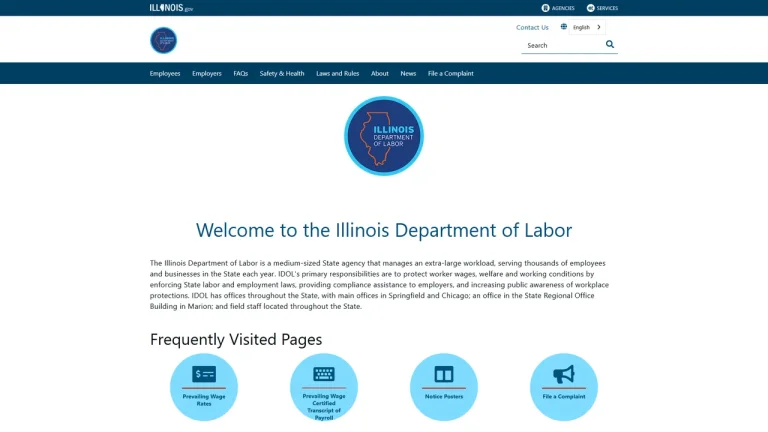
Key regulatory bodies operating within Chicago include the Illinois Department of Financial and Professional Regulation (IDFPR), which licenses and disciplines hundreds of professional vocations, from physicians and nurses to real estate brokers and certified public accountants. Other critical state agencies include the Illinois Department of Revenue (IDOR) for state tax enforcement, the Illinois Department of Labor (IDOL) for workplace standards, the Illinois Workers' Compensation Commission (IWCC) at 69 West Washington Street, and the Illinois Department of Human Rights (IDHR).
Engaging with state administrative agencies requires strict adherence to statutory filing rules and procedural codes. Whether submitting public records requests, responding to professional licensing inquiries, or participating in formal administrative hearings, knowing which regional division holds jurisdiction is critical to preserving your legal standing.
Common State Agency Procedures and Processing Guidelines
| Service / Matter | Required Documents / Prerequisites | Statutory Fee (USD) | Processing Timeline |
|---|---|---|---|
| Professional License Application (IDFPR) | Transcripts, examination scores, criminal background check, application form | $100 - $350 | 4 - 8 weeks |
| Administrative Hearing Appeal (State Level) | Notice of administrative decision, petition for review, hearing transcript | $50 - $250 filing fee | 30 - 90 days |
| Illinois FOIA Public Records Request | Written request specifying agency records, requester contact information | $0 (First 50 black-and-white pages free) | 5 business days |
| Workers' Compensation Application (IWCC) | Form 1-A Application for Adjustment of Claim, medical treatment records | $0 statutory fee | 6 - 18 months to arbitration |
Critical Legal Deadlines & Statutes in Illinois
Interacting with Illinois state agencies involves strict statutory time limitations. Under the Illinois Administrative Review Law codified in 735 ILCS 5/3-103, any person seeking judicial review of a final administrative decision issued by a state agency must file a complaint in the Cook County Circuit Court within exactly 35 days from the date a copy of the decision was served upon the affected party. Missing this jurisdictional 35-day deadline completely bars the circuit court from reviewing the agency's ruling.
Public access to state agency documentation is governed by the Illinois Freedom of Information Act. Under 5 ILCS 140/3, state public bodies must comply with or deny a written request for public records within 5 business days after receipt, with a single 5-business-day extension permitted only under narrow statutory grounds. For individuals alleging civil rights violations or workplace discrimination, a formal charge must be filed with the Illinois Department of Human Rights within 300 days of the alleged discriminatory act pursuant to 775 ILCS 5/7A-102. Contested administrative hearings before state agencies are governed by the Illinois Administrative Procedure Act under 5 ILCS 100/10-50, establishing rules for notice, evidence, and final administrative orders.
Direct Agency Access vs. Retaining Legal Counsel
Citizens and commercial entities can handle many routine state agency matters without professional legal assistance. Accessing standard consumer complaint forms, submitting public records requests under 5 ILCS 140/3, completing basic license renewals through the IDFPR online portal, or checking tax refund statuses via IDOR's MyTax Illinois portal are designed for direct public access and require no legal intervention.
However, when state agencies initiate enforcement or disciplinary proceedings, retaining administrative legal counsel is essential. If the IDFPR issues a formal complaint seeking to suspend or revoke a professional medical, nursing, or financial license, unrepresented licensees face administrative law judges and seasoned state prosecutors. Similarly, contesting a significant tax assessment before the Illinois Independent Tax Tribunal or appealing an adverse agency ruling under 735 ILCS 5/3-103 in the Chancery Division of the Cook County Circuit Court requires exhaustive brief writing and preservation of the administrative record. A qualified administrative law attorney ensures that constitutional due process protections are asserted, evidentiary objections are preserved, and your professional livelihood remains defended.
Red Flags & Consumer Warnings for Public Agency Filings
- Unauthorized Third-Party Fee Services: Be cautious of commercial websites that charge fees to submit standard state applications, license renewal forms, or FOIA requests; official state forms and public records submissions are available directly from state departments without third-party surcharges.
- Unlicensed Representation in Administrative Hearings: Only attorneys licensed by the Illinois Supreme Court may provide legal representation during formal administrative contested hearings before state boards and commissions.
- Missing the Jurisdictional 35-Day Appeal Window: Failing to serve and file an administrative review lawsuit within 35 days under 735 ILCS 5/3-103 results in permanent forfeiture of judicial review, leaving the agency's penalty permanently enforceable.
- Phishing Schemes Spoofing State Agencies: Fraudulent emails or text messages claiming immediate license revocation or unpaid state tax penalties frequently mimic official state agency headers; always verify agency communications directly through official state portals.
Frequently Asked Questions
Where are primary Illinois state agency offices located in Chicago?
Most state agency offices in Chicago are located in Downtown Chicago within the Michael A. Bilandic Building at 160 North LaSalle Street, state facilities at 555 West Monroe Street, and the Illinois Workers' Compensation Commission at 69 West Washington Street.
How do I appeal an adverse decision made by an Illinois state agency?
Under the Illinois Administrative Review Law (735 ILCS 5/3-103), you must file a complaint for administrative review in the Cook County Circuit Court within 35 days from the date the final administrative decision was served upon you.
How long does a state agency have to respond to an Illinois FOIA request?
Under 5 ILCS 140/3, a state agency has 5 business days to respond to a public records request. The agency may request an extension of up to 5 additional business days under specific statutory circumstances, such as when records are stored off-site.
Can an attorney represent me at an IDFPR disciplinary hearing?
Yes. You have the right to be represented by a licensed attorney at all stages of an IDFPR investigation, informal conference, and formal administrative hearing before an administrative law judge under 5 ILCS 100/10-50.
How can I verify the license status of a professional in Chicago?
You can verify professional licenses online through the Illinois Department of Financial and Professional Regulation (IDFPR) license verification database, which confirms disciplinary history, active status, and license expiration dates.