
Courts in Massachusetts
Navigating the Massachusetts court system requires a clear understanding of departmental trial court jurisdictions, statutory filing deadlines, and electronic records procedures. Engaging with appropriate court divisions early helps protect your procedural rights and prevents dismissal. Explore our verified directory below to locate Massachusetts courthouses, filing portals, and judicial resources.


Massachusetts Appeals Court Clerk's Office - Boston, MA
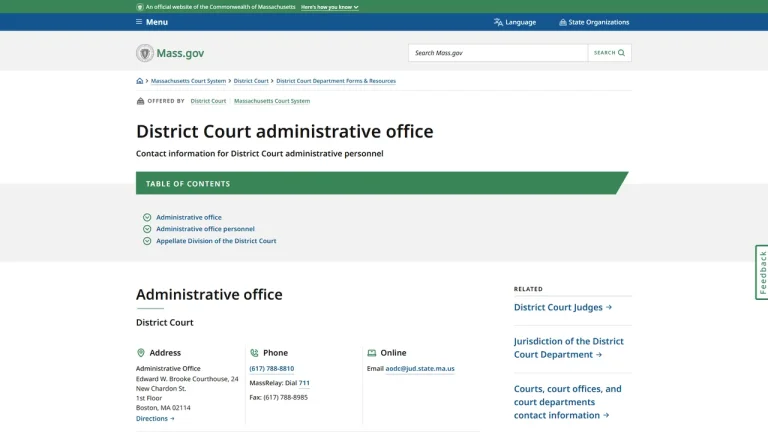
District Court Administration Office - Boston, MA
The Massachusetts Judicial Branch & Trial Court System
The Commonwealth of Massachusetts maintains a unified judicial branch organized under the administrative superintendence of the Supreme Judicial Court (SJC), which convenes at the John Adams Courthouse in Boston. As the oldest appellate court in continuous operation in the Western Hemisphere, the SJC exercises general superintendence over the administration of all courts of the Commonwealth. Below the SJC and the intermediate Massachusetts Appeals Court operates the Massachusetts Trial Court, which is structured into seven specialized departments handling civil, criminal, and equitable matters across fourteen counties.
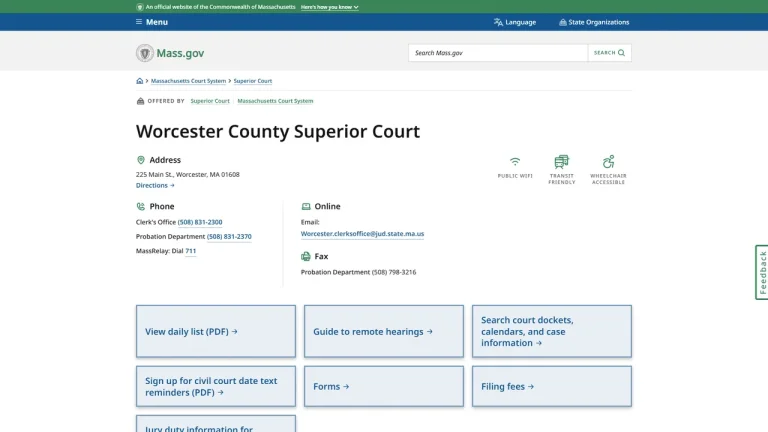
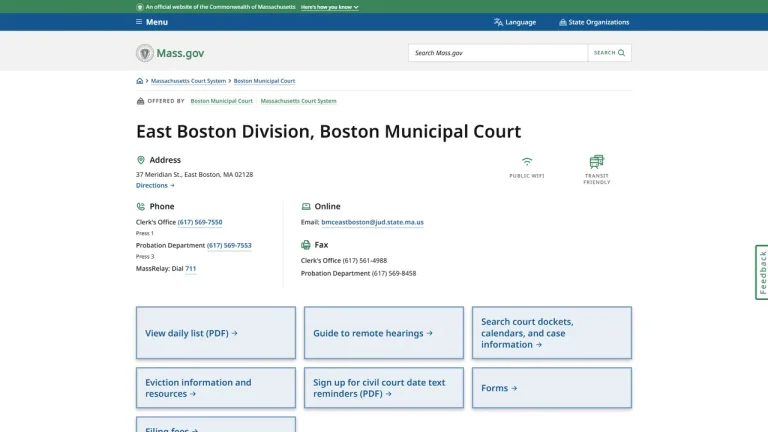
The Superior Court department maintains broad statewide jurisdiction, hearing major felony prosecutions and civil disputes where potential damages exceed $50,000. It convenes in historic and modern facilities across regional hubs including Suffolk County in Boston, Middlesex County in Cambridge and Woburn, Worcester County, and Hampden County in Springfield. For civil actions seeking $50,000 or less, jurisdiction is exercised by the District Court department and the Boston Municipal Court (BMC), which serve local municipalities across the Commonwealth.
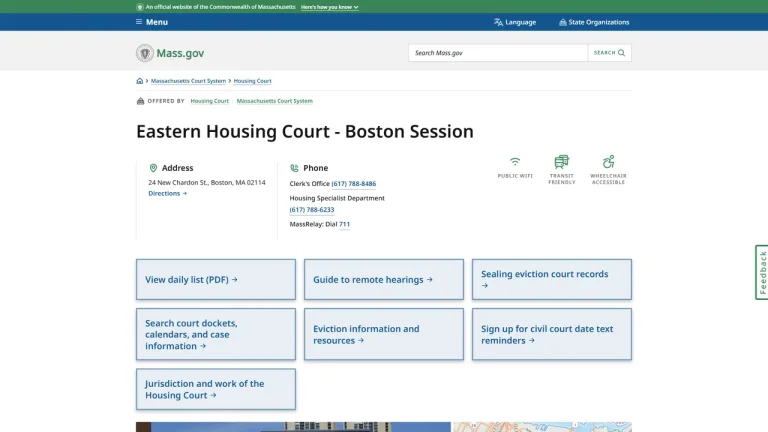
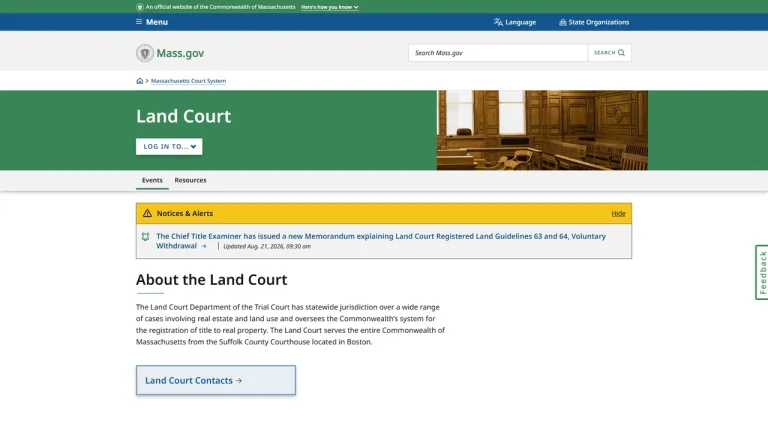
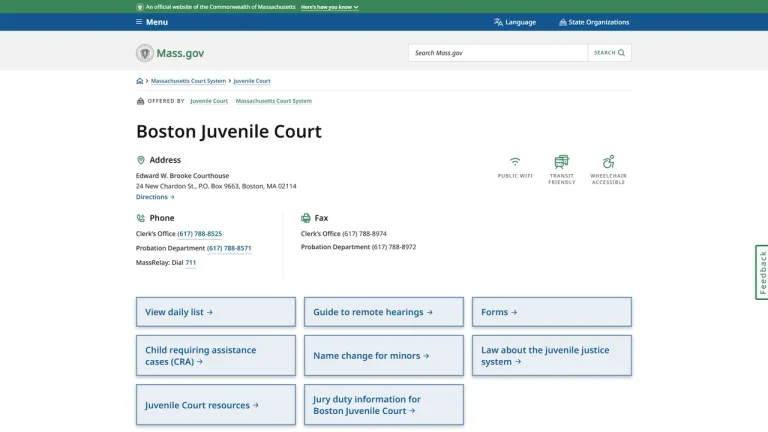
In addition to general trial courts, Massachusetts operates specialized departments including the Housing Court, Land Court, Probate and Family Court, and Juvenile Court. Court administration is supported by the Massachusetts Court Service Centers and the statewide electronic filing portal, eFileMA, alongside the public docket database, MassCourts. Understanding which trial department holds subject matter jurisdiction is essential for initiating claims and meeting procedural thresholds.
Massachusetts Court Entry Fees & Procedural Requirements
| Service / Matter | Required Documents / Prerequisites | Statutory Fee (USD) | Processing Timeline |
|---|---|---|---|
| Small Claims Action Filing | Statement of Small Claim and Notice form, supporting evidence of monetary damages | $40.00 to $150.00 (graduated scale based on claim amount) | Hearing scheduled within 30 to 60 days |
| Superior Court Civil Action Filing | Verified Complaint, Civil Action Cover Sheet, Summons, statement of damages | $275.00 entry fee (plus $15 surcharge) | Immediate electronic docketing via eFileMA |
| District Court / BMC Civil Action | Civil Complaint, Civil Tracking Sheet, Summons, proof of service | $195.00 entry fee (plus $15 surcharge) | Immediate electronic docketing via eFileMA |
| Certified Court Record / Docket Exemplification | Written record request, case docket number, government-issued photo ID | $20.00 base certification fee (plus per-page copy cost) | 3 to 7 business days |
Critical Legal Deadlines & Statutes in Massachusetts
Legal proceedings across Massachusetts courts are governed by statutory limitations and procedural deadlines established in the Massachusetts General Laws:
First, under Mass. Gen. Laws ch. 260 § 2A, actions of tort, including claims for negligence, personal injury, and damage to property, must be commenced within 3 years from the date the cause of action accrues.
Second, actions based on contract, whether express or implied, must be initiated within 6 years under Mass. Gen. Laws ch. 260 § 2. Failing to file within these windows permanently extinguishes the right to legal recovery.
Third, civil appeals are subject to stringent deadlines; pursuant to Mass. R. App. P. 4(a), a notice of appeal must be filed with the clerk of the trial court within 30 days of the entry of judgment or appealable order.
Finally, the jurisdictional threshold for small claims is set by Mass. Gen. Laws ch. 218 § 21 at $7,000. However, the statute explicitly exempts actions for property damage caused by a motor vehicle from this monetary limit, allowing such claims to be pursued in small claims session regardless of the damage amount.
Pro Se Representation vs. Retaining Licensed Massachusetts Counsel
Self-representation, known as appearing pro se, is permissible in all Massachusetts trial court departments. Pro se litigants frequently utilize Small Claims sessions to resolve straightforward contract or property disputes, represent themselves in minor summary process housing disputes, or petition for uncontested probate appointments. The Massachusetts Trial Court provides Court Service Centers in major courthouses to assist unrepresented individuals with court forms and procedural instructions.
However, navigating formal litigation before the Superior Court, Land Court title proceedings, or contested domestic relations matters in Probate and Family Court requires professional legal counsel. The Massachusetts Rules of Civil Procedure (Mass. R. Civ. P.) impose rigorous technical standards on pleadings, depositions, discovery requests, and dispositive motions under Rule 12 and Rule 56.
Retaining an attorney admitted to the Massachusetts Bar ensures procedural compliance, prevents forfeiture of vital claims through procedural default, and ensures skilled evidentiary presentation at trial. Corporate entities, with limited statutory exceptions in small claims, are legally required to appear through licensed counsel.
Massachusetts Court System Scams & Fraud Warnings
Public interactions with the judicial system require awareness of deceptive schemes designed to exploit court procedural terminology:
- Jury Duty Citation Phone Scams: Fraudsters posing as Massachusetts Trial Court officers or deputy sheriffs telephone citizens falsely alleging failure to appear for mandatory jury duty. They threaten arrest unless immediate payment is made through prepaid debit cards or wire transfers. Massachusetts courts never collect fines or demand personal financial data over the telephone.
- Third-Party Document Fees: Deceptive internet portals charge substantial convenience fees to download Massachusetts court forms, summons packets, or small claims filing sheets. All official court forms and informational guidelines are accessible free of charge on the official Massachusetts judicial portal (mass.gov/courts).
- Unlicensed Legal Document Preparers: Individuals posing as legal consultants or unauthorized practitioners offer to draft trial court pleadings without a Massachusetts law license. Engaging non-attorneys risks severe procedural errors and outright case dismissal.
- Counterfeit Judgment Collection Notices: Businesses and consumers may receive fraudulent correspondence referencing real or fabricated court docket numbers demanding immediate settlement payments. Always verify case numbers through the official MassCourts public docket repository before taking action.
Frequently Asked Questions
What is the structure of the appellate court system in Massachusetts?
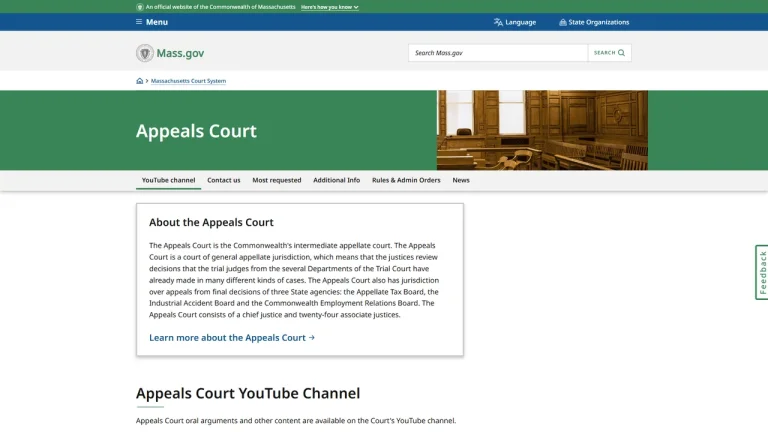
The Massachusetts appellate system consists of two courts: the Appeals Court and the Supreme Judicial Court (SJC). The Appeals Court is an intermediate appellate court that reviews decisions rendered by all seven departments of the Trial Court. The Supreme Judicial Court is the highest court in the Commonwealth, hearing appeals involving direct appellate review, questions of major constitutional importance, first-degree murder convictions, and exercising overall supervisory authority over the judicial system under Mass. Gen. Laws ch. 211 § 3.
What is the monetary limit for Small Claims Court in Massachusetts?
Under Mass. Gen. Laws ch. 218 § 21, the jurisdictional ceiling for small claims actions in Massachusetts is $7,000. However, there is an important statutory exception: property damage claims arising from a motor vehicle collision are not subject to the $7,000 limitation and may be heard in small claims session regardless of the amount claimed.
How can I access court records and case dockets in Massachusetts?
Massachusetts court dockets and case statuses can be accessed publicly online through the MassCourts portal (masscourts.org). This system provides docket details, scheduled hearing dates, and case dispositions for the Superior, District, Housing, Land, Boston Municipal, and Probate and Family Court departments. For certified paper copies or older archives, requests must be submitted directly to the office of the Clerk of Court in the specific courthouse where the case was heard.
Is electronic filing mandatory in Massachusetts courts?
Electronic filing through eFileMA is mandatory for licensed Massachusetts attorneys in most civil cases across the Superior Court, District Court, Boston Municipal Court, Housing Court, and Land Court departments. Pro se litigants are encouraged to use eFileMA for convenience, but they retain the option to file paper documents directly with the Clerk of Court.
What are Court Service Centers and how do they assist litigants in Massachusetts?
Court Service Centers are official facilities located within major trial courthouses across Massachusetts designed to assist self-represented litigants. Trained court personnel provide public computer access, help users navigate court forms, explain procedural steps, and provide language translation resources. Center staff provide legal information and navigation assistance, but cannot give substantive legal advice or represent individuals in court.