
Jails, Prisons & Detention Centers in New Jersey
Locating an incarcerated individual or navigating custody facilities in New Jersey involves understanding state prison complexes and county detention centers. While inmate locator searches, commissary account deposits, and scheduled visits proceed through standardized correctional channels, pre-trial detention motions demand urgent legal defense under state bail reform laws. Explore our directory below to find contact details, visitation guidelines, and booking desk procedures across New Jersey correctional institutions.
The Correctional System of New Jersey
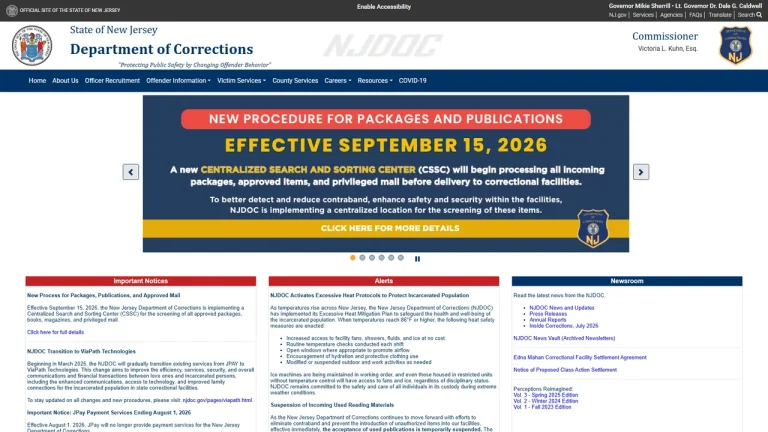
The correctional landscape across the State of New Jersey is divided into two distinct administrative systems: state correctional institutions for sentenced felony offenders and county detention centers for pretrial detainees and short-term sentences. The New Jersey Department of Corrections (NJDOC), headquartered in Trenton, maintains statewide jurisdiction over all adult state prisons. NJDOC facilities house individuals convicted of indictable offenses carrying state prison sentences exceeding 364 days.
Key NJDOC institutions include New Jersey State Prison in Trenton (the state's highest-security facility), East Jersey State Prison in Rahway, Northern State Prison in Newark, South Woods State Prison in Bridgeton, and the Edna Mahan Correctional Facility for Women in Clinton. Federal custody in the state is managed separately through the Federal Bureau of Prisons, operating FCI Fairton and FCI Fort Dix.
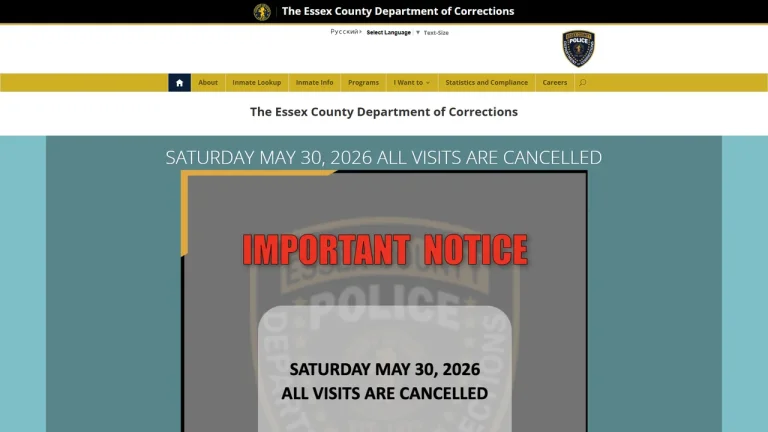
Conversely, county jails are administered by county governments and county sheriffs across New Jersey's 21 counties. Major county detention centers-such as the Essex County Correctional Facility in Newark, the Bergen County Jail in Hackensack, the Hudson County Correctional Center in Kearny, and the Camden County Correctional Facility in Camden-house individuals arrested on warrant complaints awaiting pretrial hearings. Under New Jersey's landmark Criminal Justice Reform Act (CJRA), traditional cash bail is abolished, meaning pretrial release is determined through standardized risk scores and formal court hearings rather than commercial bonds.
Inmate Custody Services & Administrative Timelines
| Service / Matter | Required Documents / Prerequisites | Statutory Fee (USD) | Processing Timeline |
|---|---|---|---|
| Inmate Locator & Custody Verification | Full legal name, SBI number, or NJDOC inmate number | $0 (Free public record database) | Immediate online access via NJDOC / County Rosters |
| CJRA Pretrial Detention Hearing | Motion for detention filed by County Prosecutor, PSA score report | $0 statutory filing fee | 3 to 5 business days from detention motion |
| Inmate Trust Account / Commissary Deposit | Sender registration, inmate identification/SBI number, payment card | $2.95 to $8.95 vendor processing fee | 24 to 48 hours for fund posting |
| Privileged Attorney Legal Consultation | New Jersey Bar card, photo ID, facility security clearance form | $0 (Constitutional legal consultation right) | Same-day walk-in or 24-hour advance reservation |
Critical Legal Deadlines & Statutes in New Jersey
Detention timelines and prisoner rights across New Jersey are defined by the New Jersey Statutes Annotated. Under the Criminal Justice Reform Act, codified at N.J. Stat. Ann. § 2A:162-16, monetary bail has been dismantled in favor of an objective risk-assessment protocol known as the Public Safety Assessment (PSA). When the state seeks to detain a defendant pending trial, N.J. Stat. Ann. § 2A:162-19 mandates that the pretrial detention hearing must be held within 3 to 5 business days of the motion being filed.
Speedy trial rules governing defendants detained under the CJRA are codified in N.J. Stat. Ann. § 2A:162-22, which establishes that an indictment must be returned within 90 calendar days of initial detention, and trial must commence within 180 days of indictment, excluding statutory tolling periods. For sentenced state inmates, parole eligibility standards are governed by N.J. Stat. Ann. § 30:4-123.51 under the oversight of the New Jersey State Parole Board. Statutory authority governing county jail management and prisoner custody is established under N.J. Stat. Ann. § 30:8-19.
Direct Family Administration vs. Criminal Defense Representation
Families can handle routine administrative interactions with New Jersey correctional facilities directly. Searching for an inmate's current location via the online NJDOC Offender Search engine or county inmate lookup portals, depositing funds into an inmate trust account through authorized vendors, scheduling in-person or video visits, and collecting personal property upon release can be accomplished without an attorney.
However, securing an attorney licensed by the New Jersey Bar is critical when legal rights and liberty are at risk. An attorney is essential for contesting the state's motion for pretrial detention in the Superior Court Law Division, challenging flawed risk factors in the Public Safety Assessment, and arguing for release on Pretrial Services Program monitoring. Defense counsel is also vital for representing inmates in disciplinary appeal proceedings, advocating before the State Parole Board, and filing petitions for post-conviction relief (PCR) or emergent medical furloughs.
Red Flags & Detention Center Pitfalls
- Cash Bail Scams in a Non-Bail State: Commercial bail agents claiming they can post cash bail to secure release from a New Jersey county jail are fraudulent; New Jersey eliminated commercial cash bail under the CJRA, and release is strictly determined by a judge based on risk scores.
- Paywalled Inmate Locator Scams: Avoid third-party commercial websites charging recurring subscription fees to locate New Jersey inmates; official searches via the NJDOC database and county sheriff rosters are entirely free of charge.
- Emergency Medical Release Wire Traps: Reject unsolicited calls demanding immediate money transfers or gift cards for emergency medical treatment or bond for an incarcerated individual; official institutions never demand telephone fund transfers.
- Unregulated Inmate Legal Preparers: Do not pay fellow inmates for legal filings; unauthorized motions for post-conviction relief often miss technical procedural deadlines, causing permanent forfeiture of constitutional appellate claims.
Frequently Asked Questions
How can I locate an inmate in a New Jersey state prison?
You can locate individuals incarcerated in state correctional facilities using the official New Jersey Department of Corrections (NJDOC) Inmate Search portal. The search tool requires either the inmate's legal name, SBI number, or six-digit NJDOC identification number.
How does bail work in New Jersey after bail reform?
Under the Criminal Justice Reform Act (N.J.S.A. 2A:162-16), New Jersey abolished commercial cash bail. Following booking, the court evaluates the defendant using a Public Safety Assessment (PSA). The prosecutor may either consent to release on monitoring or file a motion for pretrial detention, which is argued before a Superior Court judge.
What is the difference between a New Jersey county jail and a state prison?
County detention centers are operated by county sheriffs or county governments to hold individuals awaiting trial or pretrial detention hearings, as well as offenders serving sentences of 364 days or less. NJDOC state prisons house individuals convicted of indictable crimes sentenced to state prison terms exceeding one year.
How quickly must a pretrial detention hearing take place in New Jersey?
Under N.J.S.A. 2A:162-19, once the county prosecutor files a formal motion for pretrial detention, the hearing must be conducted in the Superior Court Law Division within 3 to 5 business days, during which time the defendant remains in custody.
What are the rules for visiting an inmate in a New Jersey state prison?
All adult visitors must be on the inmate's pre-approved visitor list, present a valid government-issued photo ID, and schedule visits in advance through the NJDOC visitor portal. Visitors must pass through security screening and strictly adhere to institutional dress code standards.