
State & Local Courts in New Jersey
The New Jersey state court system administers justice through the Supreme Court, Superior Court vicinages, and local Municipal Courts across all 21 counties. Navigating trial divisions, equity matters, and local municipal dockets requires compliance with New Jersey Court Rules. Explore our directory below to locate county courthouses, municipal complexes, and judicial resources statewide.

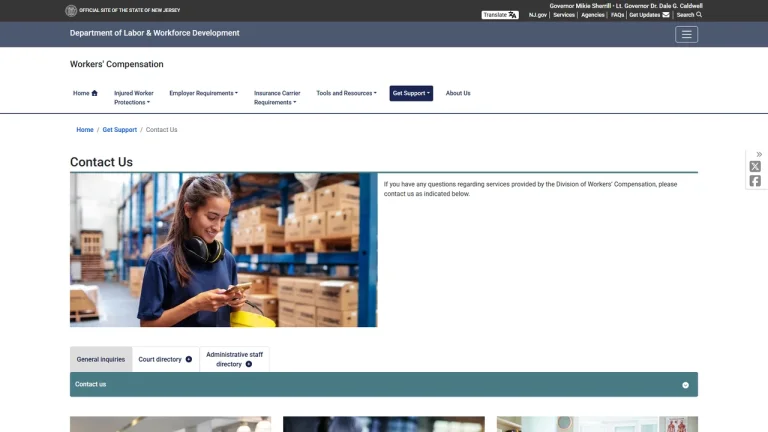
NJ Office of the Public Defender: Division of Mental Health Advocacy - Newark, NJ



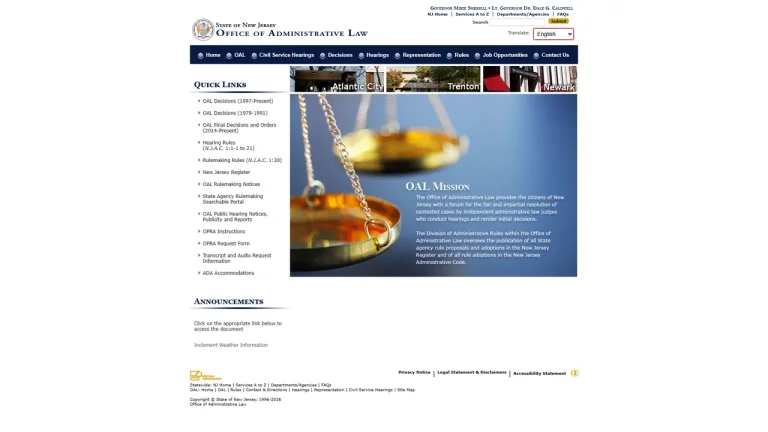

Chambers of Honorable Verna G Leath - Superior Court Judge - Newark, NJ

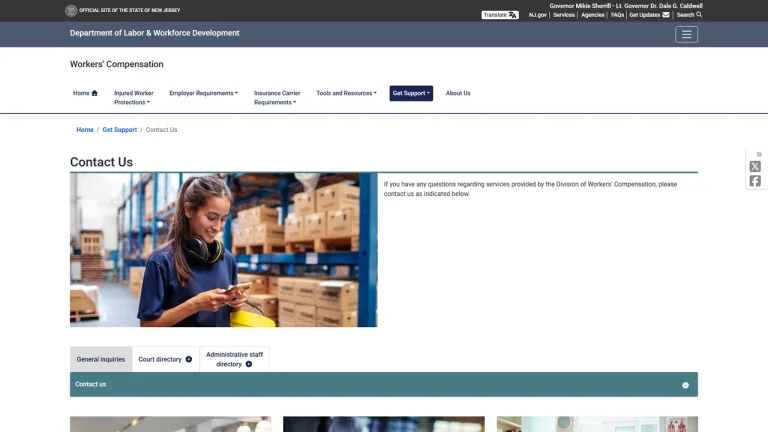




The Judicial Architecture of New Jersey State Courts
New Jersey operates one of the most unified court systems in the United States, established under Article VI of the New Jersey Constitution. The apex of the judicial branch is the Supreme Court of New Jersey, headquartered at the Richard J. Hughes Justice Complex in Trenton, which exercises discretionary appellate review and exclusive administrative and regulatory oversight over the state legal profession.
General trial and intermediate appellate jurisdiction is vested in the Superior Court of New Jersey. The Appellate Division reviews final judgments from the trial courts and state administrative agencies. Below the appellate tier, the trial divisions operate across 15 geographic vicinages encompassing all 21 counties, such as Essex Vicinage in Newark, Bergen Vicinage in Hackensack, and Middlesex Vicinage in New Brunswick. The Superior Court is divided into the Law Division (Civil Part, Criminal Part, and Special Civil Part) and the Chancery Division (General Equity Part, Family Part, and Probate Part).
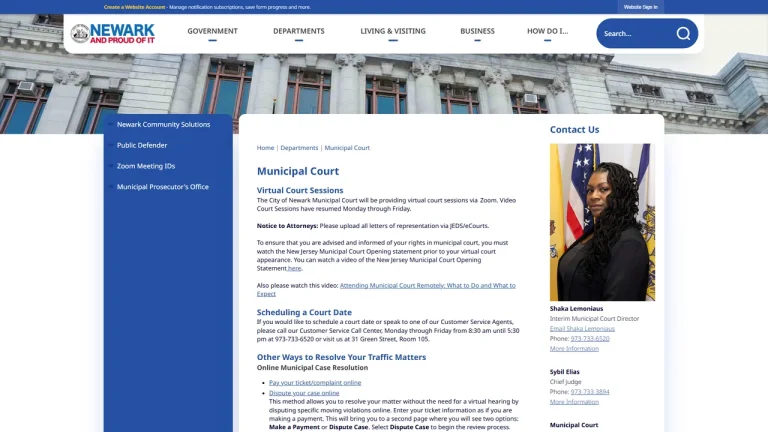
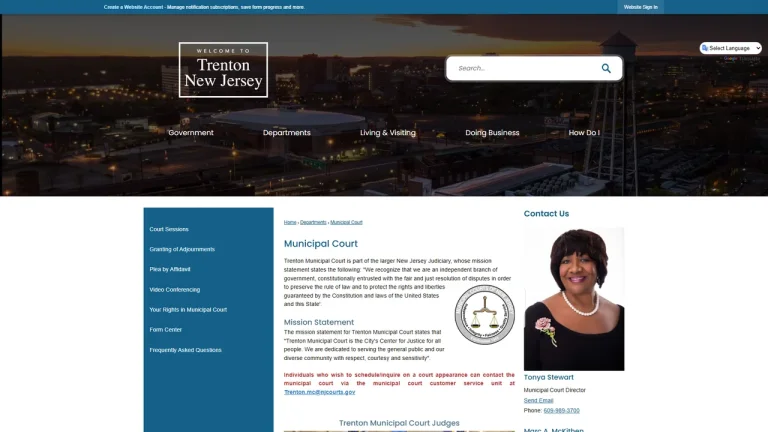
At the localized level, Municipal Courts operate in nearly every township, borough, and city across New Jersey. Municipal Courts handle non-indictable petty disorderly persons offenses, municipal ordinance violations, traffic summonses, and building code enforcement, with initial appeals directed to the Law Division of the Superior Court.
Key State Court Filings, Fees, and Case Timelines
| Service / Matter | Required Documents / Prerequisites | Statutory Fee (USD) | Processing Timeline |
|---|---|---|---|
| Superior Court Civil Law Action | Verified complaint, Case Information Statement (CIS), summons | $250 statutory filing fee | Standard discovery track of 150-450 days depending on track assignment |
| Special Civil Part Claim (Civil / Small Claims) | Small claims summons and complaint, contract or damage invoice | $35 (under $3,000) / $75 ($3,000 to $20,000) + service fees | 30-60 calendar days to trial or mandatory mediation |
| Municipal Court Traffic / Ordinance Plea | Traffic ticket number, complaint summons, entry of appearance | Fine schedule varies ($50 to $500+) + $33 court costs | 14-30 calendar days to scheduled municipal hearing |
| Notice of Appeal to the Appellate Division | Notice of appeal, CIS, transcript request form, filing fee | $250 statutory appellate filing fee | 45 calendar days from entry of final judgment |
Critical Legal Deadlines & Statutes in New Jersey
Procedural timelines in New Jersey state courts are rigorously enforced under the New Jersey Court Rules. In the Law Division, once a civil complaint is served, the defendant must file a formal answer within 35 calendar days pursuant to N.J. Ct. R. 4:6-1. In the Special Civil Part, where claims up to $20,000 are adjudicated, the responsive pleading deadline is shortened to 35 days from the date of service, while small claims matters (up to $5,000) do not require a written answer unless specified.
General civil statutes of limitations are codified under Title 2A. For tortious injuries to the person, including auto collisions and premises liability, plaintiffs must file suit within two years under N.J. Stat. Ann. § 2A:14-2. Claims founded on commercial contracts or property damage carry a six-year limitations period pursuant to N.J. Stat. Ann. § 2A:14-1.
For claims against public entities such as municipalities, county governments, or state agencies, the New Jersey Tort Claims Act imposes an unforgiving deadline under N.J. Stat. Ann. § 59:8-8. A claimant must file a formal Notice of Tort Claim with the target public body within 90 calendar days of the accrual of the cause of action; missing this 90-day window permanently extinguishes the right to sue. Appellate reviews must be filed with the Appellate Division within 45 days of final judgment under N.J. Ct. R. 2:4-1.
Self-Representation vs. Retaining Legal Counsel
Litigants in New Jersey have the right to represent themselves pro se in Municipal Court matters, Special Civil Part disputes, and uncontested matrimonial dissolutions. The New Jersey Judiciary provides robust self-help resources, ombudsman offices in every vicinage, and standardized pro se packets for small claims and municipal expungements.
However, retaining a New Jersey attorney is indispensable for complex civil litigation, Chancery General Equity injunctions, and indictable criminal offenses. Furthermore, under N.J. Ct. R. 1:21-1, corporations, limited liability companies, and partnerships cannot appear pro se in any court other than small claims actions under $5,000, requiring legal counsel for all standard trial proceedings.
Common Red Flags & Procedural Warnings
- Beware of non-attorney legal services advertising representation in municipal courts or drafting divorce pleadings; only licensed New Jersey attorneys can provide legal counsel and courtroom representation.
- Avoid missing the 90-day New Jersey Tort Claims Act notice deadline when injured on public property, as courts rarely grant late notice relief after the statutory cutoff.
- Never disregard a Municipal Court summons for traffic violations or code violations, as failure to appear triggers automatic bench warrants and driving privilege suspensions through the Motor Vehicle Commission.
- Do not file an unrepresented answer on behalf of a business entity in the Law Division, which will be deemed a non-appearance and result in the entry of default against the company.
Frequently Asked Questions
What is the difference between the Law Division and Chancery Division in New Jersey?
The Law Division handles criminal prosecutions and civil lawsuits seeking monetary damages. The Chancery Division handles non-monetary equitable relief, domestic relations in the Family Part, and probate matters.
What is the monetary limit for New Jersey Special Civil Part and Small Claims?
The Special Civil Part handles disputes up to $20,000, while the Small Claims section within the Special Civil Part resolves landlord-tenant deposit and contract disputes up to $5,000.
What cases are heard in New Jersey Municipal Courts?
Municipal Courts resolve non-indictable petty disorderly persons offenses, traffic violations, driving while intoxicated summonses, and local municipal building code infractions.
What is the deadline to file a tort notice against a New Jersey town or county?
Under the New Jersey Tort Claims Act, a claimant must file a formal written Notice of Claim within 90 calendar days of the injury, or claims against the public entity are barred.
How do I appeal a decision from a New Jersey Municipal Court?
Appeals from Municipal Court must be filed within 20 calendar days to the Law Division of the Superior Court in the county where the municipal hearing occurred.