
State Law Enforcement in New York
New York state law enforcement agencies exercise broad statewide jurisdiction over highway safety, environmental conservation, and regulatory investigations. Engaging with these centralized authorities requires adherence to specialized state administrative codes and procedural timelines. Explore our directory below to find state police troop headquarters, access official collision reports, and locate skilled administrative defense attorneys.




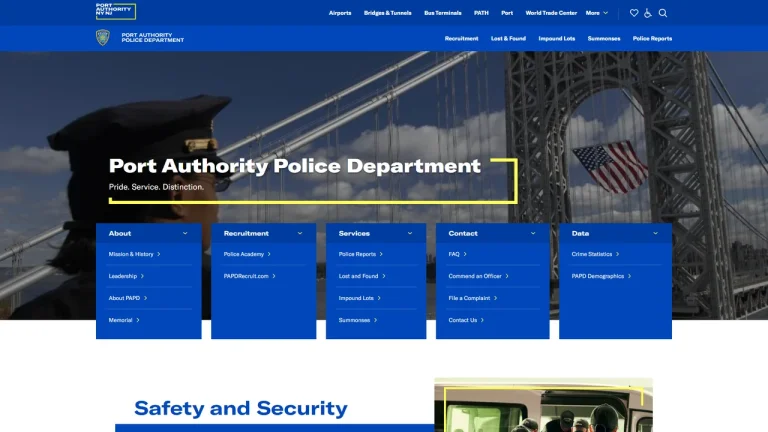
Port Authority Police Command - Port Authority Bus Terminal - New York, NY

New York State Police Forensic Investigation Center - Albany, NY

Statewide Law Enforcement Jurisdiction in New York
State-level law enforcement in New York is centered around the New York State Police (NYSP), widely recognized as the State Troopers. Established under Article 11 of the New York Executive Law, the State Police are headquartered in Albany at the Public Security Building on the W. Averell Harriman State Office Building Campus. The NYSP operates across the entire Commonwealth via ten regional Troops (Troop A through Troop K, excluding I), Troop L on Long Island, Troop T dedicated to the New York State Thruway, and Troop NYC operating within the five boroughs.
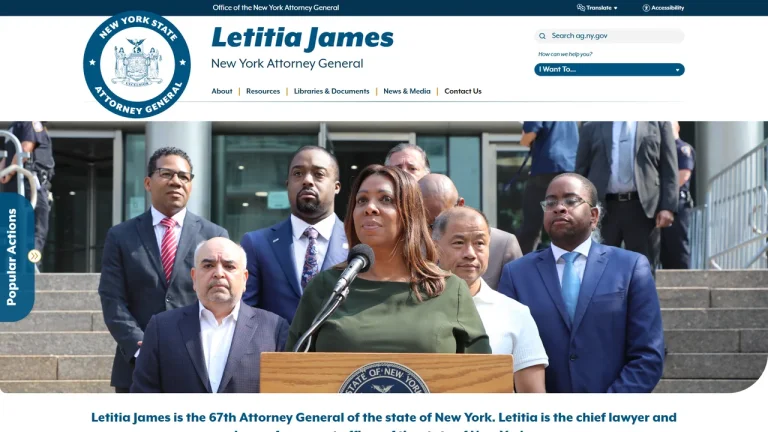
In addition to uniformed highway patrol and forensic investigation services, New York maintains specialized state-level investigative authorities. The New York State Office of the Attorney General (OAG) exercises broad civil and criminal prosecutorial authority under N.Y. Exec. Law § 63, directing specialized investigative units including the Special Investigations and Prosecutions Unit (SIPU), the Criminal Enforcement and Financial Crimes Bureau, and the Medicaid Fraud Control Unit (MFCU).
Other vital state enforcement entities include the New York State Department of Environmental Conservation (DEC) Police, whose Environmental Conservation Officers enforce environmental protection laws under the Environmental Conservation Law; the New York State Park Police, patrolling state parklands and historic sites; and the New York State Department of Corrections and Community Supervision (NYSDOCCS) Office of Special Investigations (OSI). Statewide criminal history repository management and fingerprint records are maintained by the New York State Division of Criminal Justice Services (DCJS) in Albany.
State Law Enforcement Services, Prerequisites, and Processing Timelines
| Service / Matter | Required Documents / Prerequisites | Statutory Fee (USD) | Processing Timeline |
|---|---|---|---|
| NYS Personal Criminal Record Review (DCJS) | L-1 fingerprint scan, completed application, valid government photo ID | $64.75 ($50 state fee + vendor fee) | 7 - 10 business days for certified response |
| State Police Collision Report Request (TR-679A) | Accident date, county, highway/route, driver name, vehicle plate | $15.00 search fee ($25 for certified copy) | Online: 3 - 5 business days; Mail: 2 - 4 weeks |
| DEC Environmental Violation Administrative Review | Notice of Violation, environmental permit ID, engineering remedial plan | $0 filing fee (Statutory civil penalties apply) | 30 - 60 calendar days for pre-hearing conference |
| OAG Consumer Fraud / Regulatory Complaint | Consumer complaint form, proof of purchase/contract, correspondence logs | $0 public filing fee | 14 - 30 business days for mediation intake |
Critical Legal Deadlines & Statutes in New York
Legal proceedings involving New York state law enforcement entities are subject to strict jurisdictional requirements under Commonwealth law. If an individual sustains personal injury or property damage caused by a member of the New York State Police or other state officer, claims must be litigated exclusively in the New York Court of Claims. Under N.Y. Ct. Cl. Act § 10(3), a formal claim or a Notice of Intention to File a Claim must be served upon the Office of the Attorney General within ninety calendar days of the accrual of the cause of action.
If a timely Notice of Intention is served, the claimant has two years from the date of the incident to file the formal claim in the Court of Claims. When requesting investigative records from the State Police under the Freedom of Information Law, an adverse determination must be appealed to the NYSP Records Appeals Officer within thirty days under N.Y. Pub. Off. Law § 89(4)(a). Furthermore, challenging a final state administrative enforcement determination-such as a DEC civil penalty or a state regulatory fine-must be initiated within four months under N.Y. C.P.L.R. § 217 via an Article 78 proceeding in the New York State Supreme Court.
Direct Public Engagement vs. Retaining Legal Counsel
Certain interactions with New York state law enforcement agencies can be resolved independently. Citizens can order copies of state highway traffic accident reports directly through the NYSP electronic collision records portal, request personal criminal history summaries from the Division of Criminal Justice Services for employment purposes, or file consumer protection complaints with the Office of the Attorney General without retaining private counsel.
However, when facing state regulatory investigations, grand jury subpoenas, or environmental enforcement actions, retaining seasoned legal counsel is essential. State-level investigations conducted by the OAG or State Police Special Investigations units often involve multi-agency task forces and extensive financial audits. An attorney ensures compliance with subpoena return dates, protects statutory privileges, negotiates consent decrees with DEC administrative law judges, and files claims in the Court of Claims to protect constitutional rights.
Red Flags & State Enforcement Scam Warnings
Citizens across New York should remain watchful against deceptive practices and impostor operations involving state law enforcement agencies:
- Fraudulent telemarketing calls claiming to represent the New York State Police or State Trooper PBA demanding credit card donations or selling non-existent protective decals.
- Phishing text messages purporting to originate from New York State Police or the Thruway Authority demanding immediate payment for unpaid toll violations or vehicle registration holds.
- Unlicensed non-attorney 'record expungement' consultants promising automatic deletion of records held by the New York State Division of Criminal Justice Services outside court sealing laws.
- Deceptive websites charging premium processing fees for standard NYSP collision reports or state police employment application packets.
Frequently Asked Questions
What is the jurisdiction of the New York State Police?
Under N.Y. Exec. Law § 223, the New York State Police possess statewide criminal law enforcement authority across all 62 counties, focusing on state highways, the New York State Thruway system, rural communities lacking local police departments, and specialized forensic and tactical support.
Where are lawsuits against the New York State Police filed?
Lawsuits seeking monetary damages against the New York State Police or state troopers acting in their official capacity must be filed in the New York Court of Claims, rather than the Supreme Court, and served upon the New York State Office of the Attorney General under N.Y. Ct. Cl. Act § 10.
What authority does the New York Attorney General have in criminal matters?
Under N.Y. Exec. Law § 63, the New York State Attorney General possesses statewide jurisdiction over complex financial crimes, securities fraud under the Martin Act, environmental violations, public corruption, Medicaid fraud, and cases where local District Attorneys request assistance or face conflicts.
How can I review my New York State criminal history record?
You can request an official Record Review through the New York State Division of Criminal Justice Services (DCJS). Applicants must submit electronic fingerprints through an authorized statewide scanning vendor and pay the statutory fee to receive an official certified copy of their New York criminal history.
What is the role of the New York DEC Police?
New York State Department of Environmental Conservation (DEC) Police Officers are sworn state law enforcement officers authorized under the New York Criminal Procedure Law to enforce the Environmental Conservation Law, investigate environmental crimes such as illegal hazardous waste disposal, and enforce fish and wildlife statutes.