
County Clerk in Pennsylvania
Access Pennsylvania county clerk directories, court filing offices, and official administrative resources across all sixty-seven Commonwealth counties. Whether obtaining civil court filings, securing marriage licenses, or filing local government records, Pennsylvania clerical divisions provide essential public access. Explore our verified statewide registry below to locate the appropriate county clerk, prothonotary, or judicial records office in your jurisdiction.
Philadelphia Marriage License - Philadelphia, PA
Philadelphia Office of the Clerk of Quarter Sessions - Philadelphia, PA


Allegheny County Department of Human Services (Headquarters) - Pittsburgh, PA
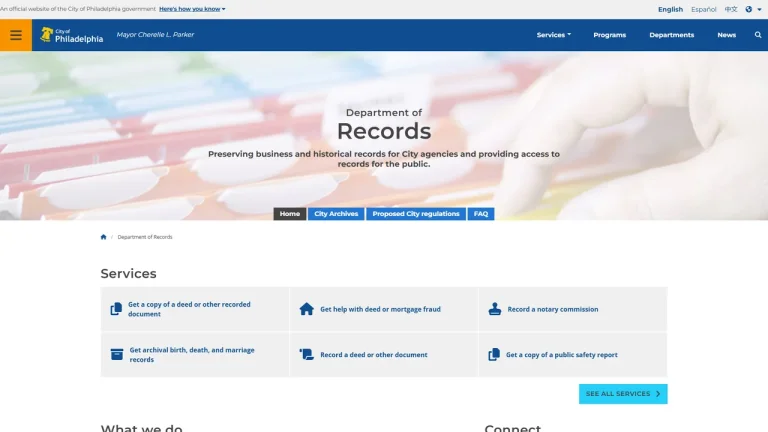
Philadelphia Department of Records - Philadelphia, PA
Allegheny County Office of Property Assessments - Pittsburgh, PA


Pennsylvania County Clerical and Judicial Records Administration
Pennsylvania maintains a specialized constitutional division of county administrative and clerical duties governed by the Pennsylvania County Code and the Pennsylvania Judicial Code. Unlike states that concentrate public recordkeeping within a single monolithic county clerk office, the Commonwealth of Pennsylvania distributes administrative, civil, and criminal filing responsibilities among distinct elected constitutional officers across all 67 counties. Operating under county government oversight and the Unified Judicial System of Pennsylvania, these offices anchor regional legal administration from major centers like Philadelphia and Allegheny County to rural jurisdictions throughout the state.
In Pennsylvania, civil court filings, judgment dockets, and statutory liens are managed exclusively by the Prothonotary, whereas criminal case dockets, summary appeals, and bail records fall under the authority of the Clerk of Courts. Matters concerning estate probate, wills, and marriage licenses are processed by the Register of Wills and Clerk of the Orphans' Court. General municipal records, county commissioner resolutions, and local agency administration are directed by the County Chief Clerk or county administration directors, ensuring structured public access to county governance.
Understanding these distinct clerical offices is critical for citizens seeking public records, filing court pleadings, or authenticating municipal instruments. While many Pennsylvania counties provide public docket access online through PACFile and the Unified Judicial System web portal, obtaining certified documents, recording civil judgments, or accessing sealed records requires direct interaction with the appropriate county clerical official.
Common County Clerical Services, Documentation, and Statutory Fees
| Service / Matter | Required Documents / Prerequisites | Statutory Fee (USD) | Processing Timeline |
|---|---|---|---|
| Civil Judgment Docketing (Prothonotary) | Exemplified copy of judgment, praecipe for entry, certificate of addresses | $25.00 - $60.00 | Same-day to 3 business days |
| Marriage License Application (Orphans' Court) | Government-issued photo ID, birth certificates, certified divorce decrees | $60.00 - $90.00 | 3-day mandatory waiting period |
| Certified Criminal Docket (Clerk of Courts) | Written records request, OTN or case docket number, requester ID | $10.00 - $25.00 | 1 to 5 business days |
| Public Records Request (RTKL County Clerk) | Standard Pennsylvania RTKL request form, specific record description | $0.25 per page (duplication) | 5 business days initial response |
Critical Legal Deadlines & Statutes in Pennsylvania
County administrative procedures and public records disclosures in Pennsylvania are governed by strict statutory deadlines established by Commonwealth law. Under the Pennsylvania Right-to-Know Law, codified at 65 P.S. § 67.901, a county agency or clerk must provide a formal written response to a public records request within 5 business days of receipt. If an agency invokes a permissible 30-calendar-day extension under 65 P.S. § 67.902, it must notify the requester in writing within the initial 5-day window. Requesters seeking to challenge a denial must file an appeal with the Pennsylvania Office of Open Records within 15 business days under 65 P.S. § 67.1101(a)(1).
Clerical and court filings must satisfy procedural mandates codified in Title 42 of the Pennsylvania Consolidated Statutes. Powers of the Prothonotary and Clerk of Courts are defined under 42 Pa. C.S. § 2734 and 42 Pa. C.S. § 2754, establishing mandatory docketing rules for judicial pleadings. For marriage licenses issued by the Clerk of the Orphans' Court, 23 Pa. C.S. § 1303 mandates a strict 3-day statutory waiting period between application and license issuance, with licenses remaining valid for 60 calendar days under 23 Pa. C.S. § 1310. Parties appealing formal decisions or administrative adjudications issued by county agencies must file their notice of appeal in the county Court of Common Pleas within 30 calendar days pursuant to 42 Pa. C.S. § 5571(b).
Direct Agency Access vs. Legal Counsel
Pennsylvania residents can independently complete numerous routine administrative and clerical tasks without the expense of private legal representation. Self-represented individuals regularly submit Right-to-Know Law requests, complete in-person marriage license applications at the county courthouse, purchase certified copies of court records, and review public dockets at computer terminals located inside county Prothonotary or Clerk of Courts offices. County administrative staff are equipped to supply standard state forms and explain intake filing guidelines.
Conversely, retaining licensed Pennsylvania legal counsel becomes essential when court filings involve contentious legal rights, clouded property titles, or judicial appeals. Challenging an improper county administrative ruling before the Court of Common Pleas, litigating will contests in Orphans' Court, resolving contested judgment liens, or navigating appellate reviews of open records denials requires formal legal advocacy. Furthermore, county clerical personnel are strictly prohibited under Commonwealth law from providing legal advice, interpreting statutory requirements, or drafting customized legal pleadings.
Red Flags & Public Safety Warnings
- Third-Party Document Brokers: Avoid commercial websites that charge high processing fees for Pennsylvania public records or marriage license forms that can be obtained directly from county offices for statutory fees or free of charge.
- Mandatory Waiting Period Scams: Be cautious of private services promising to bypass the Pennsylvania statutory 3-day marriage license waiting period; only a judge of the Court of Common Pleas has statutory authority to waive this requirement for extraordinary cause.
- Deceptive Payment Solicitations: Disregard unsolicited letters or telephone calls demanding immediate credit card payment or wire transfers for alleged delinquent county court fines, judgment filings, or missed jury duty.
- Filing in the Wrong Office: Verify the exact nature of your filing before submitting fees, as civil pleadings mistakenly delivered to the Clerk of Courts instead of the Prothonotary will be rejected, potentially jeopardizing statutory filing deadlines.
Frequently Asked Questions
What is the difference between a Prothonotary and a Clerk of Courts in Pennsylvania?
In Pennsylvania, the Prothonotary is the elected clerk responsible for civil court records, judgments, and liens, while the Clerk of Courts is responsible for criminal case dockets, summary appeals, and bail records.
How do I submit a Right-to-Know Law request to a Pennsylvania county?
You can submit a standard Pennsylvania Right-to-Know request form in person, by mail, or via email to the designated Open Records Officer of the specific county agency holding the records.
Is there a waiting period for a marriage license in Pennsylvania?
Yes, Pennsylvania statute mandates a 3-day waiting period from the date of application before a marriage license can be issued by the Clerk of the Orphans' Court.
Where can I find civil court dockets for Pennsylvania counties online?
Public dockets can be searched online using the Unified Judicial System of Pennsylvania Web Portal or individual county Prothonotary case management portals.
Can county clerk staff in Pennsylvania help me fill out legal forms?
No, Pennsylvania county clerical staff cannot provide legal advice, suggest specific language, or assist in completing legal documents, as doing so constitutes the unauthorized practice of law.