
Specialty Courts (Drug, Family, Juvenile) in Philadelphia
Philadelphia specialty courts provide rehabilitative diversion, family protection, and youth justice across the First Judicial District. Operating under structured local rules, these problem-solving dockets focus on restorative outcomes rather than standard penal sanctions. Explore our directory below to locate specialized courthouse facilities, administrative offices, and authorized judicial programs.

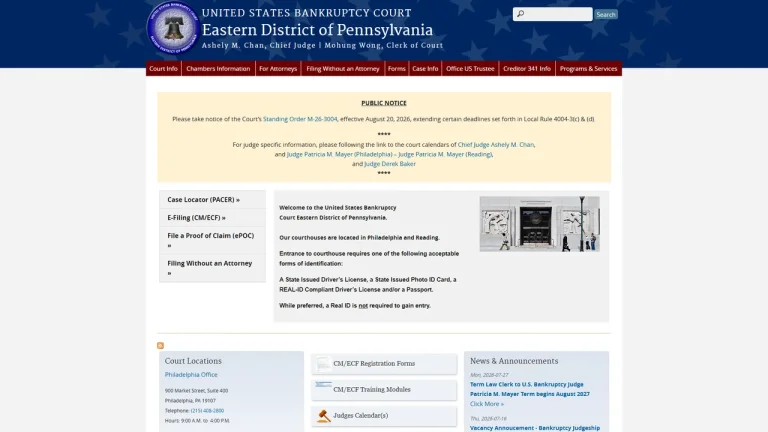
U.S. Bankruptcy Court for the Eastern District of Pennsylvania


Administration and Authority of Philadelphia Specialty Courts
Specialty courts in Philadelphia operate under the First Judicial District of Pennsylvania, delivering rehabilitative and restorative alternatives to conventional criminal and civil litigation. These problem-solving dockets address systemic challenges, including substance use disorders, mental health conditions, family disputes, and youth delinquency. By focusing on targeted accountability, these courts provide litigants with access to supervised recovery and social reintegration services.
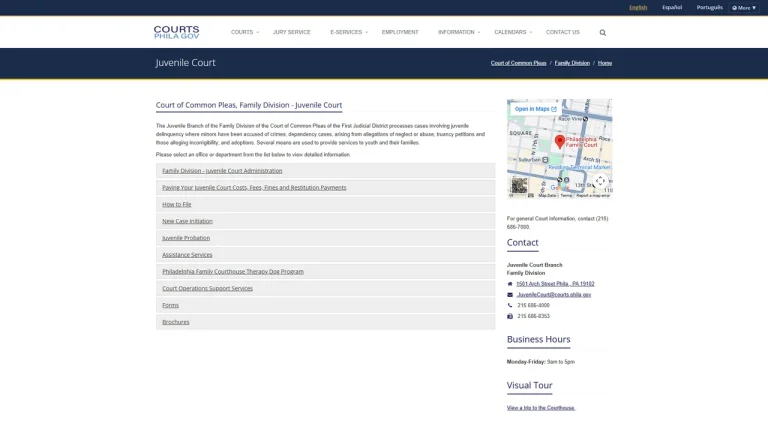
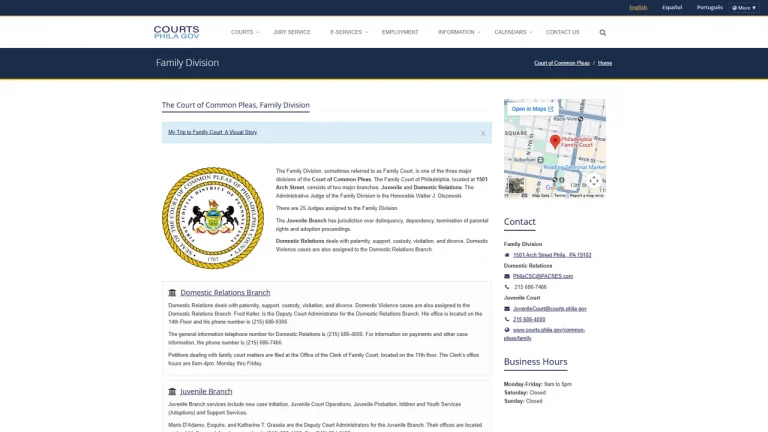
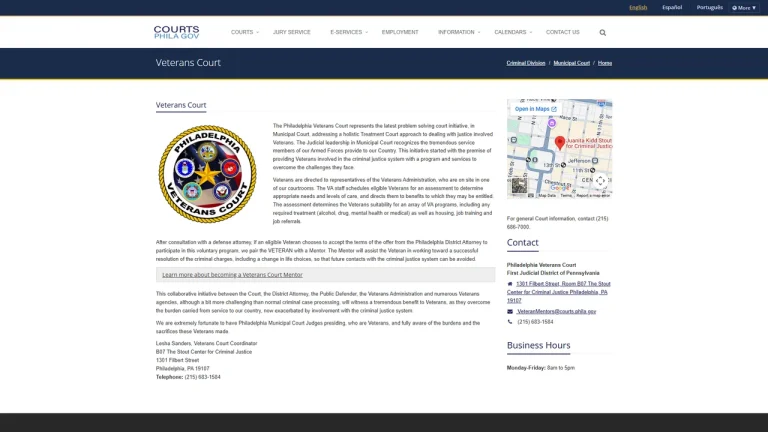
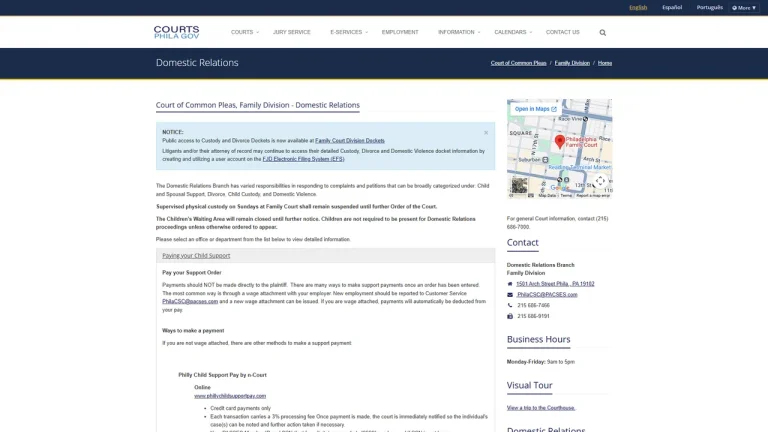
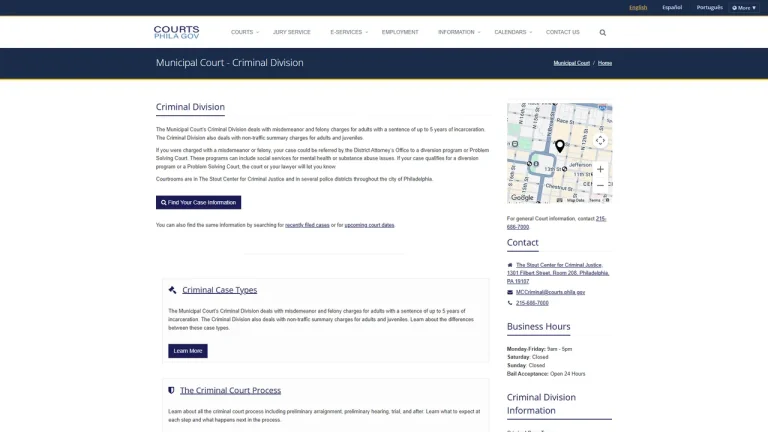
The juvenile and family branches are centralized primarily at the Philadelphia Family Court building at 1501 Arch Street in Center City. This state-of-the-art judicial complex consolidates juvenile delinquency, dependency proceedings, domestic relations, child custody, and emergency protection matters. Adult problem-solving dockets, including the Philadelphia Adult Drug Treatment Court, Veterans Court, and Mental Health Court, operate out of the Juanita Kidd Stout Center for Criminal Justice located at 1301 Filbert Street.
These specialty courtrooms serve residents from all Philadelphia neighborhoods, including South Philadelphia, Kensington, West Philadelphia, and the Far Northeast. Collaborative teams of judges, prosecutors from the Philadelphia District Attorney Office, public defenders from the Defender Association of Philadelphia, and licensed social workers oversee each docket to maintain public safety while providing alternatives to incarceration.
Common Specialty Court Proceedings, Prerequisites, and Timelines
| Service / Matter | Required Documents / Prerequisites | Statutory Fee (USD) | Processing Timeline |
|---|---|---|---|
| Juvenile Delinquency Intake | Written police allegation, juvenile identification, intake interview | $0 (Statutory waiver) | Detention hearing within 72 hours |
| Adult Drug Treatment Court Diversion | Clinical addiction evaluation, plea colloquy, prosecutor consent | $0 to $500 (Supervision fee, waivable) | 30 to 60 days to formal entry |
| Protection From Abuse (PFA) Order | Verified domestic violence petition, incident narrative, police reports | $0 (No filing fee permitted) | Same-day temporary ex parte order |
| Juvenile Dependency Status Review | Department of Human Services (DHS) report, family safety assessment | $0 (Public welfare docket) | Formal review every 90 to 180 days |
Critical Legal Deadlines & Statutes in Pennsylvania
Specialty dockets enforce strict statutory windows to protect individual constitutional rights and expedite judicial review. Under the Pennsylvania Juvenile Act, codified at 42 Pa. C.S. § 6332, an informal detention hearing for a juvenile held in custody must occur no later than 72 hours after admission to a youth detention center. Failure to conduct this hearing requires the immediate release of the minor from physical confinement.
For domestic relations and domestic violence crises, the Pennsylvania Protection From Abuse Act under 23 Pa. C.S. § 6107 requires a full evidentiary hearing within 10 business days after filing a petition or securing a temporary ex parte protective order. In child dependency matters under 42 Pa. C.S. § 6351, permanency hearings must occur at least once every six months to evaluate parental progress toward family reunification.
Adult diversion participants in the First Judicial District must also observe procedural timelines established under Pa. R. Crim. P. 313 and local administrative orders. An appeal of any final judgment or contested revocation in a specialty docket must be filed with the Superior Court of Pennsylvania within 30 days under 42 Pa. C.S. § 5571.
Direct Public Intake vs. Specialized Legal Representation
Certain emergency services within Philadelphia specialty divisions allow self-represented filing. Pro se petitioners can access the Domestic Violence Intake Unit on the 8th Floor of 1501 Arch Street to prepare and file emergency Protection From Abuse petitions without paying filing fees or retaining counsel. Court intake clerks assist with technical paperwork completion, although they cannot provide legal advice.
In contrast, criminal specialty courts and contested juvenile hearings necessitate professional legal counsel. Entering the Philadelphia Adult Drug Treatment Court or Mental Health Court requires waiving fundamental constitutional rights, including the right to a speedy jury trial and certain evidentiary protections. Retaining an attorney or securing representation through the Defender Association of Philadelphia ensures your eligibility is properly presented to prosecutors and mitigates the risk of diversion revocation resulting in incarceration.
Red Flags & Consumer Warnings in Court Navigation
- Beware of unauthorized third parties or unlicensed paralegals soliciting clients near courthouse entrances along Arch Street or Filbert Street, promising expedited docketing for cash payments.
- Never submit credit card payments on non-governmental websites claiming to file Philadelphia Family Court petitions; official state electronic records and payments occur only through the unified judicial web portal.
- Disregard private services promising guaranteed admission into diversion programs, as entry strictly requires approval from the Philadelphia District Attorney Office and the presiding judge.
- Ensure all correspondence arrives via official First Judicial District letterhead or through the state judicial case portal to avoid deceptive communication scams.
Frequently Asked Questions
Where are juvenile delinquency hearings held in Philadelphia?
Juvenile delinquency proceedings in the First Judicial District are held at the Philadelphia Family Court building located at 1501 Arch Street, Philadelphia, PA 19102. All visitors must pass through municipal security screenings before accessing the juvenile courtrooms on upper levels.
Who qualifies for the Philadelphia Adult Drug Treatment Court?
Eligibility generally requires non-violent criminal charges, an identifiable substance dependency disorder, and residency in Philadelphia. Candidates must undergo a clinical assessment and secure prosecutorial consent from the Philadelphia District Attorney Office before entering a plea under the program rules.
Are juvenile court records open to the general public in Pennsylvania?
Most juvenile court records in Pennsylvania are confidential under state law to protect the privacy of minors. However, limited access may be granted if the juvenile was 14 years of age or older at the time of an alleged act that would constitute a felony if committed by an adult.
What occurs if a participant fails to complete a diversion program?
If a participant fails to comply with drug testing, counseling, or judicial review hearings, the judge may impose intermediate sanctions or revoke diversion status entirely. Revocation returns the criminal case to standard trial dockets at the Juanita Kidd Stout Center for Criminal Justice for conventional prosecution.
How can I track the docket status of a Philadelphia specialty court case?
Adult criminal specialty cases can be viewed online via the Pennsylvania Unified Judicial System (UJS) Web Portal using the docket search tool. Juvenile delinquency and child dependency cases are sealed and cannot be accessed online by the public.