
Business Filing & Licensing in Pittsburgh
Access official business registration portals, municipal trade licensing bureaus, and commercial permit offices across Pittsburgh and Allegheny County. Following Pennsylvania corporate statutes and City of Pittsburgh business privilege tax regulations ensures full regulatory compliance. Browse verified agency contacts, licensing requirements, and official filing directories below.
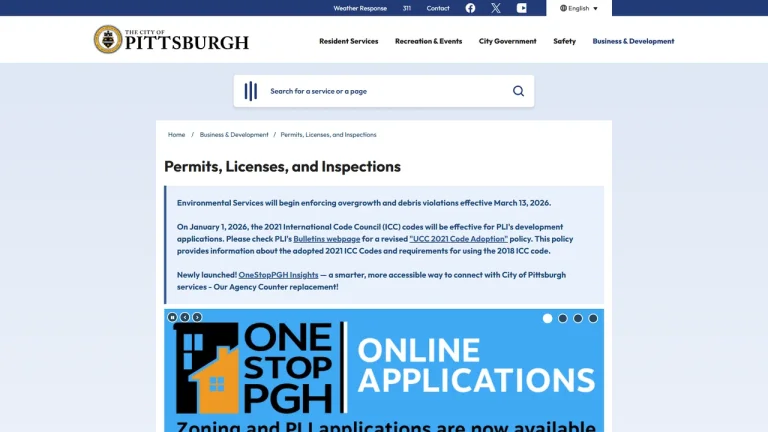
Department of Permits, Licenses, and Inspections (PLI) - Pittsburgh, PA
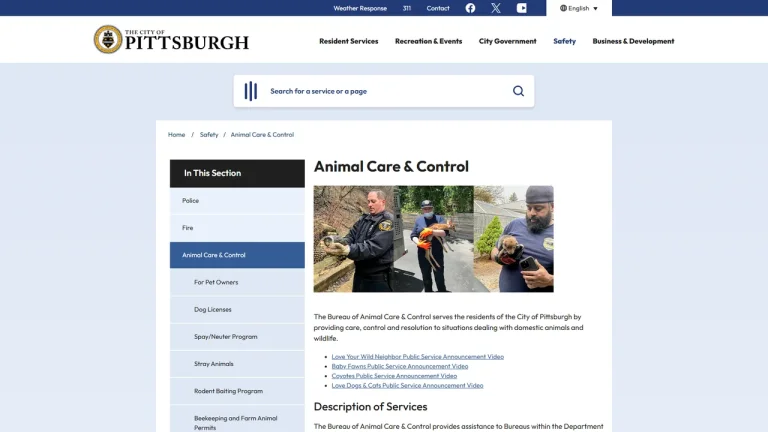
City of Pittsburgh Animal Care and Control (Licensing) - Pittsburgh, PA

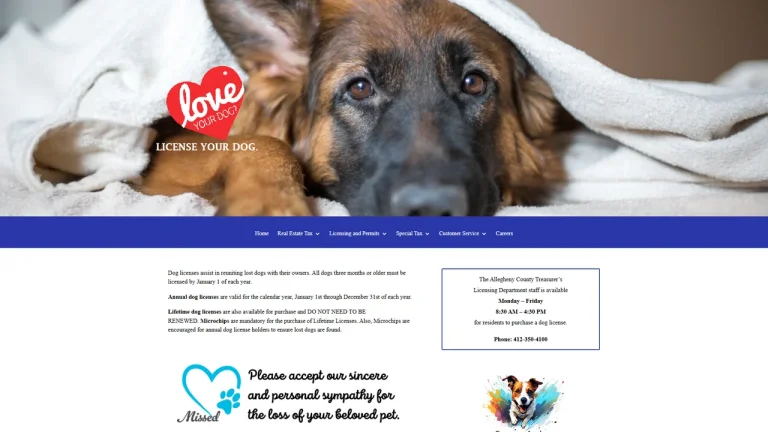
Allegheny County Treasurer's Office: Dog License Division - Pittsburgh, PA

Allegheny County Department of Equity and Inclusion - Pittsburgh, PA
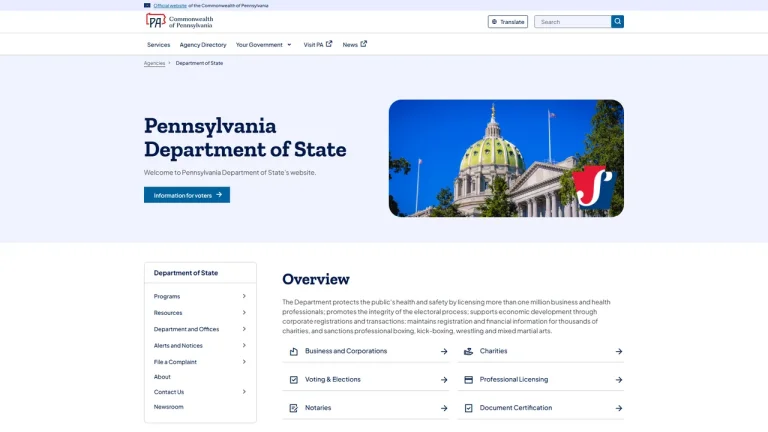
Pennsylvania Department of State - Bureau of Enforcement and Investigation - Pittsburgh, PA

Housing Authority of the City of Pittsburgh (HACP) - Executive Office - Pittsburgh, PA

Commercial Regulatory Infrastructure and Business Licensing in Pittsburgh
Establishing and operating an enterprise in Pittsburgh involves navigating administrative oversight across state, county, and municipal authorities. State-level corporate registrations are governed by the Pennsylvania Department of State Bureau of Corporations and Charitable Organizations, while local business activity is regulated by municipal agencies centered at the City-County Building and the 200 Ross Street municipal complex in Downtown Pittsburgh.
Within the city limits-encompassing key commercial hubs such as the Golden Triangle, the Strip District, Lawrenceville, Shadyside, East Liberty, and the South Side Flats-the City of Pittsburgh Department of Permits, Licenses, and Inspections (PLI) administers municipal trade licenses and occupancy permits. Concurrently, the City of Pittsburgh Department of Finance oversees local tax compliance, including the Business Privilege Tax and Payroll Expense Tax, which apply to commercial entities conducting business within municipal borders.
Food service enterprises, lodging facilities, and health-regulated businesses must also secure operational clearance from the Allegheny County Health Department, located on Forbes Avenue. Understanding the proper sequencing of filings between Harrisburg state authorities, Allegheny County health inspectors, and Pittsburgh city licensing officers protects enterprise continuity and prevents civil stop-work orders.
Key Business Registration Services and Statutory Fee Schedules
| Service / Matter | Required Documents / Prerequisites | Statutory Fee (USD) | Processing Timeline |
|---|---|---|---|
| Pennsylvania LLC Certificate of Organization | Form DSCB:15-8821, docketing statement, registered office address | $125.00 statutory state fee | 2 to 3 business days via online portal |
| City of Pittsburgh General Business License (PLI) | State entity filing, city tax identification number, certificate of occupancy | $75.00 - $250.00 tiered by commercial category | 10 to 15 business days following review |
| Allegheny County Fictitious Name Registration | Form DSCB:54-311, owner identity verification, newspaper proof of publication | $70.00 state fee plus local publishing costs | 3 to 5 business days after submission |
| Allegheny County Food Facility Operating Permit | Detailed architectural floor plan, food safety manager certification, menu plan | $100.00 - $350.00 based on square footage | 3 to 4 weeks including on-site inspection |
Critical Filing Deadlines and Business Regulatory Statutes in Pennsylvania
Commercial enterprises operating in Pittsburgh must comply with strict statutory filing timetables established under Pennsylvania consolidated statutes and municipal codes. Missing these deadlines can lead to administrative dissolution, substantial tax penalties, or forfeiture of trade name exclusivity:
Limited liability companies organized under the Pennsylvania Uniform Limited Liability Company Act of 2016, codified at 15 Pa. C.S. § 8821, must submit annual reports to the Pennsylvania Department of State to maintain active legal standing. Entities conducting business under an assumed trade name must file a fictitious name registration pursuant to the Fictitious Names Act, 54 Pa. C.S. § 311, and satisfy mandatory legal advertising requirements in two local newspapers, including the Pittsburgh Legal Journal.
Locally, businesses operating within Pittsburgh must register with the City of Pittsburgh Department of Finance within thirty calendar days of commencing operations under the Local Tax Enabling Act, 53 P.S. § 6924.301, and Chapter 251 of the Pittsburgh City Code. Annual municipal tax returns for the Business Privilege Tax and Payroll Expense Tax are due on or before April 15 of each taxable year.
If a commercial property owner or tenant faces an adverse zoning determination or denial of a certificate of occupancy from the Department of Permits, Licenses, and Inspections, a formal appeal to the Pittsburgh Zoning Board of Adjustment must be filed within thirty calendar days under 53 P.S. § 11002-A. Failure to lodge the appeal within this jurisdictional window renders the municipal denial final and non-reviewable.
Direct Municipal Access vs. Retaining Corporate Legal Counsel
Entrepreneurs can manage routine administrative filings in Pittsburgh without legal representation. Registering a straightforward single-member limited liability company via the Pennsylvania Department of State Business Filing Services portal, applying for a standard employer identification number (EIN), obtaining a basic municipal contractor license from the Department of Permits, Licenses, and Inspections, and paying local parking or business privilege taxes can be handled directly by business owners.
However, when commercial operations involve multi-member equity agreements, complex commercial leasing, or contentious municipal zoning, retaining corporate counsel is essential. Structuring multi-member operating agreements, drafting equity buyout clauses, and navigating municipal special exceptions or variances before the Pittsburgh Zoning Board of Adjustment require experienced legal advocacy. Furthermore, under Pennsylvania Rule of Civil Procedure 2177, corporations and limited liability companies cannot represent themselves in Pennsylvania judicial forums, including the Allegheny County Court of Common Pleas, and must appear through a licensed attorney. Counsel is also vital when defending against municipal tax assessments or navigating environmental and public health citations before the Allegheny County Health Department.
Commercial Red Flags and Business Filing Scam Warnings
- Beware of official-looking solicitation mailers sent to newly formed Pittsburgh businesses demanding $125 or more for "annual corporate minutes" or "certificates of status"; corporate records can be ordered directly from the Pennsylvania Department of State for standard statutory fees.
- Do not overlook mandatory statutory publication requirements when registering a fictitious name; failing to publish notice in two local newspapers under 54 Pa. C.S. § 311 leaves the trade name unprotected and unenforceable in Pennsylvania courts.
- Avoid non-licensed expediting services that guarantee building permit approvals or certificates of occupancy through informal city relationships; all construction plans must formally comply with the Pennsylvania Uniform Construction Code.
- Verify that any professional representing your company before the Pittsburgh Zoning Board of Adjustment or the Allegheny County Board of Property Assessment Appeals and Review is an attorney licensed by the Supreme Court of Pennsylvania.
Frequently Asked Questions
Where do I register a new business entity in Pittsburgh?
State-level entity registration (LLC, corporation, partnership) is filed with the Pennsylvania Department of State Bureau of Corporations and Charitable Organizations online. Once formed, you must register locally with the City of Pittsburgh Department of Finance.
Do all businesses operating in Pittsburgh require a municipal business license?
Most commercial enterprises require a general business license or specialized trade license issued by the City of Pittsburgh Department of Permits, Licenses, and Inspections (PLI) located at 200 Ross Street, alongside zoning approval.
What is the advertising requirement for fictitious names in Allegheny County?
Under 54 Pa. C.S. § 311, applicants registering a fictitious business name must publish notice of the filing in two newspapers of general circulation in Allegheny County, one of which must be the Pittsburgh Legal Journal.
What local business taxes apply within the City of Pittsburgh?
Businesses operating in Pittsburgh are subject to the City of Pittsburgh Payroll Expense Tax, Local Services Tax (LST), and applicable parking or amusement taxes administered by the City Department of Finance.
Can a corporation represent itself before Pittsburgh administrative boards?
While business owners may provide factual testimony at informal public hearings, any formal legal dispute or judicial appeal in the Allegheny County Court of Common Pleas requires representation by a licensed attorney under Pa. R.C.P. No. 2177.