
Public Records & Filing Offices in Vermont
Accessing public records in Vermont requires navigating decentralized town clerk offices for property deeds alongside state repositories for official filings. Under the Vermont Public Records Act and state recording statutes, citizens have the legal right to inspect municipal land records, vital statistics, and state archives. Explore our directory below to locate verified town clerks, state archival divisions, and court record repositories throughout Vermont.



Corporations and Business Services Division, Secretary of State - Montpelier, VT



Navigating Vermont's Unique Municipal and State Filing System
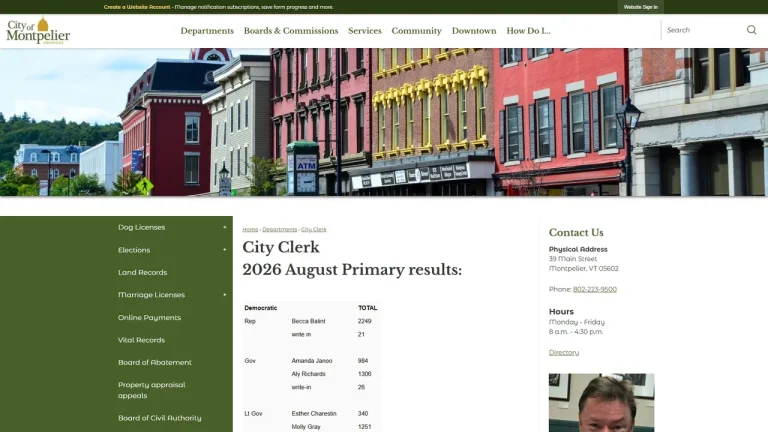
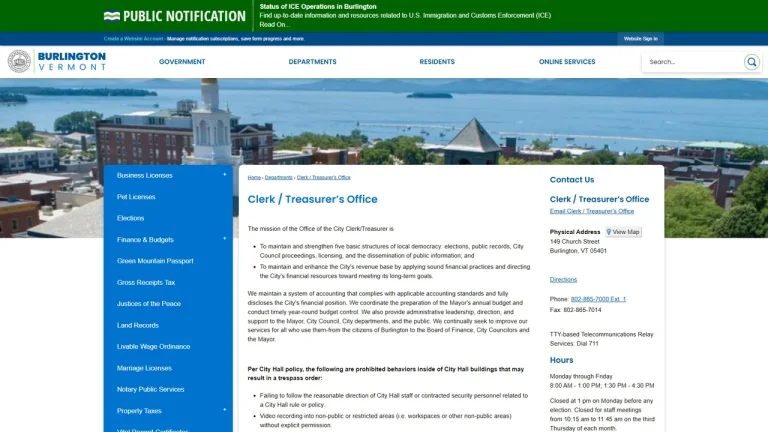
Public records administration in Vermont follows a distinctive municipal-centered structure that sets it apart from other states. While state-level repositories exist in Montpelier, real property conveyances, mortgages, mineral leases, and historic vital statistics are recorded at the local municipal level. Vermont's 246 organized municipalities-comprising 237 towns and 9 cities-maintain official land records through elected Town and City Clerks pursuant to 24 V.S.A. § 1152.
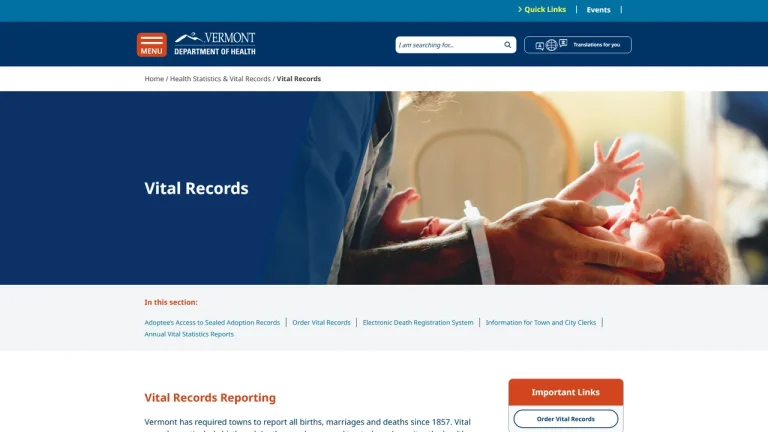
At the state executive level, the Vermont Secretary of State operates the Vermont State Archives and Records Administration (VSARA) in Middlesex, serving as the permanent custodian of historic legislative records, executive orders, and state administrative filings. In addition, the Vermont Department of Health Vital Records Office maintains the statewide Electronic Death Registration System and centralized birth, marriage, and civil union registries under 18 V.S.A. § 5000.
Judicial filings and court records are administered through the Vermont Superior Court, which operates across fourteen county units. The Vermont Judicial Branch uses the Odyssey electronic filing system, providing centralized access to civil, criminal, family, and probate case dockets while maintaining public access terminals in each county courthouse.
Common Vermont Public Records Services, Statutory Fees, and Timelines
| Service / Matter | Required Documents / Prerequisites | Statutory Fee (USD) | Processing Timeline |
|---|---|---|---|
| Town Land Record Recording (Deed / Mortgage) | Original notarized instrument, Vermont property transfer tax return (PTTR) | $15.00 per recorded page under state statute | Same-day walk-in; 24 to 48 hours postal mail |
| Certified Vital Record (Birth, Death, Marriage) | Valid government photo ID, completed VDH application, proof of direct relation | $10.00 statutory fee per certified copy | Same-day at town clerk; 5 to 7 days state health office |
| Vermont Secretary of State UCC-1 Financing Filing | Executed UCC financing statement, secured party and debtor details | $25.00 statutory filing fee | Immediate online portal; 3 to 5 days by mail |
| Vermont Public Records Act Inspection | Written request identifying records, submitted to designated records officer | Free inspection; actual copy cost ($0.10/page standard) | 3 business days initial determination |
| Superior Court Certified Docket / Case Decree | Case docket number, party names, written copy request to county clerk | $10.00 search fee plus $1.00 per certified page | 3 to 7 business days from court clerk |
Critical Statutory Deadlines & Recording Statutes in Vermont
Property conveyances and public record requests in Vermont are strictly regulated by statutory filing windows. Under 27 V.S.A. § 342, an unrecorded deed or real property instrument is not valid against any party other than the grantor and their heirs. Vermont operates under a race-notice recording doctrine; failing to record a deed or mortgage promptly in the town where the real estate is located forfeits legal priority against subsequent purchasers for value.
Real estate transfers also require mandatory tax compliance. Under 32 V.S.A. § 9606, a Vermont Property Transfer Tax Return must be filed with the Town Clerk alongside any conveyance deed; without proof of return filing or exemption, the Town Clerk is statutorily prohibited from recording the instrument. In commercial construction, contractors seeking to secure a lien on real property must record a signed and notarized memorandum of lien in the town clerk's office within 180 calendar days of completing work pursuant to 9 V.S.A. § 1921.
For public disclosures, 1 V.S.A. § 318 requires that public bodies respond to record requests within three business days. If access is denied, the requester must pursue an administrative appeal within four weeks before seeking judicial enforcement in Vermont Superior Court under 1 V.S.A. § 319 within the general six-year statute of limitations codified at 12 V.S.A. § 511.
Direct Public Filings vs. Retaining Legal Counsel
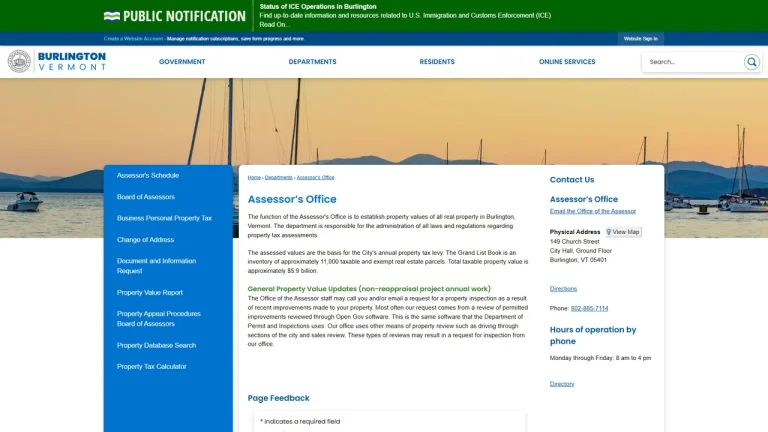
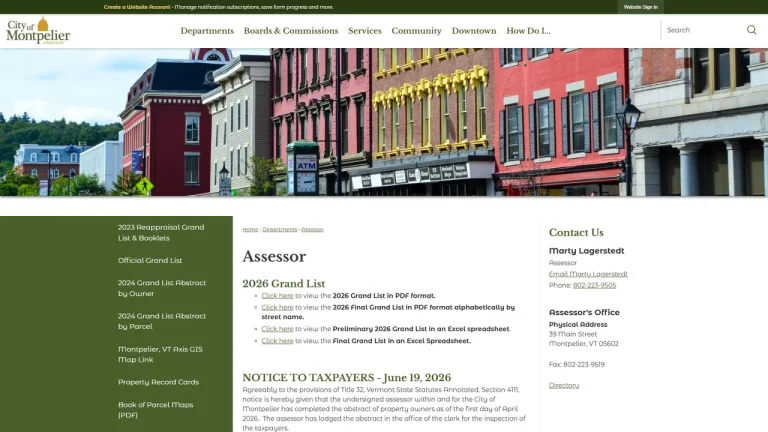
Citizens can independently handle standard recording and record retrieval tasks. Ordering certified copies of birth or marriage certificates from a local town clerk, reviewing public municipal grand lists to check property tax valuations, inspecting town land records during open office hours, or filing standard Uniform Commercial Code statements online with the Secretary of State require no legal representation.
However, when property transactions involve legal title examination or contested filings, retaining an attorney admitted to the Vermont Bar is necessary. Because Vermont relies on decentralized town vaults rather than a countywide indexing registry, conducting comprehensive forty-year title searches, drafting deeds with protective covenants, curing clouds on title via quiet title actions under 12 V.S.A. § 511, or resolving boundary disputes requires professional legal expertise. Furthermore, litigating public records denials or defending against mechanic lien foreclosures necessitates skilled court representation.
Red Flags & Consumer Protection Warnings
- Deceptive mailings offering to supply a certified copy of your property deed for $75 to $95; these private services charge excessive fees for deeds that can be obtained directly from your local Town Clerk for $15 per page.
- Filing land records at the county courthouse rather than with the specific Town Clerk's office where the real estate is located, which leaves the title unperfected under 27 V.S.A. § 342.
- Uncertified title search services that fail to examine town land records across the standard forty-year search period, leaving undisclosed encumbrances or unresolved probate liens on title.
- Third-party vital statistics portals that charge processing markups while harvesting personal identification data; vital certificates should only be ordered through Town Clerks or the Vermont Department of Health.
Frequently Asked Questions
Where do I record real estate deeds and mortgages in Vermont?
In Vermont, real estate deeds, mortgages, and liens must be recorded in the municipal clerk's office of the specific town or city where the property is located, pursuant to 24 V.S.A. § 1152. They are not recorded at the county courthouse.
What is the deadline for an agency to answer a Vermont Public Records Act request?
Under 1 V.S.A. § 318, a town clerk or state agency custodian must respond to an inspection request within three business days, with a possible written extension of up to ten business days for unusual circumstances.
How do I obtain a certified copy of a birth or marriage certificate in Vermont?
Certified copies of vital records can be obtained directly from the Town Clerk in the town where the event occurred or where the parties resided, or through the Vermont Department of Health Vital Records Office, by presenting valid photo ID and paying the statutory $10.00 fee.
What is the statutory deadline for recording a contractor's lien in Vermont?
Under 9 V.S.A. § 1921, a person claiming a contractor's or mechanic's lien must file and record a signed and notarized memorandum of lien in the town clerk's office within 180 calendar days after the last labor or materials were provided.
How do I search court dockets and judicial records in Vermont?
Judicial dockets for civil, criminal, family, and probate matters in the Vermont Superior Court are accessible online through the Vermont Judiciary's public access portal, or in person at public computer terminals located in each county courthouse.