
State & Local Courts in Vermont
Vermont operates a unified judicial system anchored by the Supreme Court in Montpelier and fourteen county Superior Court units statewide. Most civil complaints, criminal dockets, and public court records are managed through county clerk offices and the state electronic filing network. Consult our verified directory below to find courthouse locations, clerk contact numbers, and filing resources across Vermont.





The Unified State Judicial System of Vermont
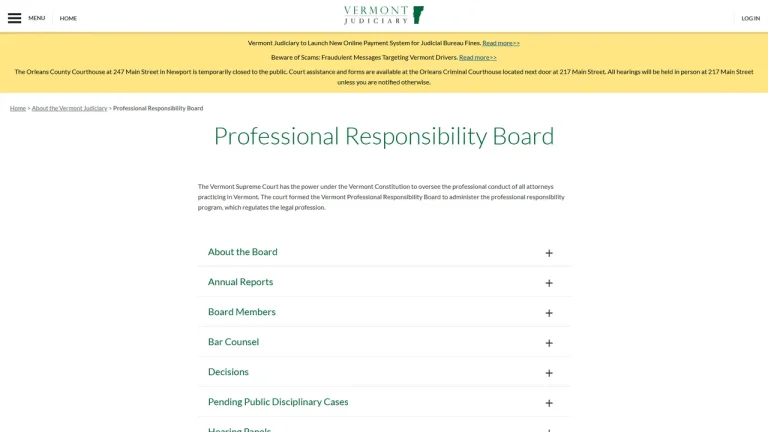
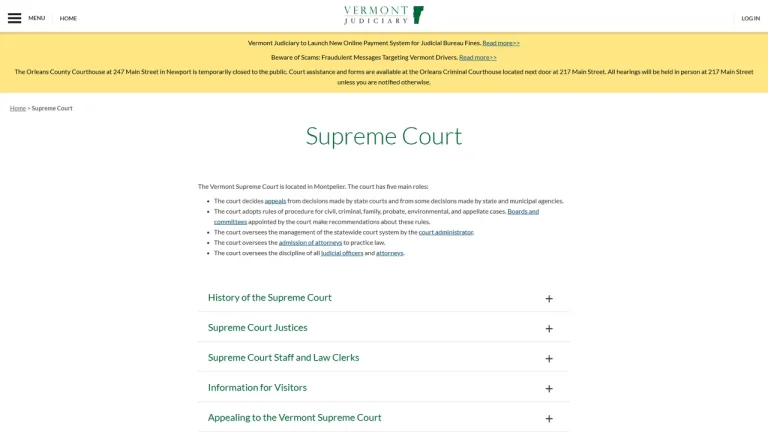
Vermont administers justice through an integrated, unified judicial branch structured under the constitutional authority of the Supreme Court of Vermont and directed by the Office of the Court Administrator. Seated in the state capital of Montpelier within Washington County, the Vermont Supreme Court serves as the constitutional court of last resort, exercising mandatory and discretionary appellate jurisdiction over civil, criminal, domestic, probate, and administrative judgments rendered throughout the state.
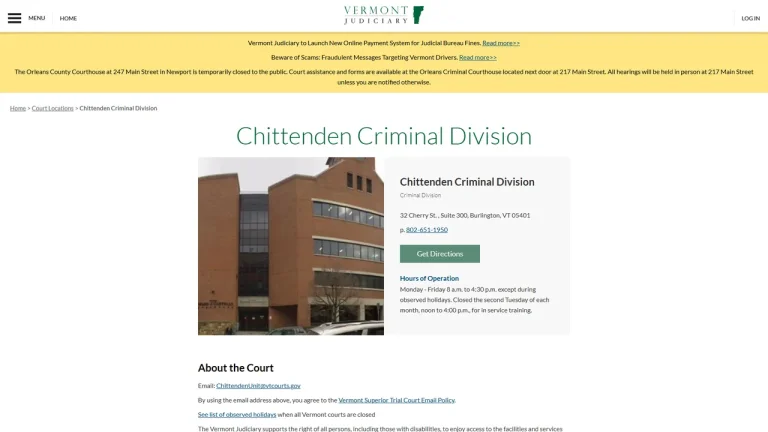
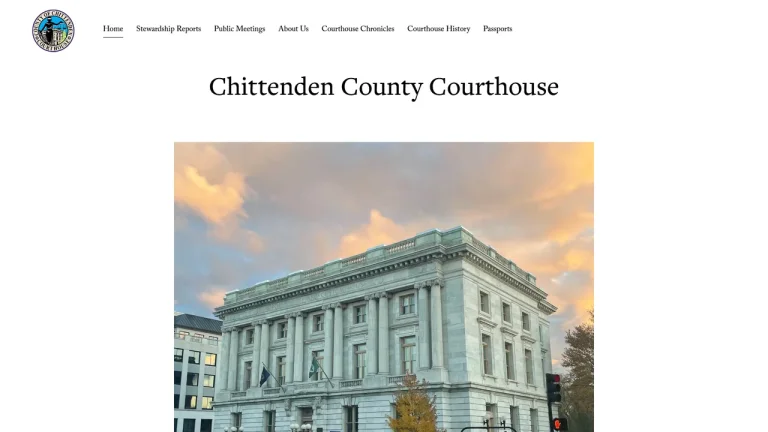
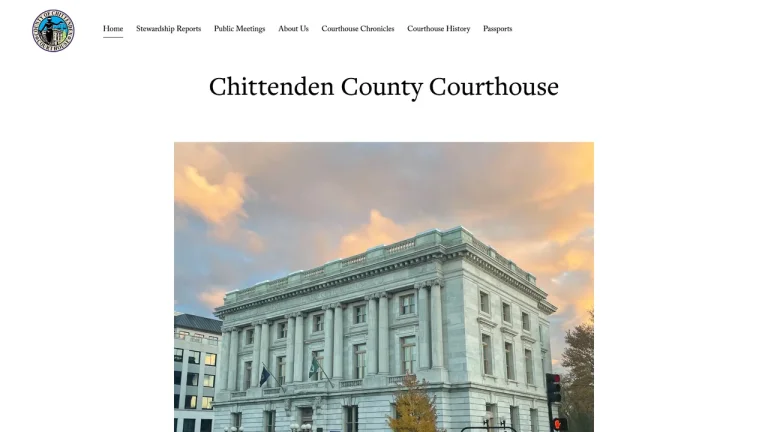
General trial jurisdiction is vested in the Vermont Superior Court, which is organized geographically into fourteen distinct court units corresponding to Vermont's fourteen counties: Addison (Middlebury), Bennington, Caledonia (St. Johnsbury), Chittenden (Burlington), Essex (Guildhall), Franklin (St. Albans), Grand Isle (North Hero), Lamoille (Hyde Park), Orange (Chelsea), Orleans (Newport), Rutland, Washington (Montpelier and Barre), Windham (Brattleboro and Newfane), and Windsor (White River Junction and Woodstock).
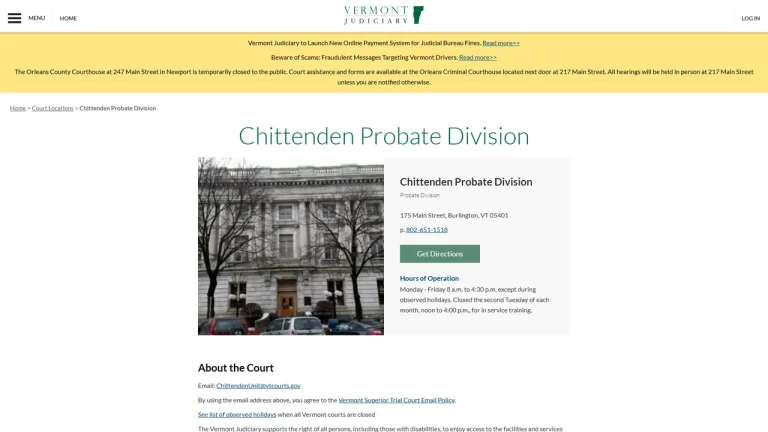
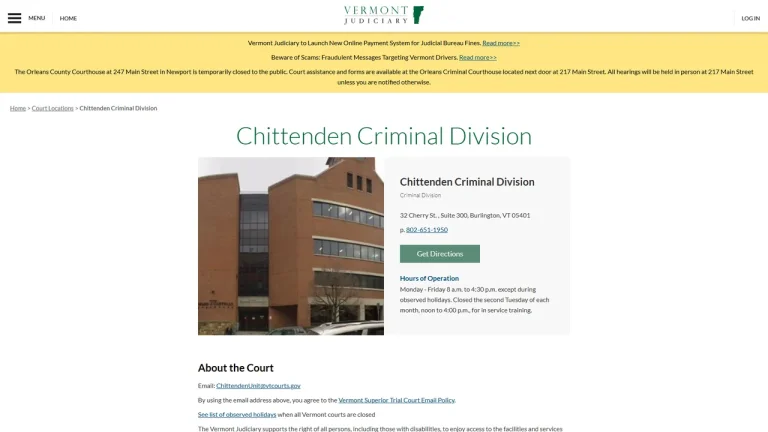
Each county Superior Court unit is organized into five subject-matter divisions: the Civil Division (adjudicating general torts, commercial disputes, and property actions), the Criminal Division (presiding over misdemeanors, felonies, and criminal jury trials), the Family Division (handling divorce, parentage, child support, and juvenile matters), the Probate Division (administering wills, trusts, guardianships, and adoptions), and the statewide Environmental Division (adjudicating land use appeals and municipal zoning decisions). The Vermont Judicial Bureau exercises statewide jurisdiction over civil traffic violations, municipal ordinance infractions, and natural resource citations. Electronic filing is administered statewide via Odyssey File & Serve.
Common Vermont Court Filings, Documentation & Statutory Fees
| Service / Matter | Required Documents / Prerequisites | Statutory Fee (USD) | Processing Timeline |
|---|---|---|---|
| Superior Court Civil Action Filing | Verified Complaint, Summons, Civil Information Sheet | $295 statutory entry fee | Same-day digital entry via Odyssey |
| Small Claims Complaint (Civil Division) | Small Claims Complaint, Proof of claim under $10,000 | $90 base fee ($125 for claims over $3,000) | Hearing scheduled within 30 to 60 days |
| Certified Court Record Issuance | Written request, Case docket number, Identification | $5.00 base fee plus $0.50 per copy | 3 to 7 business days |
| Adult Criminal Record Expungement | Petition to Expunge or Seal, Certified criminal history | $0 statutory fee for qualifying petitions | 60 to 90 days for prosecutor review and hearing |
Critical Legal Deadlines & Statutes in Vermont
Litigants in Vermont state courts must comply strictly with statutory deadlines and rules of civil and appellate procedure. When served with a civil complaint and summons filed in the Superior Court, the defendant must serve a written answer or motion within 21 days of service pursuant to V.R.C.P. 12.
Actions for bodily injury, medical malpractice, and personal property damage carry a strict three-year statute of limitations from the date the cause of action accrues under 12 V.S.A. § 512. General civil actions, including breach of contract and debt collection actions, are governed by a six-year limitation period pursuant to 12 V.S.A. § 511. Civil disputes seeking money damages where the claim does not exceed $10,000 may be brought in the Small Claims docket of the Civil Division under 12 V.S.A. § 5531. Any party seeking to appeal a final judgment to the Supreme Court of Vermont must file a notice of appeal with the clerk of the trial court within 30 days after the date of entry of the judgment under V.R.A.P. 4. Civil traffic violations issued by the Vermont Judicial Bureau must be answered within 21 days under 23 V.S.A. § 2307.
Direct Court Navigation vs. Retaining Vermont Legal Counsel
Citizens can handle several routine legal and administrative court functions without retaining private counsel. Individuals frequently represent themselves in Small Claims proceedings where evidentiary rules are relaxed for claims up to $10,000 under 12 V.S.A. § 5531, pay civil infractions or request hearings before the Vermont Judicial Bureau, and review open public court records using public search terminals at county courthouses.
Conversely, retaining an attorney licensed by the Vermont Supreme Court and in good standing with the Vermont Bar is crucial for substantive litigation. Complex commercial disputes in the Superior Court Civil Division, felony trials in the Criminal Division, high-net-worth divorce or contested parental rights in the Family Division, and appellate advocacy before the Vermont Supreme Court require formal legal training. Self-represented litigants must comply with all procedural rules, and mistakes in motion drafting or evidentiary presentation can lead to dismissal or default judgments.
Red Flags & Court System Scams
- Fraudulent telephone calls where callers impersonate Vermont county sheriffs or court clerks demanding immediate payment via prepaid cards or cryptocurrency to clear warrants for missing jury service.
- Commercial web portals demanding recurring subscriptions or processing fees for official Vermont court forms that are available free on the Vermont Judiciary public website.
- Unlicensed non-attorney legal consultants offering representation or preparing complex court pleadings without active licensure from the Vermont Supreme Court.
- Deceptive debt collection letters displaying forged Vermont Superior Court captions that do not possess authentic case docket numbers verifiable on the Vermont Judiciary Public Portal.
Frequently Asked Questions
How is the court system structured in Vermont?
Vermont has a unified court system comprising the Supreme Court (the sole appellate court) and the Superior Court, which operates across fourteen county units with Civil, Criminal, Family, Probate, and Environmental divisions, alongside the statewide Judicial Bureau.
What is the financial jurisdictional limit for Small Claims in Vermont?
Under 12 V.S.A. § 5531, the small claims jurisdictional limit in the Civil Division of the Vermont Superior Court is $10,000 for actions concerning money damages.
How can the public access court dockets and filings in Vermont?
Public court dockets, hearing calendars, and case records can be reviewed online through the Vermont Judiciary Public Portal or requested in person at the respective county Superior Court clerk offices.
How long do I have to file an answer to a lawsuit in Vermont Superior Court?
Pursuant to V.R.C.P. 12, a civil defendant must serve a written answer or responsive motion within 21 days after being served with the summons and complaint to avoid entry of default.
Which Vermont court adjudicates traffic citations and municipal tickets?
Civil traffic violations, speeding citations, fish and wildlife infractions, and municipal ordinance violations are handled by the statewide Vermont Judicial Bureau, which conducts hearings across county hearing sites.