
Harassment Lawyers in New York City
Retaining an experienced New York City harassment lawyer protects your rights and holds perpetrators accountable under powerful municipal and state civil laws. Skilled employment attorneys resolve workplace harassment, hostile work environments, and retaliation claims through confidential pre-litigation settlements or agency filings. Explore our verified directory below to consult a dedicated New York City attorney.
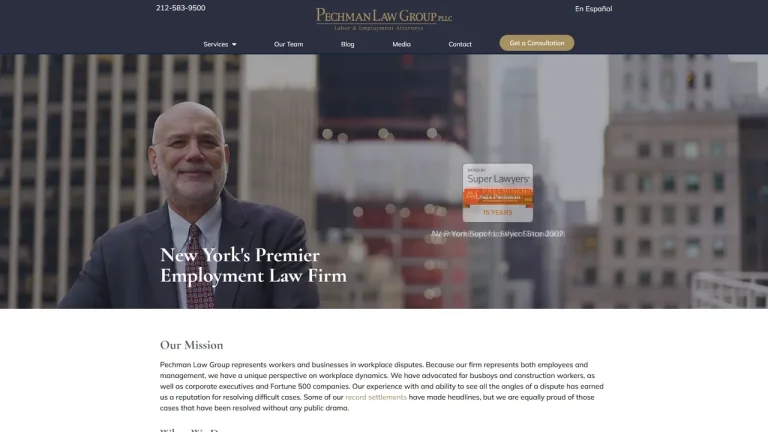
Pechman Law Group PLLC - NYC, New York
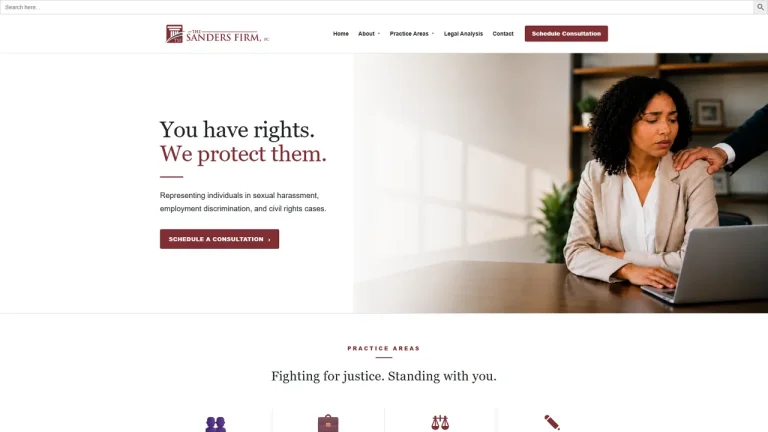
The Sanders Firm, P.C. - NYC, New York
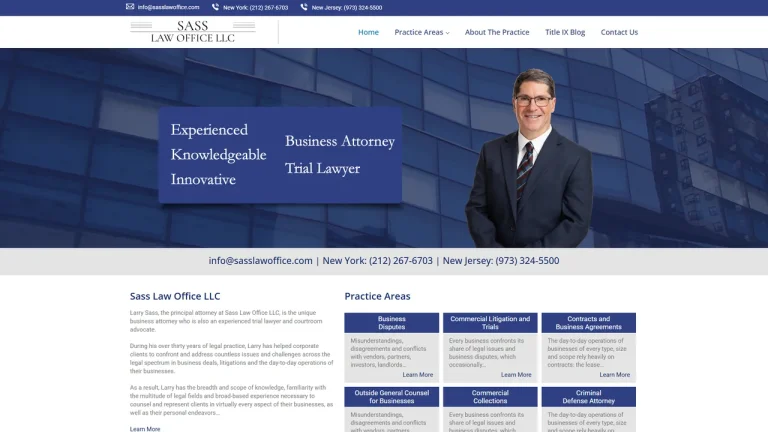
Sass Law Office LLC - NYC, New York
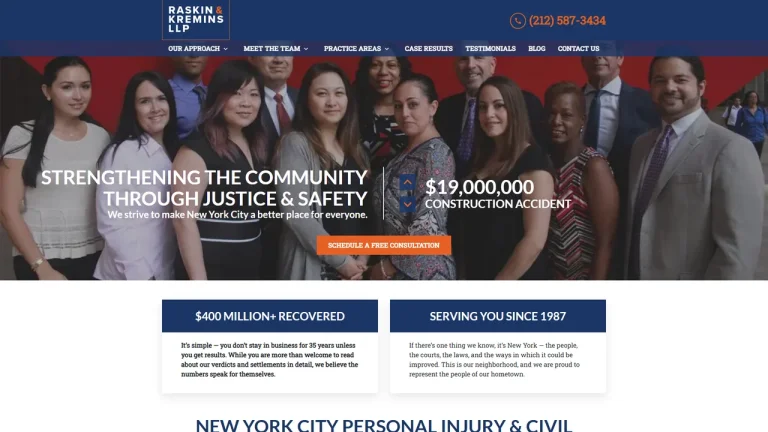
Raskin & Kremins - NYC, New York
Peters Brovner LLP - NYC, New York
Elefterakis, Elefterakis & Panek - NYC, New York
Pelton Graham LLC - NYC, New York
Law Offices of Jacob Aronauer - NYC, New York
Razavi Law Group - NYC, New York
Satisky Law, PLLC - NYC, New York

Eisenberg & Baum, LLP - NYC, New York
Arcé Law Group - NYC, New York
Silver Law Group PC - NYC, New York
J Goldman Law - NYC, New York

Melito & Adolfsen P.C. - NYC, New York
The Roth Law Firm, PLLC - NYC, New York
The Maddox Firm LLC - NYC, New York
Danny Grace PLLC - NYC, New York
Steven Mitchell Sack, The Employee's Lawyer - NYC, New York
Granovsky & Sundaresh PLLC - NYC, New York

Tarter Krinsky & Drogin LLP - NYC, New York
McLaughlin & Stern LLP - NYC, New York
Mark L. Bodner, P.C. - NYC, New York
The Jurisdictional and Enforcement Landscape for Harassment in New York City
Addressing harassment within the five boroughs of New York City-Manhattan, Brooklyn, Queens, The Bronx, and Staten Island-involves one of the most protective and progressive legal frameworks in the United States. Whether navigating sexual harassment, racial hostility, disability discrimination, or retaliatory termination in Midtown corporate offices, Downtown Brooklyn tech firms, or Long Island City logistics hubs, victims have powerful statutory remedies available under municipal and state enactments.
Harassment lawsuits in New York City are prosecuted in the New York State Supreme Court in each respective county, including the New York County Supreme Court at 60 Centre Street in Manhattan and the Kings County Supreme Court at 360 Adams Street in Brooklyn. Claims involving federal questions or diversity jurisdiction proceed in the United States District Court for the Southern District of New York (SDNY) at Foley Square or the Eastern District of New York (EDNY) in Downtown Brooklyn.
In addition to judicial litigation, legal practitioners frequently practice before specialized administrative bodies, including the New York City Commission on Human Rights (NYCCHR) and the New York State Division of Human Rights (NYSDHR). Experienced local counsel assesses whether an administrative complaint or a direct Supreme Court complaint provides optimal leverage for monetary recovery and career protection.
Typical Fee Structures and Resolutions for Harassment Matters in New York City
| Case Scenario | Fee Structure | Estimated Cost (USD) | Key Cost Determinants |
|---|---|---|---|
| Workplace Sexual Harassment Pre-Suit Settlement | Contingency Fee (33.3% - 40%) | $0 Upfront (Standard contingency) | Employer insurance policies, documentation strength, severance package negotiation scope. |
| Hostile Work Environment & Retaliation Lawsuit | Contingency / Hybrid Retainer | $0 Upfront (Plus case expenses) | Executive involvement, termination damages, Supreme Court or SDNY trial days. |
| NYCCHR / NYSDHR Administrative Agency Action | Hourly / Contingency | $2,500 - $7,500 / Contingency | Probable cause investigation depth, witness interviews, administrative conciliation. |
| Executive Severance & Non-Disclosure Negotiation | Hourly Rate | $450 - $850 / hr | Unvested equity preservation, non-disparagement covenants, reputational exposure. |
Critical Legal Deadlines & Statutes in New York
Legal remedies for harassment in New York City are defined by distinct statutory frameworks and filing deadlines. The premier vehicle for relief is the New York City Human Rights Law (NYCHRL), codified at N.Y.C. Admin. Code § 8-107. Unlike restrictive standards requiring conduct to be severe or pervasive, the NYCHRL only requires a claimant to demonstrate that they were treated less well than other employees because of a protected characteristic.
For direct civil lawsuits filed in New York State Supreme Court under the NYCHRL, a claimant must file the action within three years of the unlawful discriminatory act pursuant to N.Y.C. Admin. Code § 8-502. The New York State Human Rights Law, codified at N.Y. Exec. Law § 296, similarly provides a three-year statute of limitations for court actions under N.Y. C.P.L.R. § 214.
If a complainant elects to pursue an administrative remedy, an administrative complaint with the New York City Commission on Human Rights must be filed within three years for gender-based harassment claims. For common-law civil assault, battery, or intentional infliction of emotional distress claims arising alongside harassment, a strict one-year statute of limitations applies under N.Y. C.P.L.R. § 215.
NYC Civil Court Small Claims vs. Supreme Court Representation
The Small Claims Part of the New York City Civil Court maintains a jurisdictional limit of $10,000. While an individual may utilize small claims to recover minor monetary damages or dispute property issues without an attorney, the small claims forum is legally unequipped to handle complex harassment actions. Small claims judges cannot issue injunctive remedies, enforce policy revisions, or award statutory attorney fees.
Hostile work environment, sexual harassment, and retaliatory discharge actions must be initiated in the New York State Supreme Court or federal court. Matched against corporate defense firms, an employee acting pro se faces severe evidentiary disadvantages during depositions and summary judgment motions. Retaining an experienced New York City harassment attorney unlocks access to statutory fee-shifting provisions, emotional distress valuations, and punitive damages under municipal law.
Red Flags When Hiring a New York City Harassment Lawyer
- Attorneys who evaluate claims using the restrictive federal severe or pervasive standard rather than the plaintiff-friendly New York City treated less well standard.
- Firms advising clients to resign precipitously before preserving text messages, emails, and internal HR reporting records.
- Lack of transparency in written retainer agreements regarding deposition transcript costs, expert witness retainers, and court filing surcharges.
- Attorneys who push clients to sign rapid, undervalued confidential settlement agreements before taking essential defense depositions.
Frequently Asked Questions
What standard of proof governs harassment cases under New York City law?
Under the New York City Human Rights Law, a plaintiff is not required to prove that harassment was severe or pervasive. The claimant must only demonstrate that they were treated less well than others because of their protected category, such as gender, race, age, or disability.
What is the statute of limitations to file a harassment lawsuit in NYC?
You have three years from the date of the unlawful harassment to file a direct lawsuit in court under both the New York City Human Rights Law and the New York State Human Rights Law.
Can an employer retaliate against me for reporting harassment in New York City?
No. Both New York City and New York State laws strictly prohibit employers from demoting, disciplining, reducing hours, or firing an employee for complaining about unlawful workplace harassment.
Do I need to file with an administrative agency before filing a lawsuit in court?
No. Under the NYCHRL and the NYSHRL, you can file a lawsuit directly in New York State Supreme Court without first filing a charge with the NYCCHR, NYSDHR, or EEOC, provided you make a binding election of remedies.
How are legal fees handled in New York City workplace harassment cases?
Harassment attorneys in New York City generally work on a contingency fee basis, meaning clients pay no upfront attorney fees. The New York City Human Rights Law also provides statutory fee-shifting, requiring employers to pay attorney fees if the employee prevails.