
Courts in Chicago
Find comprehensive information on Chicago courts, including the Cook County Circuit Court at the Daley Center and federal courts in the Northern District. Our public directory outlines court jurisdictions, electronic filing through eFileIL, and procedural guidelines for civil and criminal dockets. Explore the listings below to locate judicial branch offices, clerk contacts, and hearing schedules.
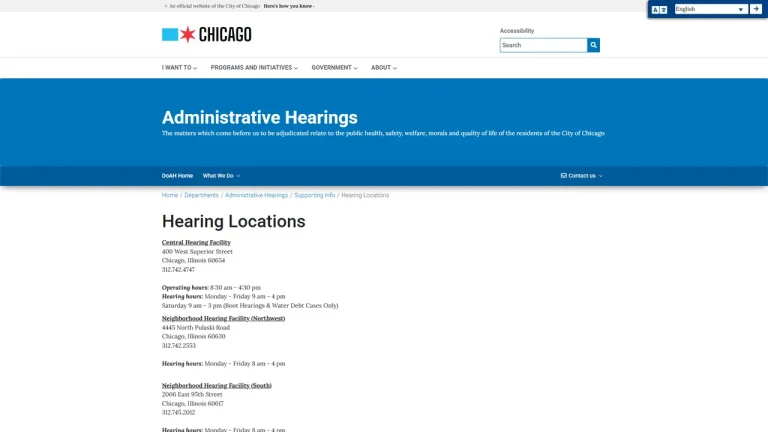
City of Chicago Department of Administrative Hearings - Chicago, IL
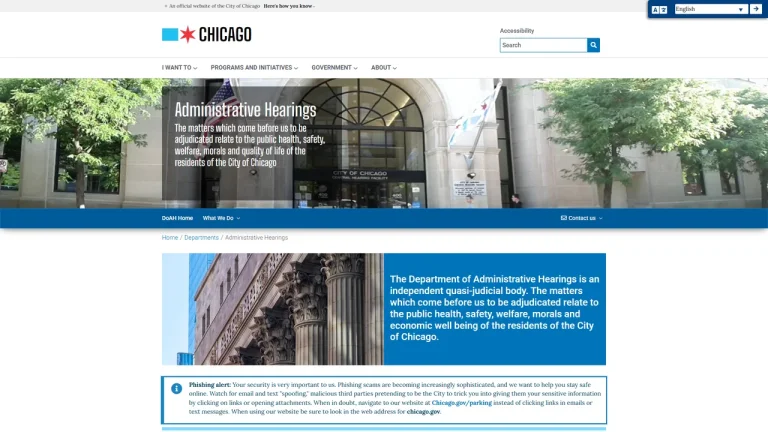
Department of Administrative Hearings Central Hearing Facility - Chicago, IL
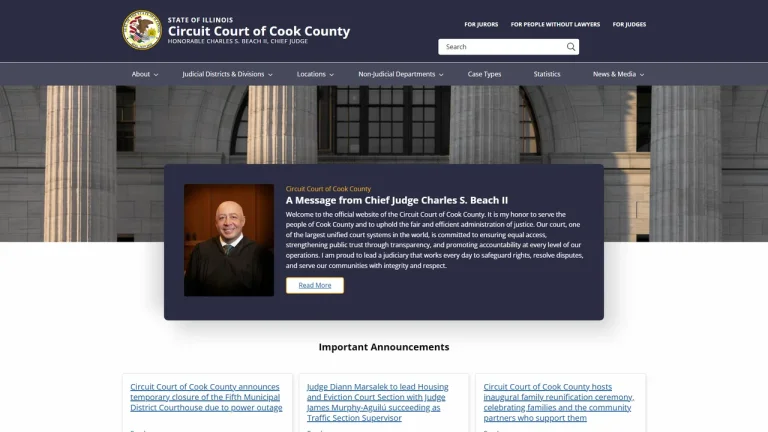



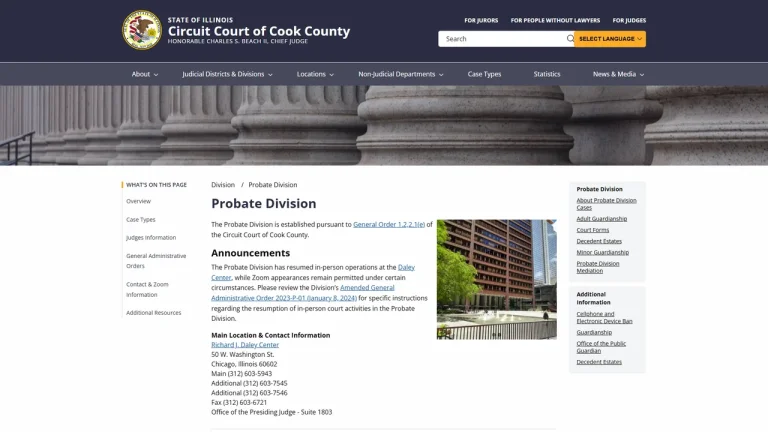
Circuit Court of Cook County - Probate Division (Daley Center) - Chicago, IL
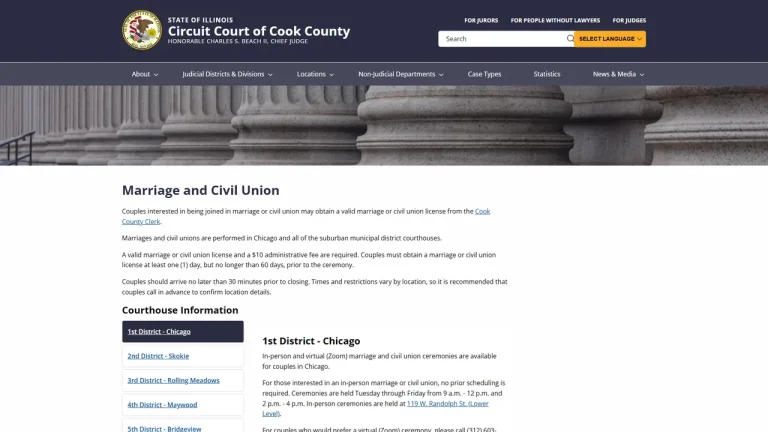
The Judicial Architecture of Courts in Chicago and Cook County
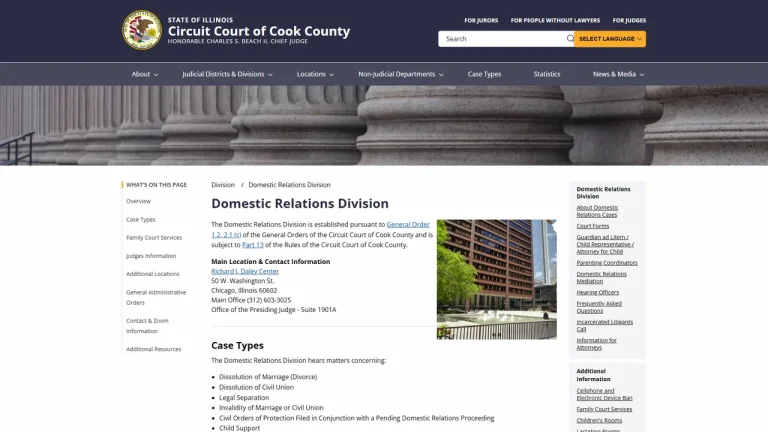
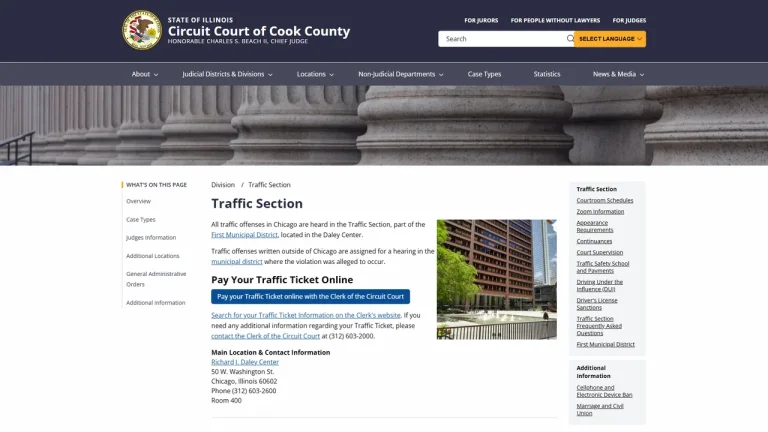
Chicago is home to the Circuit Court of Cook County, recognized as one of the largest unified court systems in the world. The primary hub for civil litigation is the Richard J. Daley Center on Washington Street, which accommodates the Law Division, Chancery Division, Domestic Relations Division, and the First Municipal District.
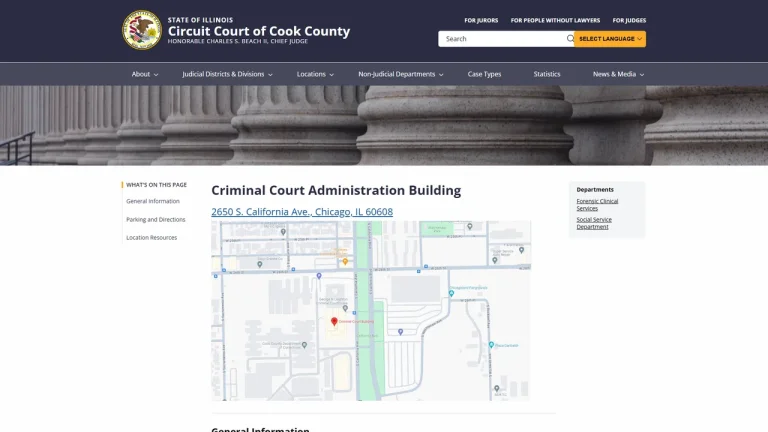
Criminal proceedings are concentrated primarily at the George N. Leighton Criminal Court Building at 26th Street and California Avenue, while specialized divisions handle juvenile justice and probate matters. Meanwhile, federal litigation proceeds at the Everett McKinley Dirksen United States Courthouse on Dearborn Street.
Navigating these judicial facilities requires understanding strict courtroom security screening protocols, mandatory digital filing rules through eFileIL, and local judicial assignments. Utilizing official directory resources ensures seamless engagement with court administration and judicial staff.
Court Filings, Administrative Fees, and Processing Benchmarks
| Service / Matter | Required Documents / Prerequisites | Statutory Fee (USD) | Processing Timeline |
|---|---|---|---|
| Civil Lawsuit Filing (Cook County Circuit Court) | Summons, complaint, civil cover sheet, approved eFileIL electronic registration | $300 to $450 statutory civil filing fee | Processed electronically within 24 to 48 hours |
| Small Claims Action Filing | Small claims complaint, summons, statement of claim under $10,000 | $150 to $250 graduated filing fee | Summons return date set within 30 to 40 calendar days |
| Certified Copy of Divorce Decree / Judgment | Case docket number, party legal names, written application, photo ID | $9 for first page, $0.50 per additional page | Same-day counter pickup, 7 to 10 business days by mail |
| Federal Northern District Civil Action Filing | Federal civil complaint, JS 44 civil cover sheet, federal CM/ECF submission | $405 statutory federal filing fee | Docketed same business day via CM/ECF system |
Critical Legal Deadlines & Statutes in Illinois
Parties engaged in litigation within the Circuit Court of Cook County are governed by strict procedural deadlines under the Illinois Code of Civil Procedure. Under 735 ILCS 5/2-201 and Illinois Supreme Court Rule 181, a defendant served with a 30-day summons must file an appearance and responsive pleading within 30 calendar days after service. Missing this deadline exposes the non-responsive party to default judgment proceedings.
If a default order is entered, the affected party must promptly invoke 735 ILCS 5/2-1301(e), which grants judges discretion to set aside default judgments upon motion filed within 30 calendar days from the date of entry. Beyond this 30-day window, relief can only be obtained through a formal petition under 735 ILCS 5/2-1401, which must be filed not later than 2 years after judgment entry. Furthermore, appealing a final circuit court order to the Illinois Appellate Court First District requires filing a notice of appeal with the circuit clerk within 30 calendar days pursuant to Ill. Sup. Ct. R. 303.
Direct Court Navigation vs. Retaining Licensed Trial Counsel
The Cook County court system permits individuals to proceed pro se in limited civil contexts. Small claims cases up to $10,000, governed by Ill. Sup. Ct. R. 281, offer streamlined court procedures and voluntary dispute resolution programs located on the 11th floor of the Daley Center. Self-represented individuals can also access legal aid desks for uncontested name changes or standard civil protective orders.
Conversely, litigating complex matters in the Law Division, Chancery Division, or defending against felony charges at 26th and California without counsel is hazardous. Illinois law prohibits corporations, LLCs, and partnerships from appearing pro se, mandating legal representation. Retaining a trial lawyer ensures adherence to Illinois Rules of Evidence, preserves appellate issues, and levels the field against experienced opposing counsel.
Red Flags & Public Service Warnings
- Unauthorized Court Fee Portals: All electronic filings in Cook County must be routed through state-certified eFileIL providers; avoid unaccredited third-party sites that inflate state statutory filing fees.
- Jury Duty Phone Scams: Beware of fraudulent telephone calls claiming you missed jury duty and face arrest unless you pay immediate fines; Cook County courts never demand financial payment by phone or wire transfer.
- Non-Attorney Legal Advisors: Paralegals, notaries, and unlicensed consultants cannot represent litigants in Cook County courtrooms; confirm your advocate is admitted to practice by the Illinois Supreme Court.
- Zoom Court Link Scams: Official remote court links for Cook County proceedings are published free of charge on the circuit court official website; never pay a third party for court access codes.
Frequently Asked Questions
Where is the main civil courthouse in Chicago located?
The central civil courthouse for Cook County is the Richard J. Daley Center, located at 50 West Washington Street in downtown Chicago, housing multiple court divisions and the main clerk counters.
How are civil court documents filed in Cook County?
All civil court documents must be submitted electronically through eFileIL, the statewide electronic filing manager, unless a litigant qualifies for and receives a certified exemption from electronic filing.
What is the financial ceiling for small claims court in Chicago?
Under Illinois Supreme Court Rule 281, small claims actions are limited to civil matters where the total claim for monetary damages does not exceed $10,000, excluding statutory court costs and interest.
Can a corporation represent itself without an attorney in Cook County?
No. Under Illinois law, corporations, limited liability companies, and partnerships cannot appear pro se and must be represented by an attorney admitted to The Chicago Bar and licensed by the state.
How can the public attend a remote court hearing via Zoom in Chicago?
Courtroom Zoom meeting IDs and passwords are listed by judicial assignment on the official Circuit Court of Cook County website, permitting remote attendance for parties, witnesses, and public observers.