
Courts in Illinois
Navigate the Illinois judicial system with official directories, courthouse jurisdictions, eFileIL rules, and clerk contact details across all circuits. The Illinois Courts system administers justice through 24 Judicial Circuits, five Appellate Districts, and the Illinois Supreme Court in Springfield. Browse our verified directory below to find local circuit clerks, small claims sessions, and courthouse filing windows.

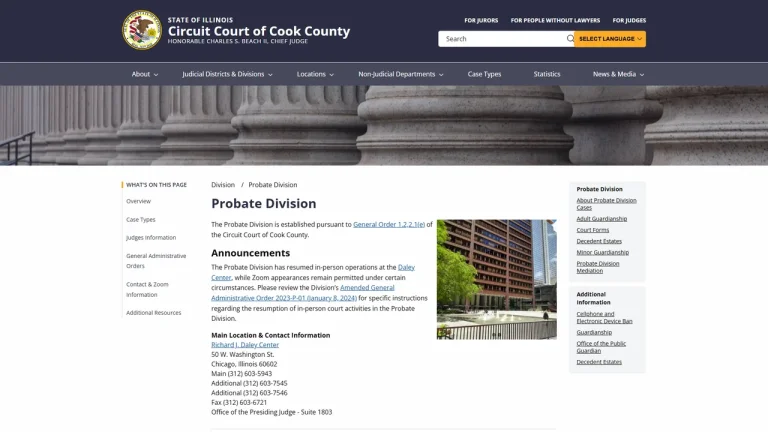
Circuit Court of Cook County - Probate Division (Daley Center) - Chicago, IL


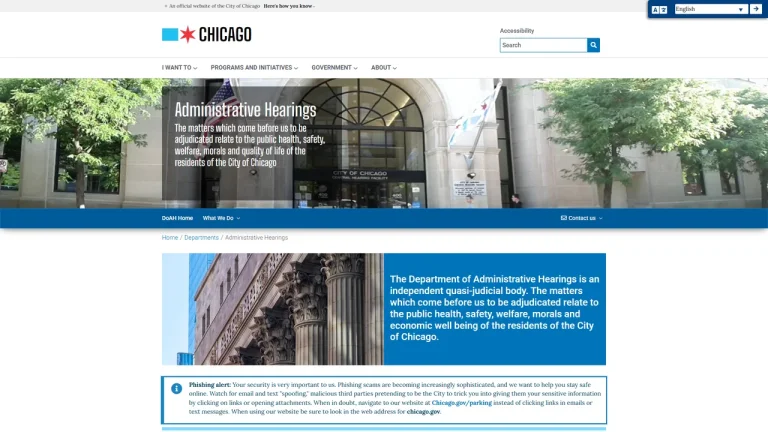
Department of Administrative Hearings Central Hearing Facility - Chicago, IL
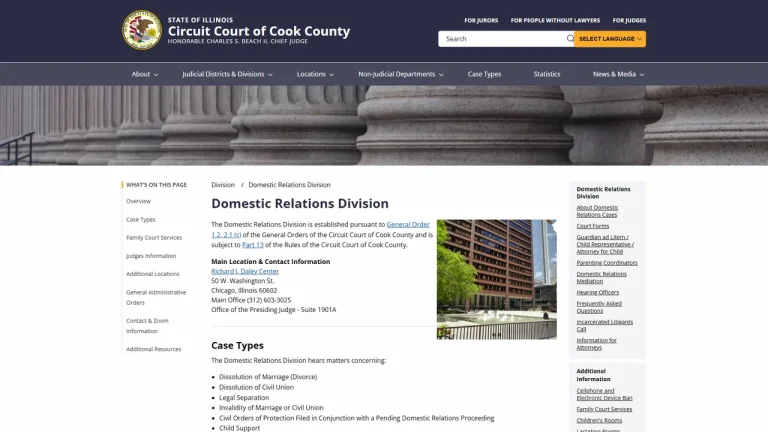
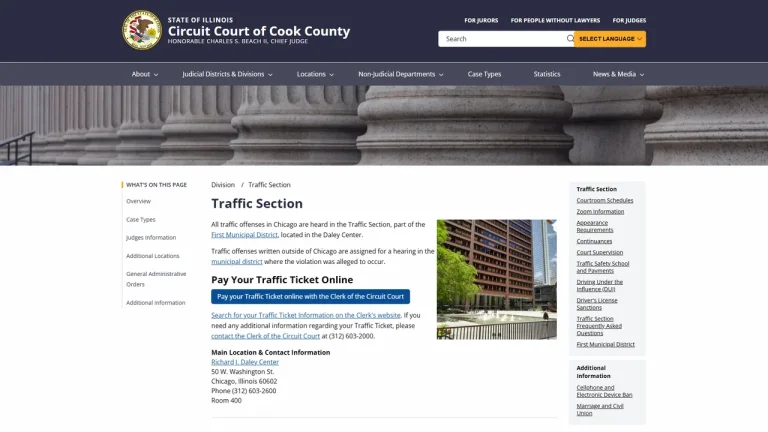
The Judicial Framework & Court Organization in Illinois
The judicial branch of Illinois operates as a unified, three-tiered court structure established under Article VI of the 1970 Illinois Constitution. Broad original jurisdiction is vested in the Circuit Courts, which serve as the state trial courts, with intermediate review exercised by the Illinois Appellate Court and ultimate constitutional authority residing with the Supreme Court of Illinois, seated in Springfield with permanent chambers in Chicago.
Original jurisdiction is organized geographically across 24 Judicial Circuits encompassing all 102 counties. Cook County constitutes a single judicial circuit, operating one of the largest unified court systems in the world from the Richard J. Daley Center and the Leighton Criminal Court Building. Outside Cook County, multi-county and single-county circuits serve regional population centers including DuPage, Lake, Will, Winnebago, Peoria, and Sangamon counties, partitioned into operational divisions such as Law, Chancery, Domestic Relations, and Municipal branches pursuant to 705 ILCS 35/1.
Appellate oversight is divided among five appellate districts, while statewide administrative procedures and mandatory electronic filing are managed through the Administrative Office of the Illinois Courts (AOIC). Litigants must submit civil pleadings through the uniform statewide electronic platform, eFileIL, governed by statewide rules under Ill. Sup. Ct. R. 9.
Illinois Court Filings, Statutory Fees & Processing Timelines
| Service / Matter | Required Documents / Prerequisites | Statutory Fee (USD) | Processing Timeline |
|---|---|---|---|
| Circuit Court Civil Lawsuit (Over $50,000) | Summons, verified complaint, civil case information sheet via eFileIL | $300-$380 statutory filing fee (varies by county population) | Immediate electronic docketing; summons issued within 24-48 hours |
| Small Claims Complaint (Under $10,000) | Small claims complaint form, return summons under Rule 281 | $85-$150 depending on county fee schedule | Return date set within 21 to 40 days of service |
| Notice of Appeal to Appellate Court | Notice of Appeal form, docketing statement, trial record request | $50 statutory appellate entry fee | Docketed within 14 days of filing notice of appeal |
| Certified Copy of Court Judgment | Written request to Circuit Clerk, case docket number, fee payment | $6 first page, $0.50 per additional page plus certification fee | 1 to 3 business days electronically or in person |
Critical Legal Deadlines & Statutes in Illinois
Procedural timelines and causes of action in Illinois courts are governed by precise statutory limitations codified in the Illinois Compiled Statutes and Illinois Supreme Court Rules:
- Personal Injury Statute of Limitations: Lawsuits seeking damages for personal injury or medical malpractice must be filed within two years of the date the cause of action accrued under 735 ILCS 5/13-202.
- Breach of Contract Timelines: Actions on unwritten contracts must be commenced within five years under 735 ILCS 5/13-205, while actions on written contracts, promissory notes, or leases must be brought within ten years under 735 ILCS 5/13-206.
- Claims Against Local Government: Lawsuits against local public entities or municipal employees for injuries must be commenced within one year from the date of injury under 745 ILCS 10/8-101.
- Appellate Filing Window: A Notice of Appeal from a final civil judgment must be filed with the clerk of the Circuit Court within 30 days after the entry of final judgment under Ill. Sup. Ct. R. 303.
- Court of Claims Actions Against the State: Monetary claims against the State of Illinois must be initiated within two years under 705 ILCS 505/22, with a mandatory written notice of intent filed within one year for personal injury claims.
Direct Pro Se Filing vs. Retaining Legal Counsel
Self-represented litigants in Illinois can access standardized court forms approved by the Illinois Supreme Court Commission on Access to Justice. In Small Claims Court, where disputes are capped at $10,000 under Ill. Sup. Ct. R. 281, individuals can handle minor debt collection or property disputes with relaxed procedural rules. Circuit clerks provide public access terminals and basic filing assistance, but they are strictly barred by law from offering legal advice.
In formal civil litigation, complex chancery injunctions, contested family law dissolutions under 750 ILCS 5/401, or criminal felony defense, professional representation is indispensable. Navigating the Illinois Rules of Evidence, local circuit court rules, and evidentiary depositions requires an experienced attorney admitted to practice by the Illinois Supreme Court and registered with the Attorney Registration and Disciplinary Commission (ARDC).
Red Flags & Judicial Service Warnings
Members of the public interacting with the Illinois court system should guard against common scams and procedural pitfalls:
- Fraudulent Jury Duty Arrest Scams: Callers falsely claiming to be county sheriff deputies or court clerks asserting that a bench warrant has been issued for missing jury service, demanding instant payment through gift cards or digital payment apps. Illinois courts never request payment over the phone.
- Commercial Resellers of Standard Court Forms: Third-party websites charging fees for Illinois standard statewide court forms that are available completely free of charge from the Illinois Courts official website.
- Unauthorized E-Filing Middlemen: Unregulated online vendors charging inflated fees to file documents through eFileIL without confirming statutory delivery or service on opposing parties.
- Deceptive Eviction Assistance Services: Unlicensed advisors claiming they can file emergency motions to stay eviction orders without meeting statutory notice requirements under the Illinois Eviction Act.
Frequently Asked Questions
What is the monetary limit for Small Claims Court in Illinois?
Under Ill. Sup. Ct. R. 281, small claims civil actions in Illinois are limited to claims not exceeding $10,000, exclusive of court costs and statutory interest.
How does electronic filing work in Illinois courts?
All civil case filings in Illinois circuit courts must be submitted electronically through the statewide eFileIL portal or an authorized electronic filing service provider pursuant to Ill. Sup. Ct. R. 9.
Where is the Illinois Supreme Court located?
The Illinois Supreme Court is headquartered at the Supreme Court Building in Springfield, while also maintaining a courtroom and administrative facilities at 160 North LaSalle Street in Chicago.
How many judicial circuits exist in Illinois?
Illinois is organized into 24 Judicial Circuits that span across all 102 counties, with Cook County designated as a standalone single-county circuit under 705 ILCS 35/1.
What is the deadline to appeal a circuit court judgment in Illinois?
A party appealing a final judgment must file a Notice of Appeal with the Circuit Clerk within 30 days after the entry of the final judgment or order disposing of a timely post-trial motion under Ill. Sup. Ct. R. 303.