
Government Agencies in Concord
Access official government agencies and administrative departments across Concord, New Hampshire. As the state capital and county seat of Merrimack County, Concord hosts municipal offices, county administration, and central state executive departments operating under New Hampshire statutory rules. Browse our verified directory below to identify jurisdictional divisions, schedule hearings, or file administrative petitions.






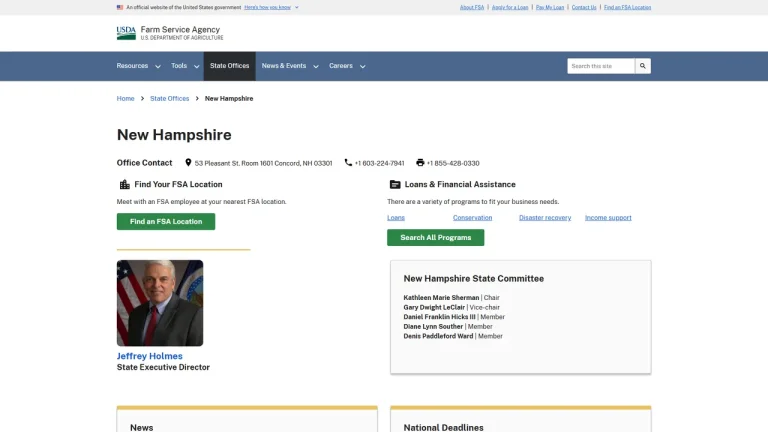
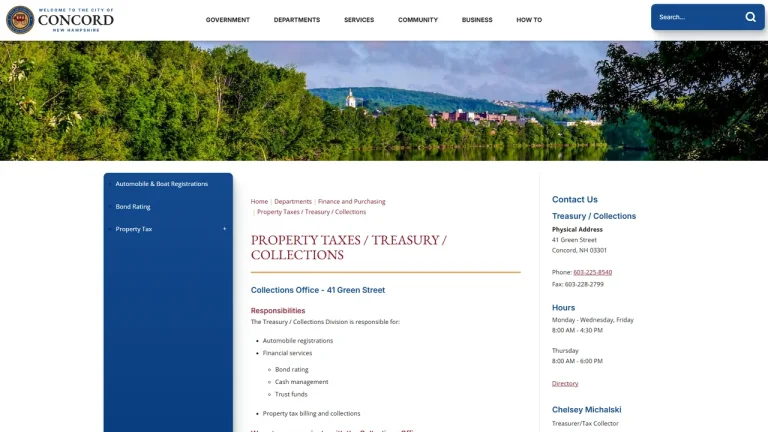

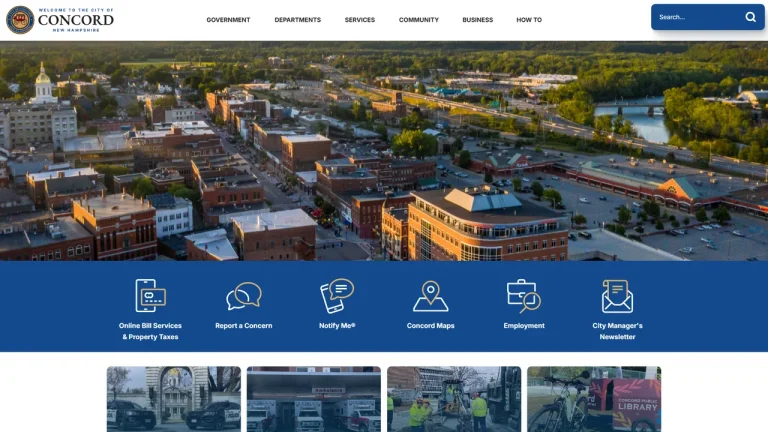

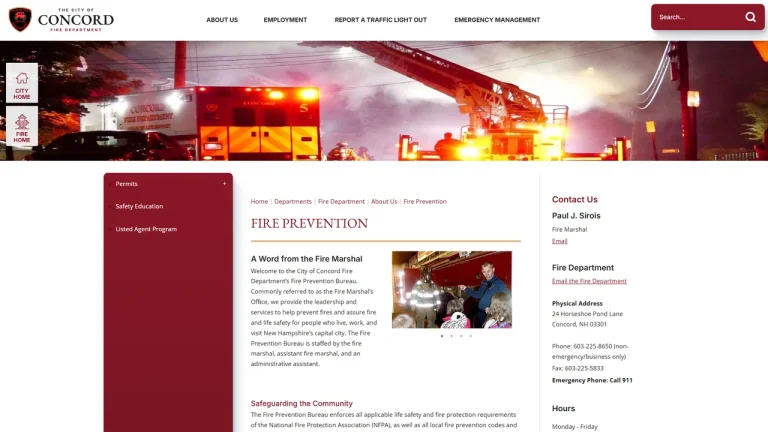
Concord Fire Department Prevention Bureau - Concord, NH
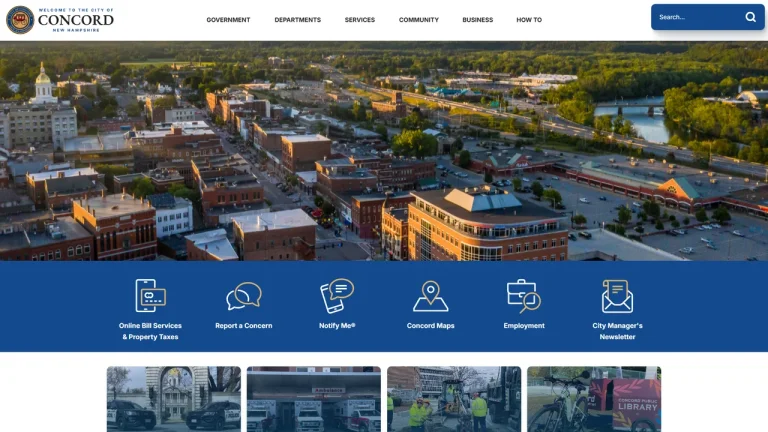
Municipal, County, and State Agency Jurisdiction in Concord
Concord occupies a distinct position within New Hampshire as both the seat of Merrimack County and the capital of the Granite State. Municipal administration centers at Concord City Hall on Green Street, housing the City Manager, City Council, Code Administration, and Assessing offices serving urban neighborhoods like Penacook, East Concord, and the Heights.
At the county level, the Merrimack County Board of Commissioners oversees regional health, human services, and county-level operations. Simultaneously, state executive departments headquartered in Concord-including the New Hampshire Department of Safety on Hazen Drive and the Department of Revenue Administration on Pleasant Street-exercise statewide regulatory oversight over commerce, taxation, public safety, and administrative licensing.
Interacting with these agencies requires adherence to established New Hampshire administrative procedures and local municipal ordinances. Whether petitioning the Concord Planning Board or responding to an enforcement inquiry from a state regulatory board, identifying the correct jurisdictional tier ensures compliance and preserves formal appeal avenues before the Merrimack County Superior Court.
Concord Agency Services, Procedural Requirements, and Timelines
| Service / Matter | Required Documents / Prerequisites | Statutory Fee (USD) | Processing Timeline |
|---|---|---|---|
| Concord Municipal Zoning Variance Petition | Site Plan, Certified Abutter Notification List, Completed ZBA Application Form | $150.00 to $350.00 municipal fee plus certified mailing costs | 30 to 45 calendar days to public hearing |
| NH Department of Safety Administrative Hearing Request | Notice of Suspension or Revocation, Written Hearing Petition, Government ID | $0.00 to $100.00 administrative fee depending on violation | 10 to 20 business days for docket assignment |
| NH Department of Revenue Business Tax Clearance | Form DP-132, State Business Tax Identification, Prior Year Corporate Returns | $0.00 statutory agency filing fee | 5 to 15 business days for certificate issuance |
| Merrimack County Administrative Public Records Inspection | Formal Written Right-to-Know Request, Identification of Records, Contact Information | $0.00 inspection fee; statutory rates for hard copy duplication | 5 business days statutory determination window |
Critical Legal Deadlines & Statutes in New Hampshire
Administrative processes, citizen petitions, and agency determinations in Concord are governed by mandatory statutory timelines under the New Hampshire Revised Statutes Annotated:
N.H. Rev. Stat. Ann. § 91-A:4, IV governs public agency obligations under the New Hampshire Right-to-Know law. Municipal departments in Concord and state agencies must make public records immediately available, or within five business days provide the records, deny the request in writing stating the statutory reason, or furnish a written statement detailing the time reasonably necessary to fulfill the request.
N.H. Rev. Stat. Ann. § 541:3 establishes that an individual or business aggrieved by an order or decision of a New Hampshire state administrative commission or board must file a formal application for a rehearing within 30 calendar days following the decision. Filing this motion is an indispensable jurisdictional prerequisite to preserving any further appeal rights.
N.H. Rev. Stat. Ann. § 541:6 dictates that if an agency denies a rehearing petition or issues an adverse determination on rehearing, the petitioner has a strict 30-day statutory window to appeal the final order directly to the New Hampshire Supreme Court located on Charles Doe Drive in Concord.
N.H. Rev. Stat. Ann. § 677:2 regulates appeals from local municipal decisions, requiring an affected party to file a motion for rehearing with the Concord Zoning Board of Adjustment within 30 days after any order or decision before an appeal may be brought before the Merrimack County Superior Court.
Direct Agency Engagement vs. Legal Counsel Representation
Citizens and local property owners can navigate standard municipal interactions directly with Concord administrative departments without retaining private legal counsel. Submitting building permit applications to the Concord Code Administration Division, reviewing tax assessment cards at City Hall, or attending public hearings of the Concord City Council represent standard citizen activities that do not require attorney involvement.
Conversely, retaining an experienced administrative law or land use attorney becomes essential when confronting complex regulatory enforcement or contested proceedings. Legal representation is vital when appearing before the Concord Planning Board or Zoning Board of Adjustment for substantial commercial variances, defending against corporate tax assessments by the New Hampshire Department of Revenue Administration, or litigating administrative hearings before the Department of Safety Bureau of Hearings. An attorney ensures that constitutional due process is maintained, expert witness testimony is properly introduced, and an airtight evidentiary record is preserved for judicial review in the Merrimack County Superior Court or the New Hampshire Supreme Court.
Red Flags & Avoiding Public Agency Imposter Scams
- Commercial third-party websites charging high service fees to book appointments or download routine administrative forms that Concord municipal departments provide free of charge.
- Unsolicited telephone calls or emails from individuals falsely claiming to represent New Hampshire state agencies demanding immediate electronic payments or cryptocurrency under threat of license suspension or asset seizure.
- Unlicensed land use facilitators promising guaranteed municipal permit approvals or variances from the Concord Zoning Board of Adjustment without completing statutory abutter notifications.
- Phishing correspondence mimicking the New Hampshire Department of Administrative Services requesting confidential banking details or enterprise login credentials under the guise of vendor portal re-registration.
Frequently Asked Questions
Where is the Concord City Hall located and what departments operate there?
Concord City Hall is located at 41 Green Street in Concord. It houses the City Manager's Office, City Clerk, Code Administration, Assessing Division, and City Council chambers handling municipal governance, local licensing, and property records.
How do I appeal an administrative decision made by a New Hampshire state agency in Concord?
Under New Hampshire statutory procedure, you must first file a formal motion for rehearing with the respective agency within 30 days of the decision. If the motion is denied, you may appeal the administrative order to the New Hampshire Supreme Court within 30 days.
What is the statutory deadline for Concord agencies to respond to public records requests?
Under the New Hampshire Right-to-Know law, government agencies in Concord must provide the requested records, issue a written denial, or provide a written estimate of the time needed to fulfill the request within five business days of receipt.
Which court has jurisdiction over administrative appeals from Concord municipal boards?
Appeals originating from the Concord Zoning Board of Adjustment or Planning Board, following exhaustion of municipal rehearing procedures, are heard by the Merrimack County Superior Court located at 163 North Main Street in Concord.
Do I need an attorney to file an application with the Concord Planning Board?
While self-representation is permitted for routine residential applications, commercial projects, complex subdivisions, and variance requests benefit from legal counsel to establish proper findings of fact and protect statutory appeal rights.