
State Agencies in New Jersey
Navigating New Jersey state agencies requires understanding departmental administrative rules, state licensing procedures, and formal compliance frameworks. Engaging with regulatory divisions early ensures that state filings, permit applications, and administrative appeals proceed smoothly. Explore our verified directory below to locate New Jersey state departments, executive offices, and regulatory resources.





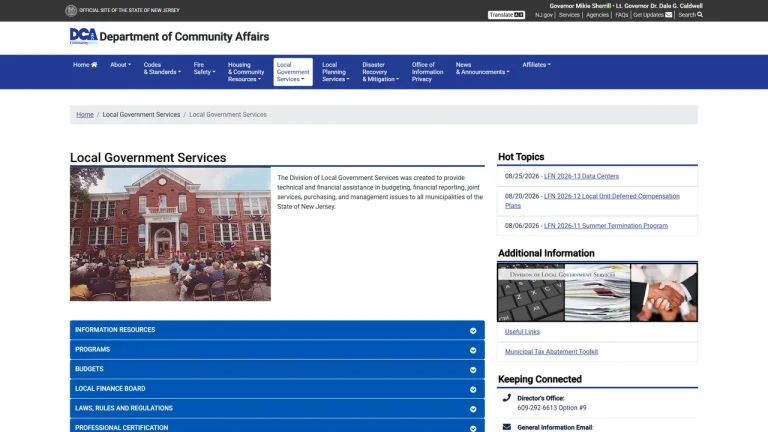
Division of Local Government Services - Financial Regulation – Trenton, NJ

New Jersey State Board of Marriage and Family Therapy Examiners - Newark, NJ

New Jersey Department of Environmental Protection (Commissioner's Office)
New Jersey State Agency Structure & Administrative Authority
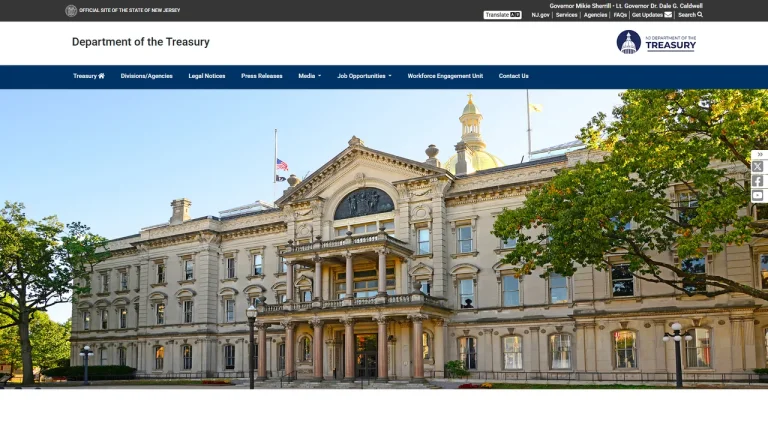
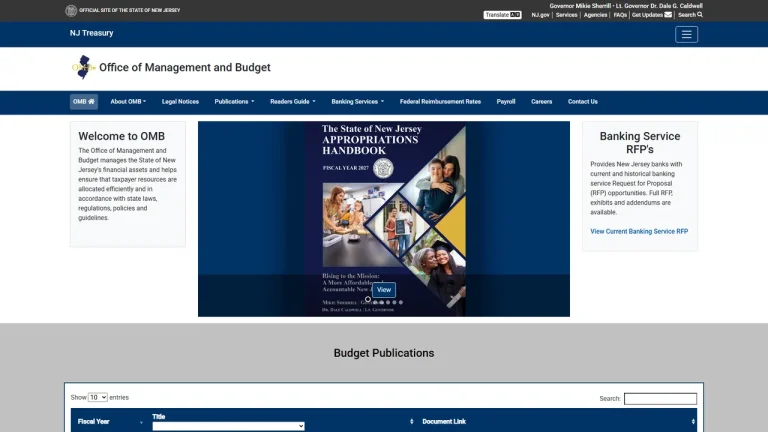
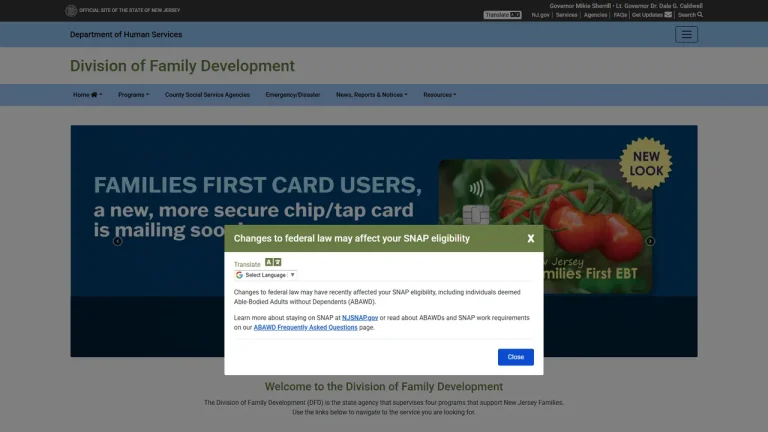
Executive governance and administrative regulation in the State of New Jersey are organized through principal departments established pursuant to Article V of the New Jersey State Constitution. Headquartered primarily in Trenton (Mercer County) around the State Capitol complex, state agencies oversee taxation, environmental protection, labor standards, commercial transactions, and consumer safety. Key administrative departments include the New Jersey Department of the Treasury, the Department of Environmental Protection (NJDEP), the Department of Labor and Workforce Development (NJDOL), and the Department of Banking and Insurance (DOBI).
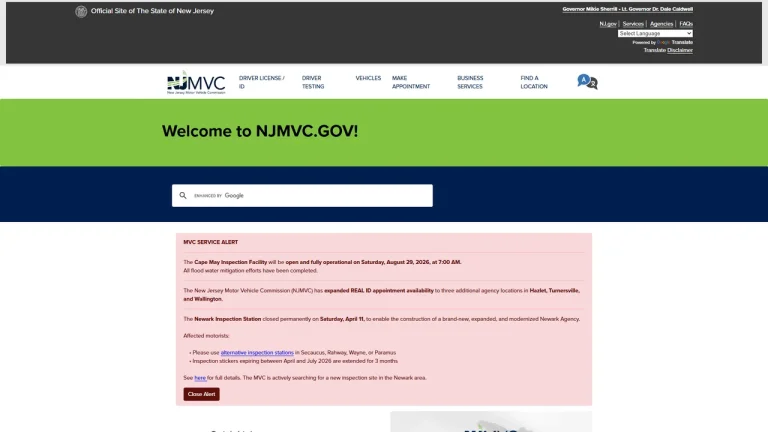
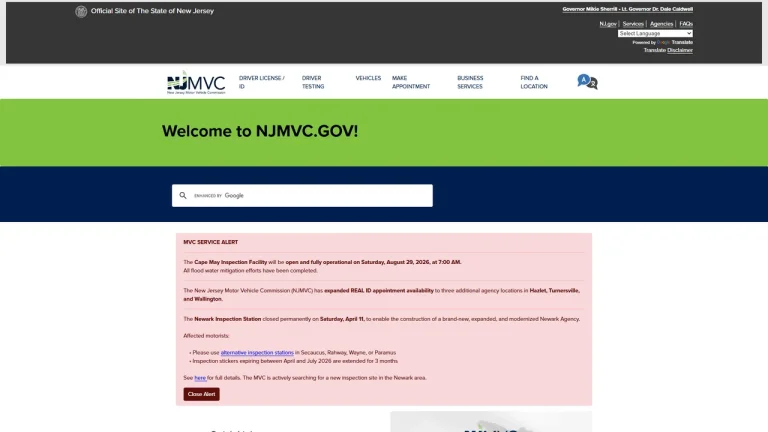
Public protection and commercial regulation are supervised by the New Jersey Department of Law and Public Safety, led by the Attorney General. Under this umbrella, the Division of Consumer Affairs oversees dozens of professional and occupational licensing boards governing healthcare, accounting, architecture, and home improvement trades, while the Division on Civil Rights (DCR) enforces state anti-discrimination statutes. Motor vehicle administration, licensing, and registrations are managed independently by the New Jersey Motor Vehicle Commission (NJMVC).
Administrative disputes between citizens and state agencies are adjudicated within a specialized administrative tribunal system. When a state agency issues a contested decision, the matter is transmitted to the New Jersey Office of Administrative Law (OAL), where independent Administrative Law Judges (ALJs) conduct evidentiary hearings in Mercerville, Newark, and Atlantic City. Final agency determinations are subject to judicial review directly in the Appellate Division of the Superior Court of New Jersey.
New Jersey State Agency Filings & Statutory Timelines
| Service / Matter | Required Documents / Prerequisites | Statutory Fee (USD) | Processing Timeline |
|---|---|---|---|
| Open Public Records Act (OPRA) Request | Written OPRA request form, specific public record description | $0.00 base statutory fee (per-page copy fees of $0.05 / $0.07 apply) | 7 business days (statutory response deadline) |
| Division of Taxation Assessment Protest | Formal protest letter, copy of assessment, supporting financial accounting | $0.00 filing fee | 90 calendar days from notice date |
| NJDEP Environmental Land Use Permit | Engineering site plan, environmental impact statement, permit application | $1,000.00 to $5,000.00+ (statutory schedule based on acreage) | 90 to 180 calendar days |
| Division on Civil Rights (DCR) Complaint | Verified complaint detailing unlawful discrimination, supporting documentation | $0.00 filing fee | 180 calendar days from discriminatory act |
Critical Legal Deadlines & Statutes in New Jersey
State regulatory compliance, administrative challenges, and public records disclosures in New Jersey operate under strict statutory deadlines:
Public access to government records is regulated by the Open Public Records Act under N.J. Stat. Ann. § 47:1A-5, which mandates that agency records custodians grant access, deny access, or request an extension within 7 business days; unlawful denials may be appealed to the Government Records Council (GRC) or the Superior Court of New Jersey.
Tort claims against state governmental entities or public employees are strictly controlled by the New Jersey Tort Claims Act under N.J. Stat. Ann. § 59:8-8. A claimant must serve a formal Notice of Claim on the state entity within 90 calendar days of the accrual of the cause of action; failure to meet the 90-day deadline generally bars recovery, subject to a 2-year statute of limitations for filing a civil complaint.
Taxpayers contesting an assessment or final determination issued by the New Jersey Division of Taxation must file an administrative protest within 90 days of the assessment date pursuant to N.J. Stat. Ann. § 54:49-18, or file a complaint with the Tax Court of New Jersey under N.J. Stat. Ann. § 54:51A-13 within the same 90-day window.
Complaints alleging unlawful discrimination under the New Jersey Law Against Discrimination (LAD) must be filed with the Division on Civil Rights within 180 days of the alleged discriminatory act under N.J. Stat. Ann. § 10:5-18, or commenced in the Superior Court within 2 years pursuant to N.J. Stat. Ann. § 2A:14-2.
State administrative rulemaking and contested case hearings are governed by the New Jersey Administrative Procedure Act, codified at N.J. Stat. Ann. § 52:14B-4.
Direct Administrative Inquiries vs. Retaining State Regulatory Counsel
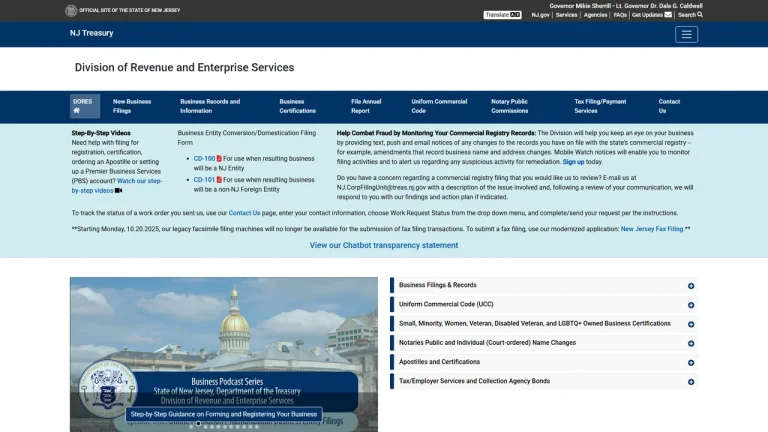
Individuals can independently complete many routine transactions with New Jersey state agencies. Filing standard OPRA requests, renewing professional trade licenses with the Division of Consumer Affairs, forming basic commercial entities with the Division of Revenue and Enterprise Services (DORES), or booking driving examinations with the NJMVC can be performed directly through official public web portals.
However, when a state department initiates formal enforcement proceedings, audits corporate tax returns, or proposes professional license revocation, retaining an attorney licensed by the New Jersey State Bar is critical. Contested matters referred to the New Jersey Office of Administrative Law (OAL) function as formal bench trials governed by the New Jersey Rules of Evidence and administrative regulations.
Administrative defense counsel prepares witness testimony, conducts cross-examinations of state compliance inspectors, files exceptions to ALJ Initial Decisions under N.J. Stat. Ann. § 52:14B-10, and ensures an exhaustive administrative record is compiled to support judicial review in the Appellate Division of the Superior Court.
New Jersey State Agency Scams & Red Flags
Commercial operators and residents throughout New Jersey should stay protected against pervasive administrative schemes and predatory practices:
- Commercial Corporate Filing Deceptions: Newly registered New Jersey businesses routinely receive deceptive mailings from private companies demanding $150.00 or more to obtain standard business certificates or file annual corporate records that can be filed directly with DORES for statutory fees.
- Division of Taxation Imposter Calls: Fraudsters posing as state tax investigators call residents threatening driver license suspension or property liens unless immediate payment is made through wire transfers or prepaid debit cards; the New Jersey Division of Taxation always communicates tax assessments through official written correspondence.
- Inflated OPRA and Licensing Resellers: Beware of unauthorized third-party platforms charging recurring subscription fees to submit standard OPRA requests or state license applications that are available directly through state department portals.
- Unlicensed OAL Representation: Non-attorney consultants offering paid representation for contested hearings before the Office of Administrative Law cannot provide lawful legal counsel, creating significant risk of procedural default in state regulatory matters.
Frequently Asked Questions
What is the role of the New Jersey Office of Administrative Law (OAL)?
The New Jersey Office of Administrative Law (OAL) is an independent state agency that adjudicates contested administrative cases for state executive departments. Administrative Law Judges (ALJs) conduct formal evidentiary hearings and issue Initial Decisions containing factual findings and legal conclusions, which are then transmitted to the head of the issuing state agency for final determination under N.J. Stat. Ann. § 52:14B-10.
How long does a New Jersey state agency have to respond to an OPRA request?
Pursuant to N.J. Stat. Ann. § 47:1A-5, an agency records custodian must grant or deny access to government records as soon as possible, but not later than 7 business days following the receipt of the request. Failure to respond within 7 business days is statutorily deemed a denial of the request.
What is the deadline for serving a notice of claim under the New Jersey Tort Claims Act?
Under N.J. Stat. Ann. § 59:8-8, a claimant must present a formal written Notice of Claim to the state or local public entity within 90 days after the accrual of the cause of action. Filing after the 90-day deadline requires a showing of extraordinary circumstances within 1 year of accrual before a Superior Court judge.
How do I appeal a final state agency decision in New Jersey?
Final decisions rendered by New Jersey state executive agencies are appealable as of right to the Appellate Division of the Superior Court of New Jersey pursuant to New Jersey Court Rule 2:2-3(a)(2). The notice of appeal must be filed with the Appellate Division clerk within 45 days of the date of service of the final agency decision.
Which New Jersey agency oversees occupational and professional licenses?
The New Jersey Division of Consumer Affairs, operating within the Department of Law and Public Safety, oversees approximately fifty professional and occupational boards. It licenses and regulates professionals such as physicians, accountants, engineers, nurses, and home improvement contractors across the state.