
County & City Agencies in Maine
Navigating county and city agencies in Maine requires understanding the relationship between municipal town halls and regional county commissioner offices. While municipal governments govern local zoning, code enforcement, and public services, counties manage regional corrections and land registries across 16 counties. Explore our verified statewide directory below to connect with town managers, city halls, and county administrative desks.




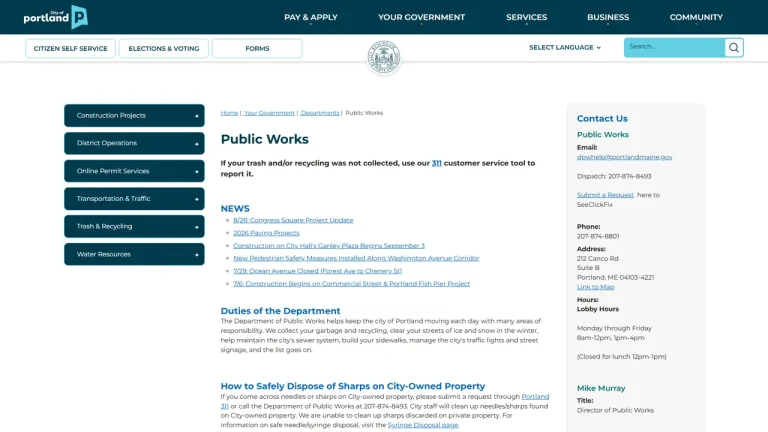
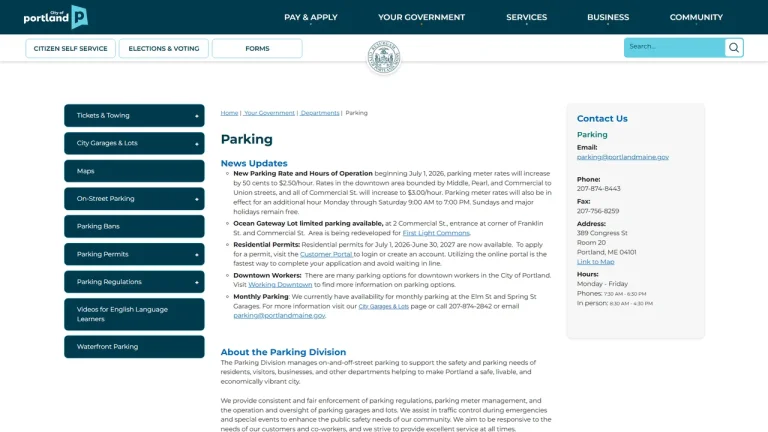
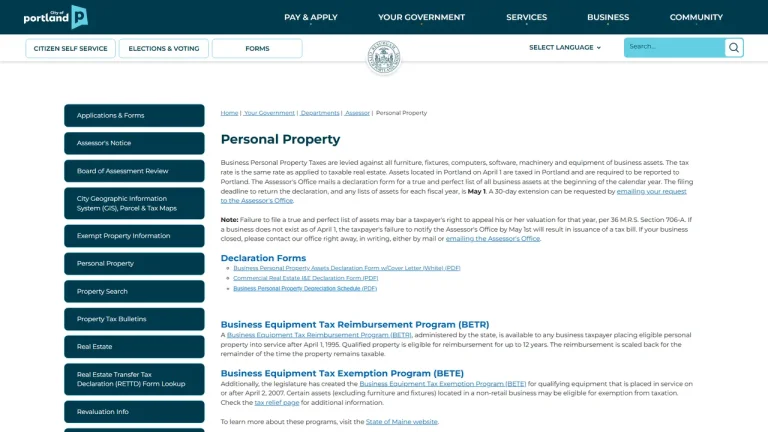
Portland Permitting & Inspections Department - Portland, ME




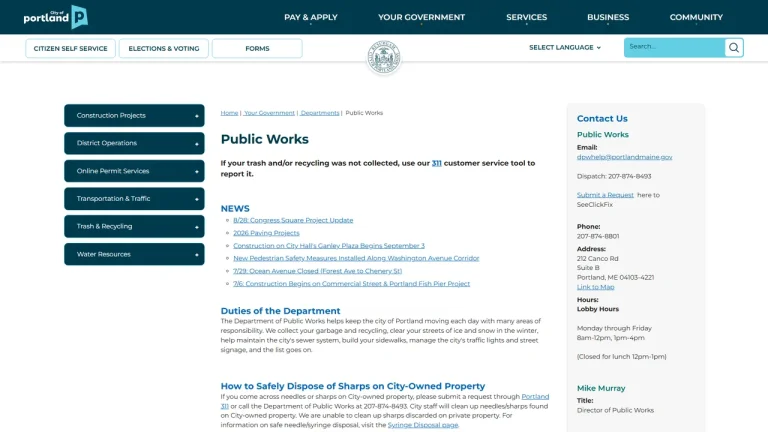
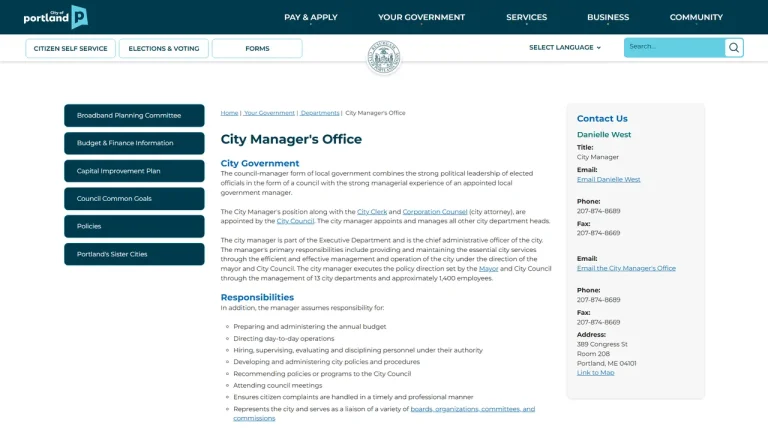
Portland Public Works Administration and Portland Recreation Division - Portland, ME




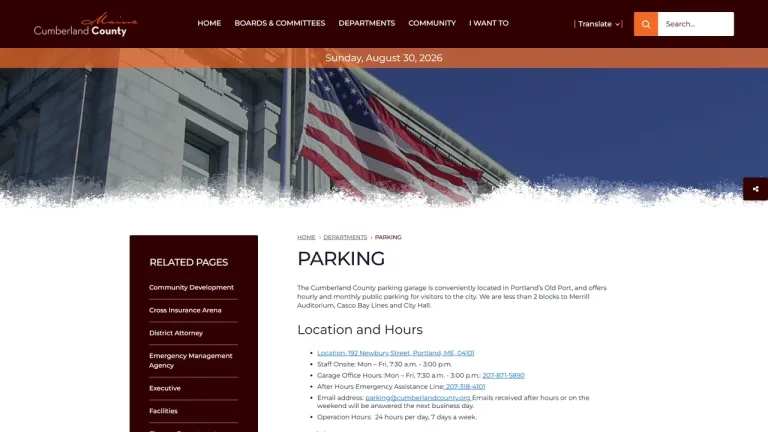
Municipal Home Rule and County Administration Across Maine
Local government in the state of Maine operates under a New England municipal framework characterized by strong municipal autonomy and targeted county-level administration. Under Article VIII, Part Second of the Maine Constitution and Me. Stat. tit. 30-A, § 3001, Maine municipalities exercise broad home rule authority. Incorporated cities (such as Portland, Lewiston, Bangor, Auburn, and South Portland) and hundreds of organized towns govern local zoning, issue building permits, administer local property tax assessments, manage public works, and enforce municipal ordinances through city councils, town managers, or traditional town meetings.
Regional administration is divided across Maine 16 counties, including Cumberland, York, Penobscot, Kennebec, Androscoggin, and Aroostook. County governance is directed by an elected Board of County Commissioners under Me. Stat. tit. 30-A, § 101. While counties in Maine do not enact broad municipal ordinances, they hold statutory responsibility for essential regional services, including operating county detention facilities through elected County Sheriffs, maintaining public land title registries through elected Registers of Deeds, funding county emergency management agencies, and administering public infrastructure in Maine vast unorganized territories.
Interfacing with local agencies in Maine requires navigating distinct administrative pathways. Whether presenting a site development plan to a municipal planning board, requesting public documents from a city clerk, or appealing an administrative decision before a local board of appeals, proceedings are regulated by state procedural statutes and the Maine Freedom of Access Act, which ensures public transparency across all municipal and county bodies.
Local Government Services, Regulatory Fees, and Processing Standards
| Service / Matter | Required Documents / Prerequisites | Statutory Fee (USD) | Processing Timeline |
|---|---|---|---|
| Maine FOAA Public Records Request | Written request identifying records, applicant contact details | $0.00 standard inspection ($15.00/hr after 2 free hours) | 5 business days to acknowledge |
| Municipal Building & Land Use Permit | Architectural site plans, code compliance review, contractor state license | $50.00 to $500.00+ based on construction valuation | 10 to 21 business days |
| Notice of Tort Claim (Maine MTCA) | Written notice of claim detailing incident, damages, and injuries | $0.00 statutory notice filing | 120-day statutory municipal review window |
| Municipal Commercial / Victualer License | Business application, health inspection approval, tax clearance | $25.00 to $150.00 local municipal fee | 2 to 4 weeks following council review |
Critical Legal Deadlines & Local Government Statutes in Maine
Citizens, property owners, and commercial developers interacting with Maine municipal and county entities must comply with mandatory procedural deadlines set forth in the Maine Revised Statutes. Public document access is governed by the Maine Freedom of Access Act (FOAA) under Me. Stat. tit. 1, § 408-A. A public agency or official must acknowledge receipt of a FOAA request within five business days and produce the requested records or provide an estimated completion date without unreasonable delay.
When asserting a tort claim against a Maine town, city, or county for personal injury or property damage, claimants must strictly follow the Maine Tort Claims Act under Me. Stat. tit. 14, § 8107. A formal written notice of claim must be served on the municipal clerk or county commissioners within 365 days of the date the claim accrued. The governmental entity is afforded a 120-day statutory review window to accept or deny the claim, and lawsuits must be initiated in Maine Superior Court within two years of the incident date pursuant to Me. Stat. tit. 14, § 8110.
Appeals from local administrative decisions operate under accelerated timelines. Under Me. Stat. tit. 30-A, § 2691 and Rule 80B of the Maine Rules of Civil Procedure, any party seeking judicial review of a final zoning variance or land use determination rendered by a municipal board of appeals or planning board must file a complaint in the Maine Superior Court within 30 days of the date of the decision. Missing this statutory 30-day window permanently bars judicial review.
Direct Public Engagement vs. Retaining Maine Municipal Legal Counsel
Maine residents regularly manage standard administrative transactions directly through municipal and county offices without professional legal assistance. Attending annual town meetings to vote on municipal budgets, filing standard Freedom of Access Act inquiries, applying for residential building permits, and paying local property taxes are straightforward civic processes designed for self-represented public participation.
However, when dealing with contested land use approvals, shoreland zoning restrictions, municipal code violation citations, or eminent domain proceedings, retaining a licensed Maine attorney is critical. Land use disputes before municipal planning boards require developing an exhaustive administrative record that conforms to local comprehensive plans and the state Mandatory Shoreland Zoning Act (Me. Stat. tit. 38, § 435). Counsel is vital when filing a Rule 80B appeal in Superior Court, defending against municipal land use enforcement actions brought under Me. Stat. tit. 30-A, § 4452, or negotiating complex commercial development agreements with city councils.
Red Flags: Avoiding Local Permitting Fraud and Unofficial Intermediaries
- Commercial websites charging private processing fees to submit basic Maine FOAA requests that municipal town clerks or county offices process for statutory fees.
- Unsolicited mailings sent to homeowners offering certified property assessment records or deed copies for fees exceeding $75, when official copies can be acquired directly from the Registry of Deeds for nominal fees.
- Third-party planning expeditors guaranteeing municipal approval of conditional use permits or shoreland variances outside formal planning board hearings.
- Phishing emails or text messages claiming to be from municipal code enforcement officers demanding immediate payment via wire transfers or gift cards to clear building code violations.
Frequently Asked Questions
What is the difference between a town and a county in Maine?
In Maine, towns and cities possess primary municipal home rule powers, managing local police, fire protection, schools, public roads, and zoning. County governments primarily oversee regional county sheriff patrols, county jails, the Registry of Deeds, and public records for unorganized territories.
How do I submit a public records request under the Maine Freedom of Access Act (FOAA)?
Submit a formal written request citing the Maine Freedom of Access Act (1 M.R.S. § 408-A) directly to the designated FOAA public access officer or town clerk of the agency holding the records. The agency must acknowledge receipt within five business days.
What is a Rule 80B appeal in Maine?
A Rule 80B appeal is a formal legal action filed in the Maine Superior Court under the Maine Rules of Civil Procedure to review the quasi-judicial decisions of municipal administrative bodies, such as planning boards or boards of appeals, within 30 days of the decision date.
What is the deadline for filing a claim against a Maine municipality?
Under the Maine Tort Claims Act, you must serve a written notice of claim upon the municipal clerk or county commissioners within 365 days of the date the injury or property damage occurred before any lawsuit can be filed in court.
How are unorganized territories governed in Maine?
Unorganized territories in Maine have no municipal government. They are administered directly by the State of Maine through the Land Use Planning Commission (LUPC) and the County Commissioners of the county in which the unorganized township is located.